

Overview
During the sixth week of the curating course, the focus was on the role of publications in exhibitions. The course included a section on describing the works, which left a deep impression on me. I noticed that there seemed to be no standard for the interpretation of works through text. This led to a question that has been constantly discussed: Do artworks need textual information for interpretation? After the afternoon group discussion, I also adjusted my curatorial pitch based on the opinions of the group members, and participated in the collective space activities on the weekend to determine the content of the collective project.
Publishing as Curatorial Practice
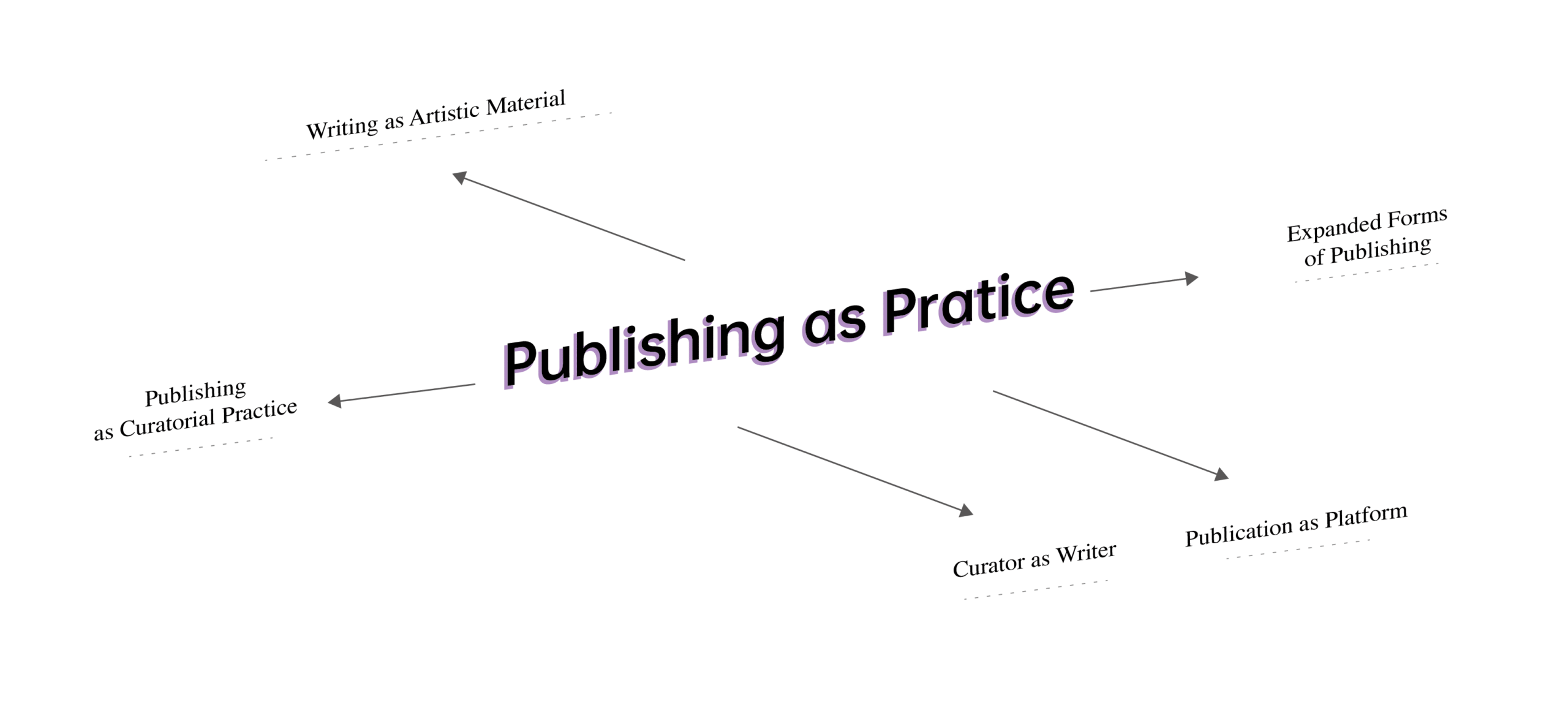
Image by: Tianshun Zhao
- Text is not only an interpretive tool for art, but also serve as a material and form for artistic creation. For instance, in futurism and conceptual art, there are textual practices.
- Curators need to explain, organize and disseminate artistic ideas through various types of writing, such as exhibition texts and reviews.
- Publications are similar to exhibitions, as an important platform for the production and dissemination of artistic ideas. They can organize knowledge and create a public discussion space.
- The publishing activity itself can also serve as a form of curating. The curator constructs the artistic discourse by editing, organizing texts and designing the publication structure.
- Contemporary art publishing has expanded to various media such as magazines, mail art, podcasts, and radio, blurring the boundaries between text and artistic practice.
Modification of Curatorial Pitch
Using new artist to replace Dan Vo
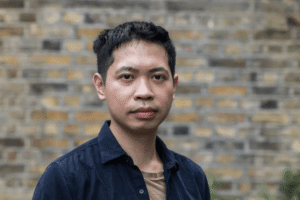
Will Pham. Photo: Hydar Dewachi https://www.newcontemporaries.org.uk/artists/will-pham
Will Pham · Diasporic Memory
He explores Vietnamese refugee histories and intergenerational memory through socially engaged practices that connect diaspora communities in the UK.
Provide some options about Exhibition Venues
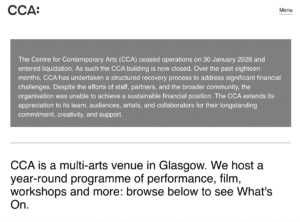
Source: https://www.cca-glasgow.com
Initially, I considered choosing CCA as the exhibition venue because Glasgow has a larger immigrant population, but it has closed down.
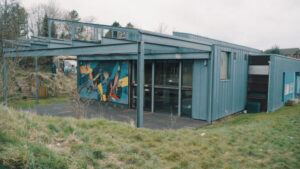
Source: https://www.whalearts.co.uk/wp-content/uploads/2021/01/WHALE-INT-EDITED-for-stills.00_00_40_00.Still011-768×432.jpg
I further discovered Whale Art Space, which offers free support for local projects and is a community-based exhibition space. It has relevance to the in-depth study of the community and my exhibition theme.
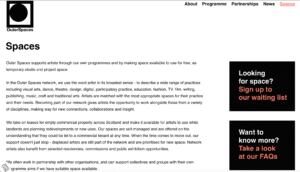
Source: https://outerspaces.org/spaces/
I also discovered that I could participate in the Outspaces program. This organization provides flexible commercial vacant spaces for exhibition projects for free in Scotland. Moreover, the flexibility of these spaces has certain connections with the history of the movement of groups.
(The Function of Publishing for Curating © 2026 by Tianshun Zhao is licensed under CC BY 4.0)
(Meeting01 © 2026 by Hengyi Chen is licensed under CC BY 4.0)
(Visting Exhibition © 2026 by Hengyi Chen is licensed under CC BY 4.0)
(https://outerspaces.org/spaces/)
(https://www.whalearts.co.uk/wp-content/uploads/2021/01/WHALE-INT-EDITED-for-stills.00_00_40_00.Still011-768x432.jpg)
(https://www.cca-glasgow.com)
(Will Pham. Photo: Hydar Dewachi https://www.newcontemporaries.org.uk/artists/will-pham)
(Publishing as Pratice © 2026 by Tianshun Zhao is licensed under CC BY 4.0)
(The Function of Publishing for Curating © 2026 by Tianshun Zhao is licensed under CC BY 4.0)
(Meeting02 © 2026 by Hengyi Chen is licensed under CC BY 4.0)



Leave a Reply