This text was commissioned by composer Matthew Whiteside to accompany Beneath the Surface – an audiovisual work inspired by his love of scuba diving and the experience of being underwater. Using footage gathered from dives around the world, the film brings music into dialogue with moving image and text to reflect on the beauty, stillness and vulnerability of the world below the surface and our impact on it. The film was created by Marisa Zanotti, with text responses by David Overend and First Nations poet Lucy Norton.
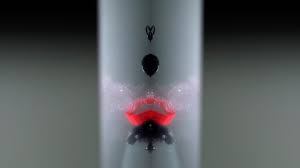
When salinity changes rapidly with depth, a shimmering layer appears, as freshwater slides over saltwater. This is the halocline.
Dive
Beneath the surface, things have already shifted.
Body suspended
Close to freezing
Neoprene skin
Diving in Scotland means slipping into murky waters; welcoming in the unknown. Sometimes, there is detritus. Microplastics, fibres from fishing nets and ropes.
But mostly, the haze is caused by runoff from the mountains: silt and sediment transported from the land and stirred up by the tide; and tannin-loaded peat, carried here by the rivers.
Phytoplankton blooms turn the water into greenish soup.
Light falls away
Leaving spaces to hide
This place is not without its dangers: sea urchins; weever fish; snakelocks anemone; lions’ mane jellyfish. But suits and caution protect, and spikes and poison can usually be avoided.
Watching without touching.
The greater risk is the water. Divers can become disorientated, the cold can cause shock, hypothermia. Pressure can change too quickly. Equipment can fail.
Better move slowly, then.
It is important to remember that we are guests here.
Fleeting visits
Life supporting systems
Borrowed time
Deeper
The halocline is a boundary line: a space between history, marked in salt.
River water flows into the sea; and despite all the churning organic matter that it brings, the newer arrival has less density than that which lies below.
This contrast keeps two bodies apart. Their stratification remains and at the meeting point, two or three meters below the surface, an oily border appears.
What kind of line is this?
Etched in water
Thin as air
It can be crossed without resistance
When the wind and the tides make their move,
One layer collapses into the other.
A pact is broken
Diving is the art of transgressing. It takes a body from its safe and stable origins and tests how far removed it can become. Above are social contracts, expectations and obligations. These remain with the sunlight.
The first displacement is from usual patterns of breathing. A tank of compressed air makes inhalation a careful, measured and considered thing. A new rhythm is established. Now, there is a focus and seriousness to every movement.
The second displacement is atmospheric. Stepping, rolling, diving, pulled downwards by the weight of a body and the pull of the Earth. The shift is to a new medium. It resists and holds. Movement is altogether different here. Direction is blurred and reference points fall away.
The third displacement is perceptual. Sound is softer and light is dispersed. Senses follow the pull of the current, the tightness of the drysuit, the bulk of the cylinders. Communication becomes gestural. Words matter differently here.
The fourth displacement is imaginative, and a new language is needed. What words can speak to a place that is so strange, unknowable and distant. Who could not come back from here changed?
Deeper, still
Five meters, six, and darkness takes over. Colours drop out of the spectrum and scarcely any light penetrates the upper level.
In clearer waters, red goes first, then orange, then yellow, then green, until all that is left is a blue glow.
Blue is always at the edges of things.
But here, all the colours leave together with the light.
Float
At the interference layer, two worlds come together and are held, suspended in a fragile equilibrium.
It takes nothing and everything to reach the other side.
Below the buffer zone, where the water is cold and clear, the dark is almost complete.
Torch light
Cutting through voids
Seabed cities
Now the beam picks out heavy red crabs; spiny starfish; tentacled anemones, tiny octopuses, flat squat lobsters with their tails curled beneath them. Bioluminescent copepods and vibrant nudibranch sea slugs. A scuttling, swaying, swirling sublayer.
Look
Among the rocks and the sand and the kelp forests;
Beyond the passage of salmon, eel, and dog shark:
Pipelines, mooring chains, rubbish and wrecks.
Here are the waste products of an advanced capitalist economy.
A cache of abandoned mayonnaise jars.
Look closely and see that they have been colonised. Hermits and gobies have moved in, protecting their soft bodies and their eggs in hard-walled caves. Barriers against a hostile environment. Thousands of tiny encrusting organisms lace patterns across the glass; barnacles and sponges anchor themselves to filter plankton. Soft corals grow and branch.
On anthropogenic structures, on marine pilings and sunken vessels, benthic islands are built into the mud, shored up by sand and empty shells.
Down here is life in all its opportunistic complexity.
Where is the halocline between this fragile microworld, from which reefs might grow, and the above-ground buildings that can reach further into the clouds than the hardiest of divers might venture in the opposite direction?
Diving deeper down here might seem to counter the hubristic sky reach of modernity.
A moment suspended in unaccountability.
But look.
The further travelled the closer reached.
Rise
Because time here is limited and this can only be a temporary fix.
Leave the pulsing, glowing, crawling depths,
And look up.
A perceptible difference in the inky water is the only sign of an exit.
Feel for the guide rope
Check the gauge
And follow the bubbles, which always go up.
Equipment should be trusted over instinct.
Ascent takes time, and air is counterintuitively released, since depth expands that which is stored within the suit.
Vent.
Then wait.
And listen for the faint echo of care and responsibility
These mark the way back, too.
Back to the boundary line, where clarity and visibility fall away.
Back to the interference layer, where thoughts are muddied and priorities shift
Back to the boil of soil and sand
Back to the surface
To the air
The sun
Back to the light.
Return
Nothing material is brought back from a journey like this.
Nothing tangible.
Only lessons from discarded receptacles.
These are lessons about bodies, containers and transitions;
These are lessons about technology, visibility and habitat;
These are lessons about knowledge, capacity, caution and care;
These are lessons about venturing out
And returning home.