Any views expressed within media held on this service are those of the contributors, should not be taken as approved or endorsed by the University, and do not necessarily reflect the views of the University in respect of any particular issue.
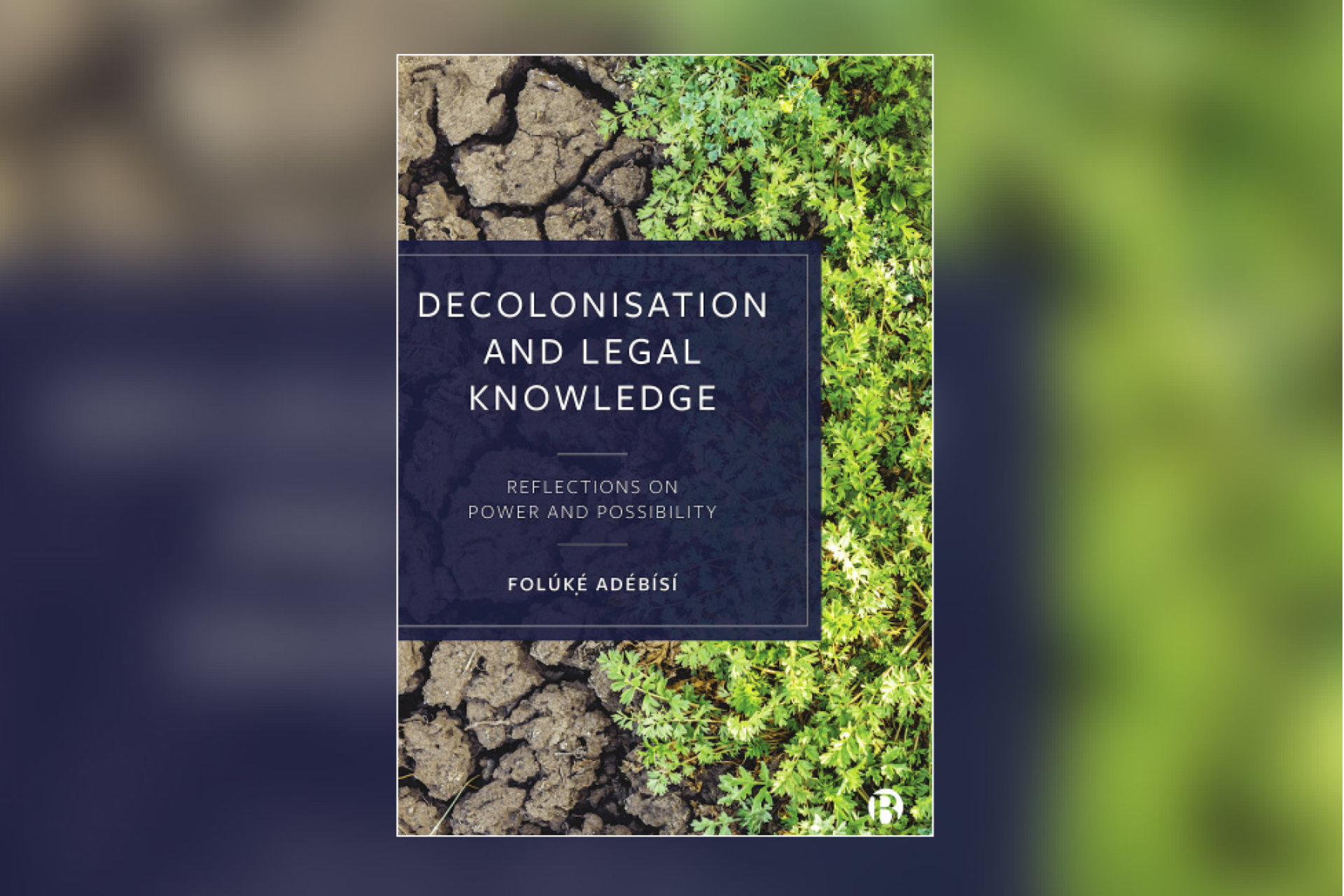
In January the School of Law was fortunate to host the book launch event for Professor Folúkẹ́ Adébísí’s Decolonisation and Legal Knowledge: Reflections on Power and Possibility.
From the publisher:
The law is heavily implicated in creating, maintaining, and reproducing racialised hierarchies which bring about and preserve acute global disparities and injustices. This essential book provides an examination of the meanings of decolonisation and explores how this examination can inform teaching, researching, and practising of law.
It explores the ways in which the foundations of law are entangled in colonial thought and in its [re]production of ideas of commodification of bodies and space-time. Thus, it is an exploration of the ways in which we can use theories and praxes of decolonisation to produce legal knowledge for flourishing futures.
If you’re interested in requesting material like this that you think would be a valuable addition to the Law Library, you can complete the Request A Book (RAB) form. Alternatively if you’re interested in the library securing access to subscriptions or expensive items that you think would benefit teaching or research, contact us by email (law.librarian@ed.ac.uk) to discuss your idea!
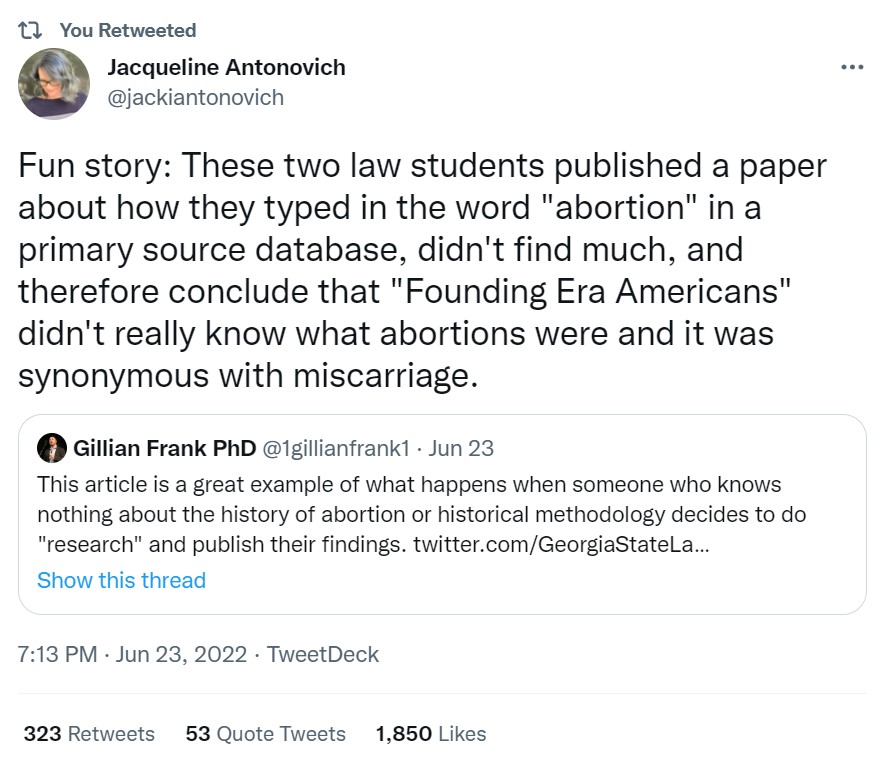
Library and research branches of Twitter were outraged recently when two American Law students published a paper in the Harvard Journal of Law & Public Policy relating to abortion rights. The anger centred around the hypothesis that because the students didn’t find any historical literature relating to the term ‘abortion’ in their searches, that abortions simply didn’t exist in American history.
Aside from there being an entire school of academic research dedicated to the history of birth control rights, you may be wondering ‘what did those students actually do wrong?’ Dr Gillian Frank (@1gillianfrank1) provides some guidance in his tweets:
Fun fact: Just because you don’t find evidence in one database when you type in the word “abortion,” doesn’t mean a practice didn’t exist. Better historical questions are: Am I using the right keywords? Under what conditions could matters relating to abortion be spoken about?
Ronit Stahl (@ronitstahl) agreed:
And from there, ask questions like *Who* would be talking about this? Who would *write* about this? What *kinds* of documents/sources might include mention of this? *Where* might we find those sources? *How* do we think about/interpret silences?
More information about how to critically assess a search like this can be found by reading through Dr Frank’s twitter thread. Twitter can be an excellent tool for sharing resources and promoting discussion. This example is not only relevant because of the current news cycle but also because awareness of the importance of interrogating research methodologies rigorously is crucial if you are to publish well respected pieces of research.
Consider the bias in all your sources.
What power structures led to this work being published?
Who is speaking and why is their viewpoint important?
Who is missing from the conversation?
If there is a solitary viewpoint, why is this one in focus?
Librarians talk about bias quite often when discussing critical information skills with students and staff, because we want to be sure that the inferences you make from your source material are sound and fully considered. The Academic Support Librarian team have recently been working with one of our student interns to produce an online resource to help students to expand their searches and diversify their reading, due to be published this summer. We’ve also been crafting a toolbox to help our academic staff colleagues start conversations about including a wider range of resources in their core reading lists. Watch out for more news of both of these going live on the ASL blog.
In the mean time, if you’re struggling with your research and would like some advice on more robust search methodologies, you can contact the Law Librarians by email: law.librarian@ed.ac.uk, or any of our colleagues from the ASL team using the contact information on the ASL by subject area page. Although classes and exams are finished, we are around all summer so please contact us to make an appointment!