Any views expressed within media held on this service are those of the contributors, should not be taken as approved or endorsed by the University, and do not necessarily reflect the views of the University in respect of any particular issue.
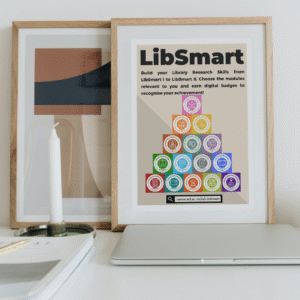
We're very excited to let you know that from this year onwards all students at Undergraduate and Postgraduate level will automatically be enrolled in our LibSmart online information literacy course! If you've not encountered LibSmart before, it's a great way to get to grips with finding and using information available to you via the Library. It's asychronous which means you can dip in and out whenever suits you across the year, and we tend to find people use it either at the start of term when they need to start looking reading material up, or right before they start research for their assignments.
LibSmart I is our foundation level course, helping students get a good baseline in using our library catalogue, searching for reading materials for courses, and understanding the best places to go for help. We also talk about referencing and plagiarism, something students will need to understand at every level of university life.
LibSmart II is a bit more specialised - it takes a subject-specific look at different topics that people find tricky to work with, such as systematic reviews, data mindfulness and digital news sources. We walk you through different types of resource and processes for working with this information, and hopefully leave you feeling confident of where to start with your assignment or research project. We recommend you complete LibSmart I first, but if you're feeling confident and ready to dive in to LibSmart II then you're welcome to start wherever you like!
And if the achievement of completing a module alone doesn't bring you joy, we also award you some lovely digital badges for each module you complete. You can save them and use them as evidence of the self-directed learning you've completed via LibSmart - something that could look very attractive to future employers!
Earn digital badges for every module you complete in LibSmart I and II.
Log in using your UUN (normal university username and password)
On the left hand navigation, select 'Organisations'
Locate LibSmart I: Your Library Research Starts Here (2023/24) from the list, or LibSmart II: Advance your Library Research (2023/24).
Click into the course and start working your way through!
If you would like some further information on LibSmart you can find out more on our LibSmart webpagewhich includes information about the modules available and a look at what previous students have found most useful about the course. Of course if you have any questions please leave us a comment or email us.
From 18 July to 17 August it is South Asian Heritage Month, a chance to celebrate and raise the profile of British South Asian history, arts, culture and heritage. This year's theme is #StoriesToTell, celebrating the stories that make up the diverse and vibrant South Asian community.
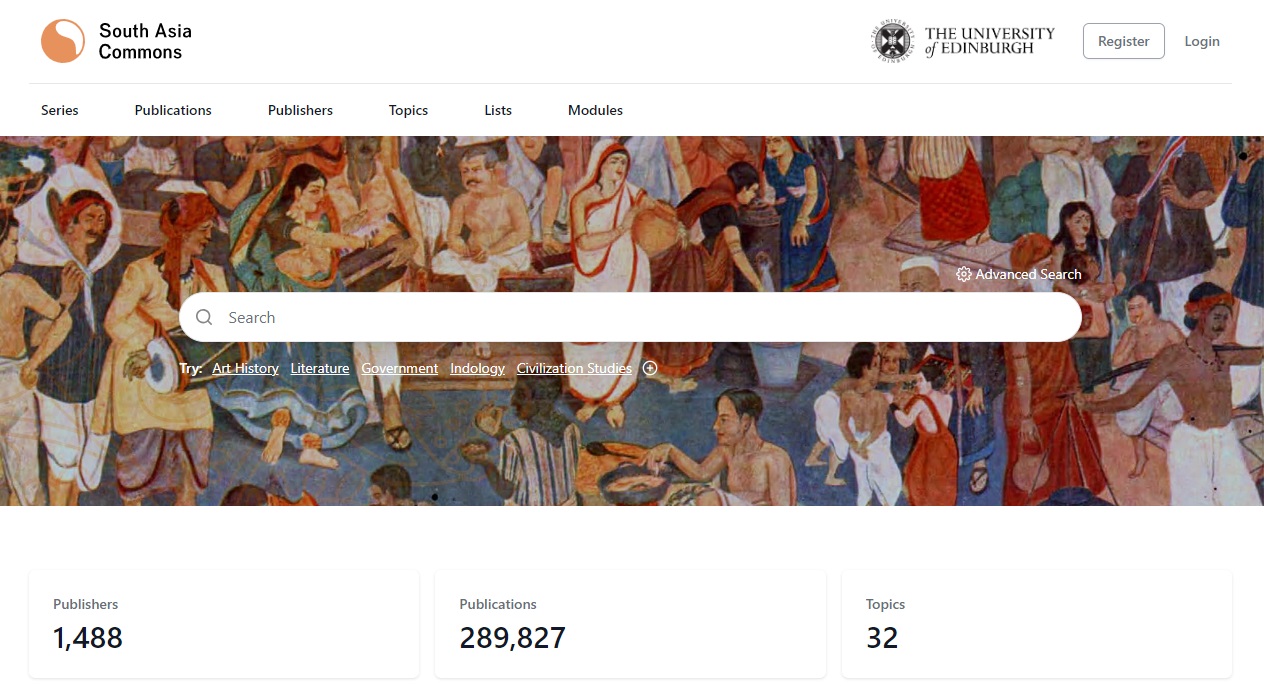
Sometimes, to understand your own story or those of others, you have to look back and in this blog post we are highlighting just a small number of digital archives you can access through the Library that allow you to learn more about South Asian history and the stories that have shaped our present and future.
Although this blog mainly focuses on the work of the ASL team (who are library focused but often work remotely) we realise that many readers may associate this blog with the physical library spaces, so we wanted to highlight a few things happening over the summer in our library buildings.
Summer opening hours: Main Library
The Main Library is now operating on Summer opening hours. This means the following hours of operation apply:
Day
Building
EdHelp Service Desk
Monday - Thursday
24 hour opening
9am - 7:50pm
Friday
24 hour opening
9am - 4:50pm
Saturday
24 hour opening
12 midday - 4:50pm
Sunday
24 hour opening
12 midday - 4:50pm
Please note that this week new gates will be fitted to the Main Library entrance and exit, Café exit gates and the High Use Books exit gates. The works will be carried out between Tuesday 4th July-Thursday 7th, 9:00-5:00pm. You can still access the Main Library, alternate entrances and exits will be clearly marked. You can find out more about this (as well as opening hours for the Centre for Research Collections, Main Library Cafe and links to other information) on the Main Library Opening Hours page.
Summer opening hours: Site libraries
The majority of our site libraries open for reduced hours during the summer. Information can be found on the individual sites listed on the Library Opening Hours page.
The vast majority of our libraries operate from 9am to 4.50pm, Monday to Friday during the summer and are closed at weekends. Exceptions this summer are the Art & Architecture Library and New College Library, which we have detailed below.
Art & Architecture Library
Due to building works in Minto House there is currently an alternative entrance to the Art & Architecture Library. Entering Minto House either via the main reception area or the Maltings entrance, follow the signs downstairs to the temporary library entrance door in the lower ground floor (basement) corridor.
UPDATE: Due to disruption as a result of essential building works within Minto House, it will be necessary to close the Art & Architecture Library between Monday 10th July and Sunday 3rd September. Please email us at library.account@ed.ac.uk for any enquiries or if you urgently require any print resources during this time and we will endeavour to make them available within 2 working days from the Law Library in Old College. Please consult the Art & Architecture Opening Hours page for more information.
New College Library
Due to essential maintenance works all New College Library's current services except for Special Collections were transferred to the temporary library at 40 George Square in 2020. A schedule for the move of New College Library services and collections back to New College Library, Mound Place in 2023 has now been agreed. The main expected dates are :
9 August 2023 : New College Library, 40 George Square closes for General Collections moves.
11 September 2023 : New College Library, Mound Place opens for access to services and collections.
Until 9 August 2023, NCL General Collections and Library services will remain fully available for students in the library at 40 George Square. For more information please see the New College Library page.
We hope this is useful for anyone wishing to visit our lovely libraries over the summer. The ASL team will be available throughout July and August, so please contact us if you have any queries, either by email or by leaving a comment on this post.
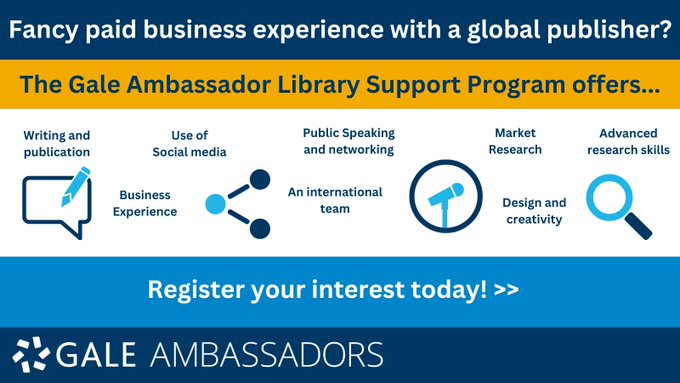
Interested in paid business experience with a global publisher? The Gale Ambassador Library Support Program may be just what you're looking for! The deadline for applications has been extended, so you now have until 13 August 2023 to apply.
Through the Library you have access to a wide range of digital archives and digital primary source databases to help you with your learning and research. ...continue reading "Student job opportunity!"
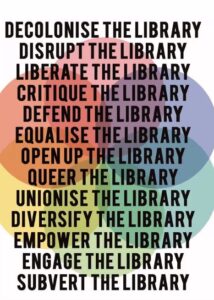
I attended the CALC Conference on 24th and 25th May and can thoroughly recommend this annual event to other professionals interested in critical librarianship. The gathering was welcoming and introduced the day by stating “we will operate within a spirit of liberation at this conference”. If you have not heard of CALC before, their website states that “The Critical Approaches to Libraries Conference aims to provide a space to discuss all aspects of critical practice in libraries and librarianship including (but not limited to) decolonisation, critical pedagogy, equality, diversity and inclusion in library work and the representation of marginalised groups in the workforce, academia and literature.”
The 2 day conference was packed with a diverse range of topics and speakers, so I can only highlight a few here. At the end of the blog post I have included links to further reading.
Some of my key take-aways were:
When designing a support resource for ebook accessibility question your assumptions about students understanding of platforms, and co-design courses with students.
When investigating library ‘decolonisation’ initiatives there is no such thing as “neutral”. Be clear about your positionality and privileges. Find actionable recommendations to solve a problem (move beyond critiquing, to action). Look at Algorithms of Oppression book (on DiscoverEd).
In the Day 1 conference Keynote: Decolonising bibliographies, referencing and citational practices Dr Gurnam Singh shared so many important reflections for where we find ourselves right now, such as:
“Enlightenment belongs to humanity not to Europe!”
“Colonialism is an economic endeavour and is still happening”.
“Critiquing the canon means exposing the othering and silencing of people”.
Dr Singh discussed the various types of colonisation to be aware of such as settler colonisation, extractive colonisation, and plantation colonisation.
(Colonialism is generally classified by one of five overlapping types according to the practice's particular goals and consequences on the subjugated territory and its indigenous peoples. These are: settler colonialism; exploitation colonialism; plantation colonialism; surrogate colonialism; and internal colonialism.)
Dr Singh then went on to compare the fixed hierarchies of arborescent thought versus rhizomatic thought’s interconnected multiplicity and networks of thought, which rejects fixed categories and sees connections and dialogues.
Some of his comments might be challenging to some people, such as “Citation rankings are monetised and racist, and so therefore is the REF [Research Excellence Framework]”. It is true that currently citation rankings perpetuate certain dominant authors and global voices, which position Western discourse as the most “valid” or important. Dr Singh said “When an article has 10 authors you just know its gaming the citation rankings – its fraud. The publishing industry is colonial – it’s based on colonial attitudes.”
“Decoloniality is about building a new humanity not going back to a “purer” time. This isn’t a specialist subject, its about being human. Maybe AI could release us to be humans and not robots?”
Other topics covered by other speakers included multilingualism in public libraries; using reflective practices to extend the impact of teaching in libraries; developing collaborative cataloguing codes of ethics; setting up Library Decol Working Groups in academic libraries; exploring working class roots of library staff and their experiences in the mostly middle class populations of HE library staff; being a neurodivergent librarian in HE; using critical race theory in medical curriculum decolonisation work; and using the Homosaurus for cataloguing in a public library consortium.
We were encouraged to develop the attitude that everybody brings something to the workplace – a richness of their own, rather than making assumptions about the limitations of people based on their assumed backgrounds, identities, or experiences of “othering”.
I can thoroughly recommend attending this very affordable and welcoming conference!
The summer vacation period officially started this week! And while many of you are probably thinking the last thing you want to do is use the Library over the summer break, there will be a large number of students who will need to (or just want to) use the Library during the summer vacation period to continue with their studies or research.
So if you are one of the many who is planning on using Library facilities or services over the summer then read on. And for those of you who are not planning on doing this, we'd recommend you read on anyway (particularly if you have not returned books you have borrowed from the Library).
1) The Main Library and all our site libraries remain open throughout the summer vacation period.
Everybody’s talking about AI and Chat GPT – what will they mean? I attended an event on 20.4.2023 organised by the Information School Sheffield University which explored this question for libraries.
Dr Andrew Cox introduced the session, reminding us that chatbots & AI have featured heavily in the news recently, and of course have existed in scifi for some time.
What might AI look like in the library?
From what we’ve learnt about AI it will have a wide and deep impact on library service and backend operations and library information literacy. We’ll see new features like library chatbots, text and datamining support and automation of systematic reviews. Knowledge discovery of collections will change, with a new paradigm of search : instead of giving a list of results, ChatGPT will give an answer. Users expectations of what a search looks like will change dramatically. There may be an impact on library jobs (although the decline of the librarian has been forecast for many years since the arrival of the internet, and librarians have evolved and thrived). Changes to the workforce will probably be complex and driven by sector.
Fundamentally we should remember that AI is only as good as the data it relies upon. Our library expertise in finding and managing data in a complex information landscape, and in determining the provenance and quality of data remains key. Also, libraries’ work in supporting sharing, openness and interoperability of data is vital as this data becomes available for AI to use.
*The Library now has full 1 year access (until 30 Sept 2024) to BFI Player via a deal with JISC. You can access it from our Databases A-Z list, Film Studies databases list, Video Resources A-Z and DiscoverEd. Note if you already had a BFI Player account linked to our pilot subscription before 1 Oct 2023, you will need to relink your account following instructions given at the above access points.*
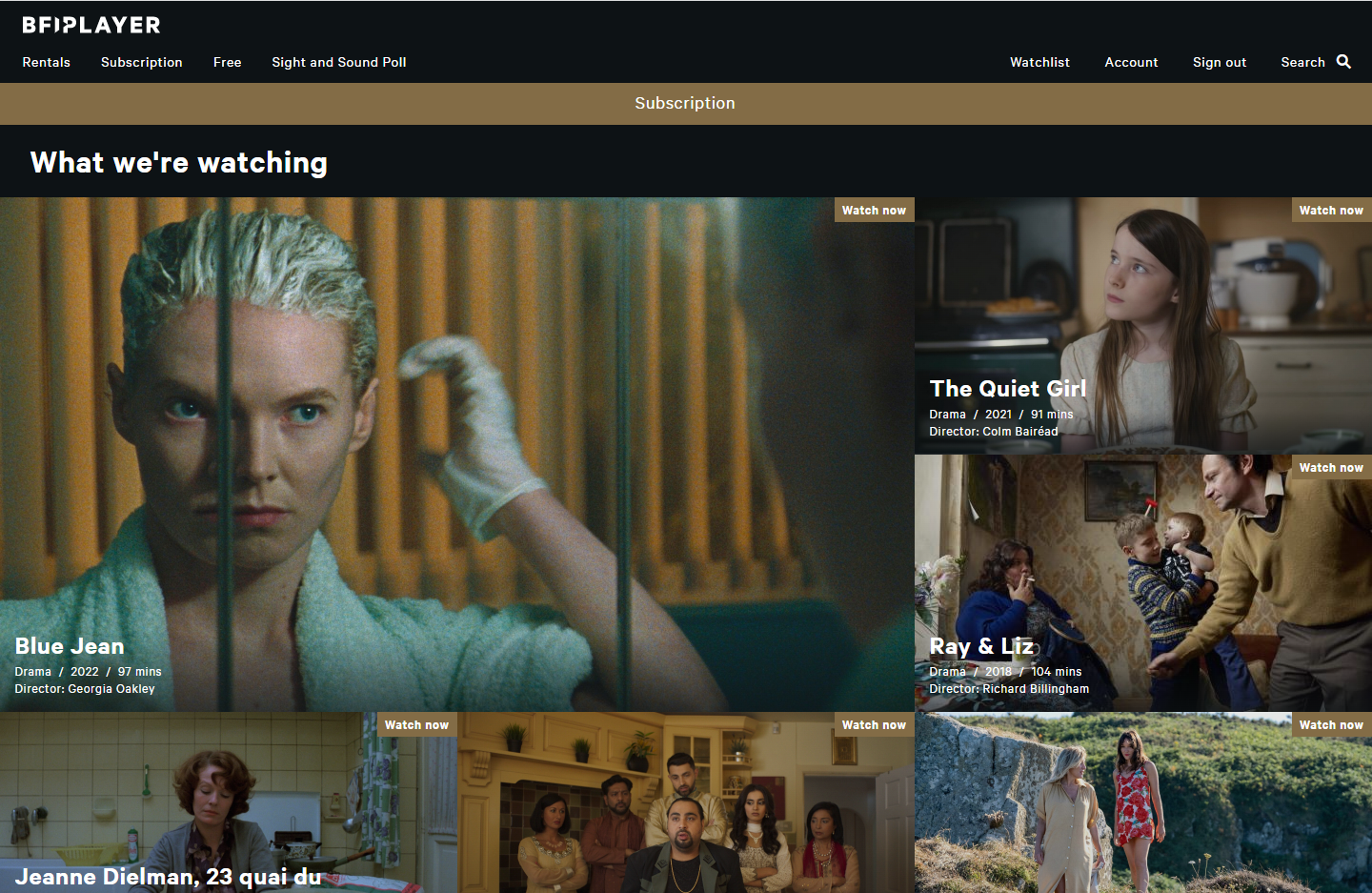
We are happy to let you know that the Library has a pilot subscription to the fabulous BFI Player, a video on demand service from the British Film Institute (BFI). Access is available to us until the end of August 2023.
BFI Player streams acclaimed, landmark and archived films. Reflecting the BFI’s wider cultural mission the focus is on British and European independent films but it does also include international releases. And it allows you to access classic and cult films from across the decades. ...continue reading "New to the Library: BFI Player"
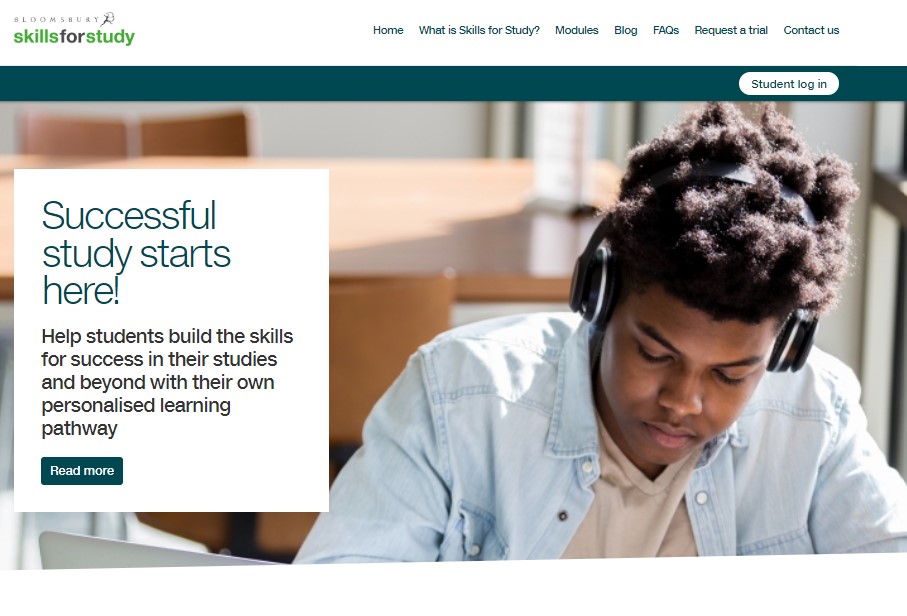
As we're midway through the second semester, many eyes are turning to assignments and thinking ahead to final exams. Did you know that we've recently secured a trial of the interactive resource Skills for Study?
Based on the bestselling The Study Skills Handbook by Stella Cottrell, Skills for Study offers an interactive and personalised solution to help students hone their academic skills while developing skills required by employers:
Confidence with Numbers
Getting Ready for Academic Study
Referencing and Understanding Plagiarism
Critical Thinking Skills
Group Work and Presentations
Research Principles
Employability and Personal Development
Projects, Dissertations and Reports
Time Management
Exam Skills
Reading and Note-making
Writing Skills
Each of the modules comes complete with exercises, activities, and module assessments along with supplementary videos, articles and blogs. We know how popular the Study Skills Handbook is for students from a range of disciplines, so here's how to access this interactive resource:
That's it, it's that easy! More information about the trial is available on the E-Resources trials page. Our trial ends on the 24th April so have a good look before then, and if you want to offer any comments on this or any of our other E-Resource trials then please consider filling in the trial feedback form.
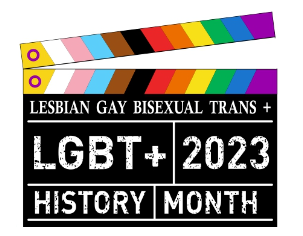
February is LGBT+ History Month and this year's theme is #BehindThe Lens. This aims to celebrate "LGBT+ peoples’ contribution to cinema and film from behind the lens. Directors, cinematographers, screen writers, producers, animators, costume designers, special effects, make up artists, lighting directors, musicians, choreographers and beyond." (LGBT+ History Month, 2023)
To help you learn more we've pulled together just a small selection of Library resources that will allow you to start to look 'Behind the Lens'.
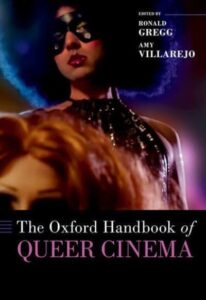
Why not start with The Oxford handbook of queer cinema as an introduction. This hefty tome covers a wide variety of topics including silent and classical Hollywood films, European and American independent and art films, post-Stonewall and New Queer Cinema, global queer cinema and new queer voices and forms.

 Opening hours and staffed hours will be reduced in many libraries so check the
 Why not start with