
Any views expressed within media held on this service are those of the contributors, should not be taken as approved or endorsed by the University, and do not necessarily reflect the views of the University in respect of any particular issue.
Skip to content

Feeling the pressure of exams creeping up? It’s easy to get caught in a cycle of nonstop study that leaves you stressed and burnt out. But luckily your library has a treasure trove of resources designed to help you relax, recharge, and maintain your wellbeing during this intense period. From our specially curated Wellbeing Collection and the Leisure Reading Collection available through Libby, to streaming platforms offering movies, TV shows, theatre performances, and music, there are plenty of ways to take a meaningful break and refresh your mind.

Library Wellbeing Collection

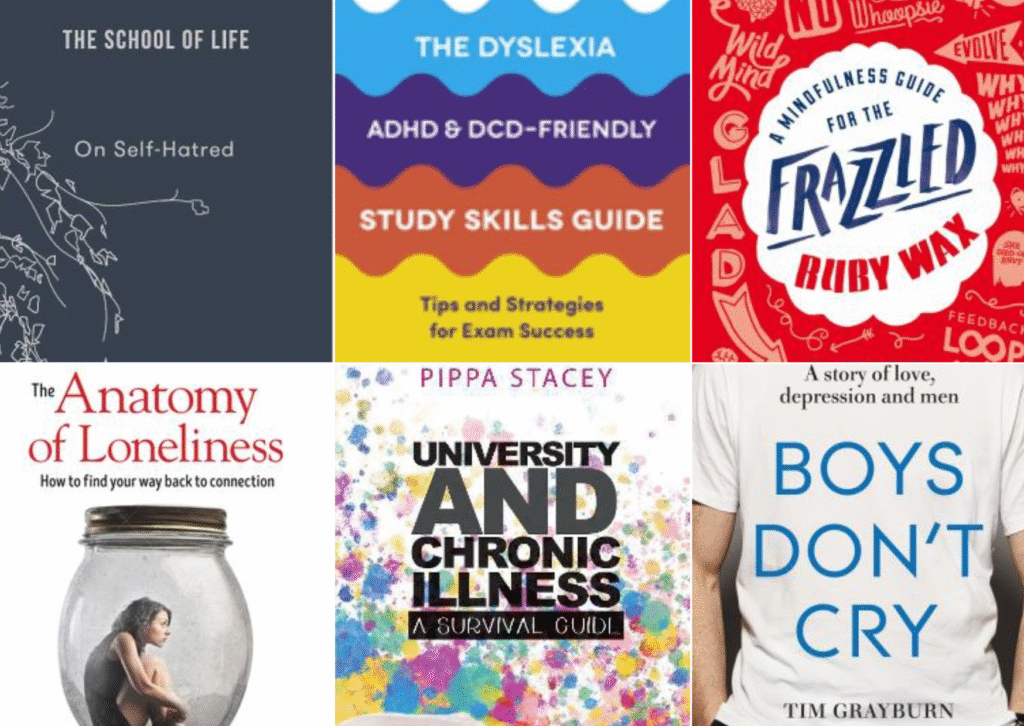
Collage of 6 book covers from titles in the Wellbeing Collection.

Did you know the Library has a Wellbeing Collection? A mix of online and print resources covering all aspects of wellbeing, purchased specifically with you in mind. In the collection you will find books on dealing with depression, anxiety and eco-anxiety, loneliness, self-esteem issues, relationships, as well as books on more general wellbeing, happiness and University life, amongst many others. ...continue reading "Beat exam burnout: Library resources to help you relax and recharge"

Semester one is almost over and exams are looming! As the exam period approaches, it’s natural to start feeling the pressure build. But remember, you’re not alone!

At the University of Edinburgh, there are plenty of resources and services designed to support you every step of the way. In this post, we’ll highlight five key ways the library can help – from available study spaces and digital resources to helpful guides and wellbeing support – so you can make the most of your revision and head into exams feeling confident and prepared.

1) Study space, study space everywhere but not a place to sit?

A collage showing different library interiors: a large historic reading room with stained glass windows and wooden desks; a modern library aisle with bookshelves and a person working at a desk by a window; a quiet study area with tables and chairs; and a group study space with students working together.
Clockwise from left: New College Library, ECA Library, Noreen and Kenneth Murray Library, and Moray House Library.

It can feel like this sometimes during the revision and exam period, particularly if you are a regular at the Main Library or Law Library. But there are lots of study spaces across our campuses that you have access to, including some temporary additional study space during the exam period.

While the Main Library is a favourite for many, there are 8 other site libraries that you have access to (with your student card). These range from old-fashioned, picturesque libraries, to modern libraries with light and space and also include a library in what used to be a swimming pool.

Locations and opening hours of our libraries ...continue reading "5 things: supporting you in your exams"

At the University Library you have access to a huge range of material for your research and learning including over 2 million books, archives, instruments and artworks, over 2 million e-books and 330,000 e-journals, as well as 1000s of streaming videos, digital scans, databases, and more.

Text: How To Library

But when you are doing your own research there will be times you come across items or material that our Library does not have in its collections. Don't panic! There are options available to help you get what you need. ...continue reading "What to do when the Library doesn’t have what you need?"

In February we celebrate LGBT+ History Month 2025 in the UK and this year the theme is 'Activism and Social Change'. Throughout history and across the globe LGBT+ activists have fueled social change, advancing society for the benefit of all.

To help you discover more we’ve pulled together just a small selection of Library resources that will allow you to start to find out more about activism and social change in LGBT+ history, herstory, theirstory.

1) Books (we are a library after all!)
2) Digital archives and primary sources
3) LGBT collections at Lothian Health Services Archive
4) Dissertation & Thesis Festival Discovery Day : Exploring LGBTQ+ History

Books (we are a library after all!)

The International Gay and Lesbian Human Rights Commission (IGLHRC) was founded in 1990 as the first NGO devoted to advancing LGBT human rights worldwide. Transnational LGBT Activism : Working for Sexual Rights Worldwide asks how is that mission translated into practice? And what do transnational LGBT human rights advocates do on a day-to-day basis and for whom? Arguing that the idea of LGBT human rights is not predetermined but instead is defined by international activists who establish what and who qualifies for protection. ...continue reading "Activism and Social Change in LGBT+ History"

One of the most important things you will need to know how to do when starting out at university is understanding academic references. Here’s a simple guide to help you decode book and journal (periodical) references.

Text: How To LibraryHow to interpret a reference for a book

Example book reference:

Olusoga, D. (2017) Black and British: a forgotten history. London: Pan Books.

  1. Author(s): The first part of the reference is the author’s name. In this case, “Olusoga, D.” indicates the author is David Olusoga. If there are multiple authors, they will be listed in the order they appear on the book itself.
  2. Year of Publication: The year the book was published is in brackets. Here, it’s “2017”.
  3. Title of the Book: The title of the book is italicized. In this example, it’s “Black and British: a forgotten history”. Only the first word of the title and any proper nouns are capitalized.
  4. Place of Publication: This is the city where the publisher is located. In this case, London.
  5. Publisher: The name of the publishing company. Here, it’s “Pan Books”.

...continue reading "How to interpret a reference for a book or journal article"

Welcome, and welcome back, to all students starting the new academic year this week!

Whether you are one of the many descending on campus or one of our online or distance learners logging in from across the globe, we hope you make full use of our library resources, services and facilities while you are at the University.

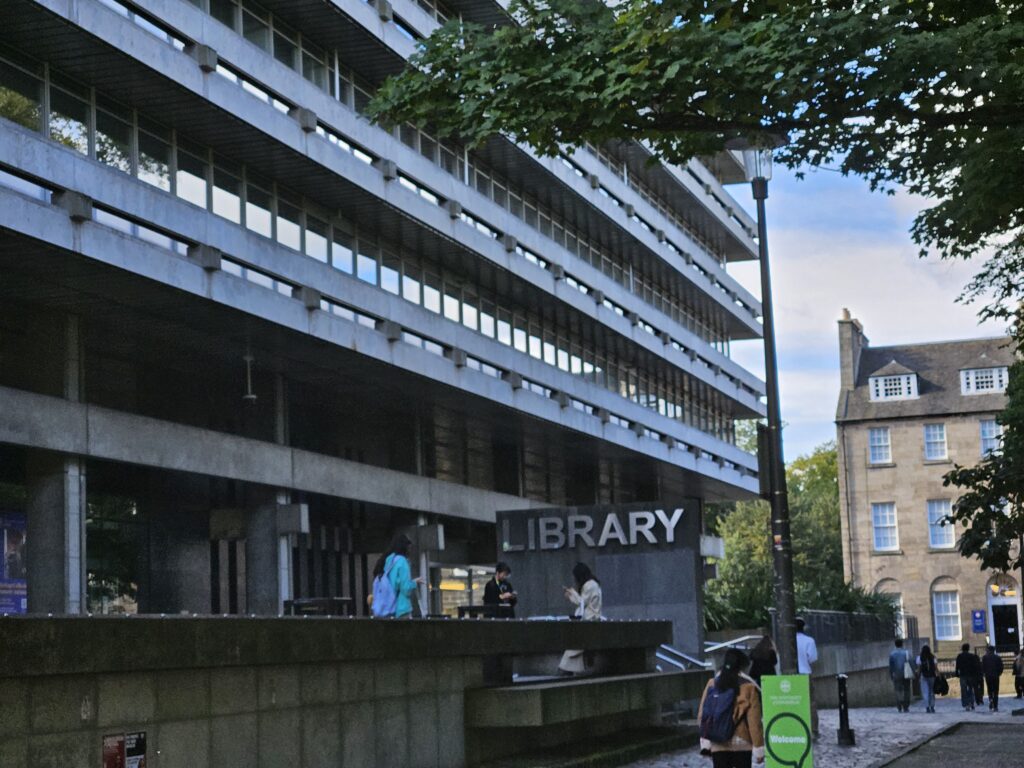
Photograph of the front of the Main Library building showing the Library sign and students outside.
Main Library

Our newly refreshed Library website has everything you need to know about the Library, while our Library subject guides help you find the resources you may need for your subject area.

But here are 5 things to help you get the best out of our (or your) library in 2024-25. ...continue reading "5 things: getting the best out of your library"

It's officially the summer vacation period at the University and our libraries remain open for business. So whether you are planning on using Library resources, facilities or services during this time or if you will be away from Edinburgh for the summer and want to forget about University as much as possible, here are five important things to remember about the Library over the summer period.

Clockwise from top left, photographs of Main Library (external), Moray House Library (internal), Law Library (internal), Noreen and Keneth Murray Library (external) and Royal Infirmary Library (internal). With an "Open" sign on top.

1) The Main Library and all 9 site libraries remain open throughout the summer vacation period.

Opening hours and staffed hours will be reduced in many libraries so check the opening hours website before you visit and follow the Library on social media for any updates – Instagram, Twitter/X, Facebook.

The Main Library will continue to be open 24/7 throughout the summer but EdHelp staffed hours will be slightly reduced between Friday 7 June and Friday 6 September 2024. ...continue reading "5 things: using the Library over the summer"

The summer vacation period officially started this week! And while many of you are probably thinking the last thing you want to do is use the Library over the summer break, there will be a large number of students who will need to (or just want to) use the Library during the summer vacation period to continue with their studies or research.

So if you are one of the many who is planning on using Library facilities or services over the summer then read on. And for those of you who are not planning on doing this, we'd recommend you read on anyway (particularly if you have not returned books you have borrowed from the Library).

1) The Main Library and all our site libraries remain open throughout the summer vacation period.

Opening hours and staffed hours will be reduced in many libraries so check the opening hours website before you visit and follow the Library on social media for any updates - Instagram, Twitter, Facebook. ...continue reading "5 things to remember if using the Library this summer"

Photo: Paul Dodds

Everyone's noticing the cost of living at the moment. And when you're a student juggling your studies with a job, time is money. Here's ten tips to help save money and time by using the library.

...continue reading "Ten ways students can save money and time by using the library"

1

LibSmart I is designed to give you an introduction to library resources for your study and research! The course enables you to take control of your learning as you self-enrol (click here to find out how) and choose the modules you cover. I personally love the flexibility of the course as you can recall the information provided by LibSmart easily on Learn.

Image of Students studying in the library.
Students studying in the library [Paul Dodds copyright of the University of Edinburgh]

So what does LibSmart I review? 

In short, by completing LibSmart I you will develop your information literacy skills and understand what library support is available to you. For a more detailed overview keep reading or better yet check out the course for yourself!

A brief overview of LibSmart I and its learning objectives 

Within the LibSmart I course there are five modules that cover key areas:

  • Introduction to using the library
  • Your information landscape
  • Finding and retrieving information
  • Managing information
  • Referencing and avoiding plagiarism

LibSmart I banner

With each topic, you will gain the confidence and knowledge to effectively research and use resources provided by the Library. My favourite module would be “Finding and retrieval”, I found the tips on research strategy construction and explanation to Boolean operators have been extremely useful when exploring a topic area. 

The course has clear goals that you can use to guide your learning and ensure you are finding the support you need. There are also activities and reflective quizzes to help you consolidate your learning to discover the subject matter you need. When you've completed the course you'll also be awarded a Digital Badge, which you can use to show off your newfound expertise. 

Ready to get started?

Visit the LibSmart webpage to find out more about how to self-enrol for this course. If you've completed LibSmart I, you also read more about how to build on these skills with the next level of research support in LibSmart II!

If you have any questions or concerns about LibSmart you can contact us via the EdHelp portal.

css.php

Report this page

To report inappropriate content on this page, please use the form below. Upon receiving your report, we will be in touch as per the Take Down Policy of the service.

Please note that personal data collected through this form is used and stored for the purposes of processing this report and communication with you.

If you are unable to report a concern about content via this form please contact the Service Owner.

Please enter an email address you wish to be contacted on. Please describe the unacceptable content in sufficient detail to allow us to locate it, and why you consider it to be unacceptable.
By submitting this report, you accept that it is accurate and that fraudulent or nuisance complaints may result in action by the University.

  Cancel