Any views expressed within media held on this service are those of the contributors, should not be taken as approved or endorsed by the University, and do not necessarily reflect the views of the University in respect of any particular issue.
We are happy to let you know that the Library has a subscription to Osmosis, a health education platform of 1,800 animated videos and 22,000 integrated practice questions, covering subjects including basic science, physiology, medicine and more.
You can access Osmosis from our list of Databases, where you will find information about registering and the access links.
Osmosis is also included in the list of Databases for Medicine, along with other useful tools and databases for your learning and research.
The subscription is a result of the extensive feedback we received to our trial of Osmosis - thank you for letting us know what you think of this resource! The Library regularly arranges trials to new resources. Publishers are usually willing to provide trial access to allow us to use and evaluate a resource before making a decision about purchase. You can see current e-resource trials on the Library website.
Between 25-27 March a host of librarians from across the globe descended on Leeds Beckett University for the annual LILAC information literacy conference. Information literacy is a key concept in the work of the Academic Support Librarians, covering all the skills that we teach, from referencing through to critical thinking. Here are our key takeaways from three days of keynotes, workshops, and poster presentations.
AI, AI, and more AI
As you might imagine AI featured heavily across the conference. The keynote on the first day was framed as a Q&A between the audience and four information professionals on the topic “Artificial Intelligence and Information Literacy: Seismic Shift or Passing Fad?”. The discussion brought up some interesting ideas, including:
AI as a chance for us to take information literacy teaching to a new level, as the bias within AI generated content and training data is the same biases present in the literary canon and the majority of academic and scientific content. It's the same challenges but at a greater amount/speed and possibly people are more aware of it.
We need to be aware of the "hype cycle" of AI adoption, acknowledge that we are all learning together about AI, and be more comfortable living in a messy world and working with others to find a way forward – we need to be able to adapt and apply the skills we learn to new things and we can apply the principles of information literacy to this new technology.
AI can only be a great leveller if everyone is digitally literate. Should libraries subscribe to AI models to increase access for all students?
It’s important to consider the context in which AI is being used and the existing digital skills of the students and staff using it. It may be necessary to establish a foundation of digital literacy skills first and then layer additional skills building up to using AI. Also, there may be significant disciplinary differences in ways of using AI, so support and guidance may need to be tailored.
In response to a question about the potential of AI to disrupt traditional research practices, the power of AI to make sense of unstructured research data, e.g., transcribing audio data, translation and providing metadata summaries, was mentioned, along with the need to open up support structures in universities to enable AI specialists to train researchers. A good question to ask yourself: Are you using AI to help you work better or using it to cut corners? This is a key question (although not the only one) when considering whether use of AI is cheating or not.
Additional sessions on the first day also focussed on AI and information literacy and libraries. We heard from Emily Dott and Terry Charlton from the Library and the Learning and Teaching Development Service at Newcastle University who presented their work in developing the University’s approach to AI literacy. They spoke about the institutional AI journey over 2022 to 2024, including: growing awareness about the potential impact of AI on education; the launch of guidance resources; developing and running workshops; editing their existing information literacy framework to align with AI literacy; launching new resources; and planning future developments. They highlighted Newcastle’s principle-led approach to AI and work on developing collaborative models for working with academic staff and students and defining AI literacy alongside IL literacy. Guidance and learning materials for students and academic colleagues were also showcased, including the AI and Your Learning website and AI for Learning Canvas course.
Erin Nephin from Leeds Beckett University gave an overview of the Library Academic Team’s work over the last year in playing a key role in developing the University’s guidance and principles on AI. Erin outlined how the team have updated their academic integrity module and referencing guidance and developed sessions for professional services and academic staff. The collaborative nature of this work with colleagues in Academic Quality Enhancement, Academic Integrity Leads, the Centre for Teaching and Learning, Library and Student Services, and the Students’ Union Advice Services was emphasised.
Erin highlighted the University’s pragmatic view of AI technologies as here to stay and needing a user education that focusses on ethical and responsible use. The focus of information literacy (IL) teaching at Leeds Beckett is very much on how AI tools work, particularly in information IL contexts such as misinformation, privacy/IP, and ethics, rather than how to use them. The success of teaching and guidance has been largely measured through post-session feedback. Key impacts of the work so far have been in incorporating IL more overtly into all teaching sessions and materials, improving staff understanding of IL and AI, information sharing, and building collaborations. Erin also recommended several sources of support, including the JISC National Centre for AI, ALDinHE AI Forum and Community of Practice, ILFA AI Special Interest Group, and AI4LAM community. On the Tuesday we had a keynote from the inspiring Maha Bali. She focused on critical AI literacy and what this might look like. For her, critical AI literacy will also be contextual, differing depending on the student, the discipline, the location etc. That said, her basic model argues that everyone should:
Understand how it works
Asses appropriate use
Craft effective prompts
Recognize inequalities and biases
Examine ethical issues
She provided lots of links and resources to investigate further but we will definitely be incorporating some of her ideas into the teaching we do around use of generative AI in HE. A commitment to Open Educational Resources and sharing of material was also prevalent throughout the conference (and the librarian community more generally). For example, instructional designers from Ohio State University shared details of their online course around AI and information literacy, particularly how they used scaffolded assignments, and we will be considering how we can deliver something similar.
Topics other than AI still exist
Despite the prevalence of AI, there were plenty of sessions on other topics. Examples include a discussion of information literacy links with employability and how this can help encourage engagement, consideration of how we could deliver more staff-focused training on information literacy and using an informed learning design model for teaching. There were also some interesting talks about new-to-me research methods, such as photovoice and narrative inquiry, which can be used to understand individual’s experiences in a more experiential way.
A really interesting talk from the final day related to encouraging help-seeking behaviour at the same time as supporting students through transition periods at university. Beth Black of Ohio State University talked about the creation of an innovative online course aimed at new undergraduate students. The course uses scenarios based on the real experiences of other students to help students understand the support available, to encourage them to access it, and also to help them see that they are not alone in the issues they face. When they analysed retention rates, they saw that students who had completed this course were more like to stay on at university, showing the value of this approach for students and the university.
If you would like to see the slides from this and previous year’s conference, they are available on the LILAC Slideshare account.
I'm happy to let you know that the Library currently has extended trial access to AM Explorer, your gateway to millions of pages of primary source content. AM’s collections provide access to digitised historical materials – manuscripts, government records, rare books, maps and more – across a wide range of disciplines, from History to English Literature, Gender Studies, Sociology, Economics, Area Studies, Political Sciences and more.
While the Library already has permanent access to 21 collections from AM (listed at end) this trial access to AM Explorer gives us access to a further 66 collections covering world history from the 15th century up to modern times.
AM Explorer allows you to search through all 87 collections at one time. You can use their search to explore through a single keyword search; take a deep dive into your areas of interest; and discover new archival materials to serve your research, learning and teaching. ...continue reading "AM Explorer – your primary source hub (trial access)"
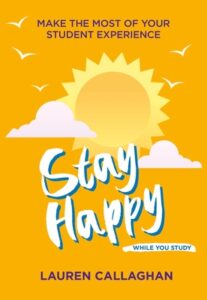
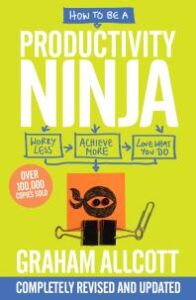
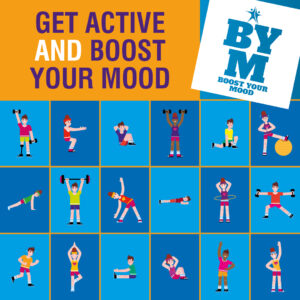
Looking for ways to look after yourself during your studies and exams? The Library’s new Wellbeing Collection provides resources on all aspects of wellbeing, including but not limited to anxiety, exercise, general wellbeing, happiness, relationships, sleeping well and University life.
The collection of books and e-books is available to borrow for all students and staff. In this blog post we highlight just a few of the e-books available in the collection.
To launch our new collection we have a display of Wellbeing Collection books in the Main Library (30 George Square) which is in place until the end of May 2024. In the two weeks since the display was put in place 66 items have already been borrowed!
Wellbeing Collection books on display in the Main Library
What does the Wellbeing Collection cover?
Here we highlight some example e-books from the collection on a few different themes that you might wish to explore:
University life
It’s normal to feel nervous before an exam or overwhelmed with your workload sometimes, but it's important not to let anxiety or stress have a negative impact on your performance.
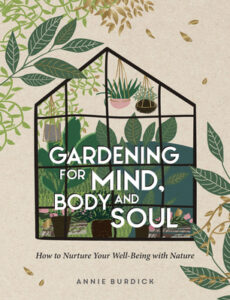
Exposure to nature has been shown to have a positive impact on physical health and cognitive function. Spring has sprung in Edinburgh, so now’s the perfect time to get out into nature.
You can read more about using the Library for wellbeing and leisure on our subject guide.
The Wellbeing Collection is managed by a team including Library staff, University Student Wellbeing Advisers and the EUSA Student Opportunities Representative (Wellbeing).
The University of Edinburgh hosted the Association of British Theological and Philosophical Libraries conference this year at New College on 21-23 March. As usual there was the opportunity for discovering fascinating and historic libraries, including (of course) New College Library, the National Museum of Library of Scotland and the Signet Library.
Computer17293866, CC BY-SA 4.0 <https://creativecommons.org/licenses/by-sa/4.0>, via Wikimedia Commons
A key focus this year was Artificial Intelligence or AI, and Prof Nigel Crook from Oxford Brookes University opened the conference, speaking about ‘Generative AI and the Chatbot revolution’, and concluding that while he didn’t predict a future like the one in the Terminator, this couldn’t entirely be ruled out. 😊 Following this was Professor Paul Gooding from the University of Glasgow, with an engaging talk on ‘Applying AI to Library Collections’. He identified a key challenge for libraries as being the control of AI development by a handful of technology firms – the forces driving AI tools are not situated in the library sector. How can libraries play a part in AI innovation? ...continue reading "AI, Theological Libraries … and me"
When the Academic Support Librarians provide help for students and researchers who are conducting large-scale reviews, such as systematic and scoping reviews, we find that often the same questions will come up. This blog post aims to answer five of your frequently asked questions about systematic reviews and provide some useful resources for you to explore further.
According to the Cochrane Collaboration, a leading group in the production of evidence synthesis and systematic reviews;
systematic reviews are large syntheses of evidence, which use rigorous and reproducible methods, with a view to minimise bias, to identify all known data on a specific research question.1
This is done by a large, complex literature search in databases and other sources, using multiple search terms and search techniques.
Traditional literature reviews, such as the literature review chapter in a dissertation, don’t usually apply the same rigour in their methods because, unlike systematic reviews, synthesise all known data on a topic. Literature reviews can provide context or background information for a new piece of research, or can stand alone as a general guide to what is already known about a particular topic2.
What about scoping reviews?
There are other review types in the systematic review “family”3. You may have also heard of scoping reviews. These are similar to systematic reviews, in that they employ transparent reporting of reproducible methods and synthesise evidence, but they do so in order to identify knowledge gaps, scope a body of literature, clarify concepts or to investigate research conduct4. Literature searching for scoping reviews will be similarly comprehensive, but may be more iterative than in systematic reviews.
Choosing appropriate databases in which to search is important, as it determines the comprehensiveness of your review. Using multiple databases means you are searching across a wider breadth of literature, as different databases will index different journals.
To get an idea which databases are best suited to yield the data you need, you can also look at published systematic reviews on similar topics to yours, to see which databases those authors used.
The number of databases you use to search will vary depending on the research query, but it is important to use multiple databases to mitigate database bias and publication bias. More important than the number of databases is using the appropriate databases for the subject to find all the relevant data.
You may have read that you should include grey literature in your sources of data for your review.
The term 'grey literature' refers to a wide range of information which is not formally or commercially published, and which is often not well represented in library research databases.
Using grey literature will help you to find current and emerging research, to broaden your research, and to mitigate against publication bias.
Sources and types of grey literature will vary between research topics. Some examples include:
Another useful approach is using a domain search in Google to search within the websites of key organisations or professional bodies in your subject. For example, searching site: followed by a domain in Google:
site:who.int will search within the WHO website.
site:gov.uk will search only websites with a url that ends .gov.uk
You may have heard that you need to ‘translate’ your search. This simply means taking the search you have developed in the database and optimising it to work best in a different database.
The way you tell a database to search for a term in the title of the record, or the command for searching for terms in close proximity to each other, will be different between databases and platforms.
For example, in the medical literature database Ovid Medline, the search for a subject heading on gestational diabetes is Diabetes, Gestational/ whereas the nursing database EbscoHost CINAHL uses MH "Diabetes Mellitus, Gestational". Both the syntax that refers to a subject heading needs to be translated (/ to MH) and the subject heading itself is different (Diabetes, Gestational to Diabetes Mellitus, Gestational).
You can practice translating a search in the Learn course LibSmart II in the module on Literature Searching for Systematic Reviews. We also have a Library Bitesize session on translating literature search strategies across databases coming up in April.
Useful resources:
Polyglot search tool: A tool for translating search strings across multiple databases.
We do! The Learn course LibSmart II: Advance Your Library Research has a whole module on Literature Searching for Systematic Reviews. LibSmart II can be found in Essentials in Learn. If you don’t see it there, contact your Academic Support Librarian and we’ll get you enrolled.
For self-paced training on the whole process of conducting a systematic review, Cochrane Interactive Learning has modules created by methods experts so you build your knowledge one step at a time. Perfect for what can be an overwhelming research method.
If you are a student conducting a systematic review, we can highly recommend the book Doing a Systematic Review (2023). With a friendly, accessible style, the book covers every step of the systematic review process, from planning to dissemination.
-----
The FAQs in this post are taken from the library subject guide on Systematic Review Guidance where you can find even more information and advice about conducting large-scale literature reviews.
You can contact your Academic Support Librarian for advice on literature searching, using databases, and managing the literature you find.
-----
References
Higgins, J., et al., Cochrane Handbook for Systematic Reviews of Interventions version 6.4 (updated August 2023). 2023, Cochrane.
Sutton, A., et al., Meeting the review family: exploring review types and associated information retrieval requirements. Health Information & Libraries Journal, 2019. 36(3): p. 202-222.
Munn, Z., et al., Systematic review or scoping review? Guidance for authors when choosing between a systematic or scoping review approach. BMC Med Res Methodol, 2018. 18(1): p. 143.
We're in the midst of gathering feedback about Resource List use in each of our colleges and would like to invite our students to get involved in two short focus groups that will help us shape our approach to lists in the future.
We have planned groups for the following schools:
Geosciences: Thursday 28 March 10am to 12pm
Law: Wednesday 17th April 2pm to 4pm
Both groups will take place in Central Edinburgh so if you're a student from one of these schools and available at these times, please email our project manager Karen to register your interest.
Tea, coffee and cake will be provided and participants will receive a £10 gift card for Blackwells, which can be used to purchase any of their worldly goods (including books, games, stationery and much more!).
There are eight spaces available in each group. All feedback will be used to inform the development of lists within the school and responses will be anonymised.
If you have any questions about the process please contact Karen Stirling by email.
(NOTE: Law group date changed from 26th March to 17th April to gather more participants.)
February isLGBT+ History Monthand this year’s theme is #UnderTheScope. This celebrates LGBT+ peoples’ contribution to the field of Medicine and Healthcare both historically and today.
To help you learn more we’ve pulled together just a small selection of Library resources that will allow you to start to look ‘Under the Scope’.
Books
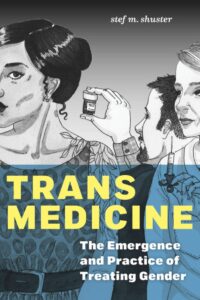
For a rich examination of the history of trans medicine and current day practice, Trans Medicine: The Emergence and Practice of Treating Gender draws on interviews with medical providers as well as ethnographic and archival research to examine how health professionals approach patients who seek gender-affirming care. The essays in Queer Interventions in Biomedicine and Public Health historicise and theorise diagnosis, particularly diagnosis that impacts trans health and sexuality, queer health and identity, and sexually transmitted diseases such as HIV/AIDS.
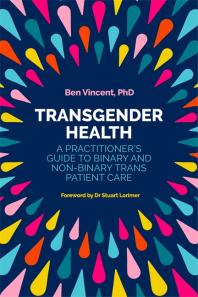
#UnderTheScope also aims to shine a light on the health inequalities facing LGBT people even today. Transgender health: a practitioner's guide to binary and non-binary trans patient careshows healthcare and medical practitioners how to deliver excellent care to gender diverse patients. Based on cutting edge research and the lived experience of the author as a non-binary person, this is essential reading for all those working to meet the needs of transgender people in healthcare settings. The remedy: queer and trans voices on health and health care invites readers to imagine what we need to create healthy, and thriving LGBT+ communities in this anthology of real-life stories from queer and trans people on their own health-care experiences and challenges.
LGBT collections at Lothian Health Services Archive
Some of the LGBT-related resources held by Lothian Health Services Archive (LHSA) include the archive of Lothian Gay and Lesbian Switchboard, the UK’s first gay helpline and Scotland’s first gay charity, and unrivaled collections that document Edinburgh’s response to HIV from 1983 to the 21st century, spanning voluntary groups, charities, local authorities, the NHS, and health promotion campaigns.
LHSA is part of the University’s Heritage Collections and holds the historically important local records of NHS hospitals and other health-related material. For information about visiting please read the information on Services and Access.
More resources to look Under the Scope
If you want to further explore LGBT+ peoples’ contribution to medicine and healthcare then you can use some of the Library’s research databases to search for journal articles, book chapters, reviews, theses, conference papers, etc., on this topic and beyond.
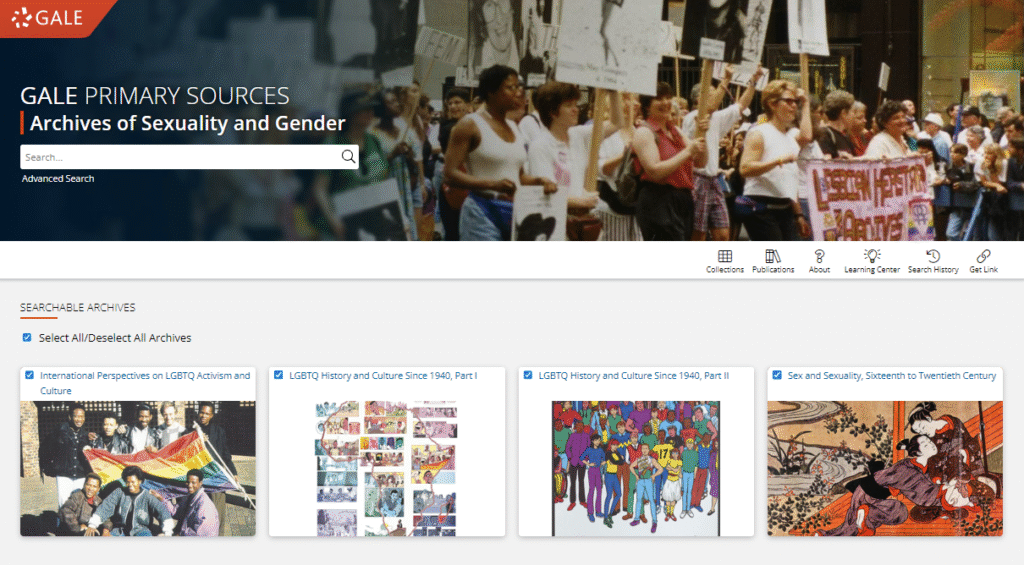
Archives of Sexuality & Gender provides a significant collection of primary sources for the historical study of sex, sexuality, and gender. With material dating back to the sixteenth century, you can examine how sexual norms have changed over time, health and hygiene, the development of sex education, social movements and activism, and many other interesting topical areas.
Use the online resourceLGBT Thought and Culture to find books, periodicals, and archival materials documenting LGBT political, social and cultural movements throughout the twentieth century and into the present day. The collection illuminates the lives of lesbians, gays, transgender, and bisexual individuals and the community.
Researching hidden and forbidden people from the past can be difficult. Terminology used to write about LGBT+ people has shifted over time or is obscured. A practical guide to searching LGBTQIA historical recordsis an accessible guide to doing historical research on LGBT+ subjects in libraries, archives and museums.
This is just a small selection of the resources on LGBT+ history in the Library. However, if there are areas in the collections that could be improved or you know of a book the Library doesn’t already have, you can use the Request a Book formto tell us.
Note that some online resources mentioned in this blog post are only available to current students and staff at the University of Edinburgh.
Are you a student who is struggling with academic writing? Are you a staff member who knows of a student who isn't quite getting the hang of writing at University level?
Perhaps you need to book an appointment with our Royal Literary Fund Fellow. Mary Paulson-Ellis is a well-respected expert in the field of writing, and has been a writing mentor, workshop leader, tutor and writer-in-residence for many organisations including the National Centre for Writing, the National Galleries of Scotland and the Edinburgh International Festival. She is also a committee member for the Society of Authors in Scotland, and student feedback from her first semester working at Edinburgh has been enthusiastically positive. She specialises in helping students in any discipline hone their writing skills and she does this by arranging one-to-one appointments with students in the Main Library.
The service is free, confidential and individual to each student's needs. To find out more about the service you can visit our RLFF page, or to book an appointment please email Mary directly.
 We are happy to let you know that the Library has a subscription to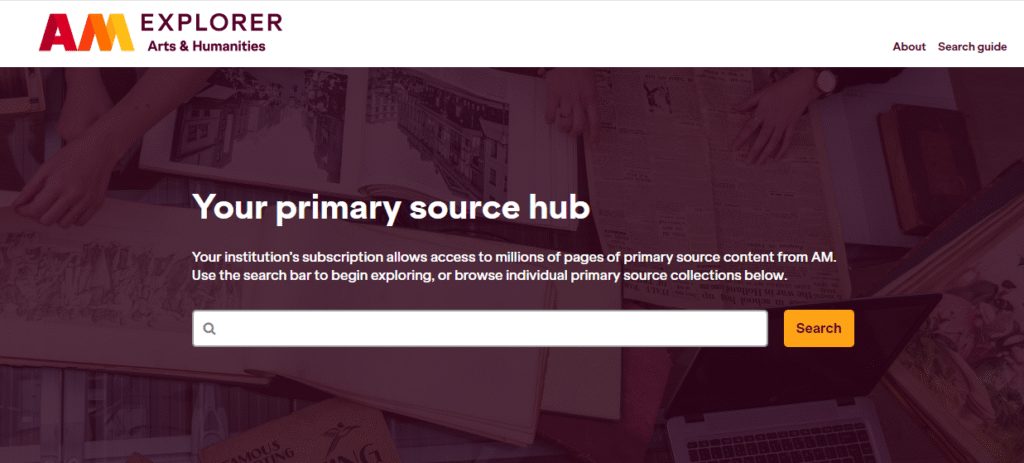

 Looking for ways to look after yourself during your studies and exams? The Library’s new Wellbeing Collection provides resources on all aspects of wellbeing, including but not limited to anxiety, exercise, general wellbeing, happiness, relationships, sleeping well and University life.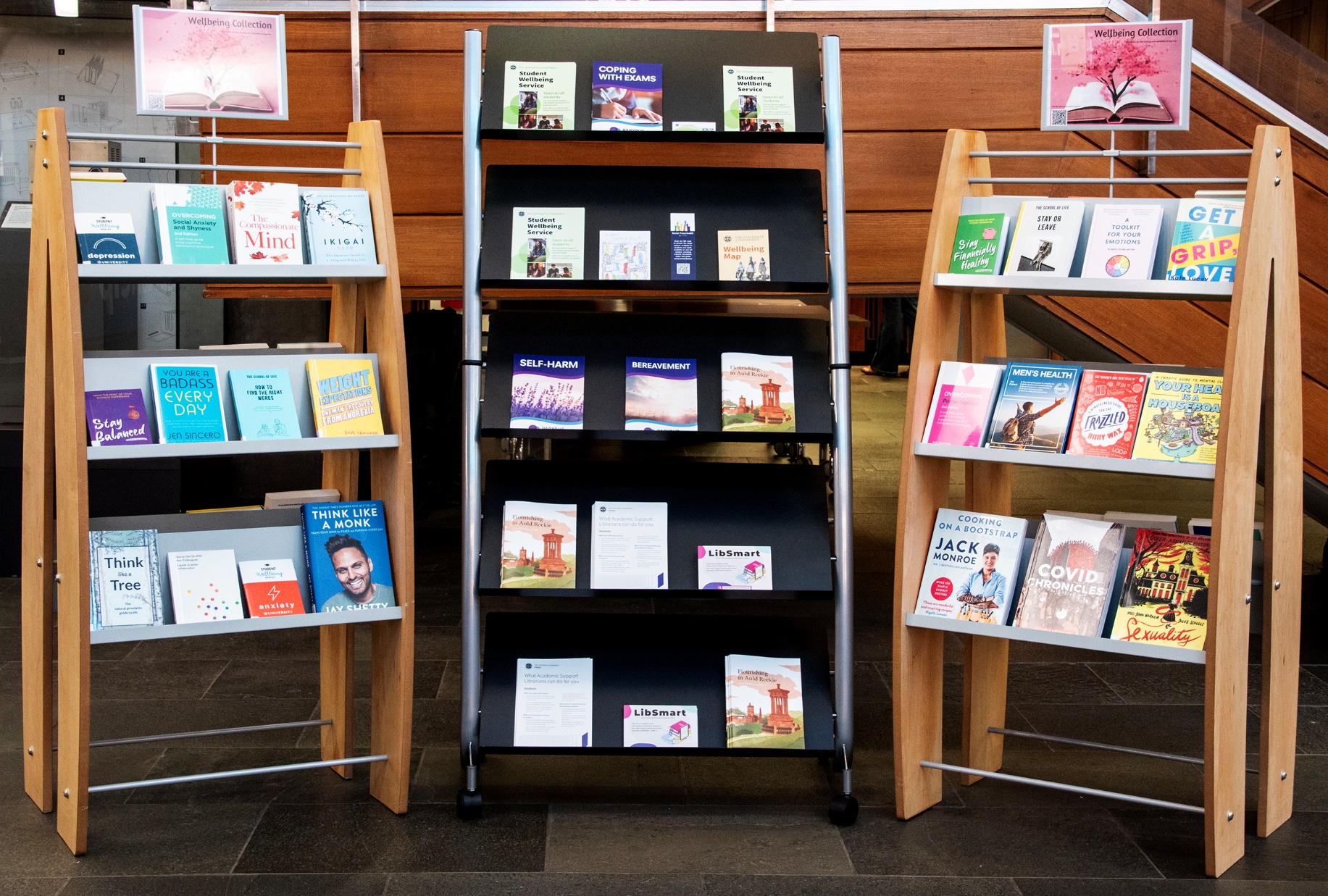





 February is