

Lacuna: Searching for Edinburgh’s Queer Past
Chloe is a Phd History student, and creator of the Lacuna project. You can read about the background to the project in the blog ‘Beginning the Lacuna project’
This project, funded by the Student Experience Fund, was made with two aims in mind. First, to address the worsening state of LGBT rights in the UK by putting our history into perspective, showing its origins, and the remarkable efforts of the people who organised before us. Secondly, to address challenges students face to their mental health on campus by encouraging in-person interaction, agency over our space, and a model for organising collectively for a better world. It uses the Lothian Health Services Archive (LHSA) as a source for finding Edinburgh’s LGBT history, and encourages viewers of the exhibition to explore the archive further.
An art trail
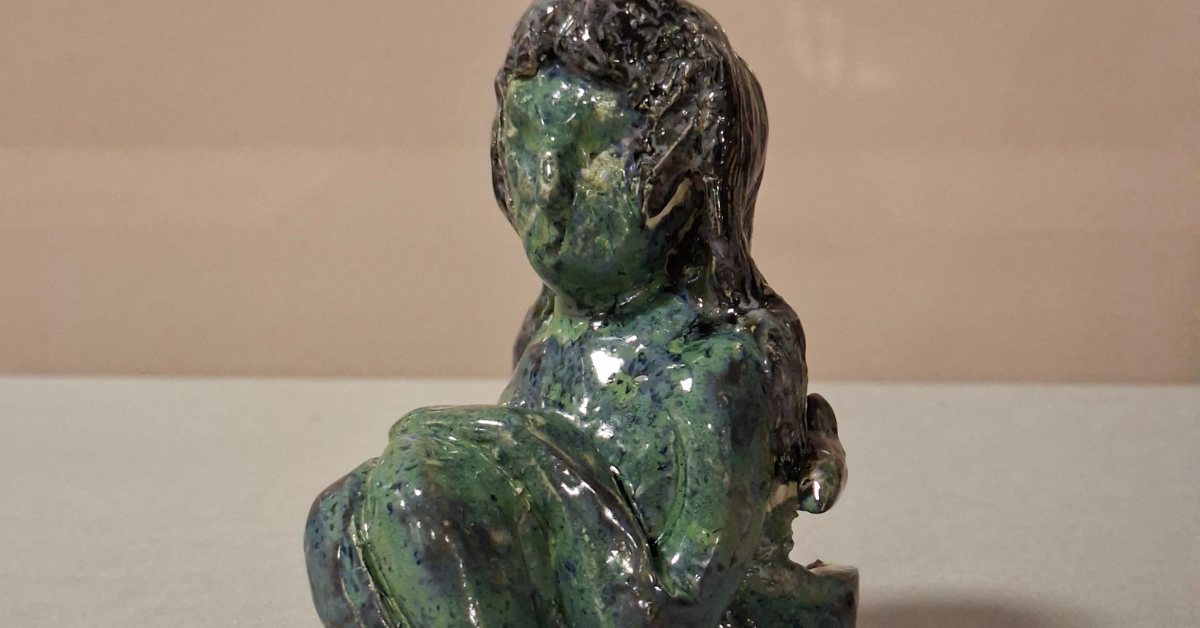
The project has taken the form of an art trail, aided by a treasure map, to encourage staff, students and members of the community to engage with our campus in a novel way, which encourages playfulness, possibility and interaction. Each location contains information to find the archived material which inspired the ceramics on display in the hopes that viewers will use the identifiers to find the pamphlets, books, memos, posters and photographs in storage at the Centre for Research Collections, where LHSA is housed.
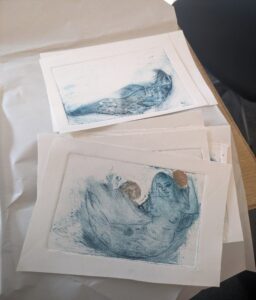 The project took around 18 months to complete, from beginning research to opening the exhibition. In that time I spent many hours in the university’s reading rooms consulting LHSA materials, but also taking ceramics lessons and developing the visual language I wanted to use to communicate what I found in the archives. I attended a printmaking workshop at Edinburgh Printmakers, kindly organised by Hana Sleiman, where I first began thinking about using selkies for this project. I also spent a lot of time with the Firth of Forth, from my home in Portobello, to the Print Co-op studio where I made most of these pieces, and even a trip to Inchcolm. This gave me the opportunity to collect the sherds which appear in this exhibition and to think about the landscape as a record of our shared histories.
The themes of community, defiance, collective action and change for good found in LHSA are more relevant now than ever. In the exhibition I have illustrated these themes through the use of hands, which reach for one another and are our first tools for building community. I have also incorporated telephones, essential to so many of the organising efforts of LGBT groups in the 20th century. The telephone was essential to their work – so essential that they were padlocked when not in use to prevent the police from accessing them. I was struck by the phone as a means of communication against persecution and criminalisation, in contrast to present discourse around mass communication as the root of all polarisation. Here, it is the means of organising, communicating, and overcoming isolation.
I was also influenced by the university’s School of Scottish Studies Archive to use the selkie as a symbol of transformation, self-fashioning, and liberation over rigid gender roles – a Scottish play on the more established queer symbol of the mermaid.
A treasure map
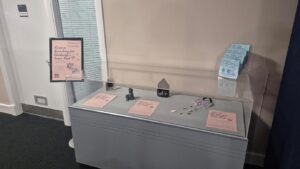
The Lacuna display case in the School of History, Classics and Archaeology. Floor 1M, turn right out of the lift and continue into the open area.
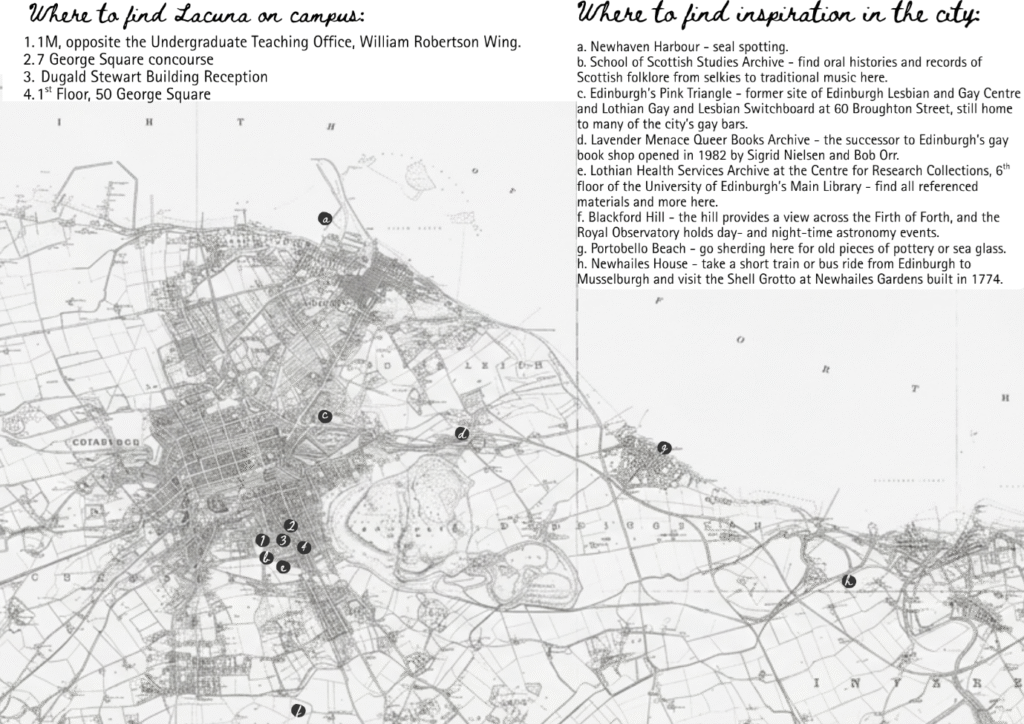
The treasure map created for this project encourages the curious to find all of ceramic objects created for this project, as well as places across Edinburgh which inspired them: Newhaven’s seals, Portobello beach’s sherds and shell, the shell grotto at Newhailes house, Lavender Menace (Edinburgh’s queer archive and ground-breaking bookshop, which remains a pillar of the community to this day), the observatory at Blackford Hill, and, of course, Lothian Health Services Archive itself at the Centre for Research Collections. The seals, constellations, shells, and sherds are echoes, too, of the origins of Edinburgh’s Pink Triangle at the top of Leith Walk, originally frequented by sailors, to Lothian Switchboard’s original premises and home to this day of Edinburgh’s gay bars.
I hope that viewers will find their own stories in the archive, as the University of Edinburgh’s collections are so expansive that a single exhibition can hardly touch on the people and struggles which the archives witness. I also hope that this exhibition will inspire further research into the role of Edinburgh, its communities and institutions, in shaping LGBT history and identity in the 20th century.
The work of LGBT organisations represented in the archive provide examples of what is possible through collective action at a grassroots level, from protest to legal support, friendship, community, third spaces and interpersonal connection. Our current political moment requires that we use every tool at our disposal, as LGBT people have once again become scapegoats and subjects of moral panics – but we remain a community which retains the values of care, solidarity and collective strength.
Find Lacuna, find inspiration

Share