

Introduction
This reflection critically examines the development of my Speculative Individual Curatorial Project (SICP), focusing on how conceptual, practical, and collaborative processes shaped its final form. The project explores diaspora as an ongoing process of cultural translation, using participatory and relational strategies to transform personal experiences into an evolving archive. Therefore, this reflection is structured around five aspects: conceptual development, turning point, curatorial strategies and practice, collective collaboration, and peer review.
Conceptual Development of the Project
The initial concept of the project originated from my re-understanding of the exhibition concept during the early stage of the course. I came to understand that curating is not merely the selection and display of works, but a process of constructing meaning through space, narrative, and relationships. This interest was further informed by readings on Vietnamese contemporary art within the Global South. Therefore, within this framework, I combined the British immigrant context and focused my research interest on diaspora, understanding it as a dynamic and evolving identity state rather than a fixed cultural label. This initial direction laid the theoretical foundation for the project, but at that time, it was still at a relatively abstract level.
As the course progressed, the relevant theories further transformed the project concept. Hall’s perspective on identity as a generative process reframed diasporic experiences as fluid (Hall, 1990, p.225), while Bhabha’s theory on cultural translation provided a way to understand the generation of cross-cultural meanings (Bhabha, 1994). Additionally, Stoler’s discussion on material memory prompted me to start paying attention to how materials carry historical and emotional experiences (Stoler, 2013, p.3). Under the influence of these theories, the project shifted from an identity-based approach to a curatorial logic centred on translation and materiality. Rather than representing identity, the project began to focus on how experiences are transformed across contexts through materials and artistic practices.
However, the conceptual development during this stage also revealed significant limitations. Firstly, the project overly relied on theoretical frameworks, resulting in the exhibition plan lacking a clear implementation path at the practical level, especially in terms of how the audience could participate in the generation of meaning, which had not been effectively addressed. Secondly, although translation and memory provided rich theoretical explanatory dimensions, their presentation remained rather abstract and lacked specific practical mechanisms. The notion of participation at this stage remained largely conceptual, lacking a concrete mechanism through which audience engagement could meaningfully contribute to the production of curatorial meaning. Drawing on tutorial case studies such as Documenta 15 (2022), an exhibition led by an Indonesian curator, these issues prompted me to rethink in the subsequent curatorial advancement how to transform theory into operational curatorial strategies, and also provided an important opportunity for adjustments in the curatorial pitch later on.
Curatorial Pitch as a Turning Point
Before the curatorial pitch, although the project had already formed a relatively clear theoretical framework at the theoretical level, there were still significant deficiencies in the practical aspect. This presentation still remained at the level of the work, lacking a clear audience participation mechanism. This made the project at that time more akin to a theory-driven exhibition concept rather than a practical system that could generate meaning through the curatorial process.
The feedback obtained during the curatorial pitch became a crucial turning point in the development of the project. This feedback prompted me to re-think the implementation method of “translation” in the project, transforming “translation” into a process completed by the audience. Informed by case studies such as Documenta Fifteen (2021) from collective feedback from the workshop, I began to reconceptualise “translation” as a participatory process, introducing the workshop as a potential curatorial mechanism. However, this aspect remained underdeveloped in the pitch, and for the selection of artists, it was only speculative, without considering the specific feasibility and extensibility.
However, this transformation also brings about new problems. Firstly, the actual effect of audience participation remains uncertain. This raises a structural question: whether participation can genuinely function as a mechanism of meaning production, or whether it risks remaining a curatorial assumption rather than an enacted practice. Secondly, the process of incorporating audience experiences into the archive also involves issues of selection and presentation, that is, how can the curator strike a balance between openness and structure. Therefore, although the curatorial pitch has pushed the project from theory to practice, this transformation also further reveals the complexity of participatory curating in its actual implementation. Moreover, the pitch is still not a sufficiently perfect curatorial idea and still leaves many spaces for subsequent curatorial strategies and practical development.
Curatorial Strategies and Practical Development
After the curatorial pitch, the project gradually transformed from a conceptual framework to specific exhibition strategies. The most crucial task was to translate the theoretical proposition of cultural translation into a practical mechanism that could be perceived and participated in by the audience. To achieve this, I began by selecting the artists and their works, viewing them as an important medium to connect theory with practice. Therefore, the selection of artists was not based on consistency in style or theme, but rather focused on whether their works could reflect the generation and transformation of cross-cultural experiences, thereby creating a methodological coherence within the exhibition. Additionally, considering feasibility, the type of works, and the suggestions from collective workshop discussions, I removed Danh Võ (who is very famous) and Nhu Xuan Hua (who leans towards commercial designers) mentioned in the pitch, and added Will Pham as an invited artist.
In terms of space and exhibition, the selection of the venue further influences the implementation method of the project. Compared to the traditional white-box exhibition space, I prefer to choose a multi-functional venue that can support the audience’s stay and interaction, making the exhibition no longer a one-way viewing structure but an environment that allows the audience to participate, communicate and generate content. Therefore, St Margret House, as a space renovated from an old school and with educational exhibition functions as well as an artist studio, falls within this framework. In this context, the space not only serves the exhibition function but also becomes one of the conditions that stimulate the audience’s actions, that is, through the setting of workshop activities, the audience acquires the dual identities of viewer and participant. This spatial strategy to some extent responds to the emphasis on relationships and interactions in relational curating (Bourriaud, 1998, p.28), but at the same time, it also has a higher dependence on spatial organization and audience behavior.
Based on the above considerations, the workshop was established as the most crucial curatorial mechanism in the project. Unlike a simple educational activity, the workshop in this project is regarded as a way of generating meaning, that is, by guiding the audience to transform their memories and experiences into text, images or objects, the “translation” process can be realized during the participation. The content generated by the audience will be incorporated into the exhibition structure, thereby gradually building an expandable archive. Through this mechanism, the exhibition is no longer a pre-set and completed result, but a process that continues to be generated over time. This also makes the project more methodologically aligned with the practice paths of participatory and dialogical art (Kester, 2004, pp.23-25).
However, these strategies still face a series of challenges at the practical level. Firstly, there is considerable uncertainty regarding whether the audience will participate, and the depth and quality of their participation. This suggests that participation may remain an idealised curatorial construct, rather than a consistently achievable form of audience engagement in practice. Secondly, although archive emphasizes openness, in the actual implementation, selection and screening inevitably occur, which means that the curator still has a certain degree of control over the formation of the narrative, thus revealing an inherent tension between the aspiration for decentralisation and the persistence of curatorial authority in shaping the archive. Moreover, the limitations of the project in terms of budget, time, and space resources also further affect the feasibility of these strategies. Therefore, although the strategy design at this stage theoretically enhances the integrity of the project, its implementation in reality still requires further examination and adjustment. Beyond individual curatorial strategies, the development of the project was also shaped by collective processes.
Collective Process and Collaboration
During the development of the project, the formation and operation of the collective constituted another important dimension in my curatorial practice. Through the continuous discussions of the tutorial group and the collective practice in the Summer Hall, the project gradually shifted from an individual conception to a process of continuous adjustment and correction based on multiple feedback. This made the project no longer a closed individual system, but an open structure that was constantly restructured through communication and negotiation.
In the collective, I mainly took on the roles of expressing and being a designer. That is, while proposing my own curatorial direction, I also screened and absorbed others’ opinions, and carried out visual design work for the collective rule and collective curatorial projects. The feedback from peers prompted me to re-evaluate the practical conditions of the original plan, thereby adjusting the list of artists. This process indicates that the collective not only provides diverse perspectives but also enhances the practical feasibility of the project to a certain extent, preventing it from remaining merely in personal imagination.
However, this collaborative process also revealed certain limitations. For instance, in the collective practice at Summer Hall, we produced two collective outcomes. The first was a collective collage intended to represent the integration of different perspectives. However, it lacked sufficient discussion and failed to meaningfully connect individual curatorial projects, resulting in a superficial representation of collectivity, where the appearance of collaboration was not supported by substantive dialogue or integration. The second was a collective curatorial project titled “No Heroes,” which simulated the planning of an exhibition through role-based collaboration. This exercise provided a more structured framework for discussion, allowing us to engage more directly with curatorial decision-making, including exhibition narrative and feasibility.
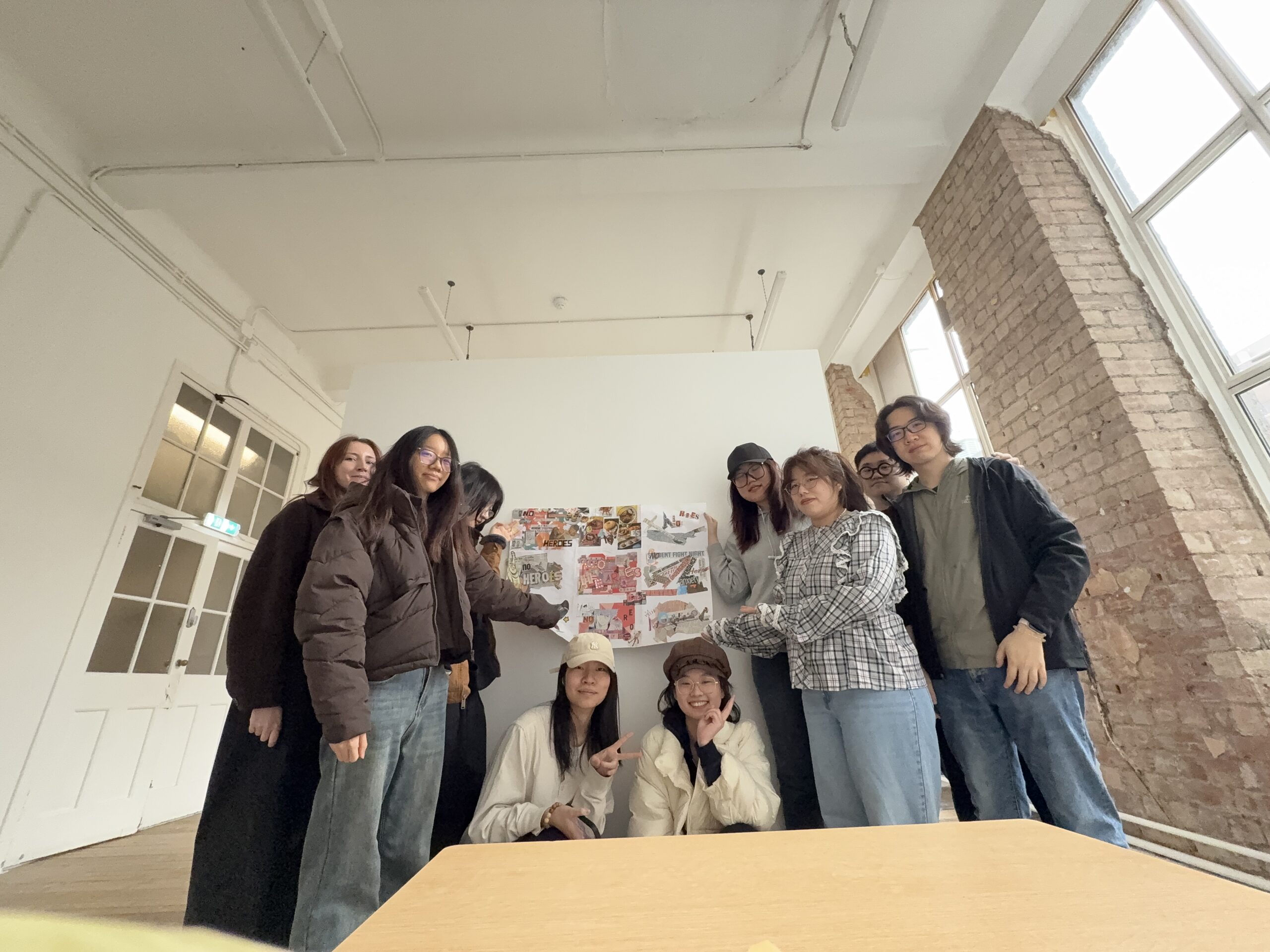
The Collective Collage
Image by Xurui Xie
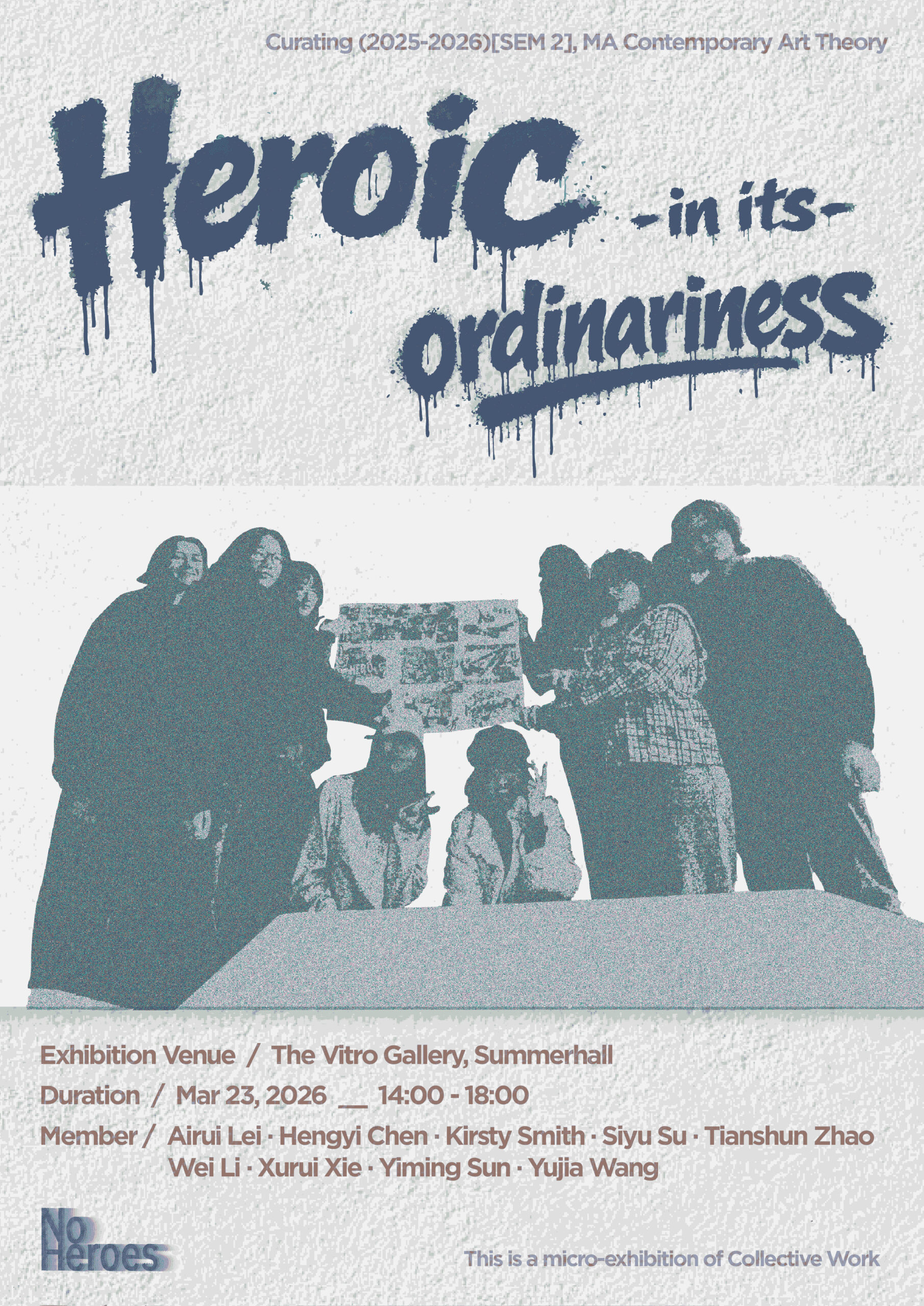
No Hero’s Exhibition Poster
Image by Tianshun Zhao
Nevertheless, the participation of the collective still strengthened the relational nature of the project at the methodological level. Through continuous interaction with others, the curatorial process itself also became a practice of generating relationships, which was not only reflected in the project content but also in its production method. Therefore, the collective not only influenced specific decisions but also, at a deeper level, changed my understanding of curating as a collaborative practice.
Peer Review and Critical Reflection
During the development of the project, peer review served as another crucial reflection mechanism, allowing me to re-examine my curatorial logic from different perspectives. Through the collective discussions of the weekly workshops, I gradually realized that curating involves not only the construction of concepts and forms, but also the relationships between space, the audience, and communication strategies. For instance, in Kristy’s blog review, I noticed her handling of the curatorial approach and narrative content, which prompted me to reflect on the relationship between the exhibition structure and artistic production in my project, thus paying more attention to how curating can guide the generation of meaning through collective work by artists. Moreover, I reflected on whether there could be a transformation between publishing and archive.
At the same time, Xurui’s review also had a direct impact on my reflection on the project. As Xurui Xie pointed out in his review, although my workshop practice can be placed within the context of participatory art, it also raised questions about participation ethics, such as the emotional labor of participants, the consent mechanism, and the ownership of content. This feedback made me realize that participatory curating is not simply inviting the audience to participate, but requires a more detailed definition of the participation relationship in terms of methods. Especially when incorporating audience experiences into the archive, how to handle the rights and responsibilities of participants becomes a need for further clarification. Regarding this content, he also proposed some theoretical suggestions, such as the question of speaking on behalf of others (Chen, 2021).
Furthermore, this review also raised discussions on the concept of curatorial positionality (Clifford, 1997, pp. 10-12), which means that the curator is not in a neutral position but rather expresses within a specific cultural and social context. This viewpoint prompted me to re-examine how my identity as an East Asian international student affects the research path and expression method of the project, thereby further strengthening the issue awareness regarding “translation” in the project. At the same time, the feedback on the budget and exhibition structure also prompted me to pay more attention to the overall coherence and feasibility of the project during subsequent adjustments. In my initial prediction, I reserved a certain amount of funds for my own project, which was 1,000 pounds more than the planned budget. And in the subsequent funding research, I found that the British Council (2021) had set up the “Connections Through Culture – Vietnam” funding, but it was not applicable to the current curatorial project. However, to some extent, this can prove the importance and attention level of the curatorial theme.
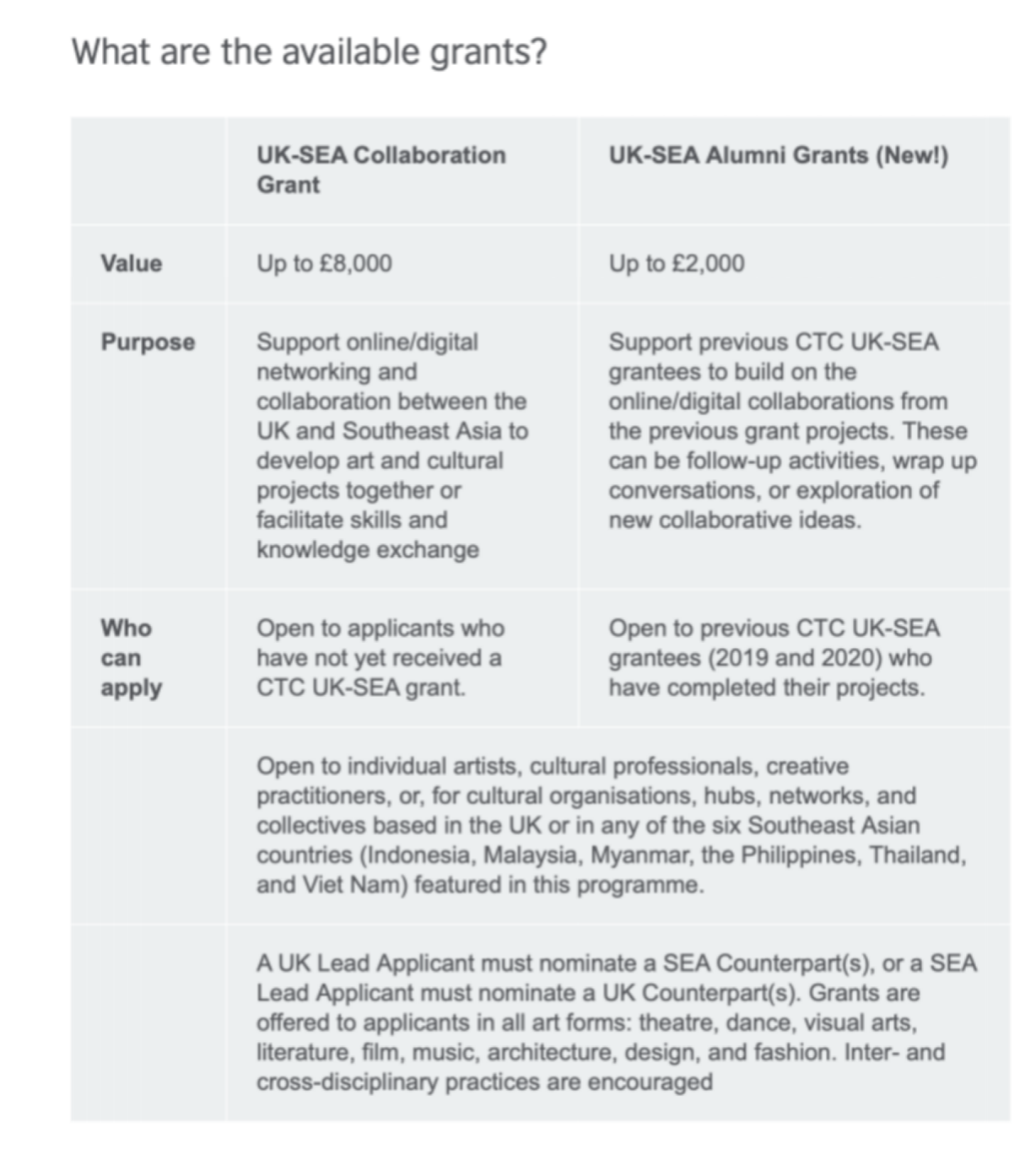
Connections Through Culture, British Council
Source: https://www.britishcouncil.vn/en/programmes/arts/opportunities/connections-through-culture
However, peer review also has certain limitations. Since the reviews are usually based on stage achievements, the feedback is more focused on the current problems presented, and it is difficult to comprehensively predict the complexity of the project in actual implementation. Moreover, the focus of different reviewers varies, which may lead to some suggestions having personal preferences and requiring the curator to make their own judgments and selections. Therefore, peer review does not provide definitive solutions, but operates as a critical framework through which curatorial decisions can be questioned, negotiated, and re-articulated.
Overall, peer review not only facilitated adjustments to the project at the practical level, but also deepened my understanding of curating as a reflective practice at the methodological level. Through this process, I gradually realized that curating is not a one-way output process, but rather a dynamic system that is constantly generated through continuous feedback and revision.
Conclusion
Through this SICP research and practice, I gradually came to realize that curating is not merely a display activity centered around works, but rather a dynamic process that continuously generates meaning through concepts, spaces, participation, and relationships. Starting from the initial theoretical conception based on discrete identities, and later transforming cultural translation into an accessible practical path through workshop and archive mechanisms, the development of the project reflects the continuous interaction and revision between theory, methods, and practice.
Through this process, I developed skills in conceptual, practical, and collaborative curating, particularly in translating theory into practice and working through collective and iterative feedback. However, at the same time, I also realized that I still have deficiencies in aspects such as mechanism design for participation, ethical issues, and project feasibility assessment. These problems to some extent limit the completeness of the project’s transition from theory to practice.
Based on these reflections, in my future curatorial practice, I will pay more attention to the specific implementation paths of participatory methods, especially in aspects such as the depth of audience participation, ethical boundaries, and the construction methods of archives. At the same time, I also hope to extend the curatorial practice to more socially-oriented contexts, such as community participation or cross-cultural projects, to test its applicability across contexts. Overall, this project is not only a process of constructing a curatorial plan, but also a systematic reflection on curatorial methods, roles, and responsibilities. This process further indicates that the core of curating lies not only in organizing content, but also in how to construct a responsive practice structure in the face of uncertainty and differences.
Reference List
Bhabha, H. K. (1994) The Location of Culture. London: Routledge.
Bourriaud, N. (1998) Relational Aesthetics. Dijon: Les Presses du Réel.
British Council (2021) Connections Through Culture. Available at: https://www.britishcouncil.vn/en/programmes/arts/opportunities/connections-through-culture (Accessed: 23 April 2026).
Chen, M.S. (2021) ‘Ethics of curating’, in Curatography 5: Curatorial Episteme. Available at: https://curatography.org/5-3-en/ (Accessed: 24 April 2026)
Clifford, J. (1997) Routes: Travel and Translation in the Late Twentieth Century. Cambridge, MA: Harvard University Press, pp. 10-12.
Documenta Fifteen (2022) ABOUT RUANGRUPA. Available at: https://documenta-fifteen.de/en/about/ (Accessed: 23 April 2026).
Hall, S. (1990) ’Cultural Identity and Diaspora’, in Rutherford, J. (ed.) Identity: Community, Culture, Difference. London: Lawrence & Wishart, pp. 222-237.
Kester, G. (2004) Conversation Pieces: Community and Communication in Modern Art. Berkeley: University of California Press.
Stoler, A. L. (2013) Imperial Debris: On Ruins and Ruination. Durham: Duke University Press.
(Critical Reflection © 2026 by Tianshun Zhao is licensed under CC BY 4.0)
(Critical Reflection © 2026 by Tianshun Zhao is licensed under CC BY 4.0)



Leave a Reply