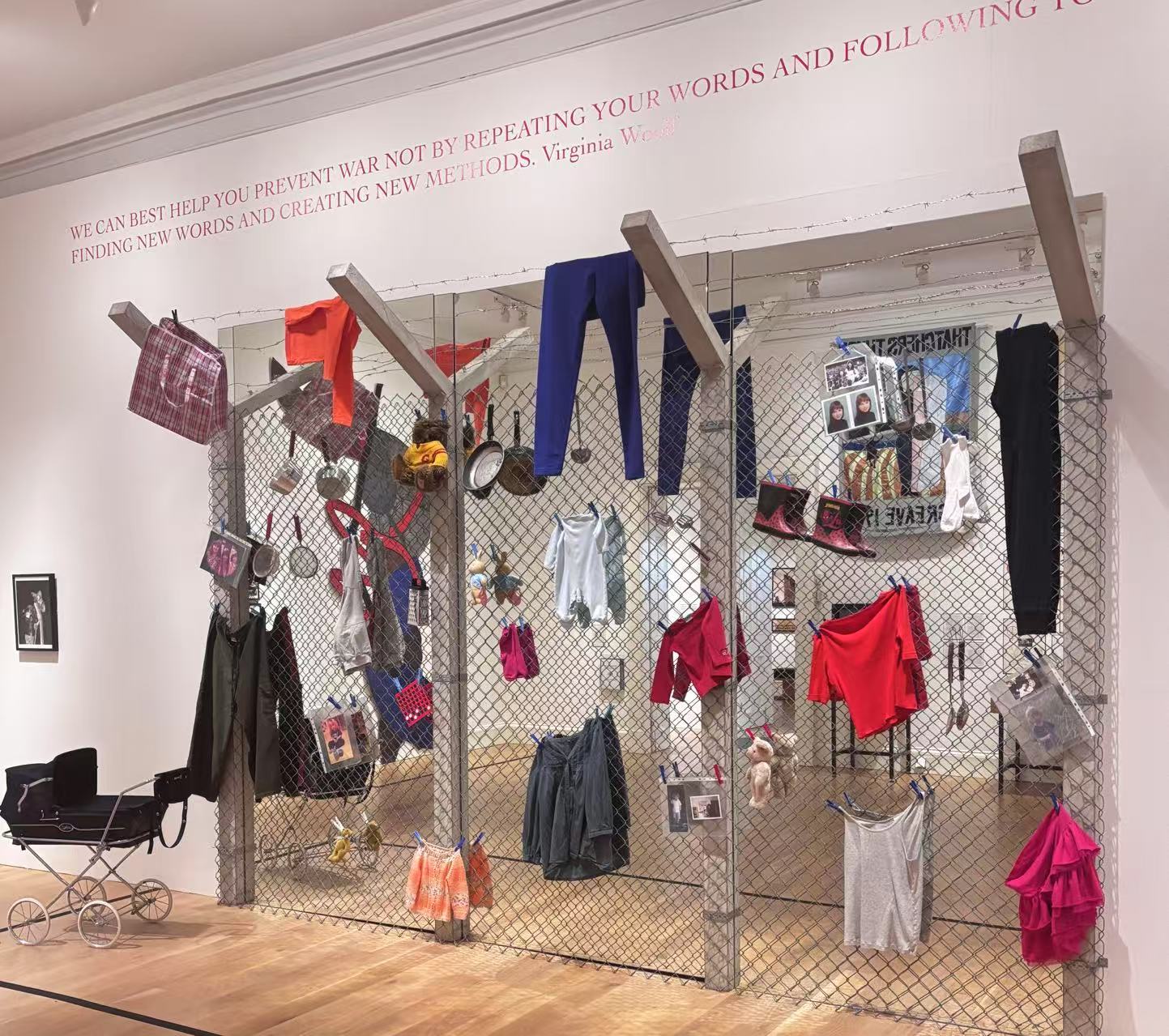
The absence of female themes in museums can be superficially attributed to the difficulty of leaving material evidence of women’s lives, creations, and contributions in history, especially for ancient women. As Moser (2010) pointed out, the social roles of ancient women were mostly confined to the family and private sphere, which made their contributions almost unrecorded in historical documents and material culture. However, the deeper reason is that the areas where women have contributed the most – such as family, motherhood, and emotional labor – have long been relegated to “insignificant” topics and are not worthy of being included in the narrative framework of museums (Tischler, 2017). This systematic neglect not only reflects gender bias in art history and museum curation but also reveals the unequal power of cultural institutions in shaping social values.
In recent years, some museums have begun to try to change this situation. For example, the exhibition “Women’s Rights and Change” at the Museum of Modern Art in New York, “Women and Modern Art” at the Tate Modern in London (2022), and “Women’s Protest: From Private to Public Sphere” in Berlin (2021) have attempted to present women’s history and social roles from different perspectives. These efforts are worthy of recognition but still have significant limitations (Cook, 2021).
The problem is that many exhibitions still focus too much on women who have achieved “success” in traditionally male-dominated fields while ignoring those women who contribute silently in their daily lives. This curatorial approach invisibly reinforces a gender bias that women are only worthy of commemoration if they have made significant achievements in fields where they compete with men, while their contributions in areas such as family, emotional labor, and cultural production are marginalized (Mitchell, 2022). For example, although some exhibitions attempt to display the works of female artists, these works are often simplified into a single role positioning-women are portrayed as “beauties” and “protagonists of love stories”, lacking a more complex and realistic presentation (Smith, 2019).
More importantly, even if some exhibitions try to focus on women’s invisible labor, their perspectives are still limited. Take the exhibition “Housework and Labor: Women’s Creativity in Everyday Life” at the Museum of Modern Art (MoMA) in New York as an example. Although the exhibition attempts to show women’s contributions to family and social production, its focus is almost entirely on middle-class women, ignoring the diverse experiences of working-class, ethnic minority, and global South women. In addition, the exhibition’s discussion of housework remains superficial and fails to delve into the complex gender inequality structure behind it. Similar problems also appeared in the exhibition “Women Revolt!” at the National Gallery of Scotland. Although the exhibition mentioned women’s invisible labor, it failed to touch on the emotional burden and psychological pressure women bear behind these labors. Emotional labor and mental labor are an indispensable part of women’s lives. Although difficult to visualize, they are crucial to women’s survival and self-identity. However, these invisible labors are almost completely absent in museum narratives.
Contemporary curatorial practice urgently needs to fundamentally re-examine women’s historical and social roles and break through the limitations of traditional narratives. To this end, the exhibition I curated will focus on the following aspects:
1. Emotional burden and psychological pressure in invisible labor: Through oral history, video records, and interactive installations, it reveals the invisible emotional burden and psychological pressure that women bear in family, emotional labor, and cultural production.
2. Invisible labor experience of diverse groups: Focusing on the diverse experiences of groups such as the working class, ethnic minorities, and women in the global South, it presents the complexity and differences of women’s invisible labor in different social contexts.
Through this multi-dimensional curatorial practice, the exhibition can not only reveal the invisible contributions of women in history and society but also challenge existing gender stereotypes and promote the development of museum narratives in a more inclusive and critical direction.
References
Moser, S. (2010). Gender equality, heritage and creativity. UNESCO Digital Library. Retrieved from unesdoc.unesco.org
Tischler, B. (2017). Gender and the museum: The politics of representation. Routledge.
Mitchell, M., & Shapiro, L. (2022). Art, Feminism, and the Museum: Revisiting the Tate Modern’s 2022 Exhibition. Journal of Modern Art Studies, 45(3), 204-221. Retrieved from https://www.artjournal.com
Smith, J. (2019). Invisible labor and gender politics in museum exhibitions. Feminist Theory, 27(1), 78-95. Retrieved from https://www.feministtheory.com
Cook, K. (2021). The Invisible Labor of Women in Contemporary Exhibitions. Museum Studies Review, 32(2), 115-130. Retrieved from https://www.museumstudies.com