The saying “It takes a village…” is probably the best description for what it feels like to work in research.
Without the support of my mentors and the Medical Research Foundation, the present project would not exist. Creating meaningful change is only possible if we connect with lived experience experts, clinicians, policy makers, and other researchers. This is why it was such a great opportunity to attend the ‘Medical Research Foundation Eating Disorder Event: Research Today for Greater Impact Tomorrow’.
During the day, we learned more about the eating disorder-related projects that are currently funded by the Medical Research Foundation, including research on:
- School-based disordered eating interventions
- Loneliness and eating disorders
- The effectiveness and safety of medication targeting appetite-regulating hormones in the management of Binge Eating Disorder
- Eating disorders in learning-disabled people
- The overlap between Attention-Deficit Hyperactivity Disorder (ADHD) and eating disorders
- The association between food insecurity and eating disorder symptoms
An event such as this is very important, as it allows us as researchers to raise awareness for our cause, while learning more about what connects our research projects to other important research. This could be the ways in which our research focuses on related topics, but also the way in which we collect information. While the projects currently funded by the Medical Research Foundation might sound very different, they all address similar themes: learning more about when and how eating difficulties develop, identifying new and better support options for eating disorders, and gaining a better understanding of the contexts in which eating disorders are experienced (e.g., in terms of other health conditions and societal contexts).
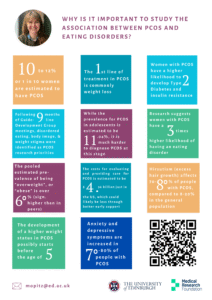
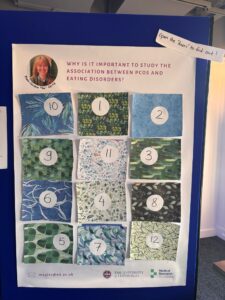
To engage attendees in discussions around the ongoing research, we created posters and exhibited them during break times. For my own poster, I decided to design an “Advent Calendar of Facts” which included 11 facts on why it is important to study the association between PCOS and eating disorders. As most of my work is very structured and requires a lot of deep thinking, I really enjoyed the challenge to try and create something that people can interact with.
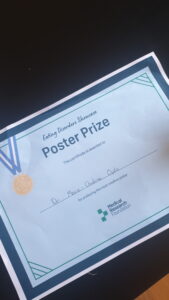
As you can see in the pictures on the right, people at the event could open numbered “doors” to learn more about the various ways in which the symptoms and presentation of PCOS can impact eating disorders. The poster also made it easier to start a conversation and it was great to see how many people were interested in learning more about this important topic. In the end, I was awarded the event’s “Poster Prize”, which was a great honour and motivated me to continue using creative methods to communicate my research to different audiences.
I am excited to see so much innovative and important research being conducted in the field of eating disorders and I am looking forward to learning more about the many projects’ outcomes. While multiple presentations throughout the day discussed the fact that eating disorder research is severely under-funded (especially when considering how many people are affected and how much eating disorders affect people’s lives), I am optimistic that we can make a meaningful difference with the research that is currently happening.
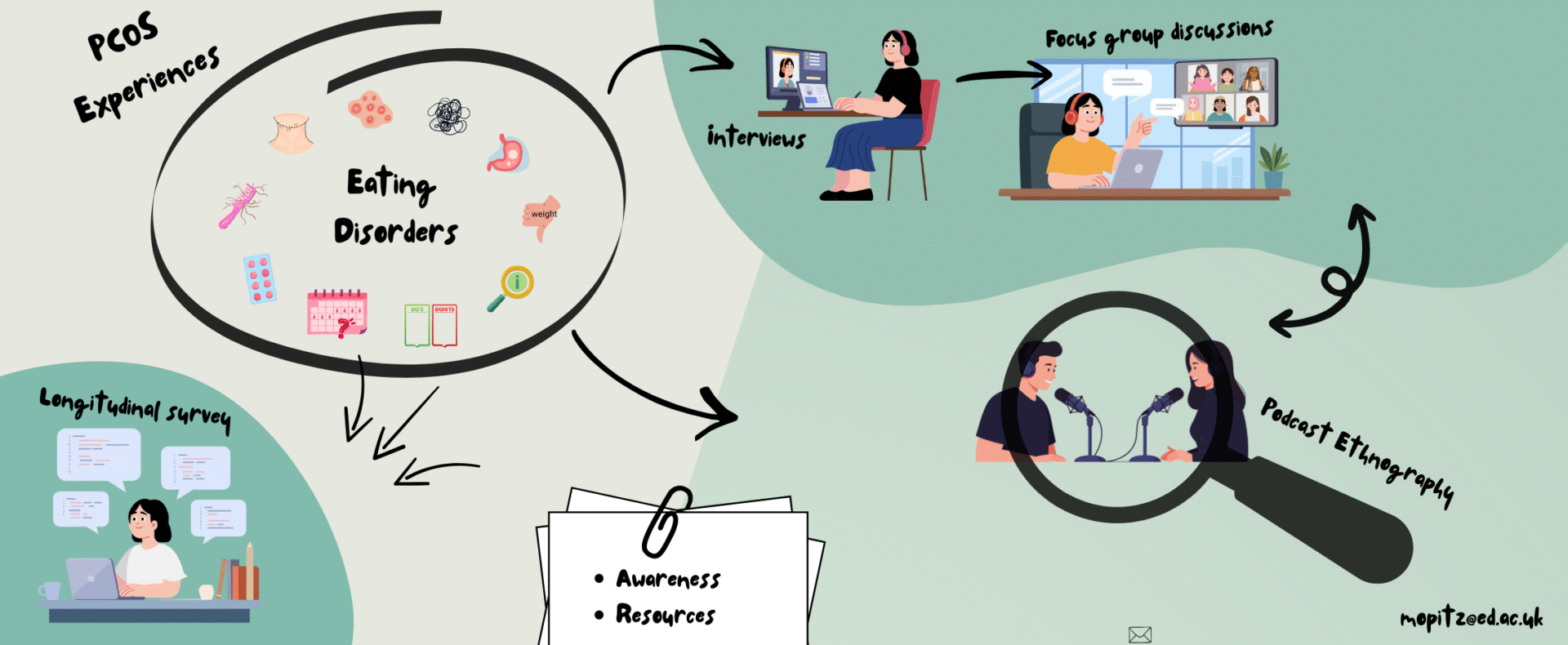
My next step will be to finalise my interviews with people who have lived experiences of both PCOS and eating disorders/disordered eating. As a researcher, I am aware that there is always more to learn and I am incredibly grateful for everyone who is willing to share their story with me and my research team.