Since 2022, a small group of Nursing and Medical students have been quietly building an exciting and innovative collaboration that is changing lives in and around Edinburgh for the better. They have recently been nominated for and even won several prestigious Scottish awards in recognition of their impact and commitment to their work, including the Newton Prize at the Scottish Cardiac Arrest Symposium 2026 and the Royal College of Nursing (RCN) Student Nurse of the Year 2024 (Runners-Up).
About Saving Lives
The University of Edinburgh Saving Lives project was set up by a group of nursing students who received a student experience grant of £5000 in order to teach Cardio-Pulmonary Resuscitation (CPR) awareness skills to fellow students and staff. In that first year, the team reached over 300 people.
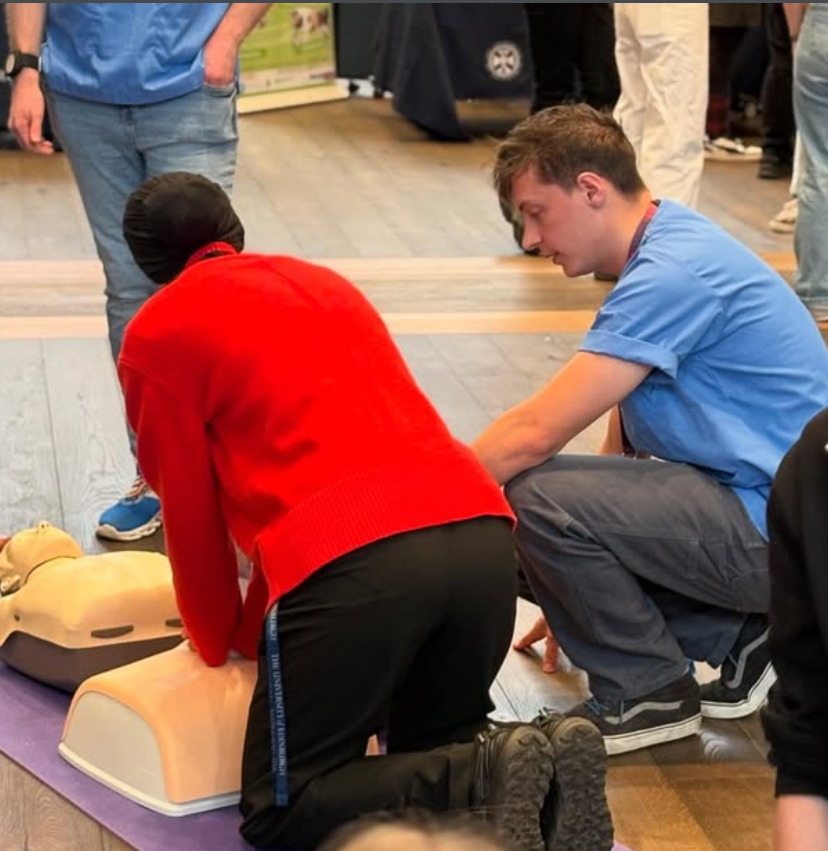
It trains health care student volunteers to provide free-of-charge, informal sessions ranging from community outreach projects to pre-arranged sessions within organisations to setting up drop-in sessions on the street for passers-by. We take participants through a step-by-step process around how to assess a casualty & recognise cardiac arrest, perform effective chest compressions, and use a defibrillator, as well as answering any questions that they may have.
We work closely with the charity Save a Life for Scotland, who do amazing work all over Scotland to promote CPR awareness and improve cardiac arrest survival, and we have also recently been engaging with elected representatives to help raise CPR awareness within their constituencies. Most importantly of course, we have helped well over 1000 people across Edinburgh & the Lothians become CPR ready.
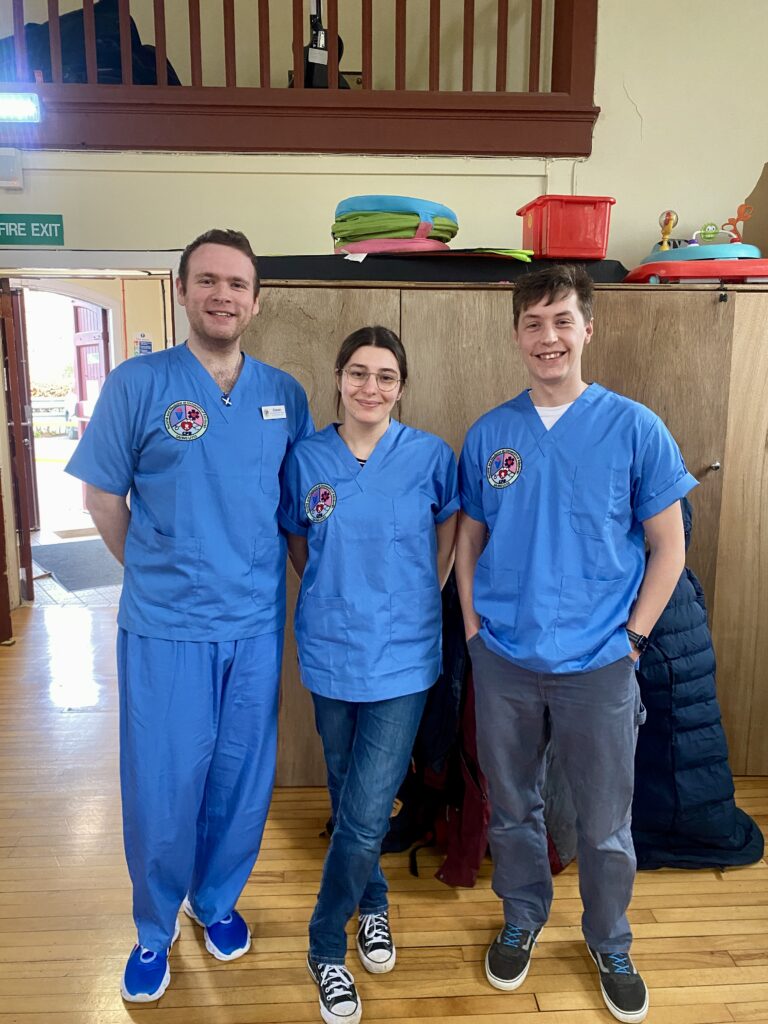
Our current executive committee is a small but dedicated team, made up of two nursing students (one undergraduate & one master’s student) as well as one medical student. We work on the project on a completely voluntary basis alongside our day-to-day academic work and clinical placements – we are well supported by medical & nursing school staff, but the project is run by us with high levels of freedom and responsibility to pursue workstreams we are interested in. Running the project allows us to build our leadership and communication skills, both within the team and at the CPR sessions themselves.
We have recruited dozens of students as volunteers for our events – mostly nursing and medical students, but across some other disciplines too.
The Awards
Saving Lives Project continues to grow in leaps and bounds. We have secured grant funding from the University and Resus Council UK in partnership with Edinburgh Community Yoga, primarily used to purchase equipment such as CPR manikins and training defibrillators and run CPR training in areas of socio-economic deprivation in Edinburgh.
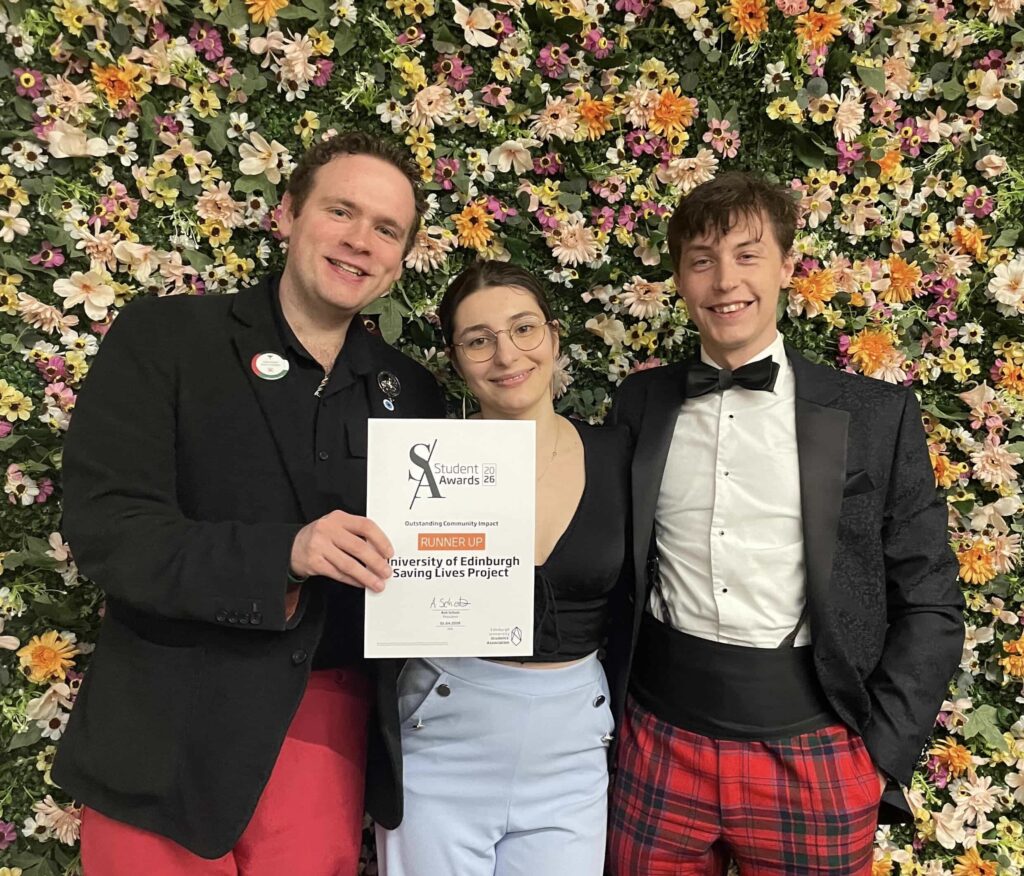
Additionally, the project was recently nominated for the category of “Outstanding Community Impact” at the University of Edinburgh Student Awards 2026, where we were runners-up. In May 2026, we attended the Scottish Cardiac Arrest Symposium here in Edinburgh, a really worthwhile experience where we got to meet many big figures in the cardiac health & cardiac arrest research community. This was where we won the Newton Award, awarded in recognition of outstanding work around cardiac arrest. The award is named after & presented by Gregor Newton & his wife Judy – Gregor suffered a cardiac arrest at the age of just 43, and survived thanks to rapid commencement of CPR from Judy, other bystanders, and first responders.
Unbeknownst to us students, Nursing Studies staff had nominated the project for this award – which we only realised when our name was read out on stage – and just a few minutes later, we were announced as the winners. We had the honour of meeting & being presented with the award by Gregor & Judy, followed by an impromptu couple of quick speeches. None of us who take part in this project do so out of a desire for recognition or reward – we do it simply because we care passionately about saving lives – but winning the Newton award & getting that bit of extra recognition that comes with it really meant a lot to the team.
Watch the video here:
Over 1000 people CPR aware
The project has expanded beyond the university setting, into the wider Edinburgh & Lothians community. In the first three months of the academic year, the team went out to places such as the university freshers fair, local primary and high schools, local sporting events, community centres, mosques, and even to Scottish Government Headquarters – and we are very proud that in this short period of time, we made over 1000 people CPR aware.
For the 2025-26 academic year, the team have focussed CPR outreach in areas of higher deprivation within Edinburgh and Lothian, as research suggests that people living in the most deprived areas of Scotland (as measured by the Scottish Index of Multiple Deprivation) are more likely to suffer from a cardiac arrest & up to 45% less likely to survive one compared to those in the least deprived areas (Bijman et al, 2024). There are a multitude of reasons for this; but for the purposes of this project, we focus on the fact that people in these areas are less likely to have bystander CPR performed on them, and are less likely to have access to a defibrillator – the use of the latter potentially increasing survival rates to over 50% (Association of Ambulance Chief Executives, 2024). We also recognise that the likelihood of a member of the public using a defibrillator during a cardiac arrest increases significantly after they have been trained (Hawkes et al, 2019). Earlier this year we ran CPR training in Craigmillar and Westerhailes in Edinburgh, and it was great to see community members build confidence in their ability to do CPR if they needed to.
Educating about CPR
Alongside the CPR teaching itself, our sessions allow us the opportunity to educate & answer questions from the public, as well as dispel some common myths around CPR. We are commonly asked for example if chest compressions will break someone’s ribs (this is indeed a common occurrence (Van Wijck et al, 2024)) or if someone can be sued for performing CPR (extremely unlikely & has never happened successfully in the UK (Resuscitation Council UK, 2025).
We also educate people about inequalities in CPR – in addition to the previously mentioned statistics concerning areas of deprivation for example, it is well documented that women are less likely to receive bystander CPR and are less likely for CPR to be successful when compared to men (Purkarthofer et al, 2025). This can be linked to hesitations and concerns – particularly from men – about engaging in physical contact or removing clothing, as well as training that doesn’t account for differences in anatomy, with a vast majority of CPR training dummies being completely flat-chested (Cheng et al, 2025). We have recently purchased a training manikin with breasts, which we hope will help make a difference to this.
Entering 2026, the future of the project is looking bright. Long-term, we hope to develop a national model in partnership with Save a Life for Scotland for other universities to follow across Scotland and the UK. We want to help make as many people & communities CPR aware as possible, with the added desire that projects of this nature can help empower and develop self-confidence in the next generation of nurses and doctors. Indeed, although both nursing students on the committee of this project will be graduating in the coming months, we are very keen to stay involved with the project in the years to come.
How to get involved
Should anyone wish to learn CPR, there are lots of resources online from Save a Life for Scotland and the British Heart Foundation, St. Andrew’s First Aid, and Resuscitation UK. We at the University of Edinburgh Saving Lives Project are also happy to help where we can, whether it be to support you with resources or to set up a session, so please do get in touch if we can help. CPR is something we all hope we will never have to use, but if we do, knowing how to do it correctly could be the difference between life and death.