In May 2025, as part of my third-year undergraduate nursing programme, I was given the opportunity to undertake an elective placement abroad at Christian Medical College Vellore, one of India’s top five hospitals. The aim of this elective placement was to expand my understanding of healthcare delivery within a different cultural and global context.
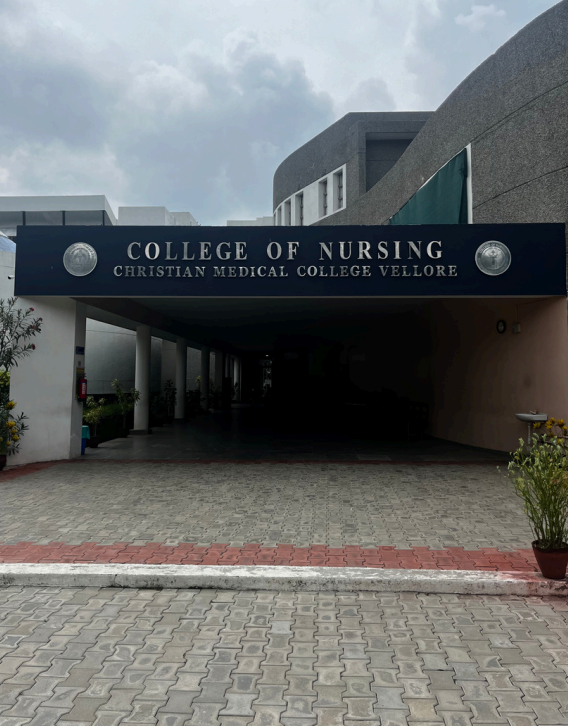
Choosing to complete my placement in India was an intentional and meaningful decision. India is part of my heritage, and a few years prior I had visited a hospital there to gain early insight into the nursing role. In addition, my late mother was Indian, and her grandfather’s brothers served at CMC Vellore for many years. This personal connection made the placement particularly significant, offering me the opportunity to explore healthcare delivery within a cultural context closely linked to my own identity. This placement was made possible through the generous support of Friends of Vellore, whose funding enabled me to undertake this invaluable experience. I am extremely grateful for their support, as my time at CMC Vellore greatly deepened my understanding of how culture, religion, and available resources shape healthcare delivery. I observed the central role families play in patient care, contrasting with the more professionally led systems commonly seen in the UK. CMC’s strong commitment to inclusive, person-centred care highlighted the importance of cultural competence and the need to adapt practice to meet diverse patient needs. Overall, this experience challenged my assumptions, highlighted my own privilege, and strengthened my ability to provide compassionate, culturally aware care. The skills, insights, and perspectives gained during my time at CMC Vellore will continue to influence my nursing practice as I move forward in my career.
Week 1 – Trauma Rotation
My first week was spent on a trauma rotation at one of CMC’s newer hospitals on the Ranipet campus, which provided me with an intensive introduction to trauma care within a high-acuity and fast-paced clinical environment. Over the six days, I rotated through the trauma bay, resuscitation room, triage area, trauma outpatient department, trauma intensive care unit, and trauma theatres. This allowed me to observe the full trauma care pathway, from the initial presentation and emergency assessment of patients to ongoing critical care management and surgical intervention.
By shadowing nursing staff across these areas, I observed the breadth and complexity of the nursing role in trauma settings. Nurses played a central role in rapid assessment, prioritisation of care, and coordination with the multidisciplinary team. I was particularly struck by the level of teamwork, clear communication, and adaptability required to manage patients presenting with severe and often life-threatening injuries. This experience strengthened my understanding of the continuity of trauma care and highlighted the skill, resilience, and professionalism of nurses working in demanding environments.
Week 2 – Mental Health
My placement at the Mental Health Centre exposed me to a wide range of treatments and conditions that I previously had limited knowledge of. The nursing staff and nursing students were exceptionally supportive, taking time to explain clinical practices and conditions clearly and responding to my many questions with patience and understanding. From the outset, I was warmly welcomed by the senior nursing staff, who regularly checked in with me throughout the week to ensure I felt supported and was gaining meaningful insight from the placement. Their attentiveness and hospitality had a significant positive impact on my experience. I was provided with a thorough orientation to the hospital and the individual units in which I was placed, with clear explanations of each department’s role and function. One aspect that particularly stood out to me was the open ward layout within the Mental Health Centre. Patients were not confined to wards and were given separate rooms with facilities and were encouraged to participate in therapeutic and recreational activities. This approach promoted a sense of dignity, normality, and engagement for patients, which I found both admirable and effective. Throughout the week, I had multiple opportunities to attend multidisciplinary team meetings and care discussions, allowing me to observe effective communication and collaboration between different specialties and how care was planned holistically.
I also attended occupational therapy sessions, where patients engaged in games and activities designed to stimulate cognitive and emotional wellbeing, and participated in ward rounds on the open wards, including discussions with families. A significant portion of my time was spent within the child and adolescent mental health services, particularly services supporting children with disabilities such as autism. These sessions often involved parents, with occupational therapists providing guidance on how best to interact with and support their children. I was fortunate to observe several of these sessions, which highlighted the importance of family involvement in care. Additionally, I spent a day with the psychology team, during which I observed patient appointments and gained insight into the mental health challenges faced by individuals in India. Following each session, the psychologist discussed the cases with me, explaining therapeutic approaches and treatment considerations, which provided valuable learning opportunities. Overall, I thoroughly enjoyed my week at the Health Centre, as it offered an in-depth and eye-opening exposure to mental health care in India. The experience broadened my understanding of psychiatric conditions and treatments, as well as how mental health is recognised, managed, and supported within the Indian healthcare context. I am extremely grateful to the staff and students who made this placement so rewarding, and I would highly recommend this opportunity to other students seeking international clinical experience.
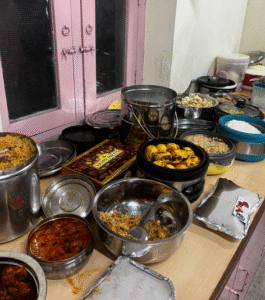
Staff also encouraged inclusion beyond the workplace through post-work social events and activities. This image was taken at a potluck held one evening.
The staff who ensured I felt welcomed and supported throughout the placement and who provided high-quality teaching.
The MN student nurses I worked alongside who were instrumental in teaching and supporting me during my placement.
Weeks 3&4 – CommunityNursing
Over the past two weeks I worked alongside the community health nurses, giving me the chance to observe the full range of their roles and responsibilities. I rotated through rural and urban settings attending primary health centres, secondary hospitals and villages in and around Vellore. I had the opportunity to take part in nurse-led and doctor-led clinics, attend specialized services such as infectious-disease and emergency antenatal clinics. I also observed a cervical screening and spent a day posted in the labour ward.
My posting here gave me a deeper insight into the role of community nurses in India and highlighted the importance and necessity of community-based nursing in improving health outcomes and preventing ill health. I observed that community nurses play a vital role in health education, working closely with individuals and families to improve understanding of disease prevention, hygiene, nutrition, diabetes management, and child health. Through regular community engagement, education sessions, and home visits, nurses empower communities with knowledge that supports early intervention, promotes healthier lifestyles, and reduces avoidable illness.
CMC’s community nurses are determined and hardworking. Despite working in extreme heat while attending to large populations, they remain cheerful, welcoming, and deeply committed to their role. I greatly valued my posting in community health; their dedication, along with their willingness to teach and involve me in practice, made the experience particularly meaningful. I feel very fortunate to have had this opportunity and to have met such inspiring nurses, and I will carry the lessons learned from both their practice and their character back with me to the UK.
This placement has had a lasting impact on both my personal development and my future nursing practice. Experiencing healthcare delivery within a different cultural and resource setting has strengthened my appreciation for adaptability, cultural awareness, and person-centred care. The exposure to family-centred approaches, strong community nursing roles, and multidisciplinary working has influenced how I view my own practice and the kind of nurse I aspire to be.
Moving forward, I will carry the skills, perspectives, and values gained at CMC Vellore into my career in the UK, using this experience to inform compassionate, culturally sensitive care and to remain open to learning from different healthcare systems throughout my professional life. I am sincerely grateful to Friends of Vellore for making this opportunity possible and for the vital work they do in supporting students and healthcare services at CMC. Opportunities such as this offer learning experiences that cannot be replicated in the UK alone, and I would strongly encourage other students to take part, as the professional and personal benefits are significant and long-lasting.