
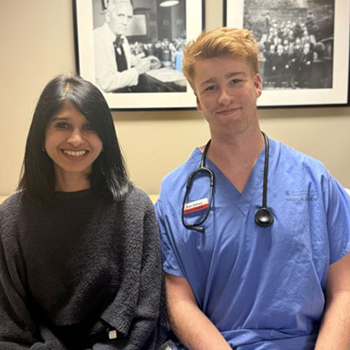
Rob Gilmour, final year medical student, reflects on research he co-authored with Dr Mekhola Hoff, exploring how drones could transform the way organs are transported for transplantation.
What did you do and what did you find?
Dr Mekhola Hoff and I explored how drones might change the way organs are delivered for transplants. At the moment, organs are usually moved by road or air, but these  journeys can be delayed by traffic, weather, or simply the complexity of coordination. Because organs only remain usable for a limited number of hours, every delay can reduce their chance of working well in the recipient.
As part of our research, we reviewed the very small number of organ drone flights that have taken place so far, studied wider examples of drones in healthcare, and spoke to experts across medicine, aviation, and regulation. We also examined the complex rules around drone use to understand how they might apply in an emergency medical setting. From this work, we wrote a paper setting out not just the potential benefits, but also what still needs to be done before drones could be used routinely. This included highlighting technical limits, regulatory gaps, and the importance of developing clear guidelines for safety, accountability, and integration into existing transplant systems. The potential is huge – drones could make organ transport quicker, cheaper, and more reliable – but there are still several barriers that need to be addressed before this becomes everyday practice.
Is anywhere currently using drones for organ transport on a regular basis?
Not yet. So far, only two successful cases have been published: a kidney flown in Baltimore in 2019 and a lung in Toronto in 2021. Both were very short journeys, carefully rehearsed in advance, and the transplants went well. These were important first steps, but we don’t yet know how drones would cope with longer, less predictable trips.
What are the main challenges?
Some of the biggest hurdles are:
- Distance and weight – most civilian drones can only fly up to 50km and carry about 5-20kg, which limits them to short “first or last mile” deliveries.
- Safety and reliability – we need to be sure that bumps, vibrations, or changes in weather won’t damage the organ on its journey.
- Fitting into existing systems – drones would need to link in smoothly with hospitals, airports, and transplant coordinators, including live tracking and temperature monitoring.
- Regulation – flying drones over cities is currently very restricted, so new “green corridor” routes or emergency exemptions would be needed.
What’s next for this project?
We’ve had two more papers accepted – one reviewing the existing evidence and another looking at how this technology might be built into health systems. We’re also interviewing transplant professionals to gather their views. The next big step will be piloting a live trial in Edinburgh to see how a drone delivery would work in practice.
What feedback have you had from doctors and teams so far?
Really encouraging. Doctors and transplant teams have been excited by the idea and can see how drones could make their work easier. Most agree that, as long as it’s proven safe and reliable, it could make a real difference for patients.
What inspired you to get involved?
I’ve always been interested in transplant surgery and research. I reached out to Dr Hoff about possible projects, and she mentioned her interest in drones. From there the idea grew, and it’s been a fascinating area to work in.
How do you balance research with your studies?
I try to plan my time carefully – setting aside hours outside of placement and sport. Because I genuinely enjoy the research, it doesn’t feel like a chore. If anything, I probably spend more time on it than I should!
What advice would you give to other students?
Give it a go. Most doctors are happy to involve students in research. If you reach out to people working in a field you’re interested in, you’ll almost always find opportunities to get involved – and it’s a great way to learn and contribute.


Seriously impressive piece of work. I like the innovation going on here. Take a bow.
So proud of you son.
I always knew from a young age that you would reach great heights (drone joke!)
Look forward to having you home for Christmas.
Mum xx