

Paget’s Awareness Day
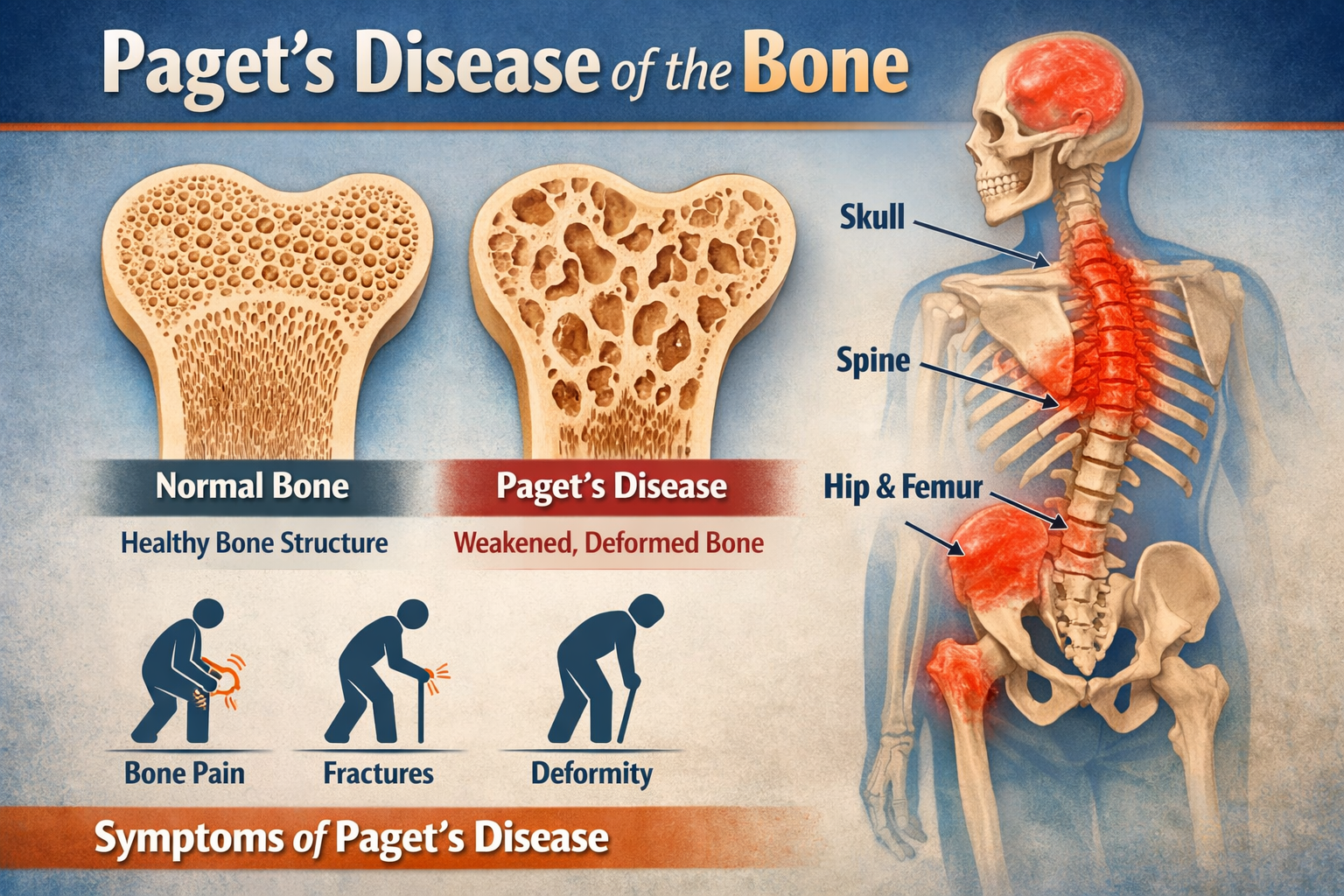
Paget’s Awareness Day is held annually on 11 January and this year’s focus is on pain – one of the most significant aspects of Paget’s disease.
Researchers at the Institute of Genetics and Cancer have found that in Paget’s disease of bone (PDB) there is abnormal processing of sensory signals, but this only applies to the skin overlying bones that are affected by the disease.
This was discovered in a study of 156 people with PDB from all over the UK who took part in the Pain in Paget’s disease (Pip) study.
As part of this study, a technique called ‘Quantitative sensory testing’ (QST) was used to measure processing of sensory signals including pain, fine touch, vibration, and hot and cold, in people with PDB.
The signals were studied in the skin close to areas of affected bone as well as ‘control’ areas where there was no evidence of Paget’s disease underlying the area tested.
Professor Stuart Ralston, who led the research, said:
Pain is the most common symptom of Paget’s disease but the reason that it occurs isn’t well understood. Although drugs called bisphosphonates are the standard treatment for pain in Paget’s, we know that in many patients they don’t work all that well. This new research gives some insights into why that may occur. Although further research is needed, we speculate that changes in bone shape or blood flow associated with PDB alter perception of sensory signals locally, or even in the spinal cord or brain, and influence the perception of pain.
This may have implications for the treatment of PDB using medicines that are available to target these pathways which could be used with – or even instead of – bisphosphonates on people with PDB suffering from pain.
Watch a series of video interviews on the Paget’s Association’s website.

Share