

Lukas Tamayo-Orrego set to embark on independent career
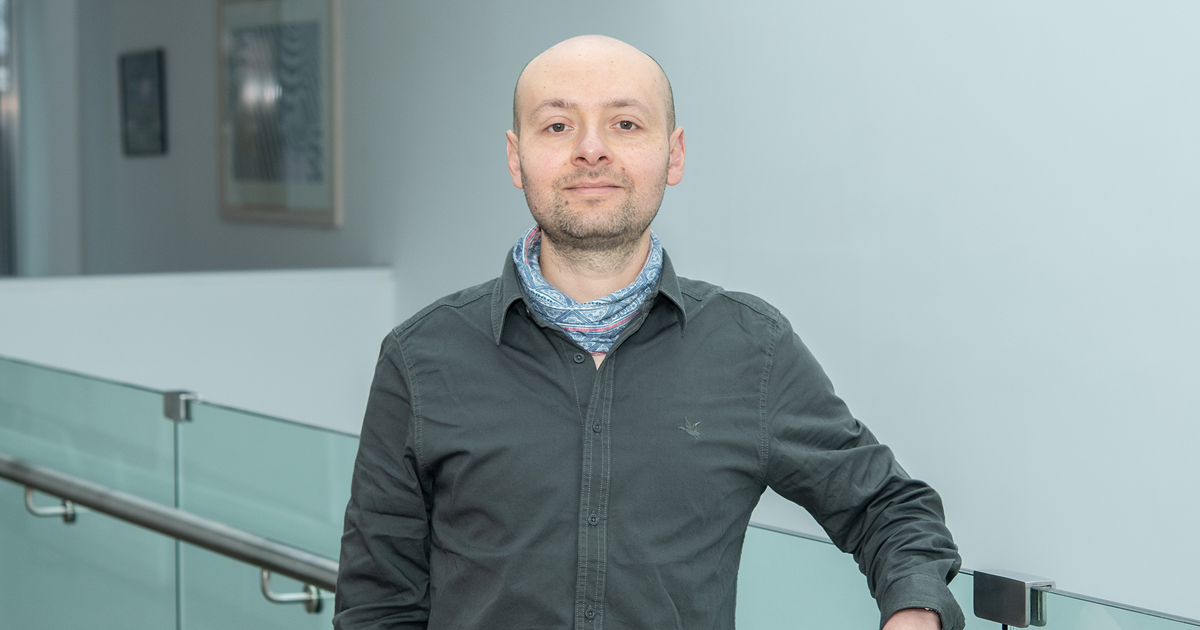
Lukas Tamayo-Orrego, who joined the Institute of Genetics and Cancer (IGC) in 2019, is preparing to embark on an independent career after being awarded an MRC Career Development Award.
The five-year Fellowship will enable Lukas, who is originally from Colombia, to continue studying the molecular mechanisms of DNA replication.
For me, this is the most exciting opportunity in my career to date. I will have the chance to do research and investigate the questions where my current science is leading me.
My main focus is on understanding how the replisome, the machinery that replicates DNA, is regulated. Basically I’m trying to understand how this machinery deals with the proteins encountered on DNA during DNA replication.
The award will start in August and in the meantime Lukas is preparing to build his team – which will include a Technician/Research Assistant and a Postdoctoral Researcher. He is also looking for opportunities to supervise students.
Lukas completed his medical studies in Colombia and then did a PhD in Neuroscience at McGill University in Montreal, Canada, where he investigated the mechanisms of paediatric brain tumour formation.
I ended up studying how the DNA is replicated in the neural progenitor cells giving origin to these malignant tumours. That’s how I became interested in DNA replication during development.
He moved to IGC to work with Professor Andrew Jackson as a Postdoc, taking inspiration from Mendelian disorders of severe growth restriction and microcephaly that directly link DNA replication to organism and brain growth and development. Working together with Johannes Walter at Harvard, they determined the essential function of DONSON in DNA replication initiation.
Lukas will continue studying DNA replication, investigating how DONSON controls the speed of DNA replication forks.
We currently have a mouse model that recapitulates the primary microcephaly seen in individual humans. In addition, I will also use gene editing in human embryonic stem cells to generate brain organoid models of DONSON deficiency and investigate the causes of brain growth defects observed in people with replisome defects.
In the longer term – in 10-15 years – I would like to become an expert in DNA replication in neural development, addressing how DNA replication impacts key aspects of neurodevelopment and brain disease.
It’s very exciting to have the opportunity to become a scientist. That has been my goal in my career. I will try to keep doing this and train the next generation of young scientists.

Share