
A rare-disease charity raising awareness and support: Myaware – Fighting Myasthenia together
As researchers and academics, sometimes we can get a bit caught up in our world of experiments and data – we don’t think about the daily struggles of people living with the conditions we study.
 Rare diseases are categorised as conditions affecting fewer than 1 in 2000 people. They are individually infrequent, but collectively common, with 1 in 17 people being affected at some point in their lives. Though these rare diseases affect much of the population, there are few organisations in place to support these individuals – and most of them are charities. I wanted to write this post to spread awareness about Myaware.
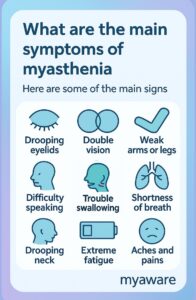
As a charity, Myaware raises awareness for myasthenia, a group of rare neuromuscular diseases affecting around 20,000 people in the UK. It also provides a much-needed support service for patients and funds vital medical research. Of the many disease types, Myasthenia gravis, ocular myasthenia and Lambert-Eaton myasthenic syndrome are autoimmune conditions, whereas congenital myasthenic syndrome is a heritable disorder caused by genetic mutation. Each have varying severities, unique symptoms and treatment strategies.
As part of this post, I also interviewed one of my closest friends, Charlotte Campbell, who uses her scientific background to do some amazing work at Myaware, ultimately helping more people get the treatment they need.
———————————————————————————————————————————-
What is your role at Myaware?
“My role at Myaware is as the Research and Partnerships manager, where I manage our research portfolio and applications for funding. On the partnerships side of things, I manage all of the charity’s external relationships with academia, healthcare, and industry.”
What is the most rewarding, and most difficult part of your job?
“The most rewarding part of the job is the feeling of making an instant impact on the lives of the members we work for, which involves not just patients but also their families and carers. The charity gives myasthenia patients a space to feel heard and to be able to share their own journeys which isn’t something readily available when first diagnosed. The most difficult part of the job is, because we are a small charity, you end up wearing quite a few hats. For example, I also lead on a lot of our awareness and education initiatives, simply because there’s not always someone around who specialises in this. My background is as a scientist, but I’ve found myself helping patients, lobby MPs, aided in the development of educational resources for specialist nurses, and manned stalls at conferences for GPs trying to raise awareness of myasthenia in primary care.”
What are the biggest struggles people with myasthenia face?
“Patients with myasthenia face a lot of struggles just at the beginning of their journey – it can take on average 2 years to be diagnosed and even after that it will take a while to find an optimal treatment plan. And even then, standard care for myasthenia is steroids, acetylcholinesterase inhibitors and immunosuppressants. Steroids are a big issue, particularly when you take them long term and on high dose. Immunosuppressants like azathioprine can take 2 years just to be able to assess if they’re helping. And then around 10% of myasthenia patients are refractory, meaning their symptoms aren’t managed with these broad-acting therapies and they’re at risk of going into myasthenic crisis, which is where the muscle weakness affects the patient’s breathing and involves mechanical intubation.”
Have there been any recent achievements or breakthroughs with how myasthenia is treated in the UK?
“Some of the biggest achievements have been the development of targeted therapies which help overcome some of the struggles I’ve listed above. These are fast-acting, self-administered drugs that are helping myasthenia patients reduce their steroid and immunosuppressant intake. They are changing the lives of some of the most severely affected patients. They are currently available in the US and many countries in Europe, and Myaware is working hard to make these drugs accessible on the NHS.”
———————————————————————————————————————————-
Check out Myaware’s website https://www.myaware.org/ for more information about support, treatment approvals and funding strategies.

Share