Any views expressed within media held on this service are those of the contributors, should not be taken as approved or endorsed by the University, and do not necessarily reflect the views of the University in respect of any particular issue.
Skip to content

The Chernobyl accident, which occurred on 26th April 1986, was one of the most catastrophic nuclear disasters in history. A sudden failure during a safety test at the Chernobyl Nuclear Power Plant in Ukraine released a massive amount of radioactive material into the atmosphere. The disaster resulted in immediate fatalities, long-term health consequences, widespread environmental contamination, and the evacuation of thousands of people. In this blog post, marking the 40th anniversary of the Chernobyl disaster, I have pulled together just a small selection of our digital library resources that will help you explore the accident, the events leading up to it and the aftermath.
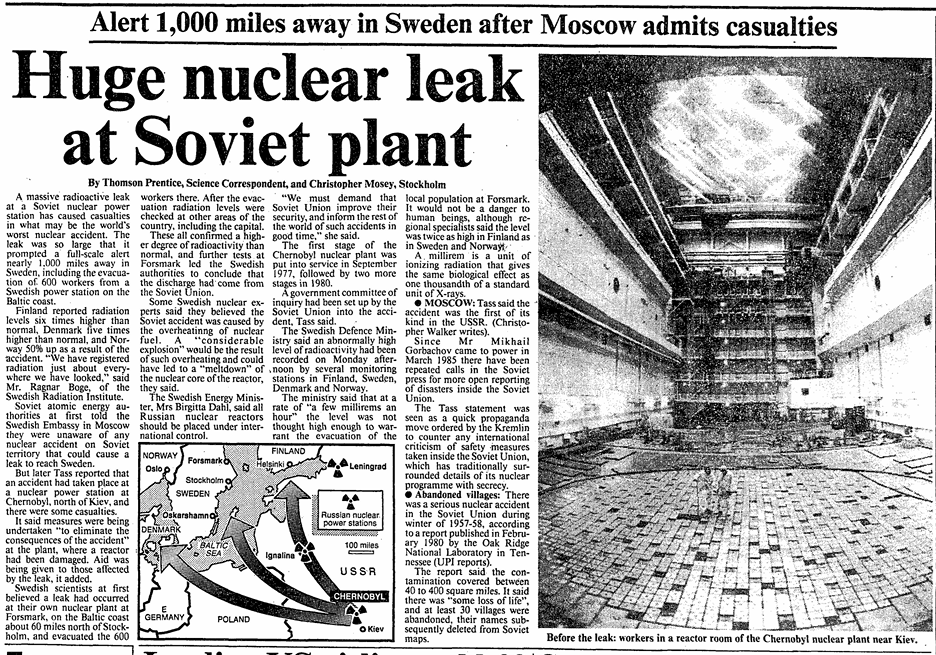
From the front cover of The Times, 29 April 1986. Times Digital Archive.

What did the papers say?

While the Chernobyl accident occurred in the early hours of 26th April, it only began to be reported on 2 or 3 days after the event. The Soviet regime had wanted to keep news of the accident as contained as possible but when the alarms at a nuclear power plant in Sweden were set off by radiation levels, it was quickly worked out the radiation was coming from outwith Sweden and the Soviet government were forced to confirm the accident had occurred. ...continue reading "The Chernobyl disaster: online library resources for your research"
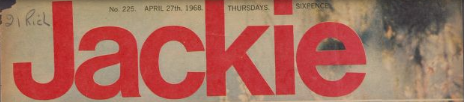
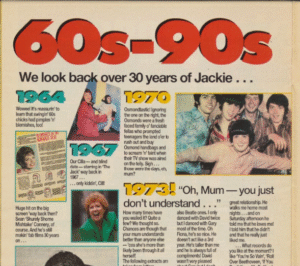
Following a request by staff in History, I'm happy to let you know the Library currently has trial access to the Jackie Archive, 1964-1993 from The Social History Archive, which provides access to this seminal British weekly magazine for teenage girls for the first time.

Screenshot of page from last issue of Jackie from 03 July 1993. From The Social History Archive.

You can access the Jackie Archive via the E-resources trials page.

Trial access ends 20th March 2026.

Jackie magazine was a cultural touchstone for British teenage girls from 1964 to 1993. A symbol and standard-bearer for the 1960s and beyond, it was the first title to cater explicitly to young teens and went on to sell in excess of a million copies a week. Across three decades, Jackie chronicled the changing identity of British girlhood, from the optimism of the Swinging Sixties to the uncertainty of the early 1990s. Today, it stands not only as a nostalgic artefact but also as a rich source for students and researchers investigating the intersections of adolescence, media, advertising, gender, culture, and more.

This series provides access to the only full set known to exist, as no publicly held collection holds the complete archive of the magazine.

You can access the Jackie Archive via the E-resources trials page.
Trial access ends 20th March 2026.
Feedback welcome.

Please note, trial access to a resource is an opportunity for our staff and students to try a resource out and give feedback on its quality and usefulness. However, if we trial a resource this is not an indication that we plan to or will be able to purchase or subscribe to the resource in the near future.

Caroline Stirling – Academic Support Librarian for History, Classics and Archaeology

css.php

Report this page

To report inappropriate content on this page, please use the form below. Upon receiving your report, we will be in touch as per the Take Down Policy of the service.

Please note that personal data collected through this form is used and stored for the purposes of processing this report and communication with you.

If you are unable to report a concern about content via this form please contact the Service Owner.

Please enter an email address you wish to be contacted on. Please describe the unacceptable content in sufficient detail to allow us to locate it, and why you consider it to be unacceptable.
By submitting this report, you accept that it is accurate and that fraudulent or nuisance complaints may result in action by the University.

  Cancel