

Exploring Scotland’s Futures in the Scottish Highlands
By Alice Locker, MA Geography
Watch Alice’s field trip video
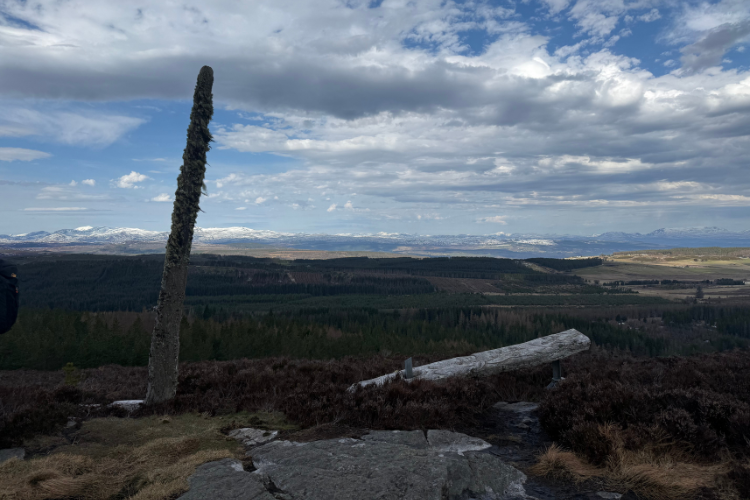
‘Hill of the slope above the water’, known in Gaelic as Càrn na Leitire, rises above the surrounding Abriachan Forest Trust, offering a breathtaking view. The peak is marked with four slighting decaying totems, encrusted with lichen, each showcasing a quarter of the Gaelic year using the sun’s cycle.
Stretched out in front of us are bright green fields, bubbles of heather and patches of tree plantations, evidencing a timeline in land uses. On the horizon, the mountains are tipped in snow, which glistens under the gentle spring sun.
We’re in Abriachan as part of the second year ‘Scotland Futures’ human geography field trip. Across five days in the Scottish Highlands, we explored what we can learn socially and culturally from understanding a landscape, including its past, and how this will shape its future.
For the week we were based in Inverness, at a hostel for our accommodation and in a community centre for much of our work. Our cohort of about 60 students was then split into three for the daily activities, which were all just short journeys from Inverness.
Day 1
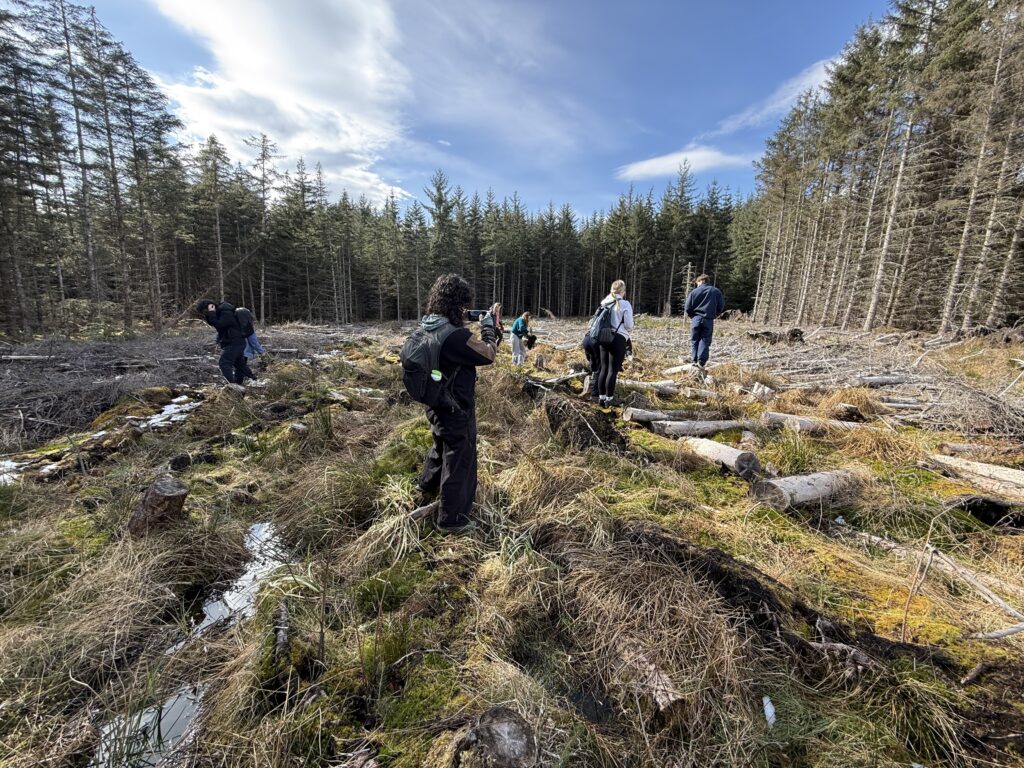
I began with visiting the Abriachan Forest Trust, where three of the locals involved spoke about their story of acquiring their land as a community and the work they have since done, including introducing beavers into Loch Laide.
Alongside this, the day’s theme of ‘future folk’ led to discussions on community landownership, Gaelic culture and nature restoration. We were able to see this put into practice on a tour of the site and get involved ourselves by planting willow trees to support the beavers.
Day 2
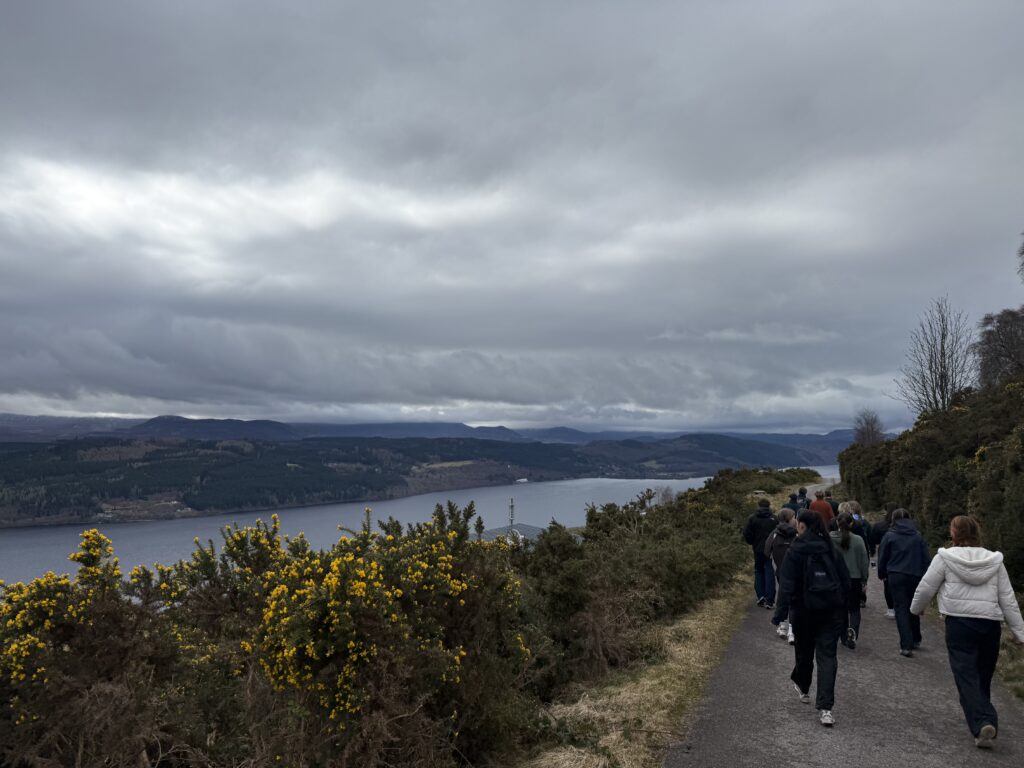
The second day was focused around ‘future natures’, more specifically on rewilding. We began with a profit-focused rewilding company in Bunloit, on the banks of Loch Ness, where we heard about the challenges they are currently facing, from sika deer to the Scottish Government.
Afterwards, we saw quite a different scene in Dundreggan, with a more established rewilding charity organisation, which also houses a community centre and tree nursery to support other initiatives around the country.
Day 3
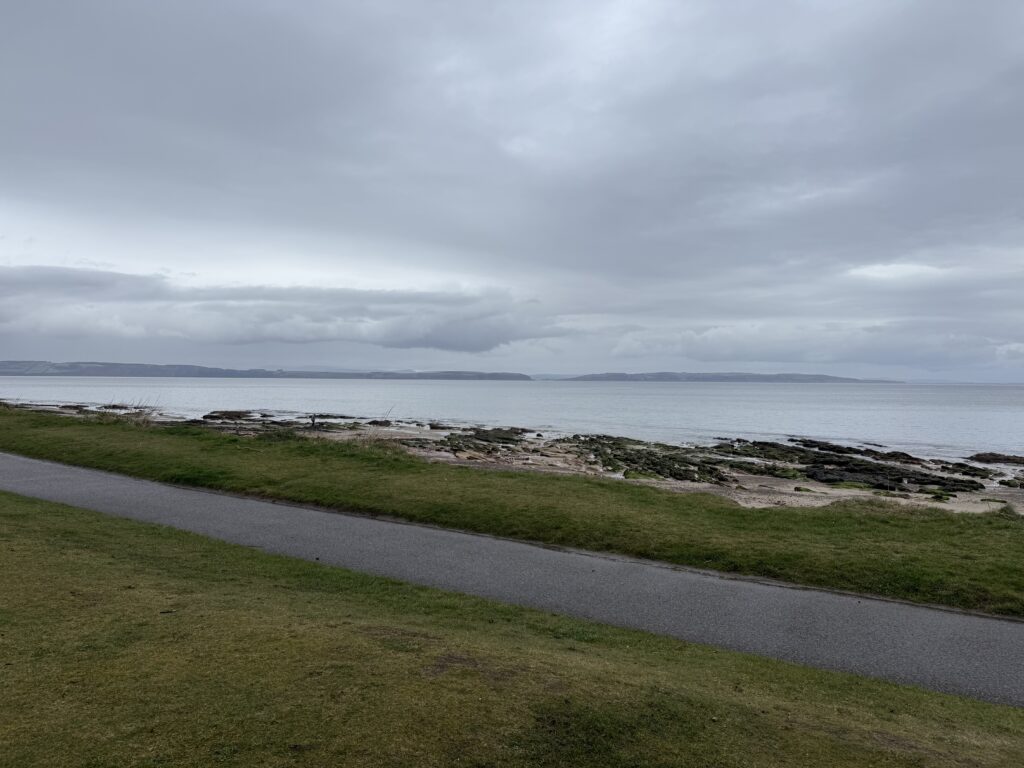
On day three we took the train to the seaside town of Nairn to think about ‘blue futures’, especially in the context of the rising popularity of ‘wild’ swimming. Applying our skill of participant observation, learnt in lectures while in Edinburgh, we dipped in the sea ourselves and even got to go inside a sauna on wheels!
Though the water was unsurprisingly freezing, it was certainly a highlight of the trip for me and many others. After, we listened to recorded interviews between staff and local Nairn swimmers, practicing techniques of logging.
At the end of each day, we worked in smaller groups to create a poster on our thoughts and observations, as both consolidation and practice for our final poster presentation. These presentations took place on the last day as part of our assessment for this course, before we returned to Edinburgh.
It was great to have some more hands-on learning with the field trip, especially being able to have conversations with the people and communities at the forefront of these projects, which are central to their futures.
One of the aspects of the trip I found most interesting was learning about Gaelic culture, including folklore and attitudes towards nature. On our walk around the Abriachan Forest Trust we saw rowan trees, which require permission to be cut down in Scotland, stemming from Gaelic mythology where they would ward off evil fairies.
We also saw many signposts, where all the place names were written in both English and Gaelic, with the tour leader Mairi explaining the meaning behind the Gaelic words, such as ‘allt’ which translates to ‘burn’ to reference a stream.
The field trip wasn’t only beneficial educationally; it was also a nice way for us to come together as students and staff outside of the lecture theatres. From a night of ceilidh dancing to working within different groups and post-work pub trips, we were able to forge new friendships that we will take forward with us into our honours years.
______________________________________
Learn more about our MA Geography degree
Our Master of Arts (MA) Geography gives you the opportunity to specialise in human geography. It is key to understanding and resolving many of society’s biggest problems.
We will teach you about the relationships between people and their different worlds, such as the:
- social
- cultural
- political
- economic
This content has been created by a University of Edinburgh student ambassador who has been incentivised to tell their story.

Share