

Q&A: Phoebe’s placement-based dissertation with McLays Foods
Summary
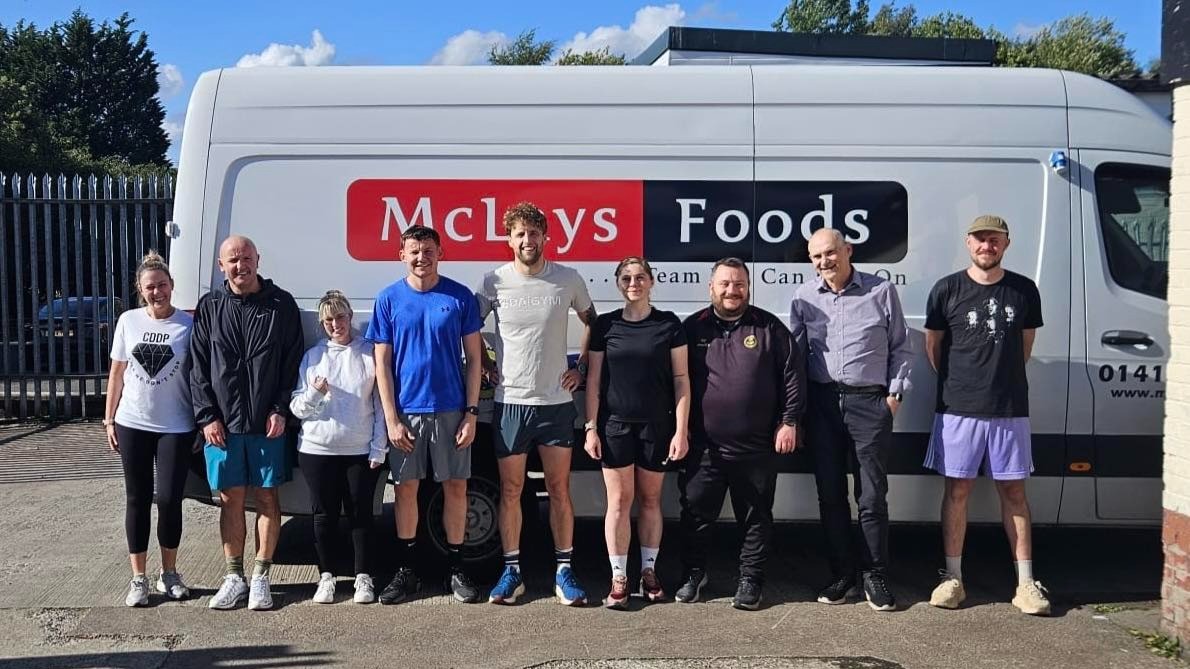
For her master's dissertation, Phoebe Doran undertook a research project with McLays Foods, a Glasgow food supplier.
This article was originally published on the LinkedIn newsletter ‘Springboard Bulletin’, by Climate Springboard: View original article
Placement-based dissertations are a way for businesses to host a student with specialised knowledge, who will contribute to a pre-arranged research project in line with organisational objectives.
We spoke with recent graduate Phoebe Doran, who completed her dissertation for MSc Environmental Sustainability at the University of Edinburgh with McLays Foods, a Glasgow fresh produce supplier who had completed ECCI’s Climate Springboard training programme in 2024.
She shared her experience of working with a smaller business, from the initial stages of setting up a conversation to tips for finding the balance between academic and commercial demands.
The interview has been edited for length and clarity.
Did you already know what you wanted to research for your dissertation?
Phoebe: I didn’t. There were some dissertation mixers that I went to, where we were told about businesses that we could work with to research and write our dissertations.
I heard about Climate Springboard, who were proposing projects about the decarbonisation of businesses and helping them on that journey. That sparked my interest.
I sent an e-mail and Izi replied to me. She asked me to send a little bit about myself and what I was interested in. I told her about my undergrad dissertation, which was about food waste streams and how to reduce them with the introduction of food waste bins. So, I already had a bit of experience.
Izi proposed that I work with McLays Foods, a food supplier in Glasgow. They are trying to become more sustainable. Part of that was to increase the uptake of seasonal local produce by their customers. It tied in with my interest in food during my undergrad dissertation, so she set us up to work together.
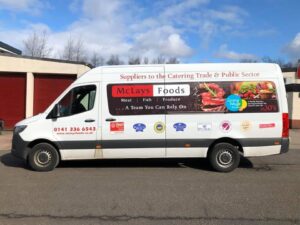
McLays delivery van
What were the first steps in setting up the placement?
Phoebe: I agreed to work with McLays at the end of March, and I had to write my dissertation proposal by the 11th of April.
Then, at the end of May, I had a meeting with Izi [from Climate Springboard] and Ben [School of Geosciences] and Karen, the technical manager at McLays.
I still needed some more information [to inform] how I should design my research and collect the primary data. So, I emailed Karen after the meeting, to clarify what it is that she wanted to learn from my research. I told her what I was planning on researching, and how that would help her.
What did you research?
Phoebe: McLays wanted to know the most effective communication strategies they could use to promote seasonal, local food to their customers. They sell to schools in Glasgow, as well as restaurants and catering services.
There are a lot of complexities around the actual definition of ‘seasonal’ and ‘local’ food and how they were portraying that to customers.
Karen wanted me to conduct a survey of their customer base that she could send around. I did that, but I also did a survey of UK consumers in general, to see what their opinions were [of seasonal and local produce].
Then I did four interviews with their staff members, including Karen, about where they want to go in terms of the sustainability of their business; why they believe seasonal local food is more beneficial; why they want to promote it; and what does that mean?
There are a lot of complexities around the actual definition of ‘seasonal’ and ‘local’ food and how they were portraying that to customers. It was really interesting to get their view about it.
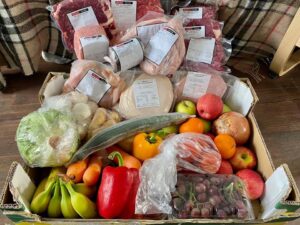
McLays produce
What was the most challenging part?
Phoebe: Honestly, making sure I had given McLays the information that they wanted.
It was at the back of my mind that this research was for something more than just myself and my interest. It was for a business, and they were really hoping that I could give them some communication strategies that they’d never thought of before and [presented] in a clear way – obviously, I didn’t want to hide them in a 12,000-word document.
The literature review at the beginning was challenging, too. [When it comes to] writing about seasonal and local food in general – it was quite hard to establish if and why they are environmentally beneficial. People just assume they are, because it sounds better.
But there’s a lot of complexity around that. When I started my research, it scared me a bit. I thought, “Oh, maybe people shouldn’t be purchasing seasonal food after all.” It was fine in the end. I just had to read a lot of the literature to find out.
What advice would you give to a student doing a work placement for their dissertation?
Phoebe: Don’t be afraid to send an e-mail if someone hasn’t replied. Emails do get lost. These are big companies you’re dealing with. They’re quite busy and have other things on their plate.
It’s always good to check in as well. Just in case their minds do change around what they want, make sure to keep up with the communication. I’d say that was the most important thing.
Meet them in person. I went to Glasgow to interview McLays staff. If it is possible, interview the people you’re working with. You get their perspective, which I found really valuable in my research. Or even just a survey to their staff members, depending on what your research is about.
Remember to focus on the wider research that you want to do
Don’t just focus on the company, remember to focus on the wider research that you want to do. McLays wanted me to produce a communication strategy that would work. But I couldn’t write my whole dissertation about that.
The literature review section wasn’t really for McLays, it was for the reader of my dissertation, so that they get the background knowledge they need. I viewed the reader as the consumer. Whereas the discussion section was more useful for McLay’s, because that was about the results of the survey and interviews. So balance needs of the company with your research integrity.
______________________________________
If you’re interested in writing a placement-based dissertation about small business and climate change, get in touch at climatespringboard@ed.ac.uk 👋
Learn more about our MSc in Environmental Sustainability
On our MSc Environmental Sustainability, you will be encouraged to think across different disciplines and consider scientific, socio-economic, and policy perspectives to better understand sustainability and how it can be achieved in different geographical contexts.
By the end of the programme, you will be comfortable using interdisciplinary approaches to summarise technical scientific documents for use in policy, business strategies and other local and international initiatives.
MSc Environmental Sustainability

Share