

A day in the life of a fourth-year BSc Environmental Geoscience student
Summary
Ailís Keyes shares a day in her life as a BSc Environmental Geoscience student at the University of Edinburgh.
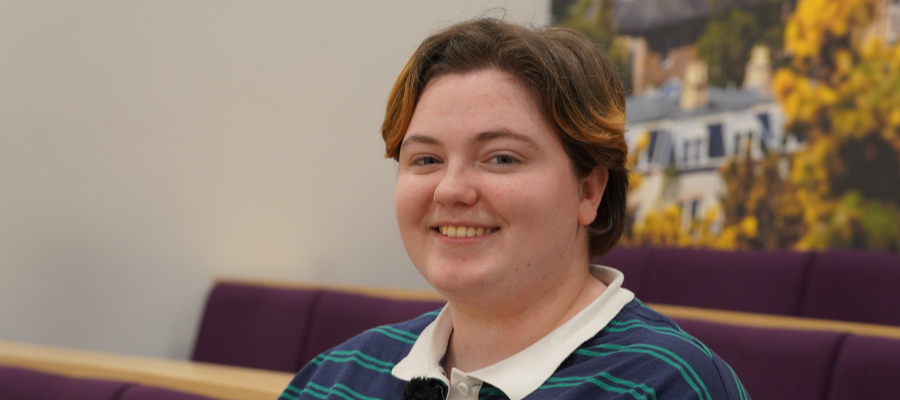
Hi, I’m Ailís! I’m a fourth-year GeoSciences student and a Student Ambassador for the School of GeoSciences. I’m going to take you through a day in my life as a student at the University of Edinburgh, and hopefully help you feel a bit more informed as to what your life could look like if you join us!
Morning
I start my Tuesday pretty early because I’ve got a 9am Environmental Geochemistry lecture in Murchison House. I usually make a quick breakfast, throw everything into my bag, and head out the door. One of the perks of studying in Edinburgh is how easy it is to get around; the buses to King’s Buildings Campus are frequent, and the bus stop is directly outside Murchison House.
Since this is one of my only early starts of the week, I sometimes get to campus a bit ahead of time and grab an energy drink from the Nucleus Shop. It’s a nice way to wake up properly and set myself up for a packed day.
The lecture itself runs until 11:30, and it’s always packed with interesting examples and case studies of how chemistry shapes the environment around us. The class itself tends to be split between a lecture and then a more hands-on computer-based practical. After class, I usually have a bit of a break, so my friends and I tend to find computers in the open access labs in Murchison to do a bit of work, or we might move to King’s Buildings House for lunch if none of us feel particularly keen on being productive!

Afternoon
After lunch, it’s time to head over to JCMB for my Environmental Problems and Issues lecture, which starts at 14:10. When based on King’s Buildings, the walk time between classes is never more than five minutes, which really helps you be more productive during the breaks. The lecture is a long one, but the content is so interesting that it never feels that bad. We cover everything from legacy pollution to nuclear waste management, and it’s one of those courses where everyone has something to say, which keeps it lively.
Once the lecture finishes around 17:00, I usually take a short breather by taking a walk outside or having a quick snack before getting ready for the evening. Tuesdays are definitely my most class-heavy day, but I actually like the structure of it. It feels like I get a lot done without it being overwhelming.
Evening
At 17:30, I meet up with other members of the Marine Science Society for a committee meeting. We plan events, organise speakers, and brainstorm ways to get more students involved in marine science. It’s a really friendly committee, and it’s nice to be part of something that connects people across different years and degrees. As the Research Manager for the society, I provide an update on the corals we look after in the lab and provide support to other members with their events.
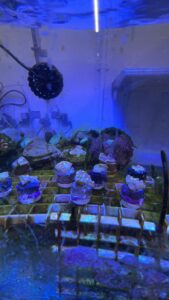
Corals used for research project with the Marine Science Society
After the meeting, I usually head to the gym. I meet up with some of my teammates from the Shinty Club, and we do a group exercise session together. It’s a nice way to reconnect and have a little gossip too! Once I’m home, I’ll make dinner and do a little bit of uni work, preparing for the next day’s classes. It’s nothing too intense, just enough to feel on top of things. Then it’s straight to bed because Tuesdays are definitely full, but in a way that feels rewarding.
It’s a long day, but it’s full of things I genuinely enjoy. If you’re thinking about joining the School of GeoSciences, days like this are pretty typical: busy, varied, and full of opportunities to get involved in whatever you’re passionate about. Edinburgh really is an amazing place to study, and there’s always something happening, whether it’s academic, social, or somewhere in between.
______________________________________
Learn more about our BSc in Environmental Geoscience
With our BSc Environmental Geoscience degree, you will explore the conditions of Earth’s past so you can protect its future, evaluate the risks related to global environmental issues, and use your knowledge in discussions on environmental challenges.
We will teach you how to tackle these challenges by covering:
- data science, programming, and computing skills
- traditional field and laboratory skills
- knowledge of how the Earth’s environment functions
This content has been created by a University of Edinburgh student ambassador who has been incentivised to tell their story.

Share