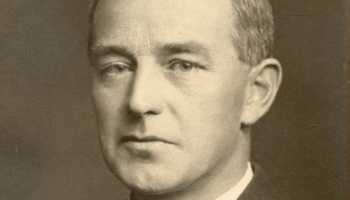
There has been a long history of medical innovation and discovery in Edinburgh over the three centuries of our history. In this blog post, alumnus and pathologist Professor Michael Patton describes his grandfather’s wartime development of one of these innovations, EUSOL, an antiseptic solution which could be made up freshly at the battlefield in an era before antibiotics.
EUSOL Edinburgh University Solution
By Professor Michael Patton
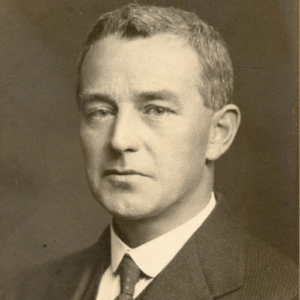
Three generations of pathologists
I am the third generation to graduate in medicine at Edinburgh University and with three generations our careers have spanned over hundred years of the tercentenary. We have all been pathologists but pathology has changed enormously over that period of time.
My grandfather Professor Alexander Murray Drennan started his studies at the end of the 19th century when pathology covered all laboratory disciplines including chemistry, haematology, histopathology and forensic pathology. When he became Professor of Pathology in Edinburgh, he was involved in the planning of what was then the new Medical School building at Teviot Place. My uncle, who was also called Murray Drennan, was a general pathologist working at the Western General Hospital in Edinburgh and was involved in setting up the department there. After graduating in 1974 I trained in medical genetics at the MRC Unit in Edinburgh and then went to set up the Regional Genetics Service at St Georges in London. At the end of my career, I became responsible for a new 13 story pathology lab, which was a joint venture between a global pathology company Sonic Healthcare and University College Hospital in London. By this stage gene sequencing had become the basic technology in all the pathology disciplines.
The Development of EUSOL
In the First World War the frontline troops were fighting in water filled trenches and as a consequence many developed a serious problem known as “Trench Foot”. Following a mild initial trauma deep ulceration and infection would develop and in the absence of antibiotics, which were not developed until the Second World War, the infection would spread through necrotic tissue and might lead to surgical amputation of the leg or even both legs. In some cases, the infection would enter the blood stream and lead to death from septicaemia.
At the beginning of the Frist World War my grandfather was in the Royal Army Medical Corps and was based in Edinburgh. The newly formed Medical Research Committee approached the pathology department in Edinburgh to investigate the possibility of a treatment for trench foot. My grandfather worked on this with Professor Lorrain Smith and together they developed an antiseptic solution based on Hypochlorous acid which could be made up freshly at the battlefield and could be applied in soaks to the infected wounds. Their paper, which showed extensive laboratory and clinical investigations, was published in the British Medical Journal on 24th of July 1915 (1). The term EUSOL or Edinburgh University Solution was used in the paper and has continued to be used since then. Their paper was followed by many clinical reports from military surgeons at the frontline reporting the efficacy of this treatment in treating trench foot and avoiding the need for amputation.
EUSOL today
Although EUSOL was developed as a specific treatment for trench foot, it found many other uses in the era before antibiotics. It continued to be used successfully as I remember as a medical registrar, even after antibiotics were available, in the treatment of leg ulcers in elderly patients where there was poor circulation and deep necrotic ulcers. It was one of the cheapest treatments for leg ulcers as it had been developed as part of the war effort and was not patented or developed commercially. EUSOL is no longer available in the hospital pharmacy, but it had an advantage which is perhaps forgotten today. Using antiseptics rather than antibiotics to treat open wounds does not lead to the development of dangerous multi-resistant hospital pathogens.
Reference
1. Smith JL, Drennan AM, Rettie T, Campbell W. Experimental observations on the antiseptic action of hypochlorous acid and its application to wound treatment. BMJ 1915 ii 129-36