In 2026, we mark 300 years of medicine at the University of Edinburgh.
This is also a very significant year in particular for two groups; the MBChB class of 1976 who came together in Edinburgh for their 50th anniversary reunion in May, and the graduating MBChB class of 2026 who have completed their medical training during a busy year of tricentenary activity.
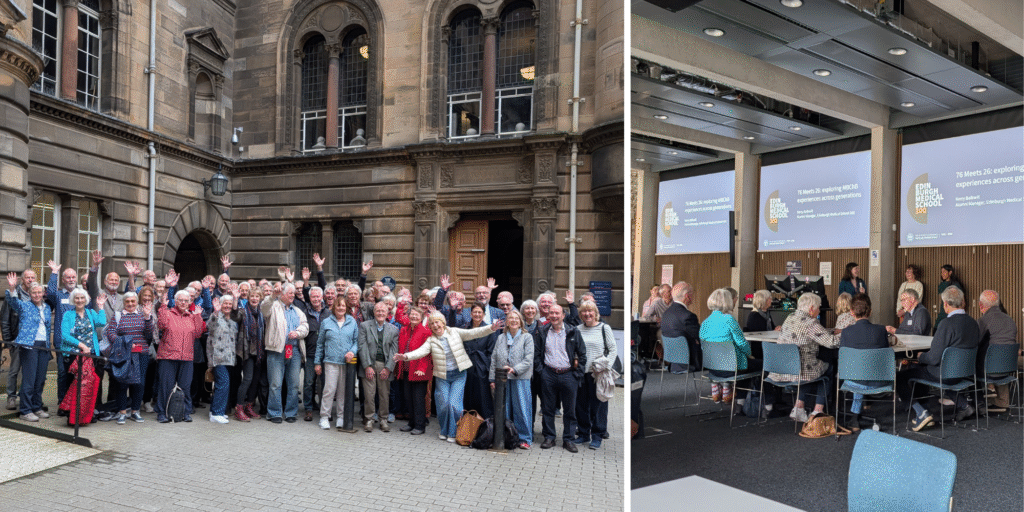
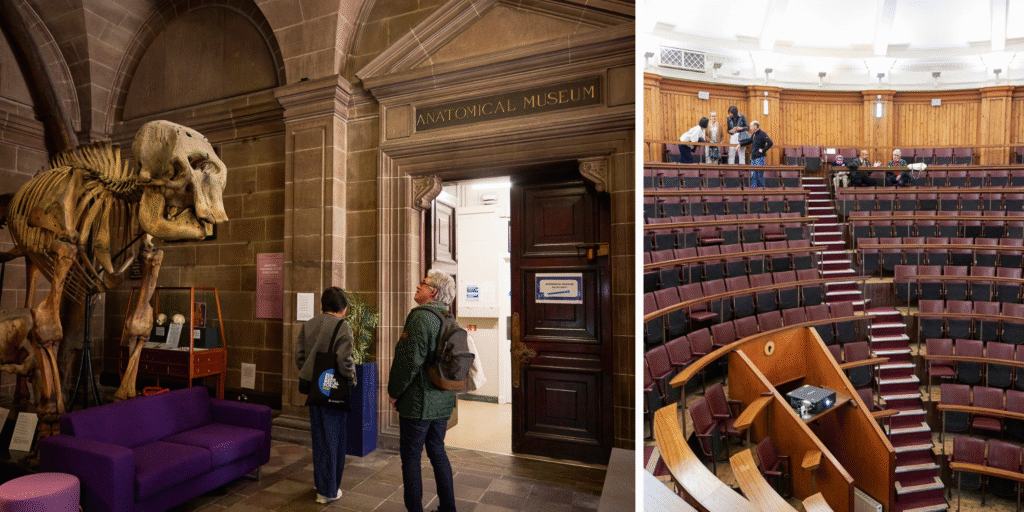
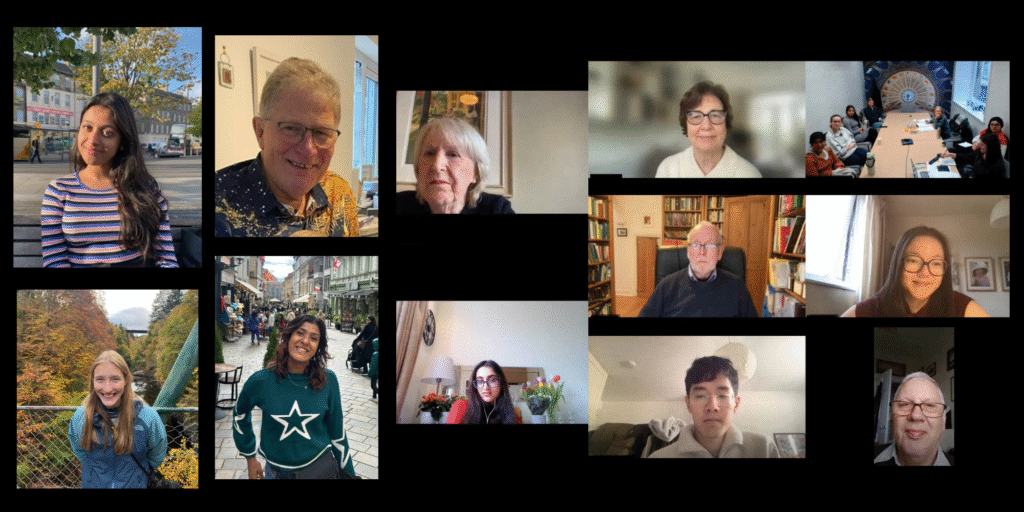
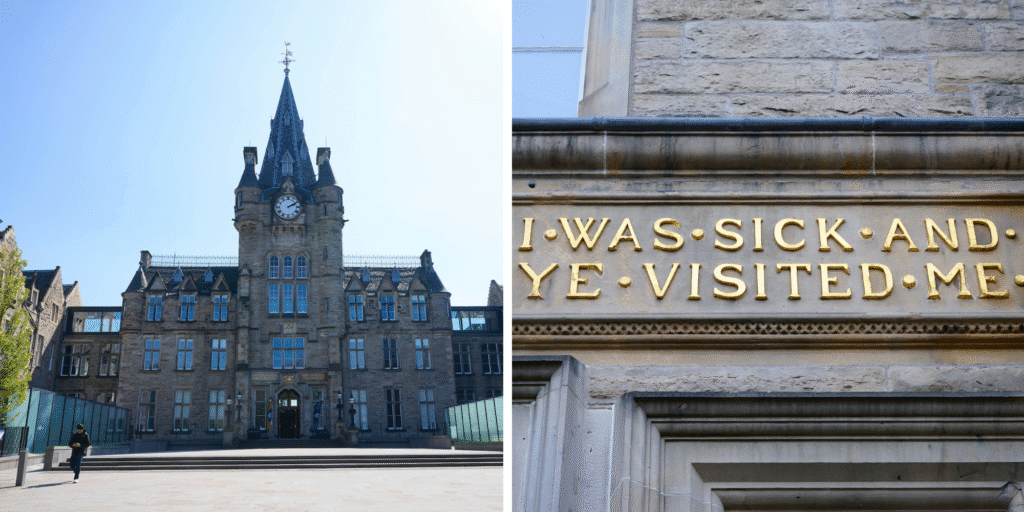
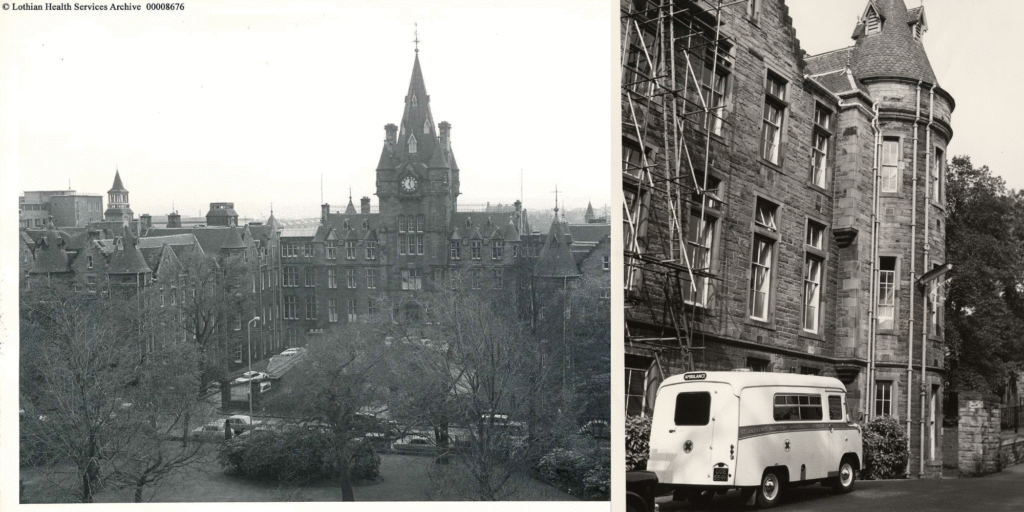
In February, during a gap between medical exams and placements, members of each class came together for a hybrid workshop to compare experiences and share perspectives on what has changed about the student experience and learning over the last 50 years. We hosted a repeat workshop in May, this time in person as part of the class of 1976 reunion. This second session took place in the former Royal Infirmary of Edinburgh, now the Edinburgh Futures Institute, a fitting location for exploring memories and experiences across generations.
There have been vast changes to the student experience over the last 50 years with the evolution of medical education and practice. Against this backdrop of change, what elements of student life and learning are unrecognisable, and what elements of the Edinburgh Medical School experience have stayed very much the same? We spoke to the two groups to find out.
Treasured memories
Nostalgic memories were shared as alumni and students introduced themselves in each workshop. There were common themes of learning from patients, the relief of finishing exams and enjoying the Edinburgh sunshine with friends:
“The summer of 1976 was spectacular. The weather was absolutely gorgeous. I’ll never forget it. And we were sitting our finals at the time, and then when it was all over, I remember the day of the last exam, we all piled into various cars and were driven or drove to the Sheep’s Head in Duddingston. And we gathered outside in the sunshine. I even got a sunburn, I can remember…” – 1976 graduate
“My favourite memory probably is getting to meet lots of people and patients. It’s such a privilege to get an insight into people’s lives and I think that’s the part of medicine that I’ve most enjoyed studying.” – current student
A changing educational landscape
“Nobody taught you how to break bad news. I think that’s changed now.” – 1976 graduate
There were significant differences in teaching and learning, with the growth of student numbers today to over double that of the 1976 class, and with this particular class having spent much of their first years online during the COVID pandemic. For their first year, the class of 2026 had open-book, online exams – an unimaginable format for many in the class of 1976 who were tasked with many months of dissection exercises in years one and two (with the focus now on prosection and learning through observation).
Students had found that formalised communications skills classes with trained actors built their confidence in approaching difficult conversations with patients, something that hadn’t been covered and was described as more ‘on the hoof’ in 1976. Down the line in their programmes, students felt that real interaction with patients had been impactful, helping them to build their confidence and skills in later years.
“When I was in 4th year, I felt like the patients were so important in helping me bring up my confidence and helping me sort of just become better at medicine and become better at interacting… I just feel like it’s a two-way system – we’re helping them and they’re also helping us. And I just think that’s such a nice experience to have had.” – current student
Alumni described the importance of role models, and particularly nurses, to their practical learning experiences:
“One of the most important things for me was learning from the nursing staff because they taught, especially the experienced ones, and they could take you under their wing and you just learned a huge amount from them.” – 1976 graduate
As well as being much larger, the MBChB cohort is much more diverse than it was in the 1970s. One key example of this within the group was brought up by students from the HCP-Med for Healthcare Professionals programme. Set up in 2018 and the first of its kind in the UK, the five-year scheme encourages professionals in other areas of healthcare to consider studying to become doctors. For the first three years, students study part-time and predominantly online, with three compulsory residential weeks in Edinburgh each year. This new pathway has widened access to medical degrees and is an innovative departure from the traditional routes taken in the 1970s.
Alumni heard from a student and former nurse who reflected on how she has been able to use her career experience and familiarity with the hospital environment to make the most of her placements and enjoyed seeing things from a new perspective. Her favourite memory was joining up with the cohort in person for her final years and feeling welcomed into the group:
“I really enjoyed then when we got into the final two years… it was good because it did feel a bit disconnected being in our little group of 25 [HCP Med students]. But it was all distance learning, all online, which I’m sure [the other students] already went through due to COVID, but that was more situational than anything else. Ours was, I guess, intentional, but it was so nice to get to know everyone in the undergrad cohort as well.” – current student
On placements, both cohorts felt that these were pivotal parts of the MBChB programme, and many from both years had had international experiences which had helped them to learn about new systems, become more adaptable and encounter things that they never would have seen locally.
The importance of mentorship and active attention to teaching was made clear by a current student, who shared both positive and negative experiences from their placement. They contrasted experiences of feeling ignored and not being introduced to patients, to valuable moments where consultants actively spoke through their thinking out loud and asked questions:
“It makes such a difference, having someone talking to you, asking you questions. I remember going into a surgery and the anaesthetist was keen to teach me and he was asking me about the mechanisms for all of the different drugs he was using and I had no idea. And I was so embarrassed and that night I went home and I learned all of the mechanisms of all of the drugs and they stuck in my mind.” – current student
Support networks: closer connections between years
“Most people didn’t even have television in their flat, so we all used to walk to somebody’s flat to watch Monty Python or something similar.” – 1976 graduate
Graduates were asked about forming networks. Alumni formed strong connections within their own class, evidenced by the many well-attended reunions that have taken place over the years. During their student days, they would get to know some other students through doing intercalated degrees and taking part in societies.
Many members of the group had also been very active in sport, which still helps to expand networks and form important bonds. The graduates we spoke to had taken part in various clubs that are still running today, including rugby, hockey, mountaineering and trampolining. The class of 1976 were part of a proud tradition of intramural sports, with one of the alumni participants having run the Sports Association and Intramural League during a winning year for Edinburgh. One of our student participants described how they had hugely benefitted from being a part of the newer SNIMS (Scottish & Northern Irish Medical Sports), which involves competing in a different host city every year and meeting medics from a wide range of cities.
Most people didn’t have landline phones, so staying in touch was a matter of sticking to pre-arranged meetings and knocking on doors.
Today, class sizes are much larger but students form close relationships across years, with the use of technology helping people to build and maintain broader networks. Regular activities organised by students in senior years, such as the annual Medics Musical, social media communities, a wider range of discipline-specific societies and informal ‘academic family’ groups have enabled medics to build relationships across years and learn from their peers. The group felt that these activities have made the transition across years easier for many students than it once was.
“I have people in the year above that were my ‘parents’. And then I’ve got two people in our year who are like my ‘husband’ and ‘wife’. And then we have four ‘children’. Our academic family have all stayed in touch, so I have people in first year that we are, however many great grandparents of…! We do Christmas dinner every year, and every year it got bigger.” – current student
Lifting barriers: slow but important progress
One of the most significant differences between the two cohorts was the demographic make-up of each class. In the class of 1976 cohort, women were underrepresented at around 35% of the graduating class. However, there are consistently more female applicants and students today, with women representing over 50% of recent MBChB cohorts. The student cohort has also become much more diverse since 1976, with students from a wide variety of backgrounds now entering Edinburgh Medical School.
Although alumni generally felt that they received equal treatment at Edinburgh Medical School, many faced challenges as their careers developed. The class of 1976 described hearing from colleagues who had been asked about childcare arrangements at interview, and some cases of preferential treatment for male doctors. Additionally, some disciplines, such as surgery, were described as near impossible for women to get into at the time.
Even in 1991, years after the class graduated, only 3% of surgical consultants were women in the UK according to the Royal College of Surgeons. In 2024, it was nearly 17%, showing a huge change but still a significant gap in these professions.
Although positive steps have been made to support equality, diversity and inclusion since 1976, the students we spoke to had heard of instances of poor treatment of non-white colleagues by patients and hospital staff, particularly in rural and remote areas. Students were optimistic that attitudes are shifting and that there are now more protections in place.
“It seems to be quite a big problem, but I hope things are getting better because people are recognising that it’s a problem and that it’s something that needs to be fixed.” – current student
Student life: familiar spaces through the decades
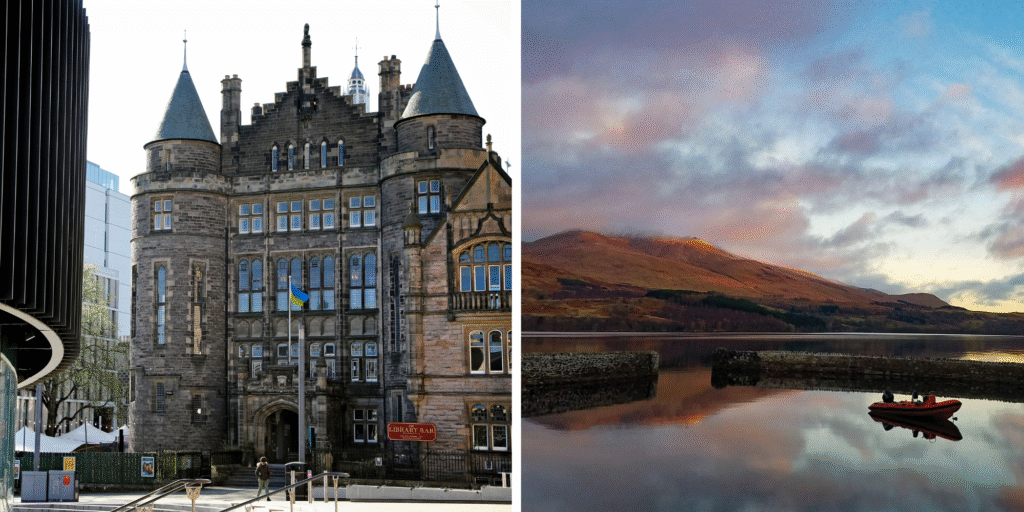
Both the alumni and students described very fond memories of trips to Firbush Point, the University’s outdoor activity centre located eighty miles north of Edinburgh on the south shore of Loch Tay.
Firbush first opened as a university facility in October 1967, shortly before our alumni group started their programmes. The facility cost approximately £50,000, much of which was funded by grants from the University Appeal Fund. Firbush has been enjoyed by students, alumni and their families for decades and continues to be a popular escape from the city for student societies and academic groups more than 50 years on.
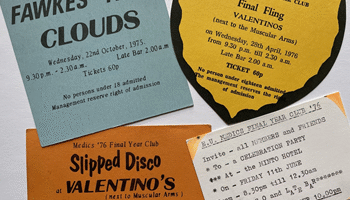
Another similarity was spending time in the various student unions. Teviot Row House was known as the Men’s Union when the 1976 class started at the University, with female guests permitted via a sign-in system (with the exception of a Friday night disco). During their time at University, the class of 1976 saw the last night of the all-male bar, with women being welcomed in without restriction thereafter. In January 1971, that Union finally voted to admit female students as members, for which a 75% vote was required. Soon after in 1972, the Union voted to make all matriculated students automatic members of the Union. For 55 years, it’s been open to everyone.
Protests centred around Old College were still very much a part of the student experience in 1976 and many members of the class described fighting for equality and progress during a politically turbulent time:
“The students back in the 70s were revolting. You can take that two ways…! But we were, some of us occupied the old quad, the administration building, protesting against apartheid in South Africa. We had a student rector elected… Gordon Brown, his name was.” – 1976 graduate
The cost of living – a shift towards working whilst training
“It was when we got married, halfway through the course, and we didn’t have any debt, and we only had 10 pounds, but that was okay. I had a full grant… I felt as affluent at that time as I felt at any other time in my life. Everything was cheap, accommodation was cheap, food and drink were cheap.” – 1976 graduate
The cost of living and student debt has risen substantially. Alumni were surprised to learn that many students had needed to work part-time jobs throughout term time at Edinburgh to get by, on top of receiving loans.
The students who we spoke with had worked flexibly throughout the semester in both online and in-person tutoring roles and hospitality jobs that could fit around their studies to cover living expenses. This highlights an important difference in the day-to-day student experience at Edinburgh, which can be challenging for those who can’t rely on others for support.
By contrast, it was previously very challenging and unusual to work part-time during the semester due to long hours spent learning. One graduate described her husband, also a medical student, driving buses on weekends as a rare exception. Many alumni had worked over the summer holidays however – one of our participants was even a lifeguard at the former Portobello outside pool.
“You couldn’t, you couldn’t conceive of having an outside job. We were at it morning, noon and night without respite. You might not even have had an hour for lunch in the day… there was no way you could remotely contemplate working during the term time.” – 1976 graduate
Student consumption of beer was identified as one commonality that has stood the test of time, but with significant differences in costs.
“I think beer played too much of a part in our education… If you were so minded, you could buy a bucket of beer, literally a plastic bucket of beer, a ‘pint pot’. You used to say you could get drunk for a pound!” – 1976 graduate

After graduation: growing uncertainty and unexpected opportunities
Students commented that the allocation system for foundation training posts, which gives each applicant a computer-generated ranking, can create a sense that future career pathways are out-width their control. This uncertainty can make it hard to imagine settling and putting down roots, meaning that many have to re-adjust expectations quickly and build new support networks:
“I’d say it’s quite a nomadic career of like you’ve kind of got to go where you get the training jobs. I’m going to make a move this year to start my job and then I’m probably going to have to move again to start specialty training and move again for consultancy. So, when do you settle is the question… it seems quite far away right now. It seems very much like you’ve got to be ready to up and go whenever.” – current student
“We spoke about the kind of winding roads until you figure out what you want to do or you get the opportunity of what you want to do. Many of us are in the stage right now where we’re leaning towards a set of things, but depending on opportunity and whether or not we want to move, whether or not we’re competitive enough… I think we were forced to be adaptable.” – current student
For the class of 1976, the job market was still very competitive but there were ample local opportunities. Although many travelled further afield, some graduates feared that there was a risk of being ‘passed over for moving up the ranks’ for those who moved away from Edinburgh. Not everyone got their first choice, but there was more certainty in terms of putting down roots, choosing a location and specialty.
“In our day if you decided, right, that’s what I want to do… it was not easy, I won’t say easy, but you know, the paths were fairly well predefined.” – 1976 graduate
Faced with uncertainty, students received reassurance from alumni, who emphasised the benefits of keeping an open mind early on in their careers. Many hadn’t expected to find the specialty that they did, but were inspired by role models and colleagues along the way. Embracing uncertainty had led to new interests and directions for many.
“I think we’d all do it again, yeah. I had a great life. Every day I went to work, it was completely different. I had no idea what was going to happen – you walk into the surgery and you had no idea who was going to walk through the door. So, it was always interesting.” – 1976 graduate
Asked about the role of AI and threats to jobs, students maintained that whilst some non-human aspects of medicine are already being strongly influenced by AI, they felt relatively secure in their upcoming roles given the timeless prominence of the patient-doctor relationship.
“The face-to-face interaction, the trust that patient and doctor have with each other and the whole patient-doctor relationship is still a main focus [of the industry]. I think as it stands now, there’s already a lot of scepticism around AI from doctors and public alike. So, I think [the human element] will persevere.” – current student
Students expressed concern about the media environment around medicine, and described reading articles which have been demoralising as they come up to graduation. Alumni attendees advised keeping the intrinsic importance of their work to the patients at front of mind in the face of negative press and shifting political circumstances.
“You get all that press stuff… but when it comes down to your patients, you’re hugely important. You mustn’t forget that. The majority of patients are really grateful.” – 1976 graduate
A shared love of the profession
“We were all in the same position, we were all working our socks off, but everybody was doing the same, so you didn’t feel you were any different.” – 1976 graduate
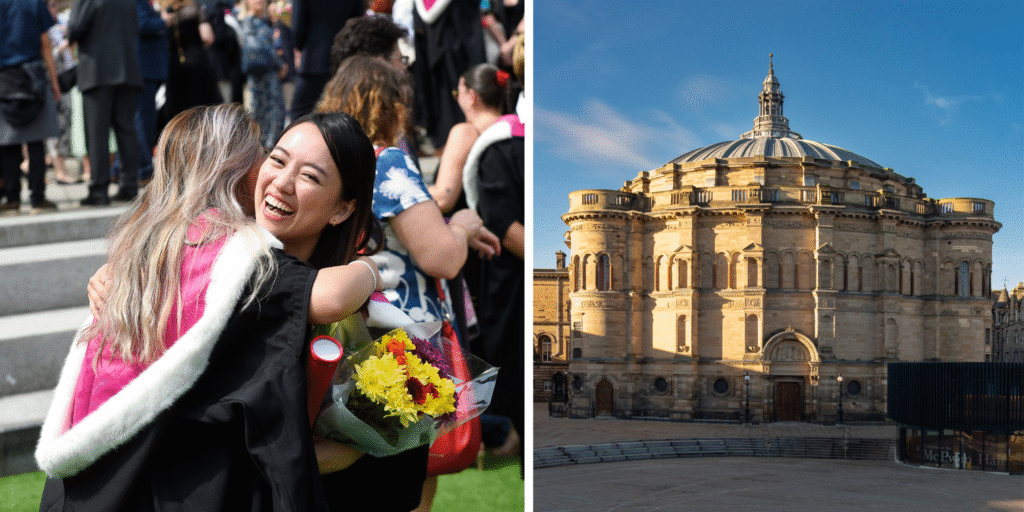
In conversations, we found that a shared passion for and dedication to medicine has defined both the student and new graduate experience over the years.
Many alumni experienced very difficult working conditions in the early days of their careers and much longer hours than students will be working in their first roles.
Despite this, many described their hospitals as sanctuaries – sometimes with a dedicated mess, a bedroom, and even a butler who always ensured that those working would have something to keep them going (most often tea and toast). There was a camaraderie and a feeling of being looked out for, appreciated and valued by the team:
“When we were doing our sort of final year and house years, there was the ward kitchen and the kettle and the fridge, and you could always make a slice of toast. And sometimes if you were a man, the nurses actually did it for you. They never did it for the women. But it made you feel that somebody appreciated you, that you were valued.” – 1976 graduate
“I was exhausted and the ladies in the ward knew that I was very, very tired. I think I looked paler and paler and paler with every day that went by. And one day [the nurses] were very excited and they said, “come over”. And what they’d done was to ring up Radio Forth and get a record played for me. And do you know what they chose? Lonely is the man without love.” – 1976 graduate
Dedication, resilience and a passion for medicine had been anchors for our alumni as they navigated life as new graduates and these were also traits that the current students shared as they pushed on with their education through difficulties caused by the COVID-19 pandemic. When asked if they considered medicine to be primarily a career or vocation, students asserted the latter, citing the privilege they felt to be the person trusted to treat patients at their most vulnerable. Alumni taking part were reassured to hear that students today still share a genuine love for their work.
Conclusion: professional lives well lived and bright futures
Reflecting on discussions, it is clear that both change and continuity define the experiences of medical students at the University of Edinburgh. While educational methods, class demographics, and social contexts have evolved, the core values of passion, camaraderie, and a commitment to patient care remain unchanged.
Today’s students face new challenges, such as increased financial pressures and global uncertainties, yet they benefit from increased support networks and the technological advancements which have made these possible. And of course, those who participated in the workshops head out to take their first steps with warm words of advice from those who have spent 50 years practicing.
Every new summer 2026 Edinburgh Medical School graduate will receive a postcard with handwritten words of encouragement from a former student, thanks to alumni who have participated in our postcard activity throughout the year. Once piece of advice perfectly captures the shared experiences that define our medical alumni community across generations:
“Congratulations on choosing medicine! The technology of your time will be way in advance of my time, but you’ll experience many similar things; the privilege of helping those in their times of worst need and desperation, the thrill of new scientific advances and what they bring to your practice, the enduring camaraderie of medical life. There will be sacrifices; you will have to navigate work-life balance and keep well. But you have already excelled to get here, so you can do it. Good luck.”
With thanks to Vivienne van Someren (MBChB 1976) and Zakiyyah Sadiyah Mamodebaccus (MBChB 2026), who helped us to shape workshops and bring groups together, and to everyone who took part in the discussions.