
Every year the 27th of October marks World Audiovisual Heritage Day, and in 2025 it coincided with my first day at the University of Edinburgh’s digital library as the new AV Digitisation Technician. My post had been vacant for some two years and I am thrilled to fill it, tasked with digitising and making available material at the School of Scottish Studies Archive and beyond. I began my career in digitisation at the Briscoe Center for American History in Austin, Texas, while studying for my Masters in Information Science, and quickly fell in love with the work. Connecting people with their heritage on otherwise inaccessible audiovisual material is a particular passion of mine, which I’m excited to continue in my new post.
Since starting, I have had the pleasure of fulfilling a backlog of next of kin requests for recordings held at the School of Scottish Studies Archive. I’ve been getting familiar with the range of holdings, which span oral histories, musical performances, place name surveys and more, and working with the Archive and Library Assistants to trim larger recordings down to the desired tracks.
Most material is sent out as mp3 files, which are easily compatible with consumer-grade sound systems such as phone and laptop speakers, though one requestor had their files burned to seven CDs! In making recordings accessible, overcoming tech needs, such as lack of internet streaming access, is paramount so that people may hear the voices of relatives and contributors from decades ago.
In addition to working on the backlog, I have been inventorying the variety of audiovisual digitisation equipment held at the university. One of the key challenges to transferring archival AV material is the availability of playback equipment, which is quickly diminishing. Try to think of the last time you used a VCR, or if you’ve ever come across a reel-to-reel tape machine – a long time ago, or maybe never?
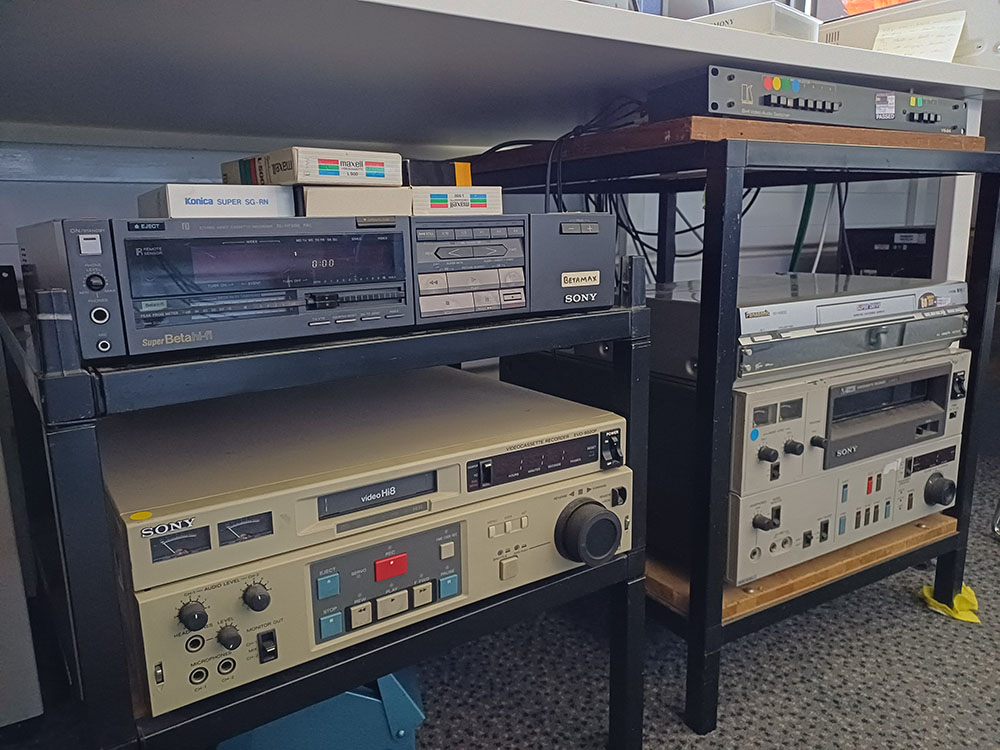
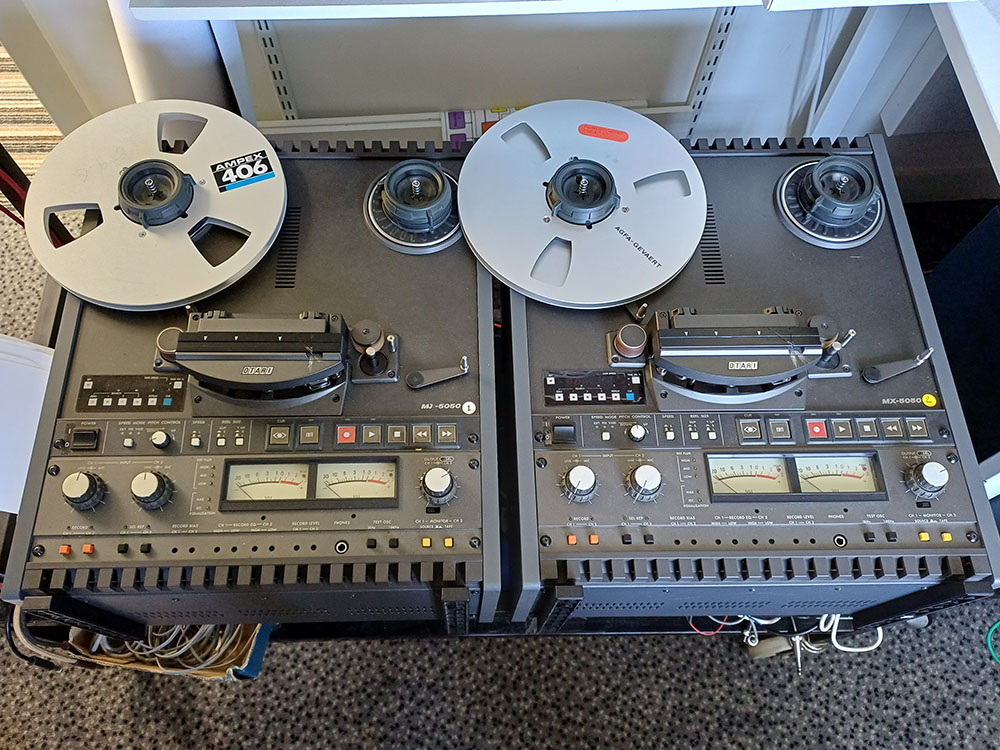
I’ve found some brilliant bits of kit so far, such as the Nagra IV, a LaserDisc player, a Brenell Delay Echo Unit Tape Loop, and even an Edison cylinder lathe. Part of my remit is to ensure we have well-operating machines to be able to continue the work. I have been developing a comprehensive inventory of everything we have, which includes the machines used for digitisation, such as our well-taken care-of Otari MX5050 reel-to-reels, and the aforementioned ‘collection’ kit that serves as an insight into recording history.
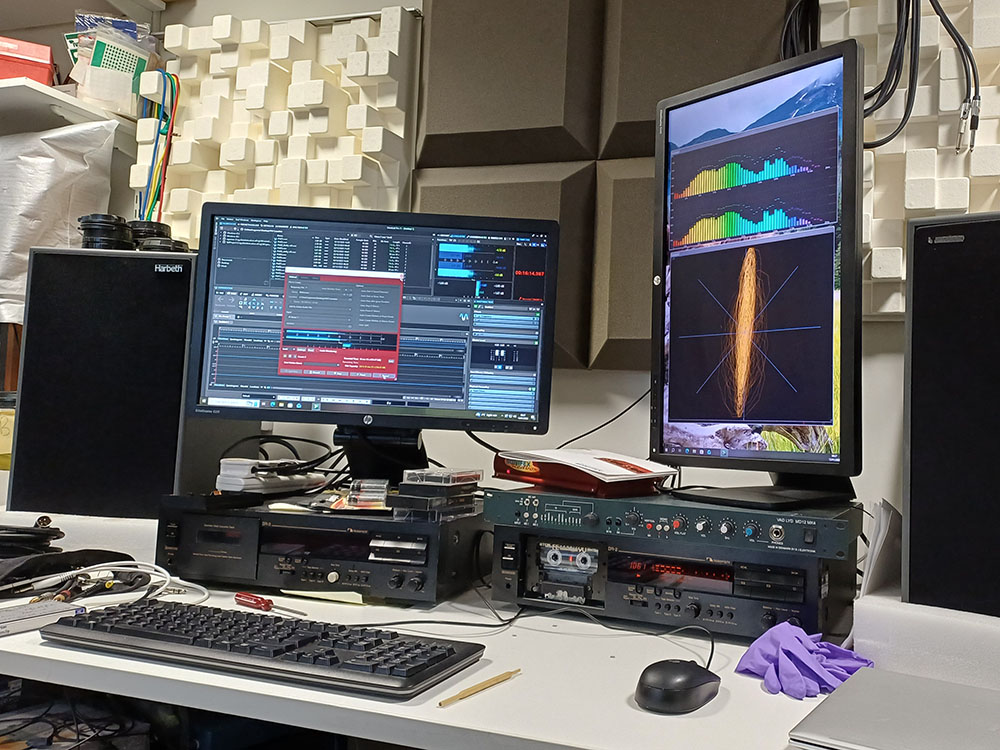
My other priority is resuming digitisation, starting with 61 oral histories of Penicuik papermill workers, recorded by the late Ian MacDougall. These are on cassette tapes which I played back on a Nakamichi DR-2 and digitised using WaveLab Pro, following standards set out by IASA. These tapes have been fascinating to listen to, filled with experiences in paper-making, the military during World War II, labor disputes, and local history in Penicuik. MacDougall’s technique allowed for participants to open up and talk at length about their lives and careers, providing a multi-faceted record of mid-century Scottish labor history.
As you can see, the last six months are an example of the varied work involved in audiovisual digitisation. Part of what makes the work exciting is connecting people with their histories, something that sound and video are powerful in doing. I look forward to unlocking more of the audiovisual archives held at the University of Edinburgh!
Nat Gunner, AV Digitisation Technician.