Knowledge Exchange Visit to the Freie Universität Berlin

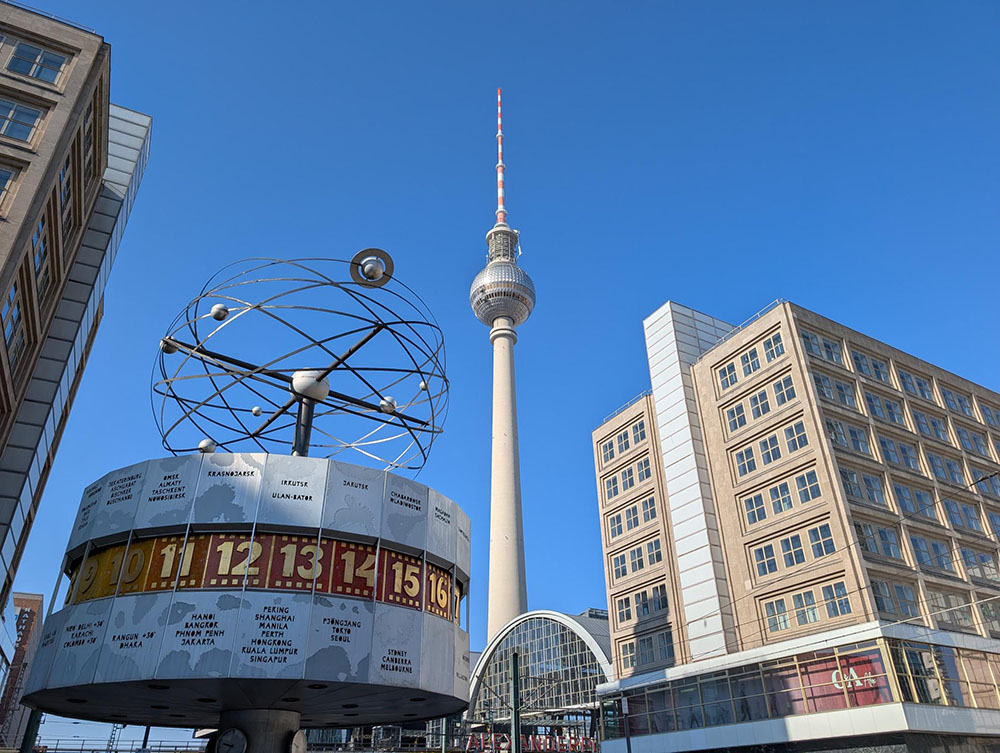
View of the World Clock and Television Tower (known as the Fernsehturm) at Alexanderplatz in Berlin
View of the World Clock and Television Tower (Fernsehturm) at Alexanderplatz

I was delighted to be a part of the Knowledge Exchange cohort to travel to the Freie Universität Berlin this past March.

The Libraries of the Freie Universität Berlin (FUB) and the University of Edinburgh share a Memorandum of Understanding. This sets out a formal collaboration between both Libraries for sharing professional knowledge and experience, including visits between the two Libraries.

I attended with 12 other colleagues from a variety of different departments in the Library. Most of us had never worked together before so we got to know each other really well during the trip, which was in itself a fantastic experience.
External view of the Freie Universität Berlin Central Library building
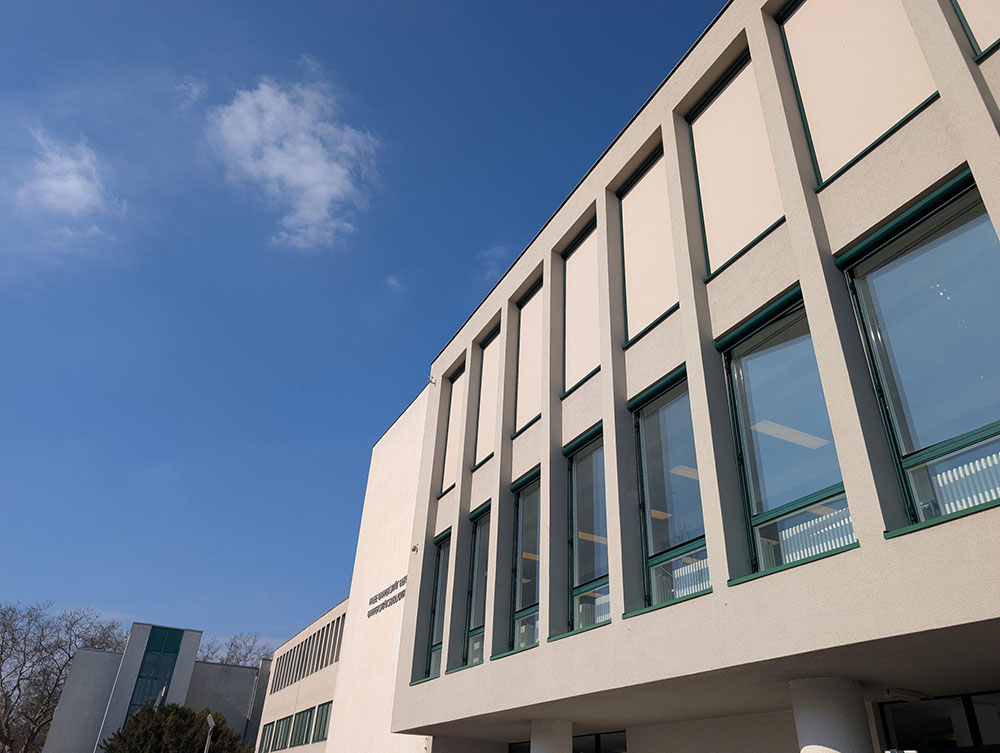
Exterior view of the Central Library at the Freie Universität Berlin

The campus is based in the Dahlem district, southwest of the centre of Berlin. The Library is spread across 14 locations on the campus, including the Central Library. This is where the knowledge exchange programme took place, comprising of three days of presentations, visits and themed discussions.
A speaker presenting in front of an audience at the Freie Universität Berlin Central Library
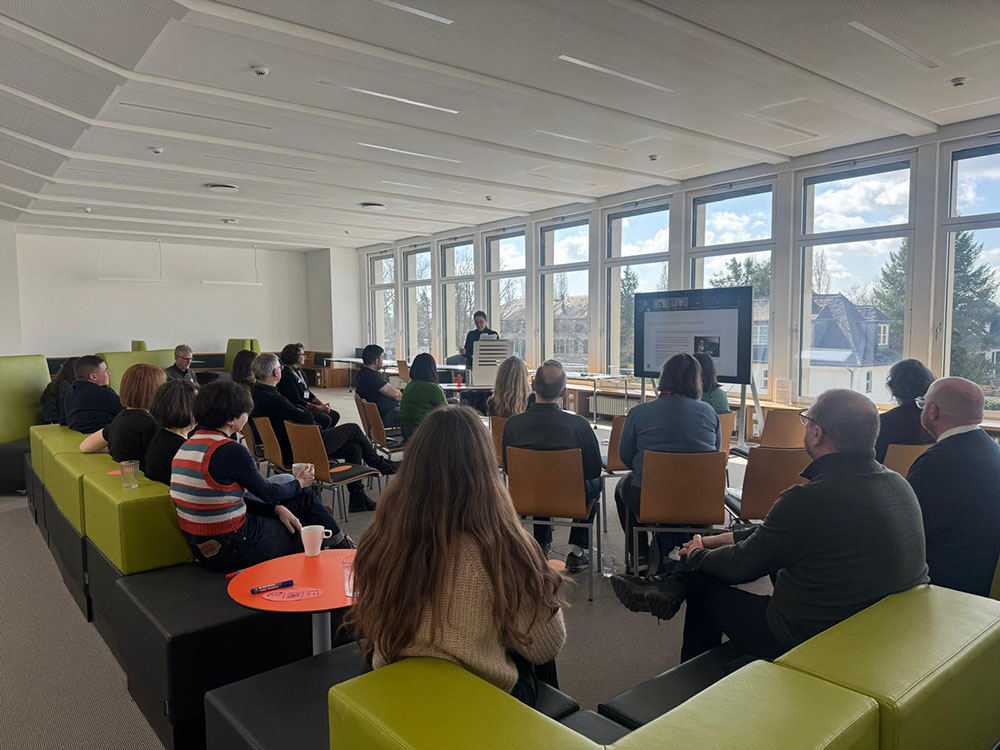
Presentations in full swing at the Central Library

Colleagues from both Universities presented on their work and projects.

University of Edinburgh colleagues presented on sensory maps, DataShare, resource lists and digital collections migration, among other topics.

FUB colleagues covered the history and structure of libraries in Germany, scientific collections, user experience research and liaison librarianship.

Also presented on was the FUB’s fascinating work in recording oral histories for the online archive ‘Forced Labor 1939-1945’. This archive contains video and audio testimonies of victims of forced labour under the Nazi regime.

Forced Labor 1939-1945

Issues around the use of artificial intelligence in libraries was also heavily discussed as part of the themed discussions, as well as how to engage diverse communities with collections.

As part of the exchange, we visited a few of the FUB Library’s other buildings.
Internal view overlooking the entrance of the Freie Universität Berlin Philological Library, showing students studying at desks
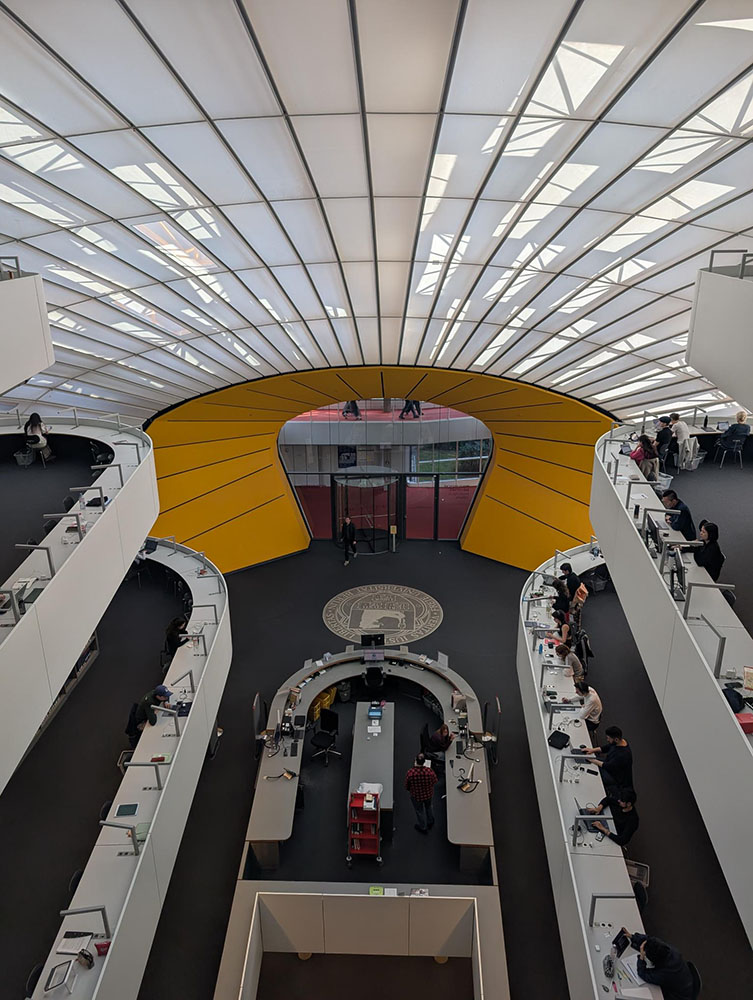
View overlooking the entrance of the Philological Library
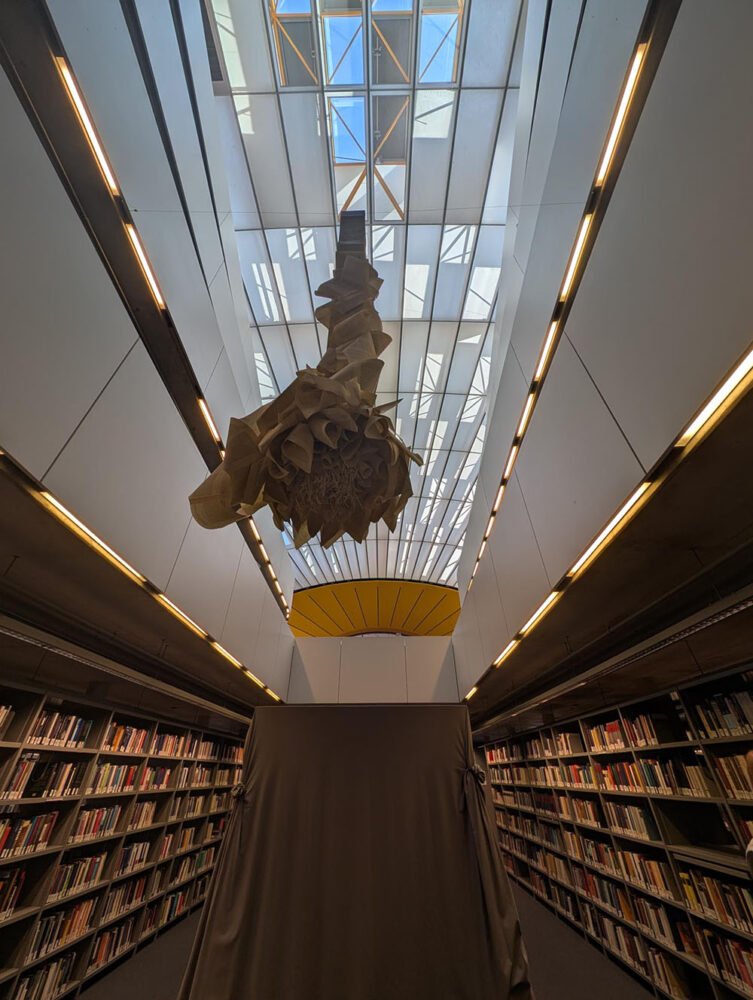
Internal view of the Freie Universität Berlin Philological Library, showing a ceiling art sculpture and bookshelves
Ceiling art sculpture at the Philological Library

The Philological Library holds volumes from a broad range of subjects including Slavic Studies, Philosophy and Medieval Latin Philology, among others. The striking building (nicknamed ‘the brain’) was designed by Norman Foster and opened in 2005.
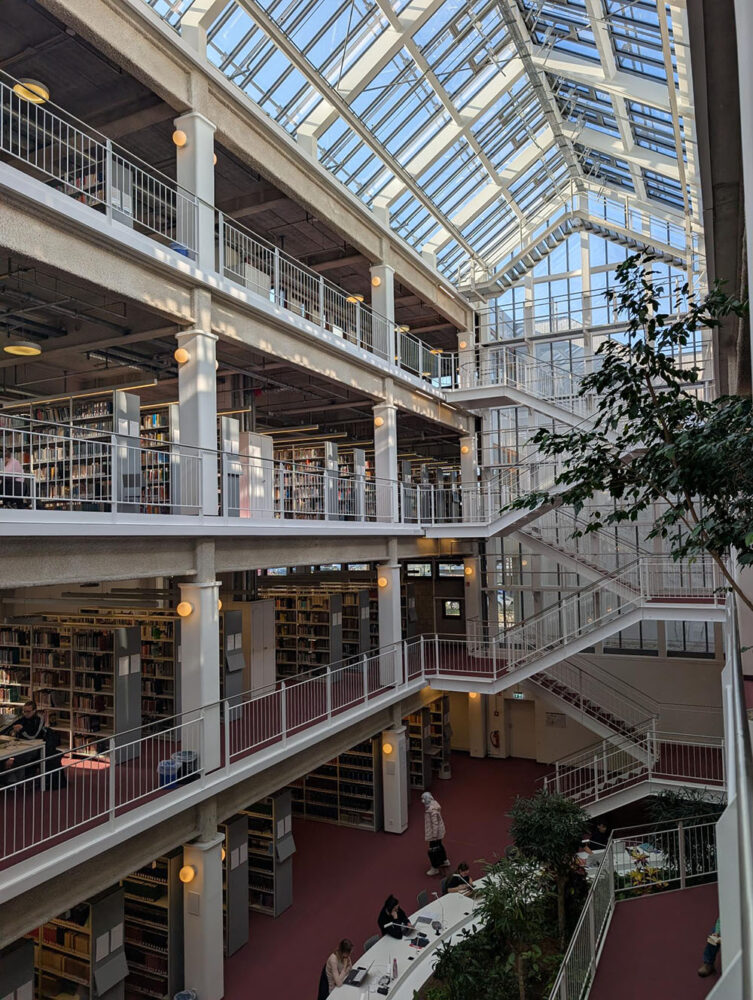
 

Internal view of the Freie Universität Berlin Campus Library, showing the mezzanine space with rows of bookshelves on each floor
View of the mezzanine space at the Campus Library
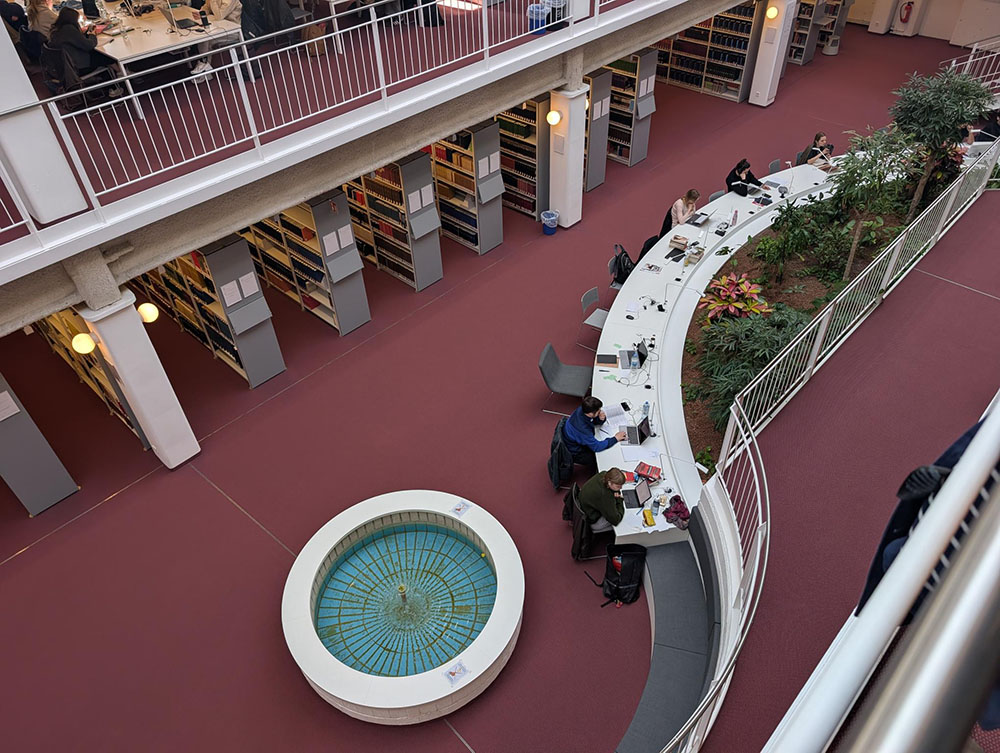
Internal view of the Freie Universität Berlin Campus Library, showing a water fountain and students studying at desks
Water fountain, plants and study desks at the Campus Library

The Campus Library holds approximately 1 million volumes covering Maths, Sciences and East Asian Studies, among other subjects. I thought that the water fountain and plants throughout the space were a fantastic idea, making for a calm and soothing space that is highly conducive to studying.

We also visited the Humboldt University Library, receiving an introduction to the history of their special collections.
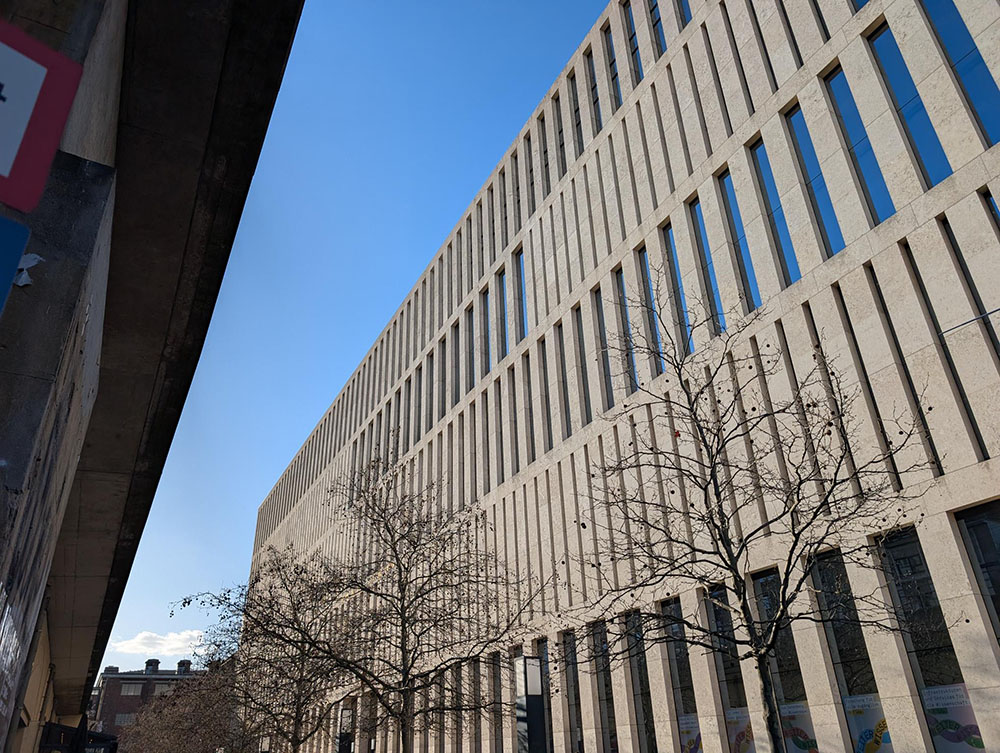
Exterior view of the Humboldt University Library
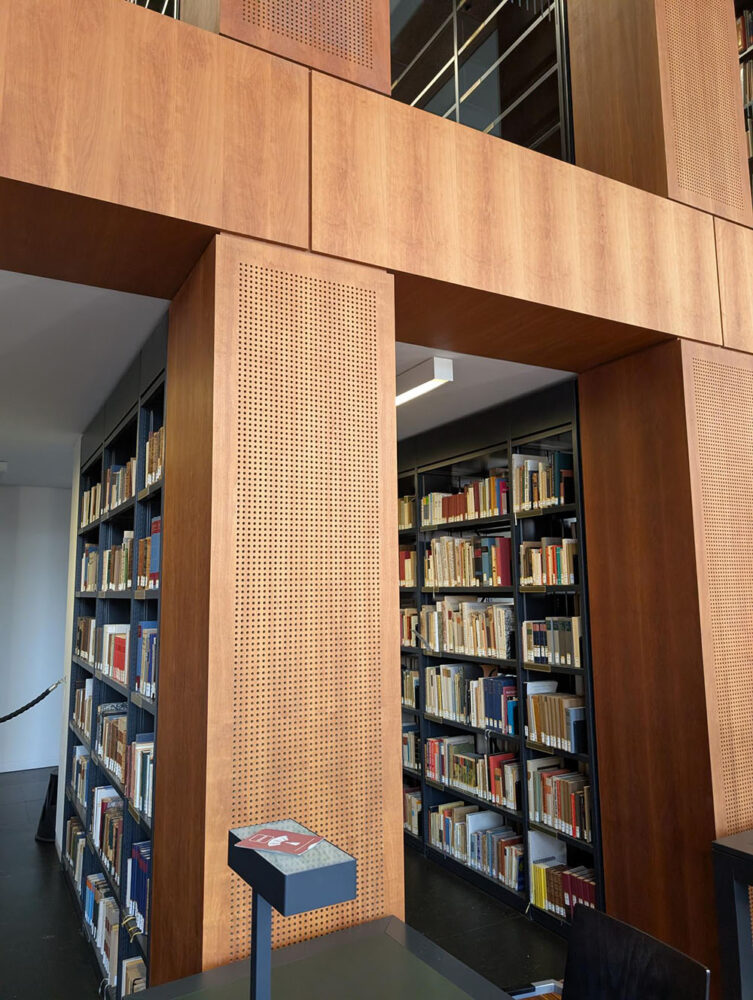
View of the Special Collections reading room at the Humboldt University Library
The Special Collections reading room at the Humboldt University Library

The Library is currently digitising the reference material used by the Brothers Grimm, whose library the Humboldt University holds a large proportion of.
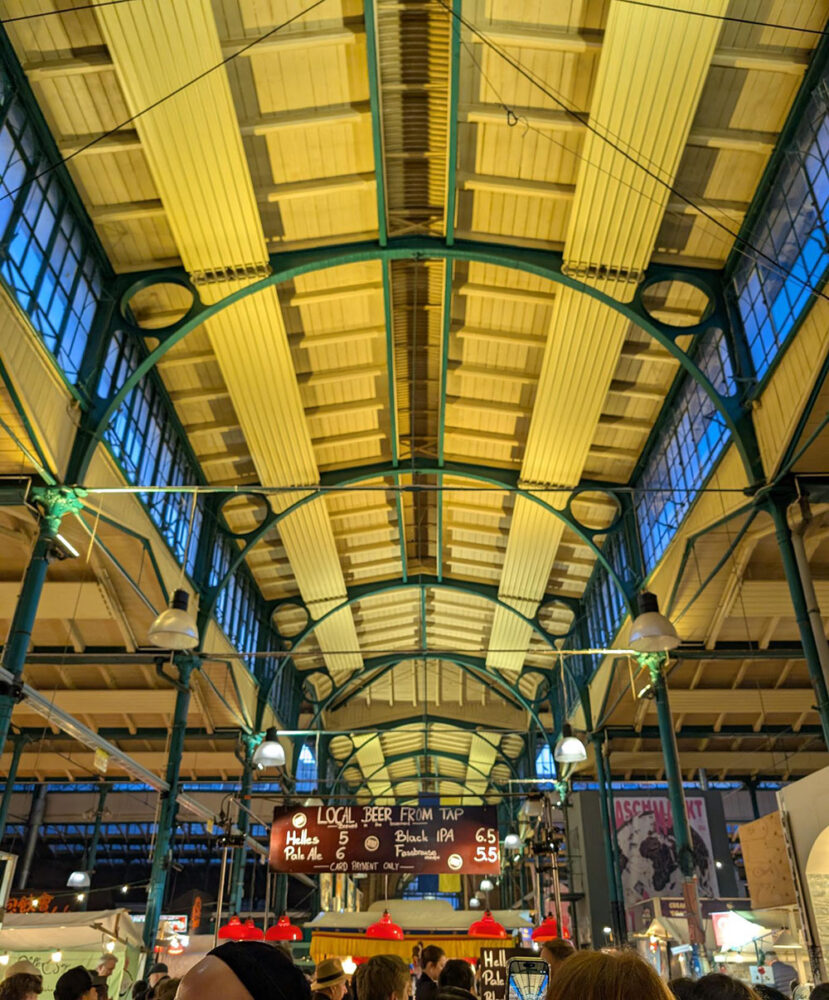
 

View of the entrance to the Markthalle Neun food market
Markthalle Neun food market

We finished the exchange visit with a well-deserved trip to the food market at the Markthalle Neun in the Kreuzberg district, toasting to the end of a week of stimulating ideas and discussions. Many of us tagged a few days onto the trip to get a chance to further explore this fascinating city.
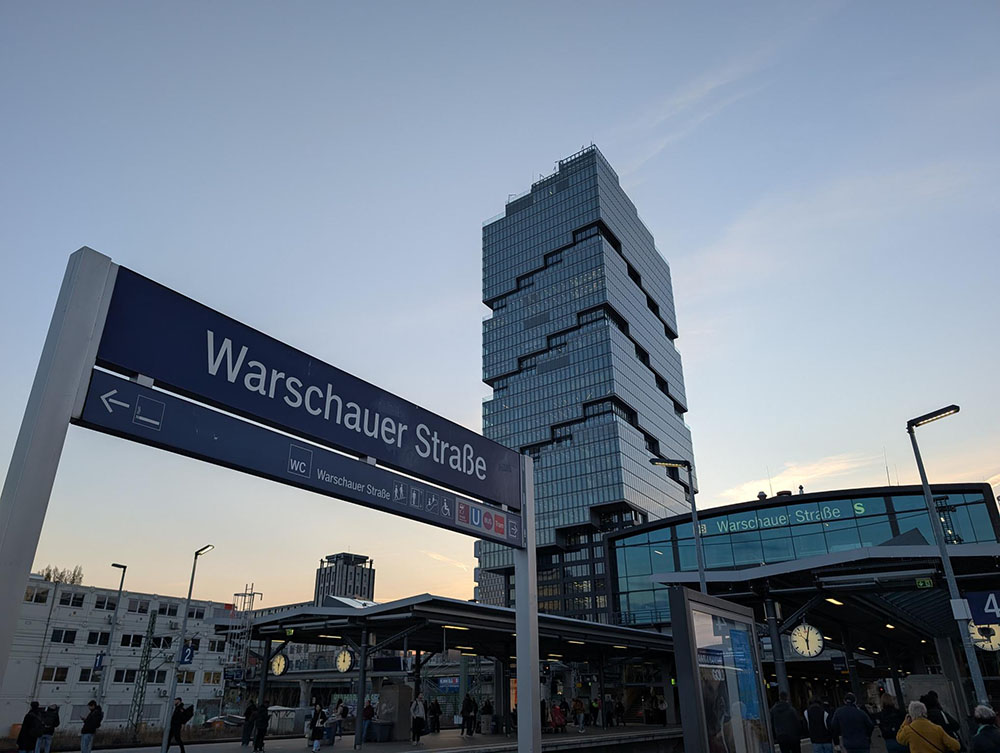
The platform of Warschauer Straße metro station
Warschauer Straße metro station
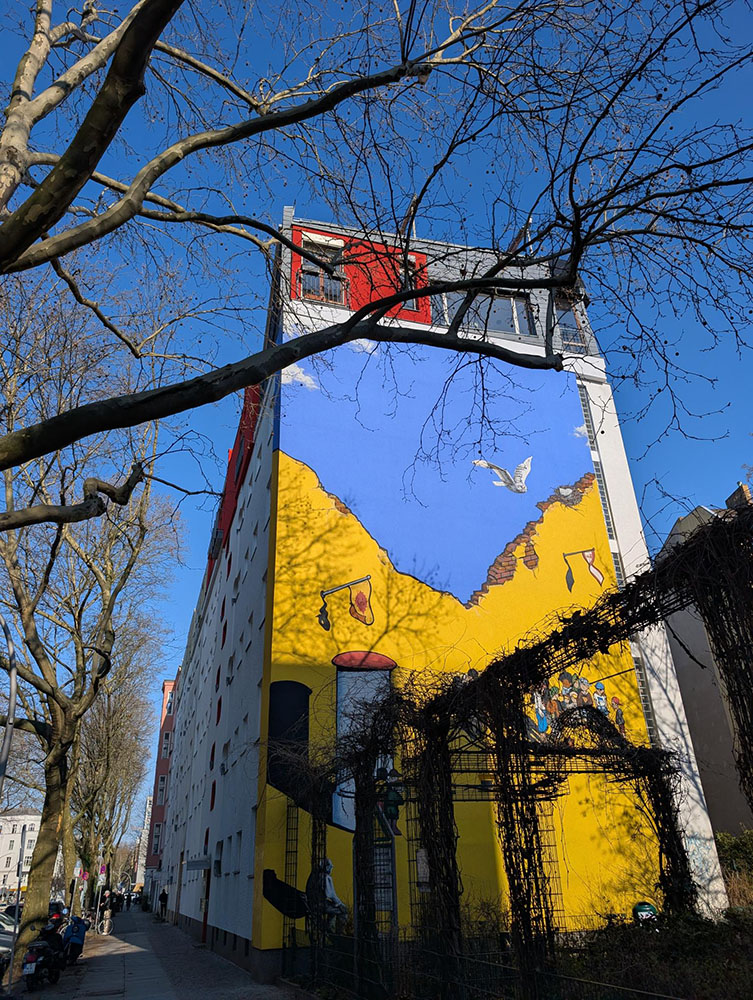
Art on the side of a building
Building art
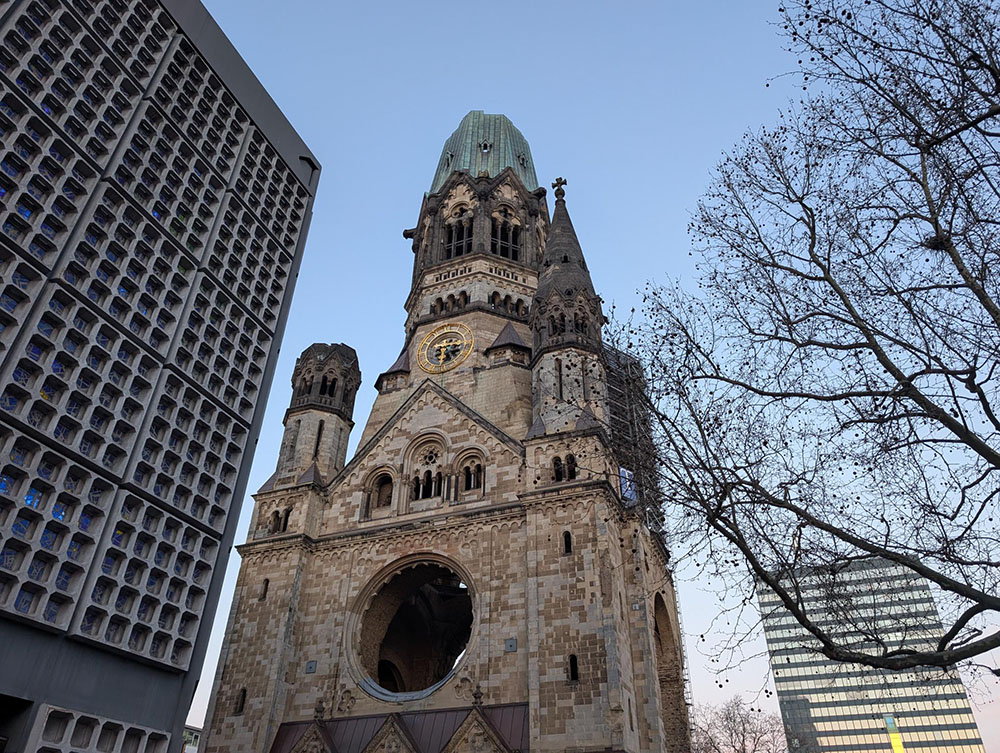
View of Kaiser Wilhelm Memorial Church
View of the Kaiser Wilhelm Memorial Church

This trip was a fantastic experience for me both professionally and personally, not only to learn about a university library in another country and how they operate and the challenges they face, but also to learn about the work of other Edinburgh colleagues who I don’t normally work with, and to get to know them on a personal level too.

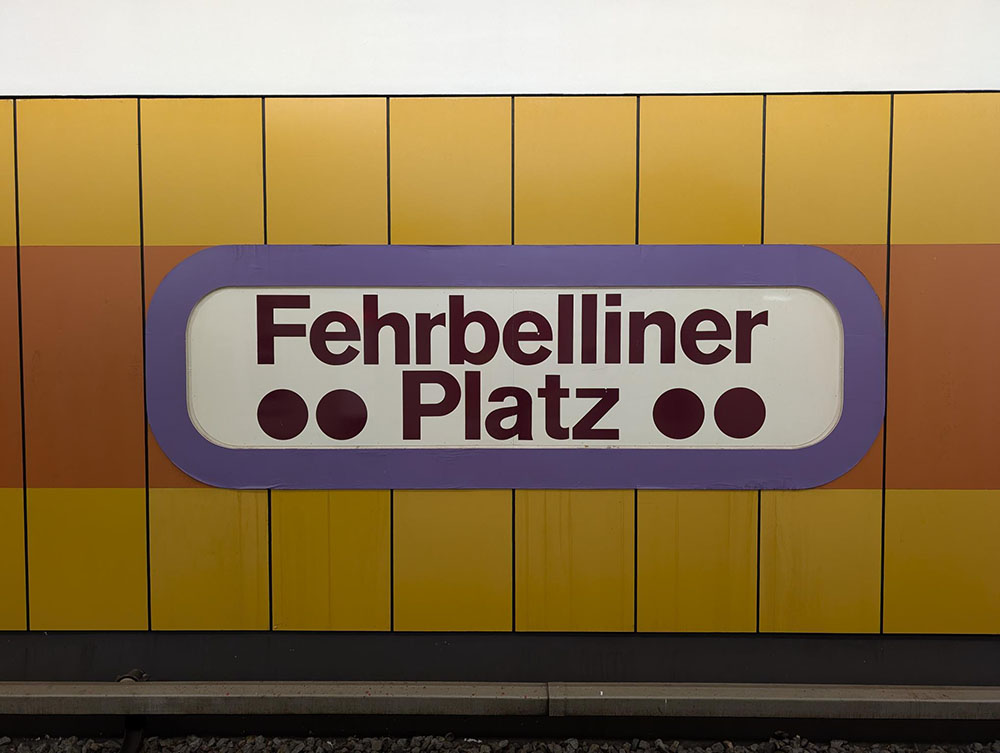
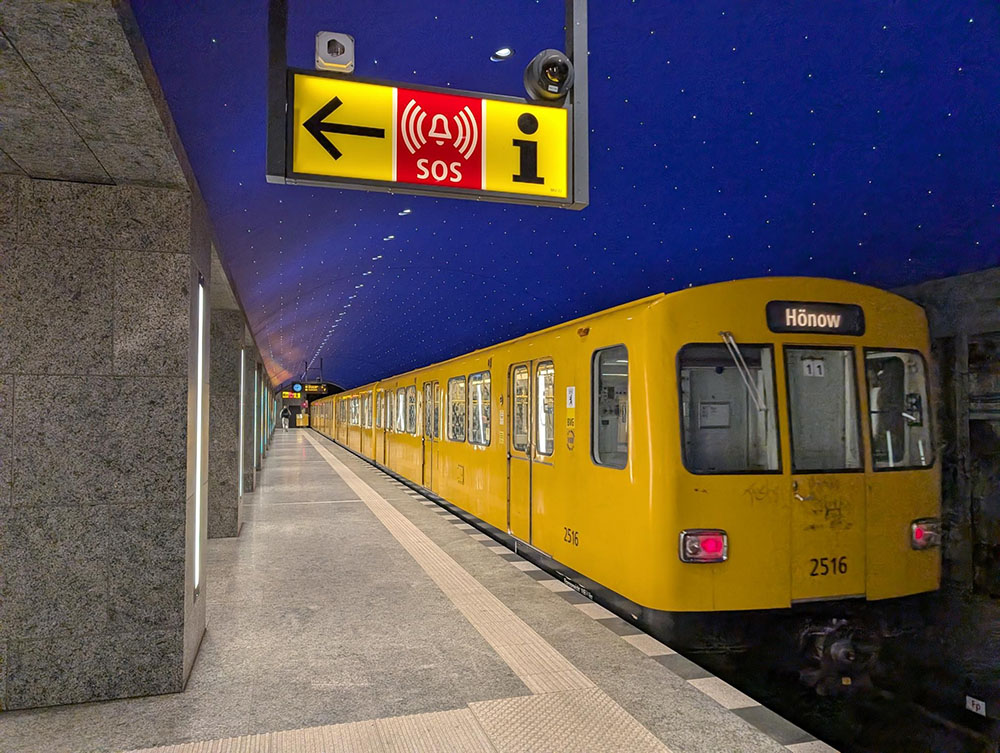
It goes without saying that Berlin is a fascinating place to visit. I leave you with a few images of the beautifully diverse designs seen in the metro stations across the city.
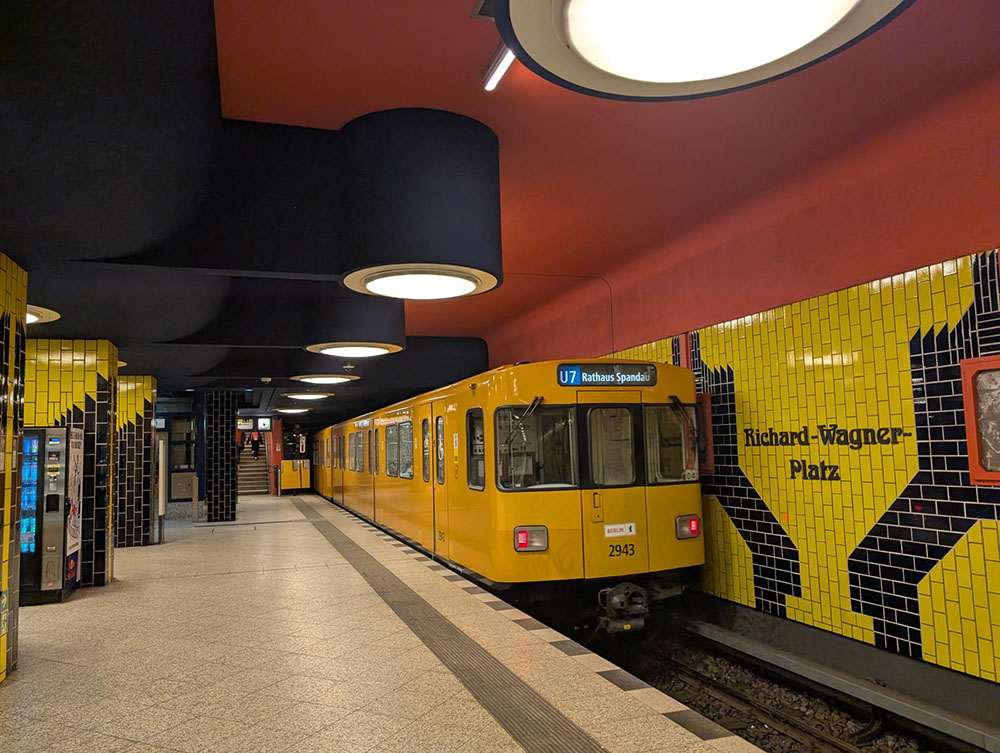
View of platform at Richard-Wagner-Platz underground station in Berlin
Richard-Wagner-Platz metro station
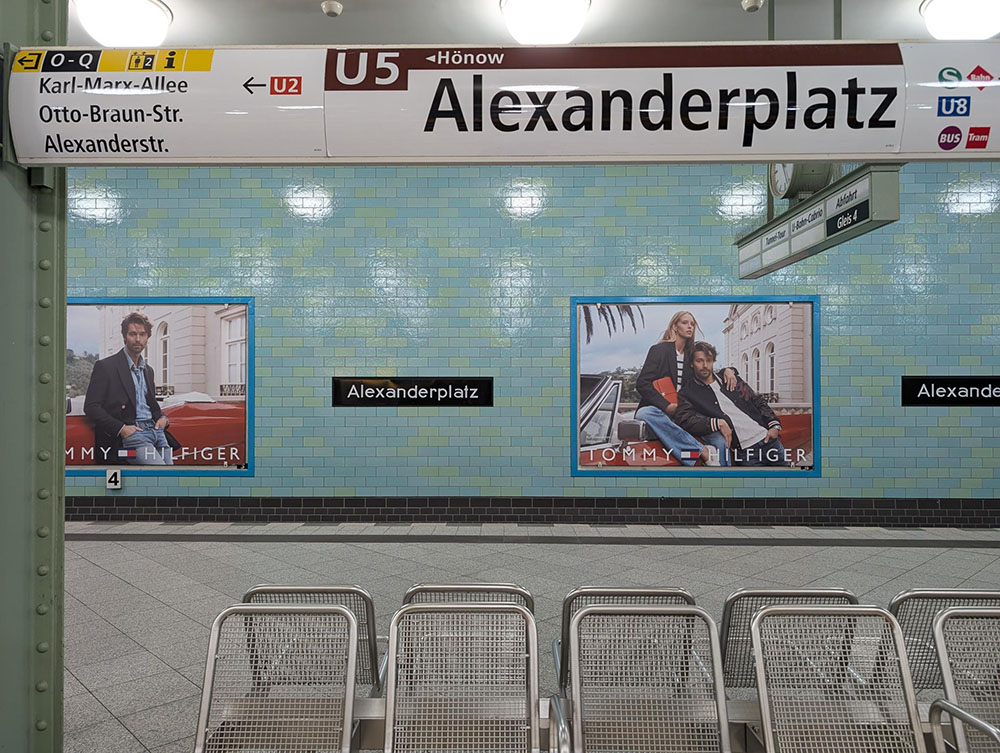
View of platform at Alexanderplatz underground station in Berlin
Platform at Alexanderplatz metro station
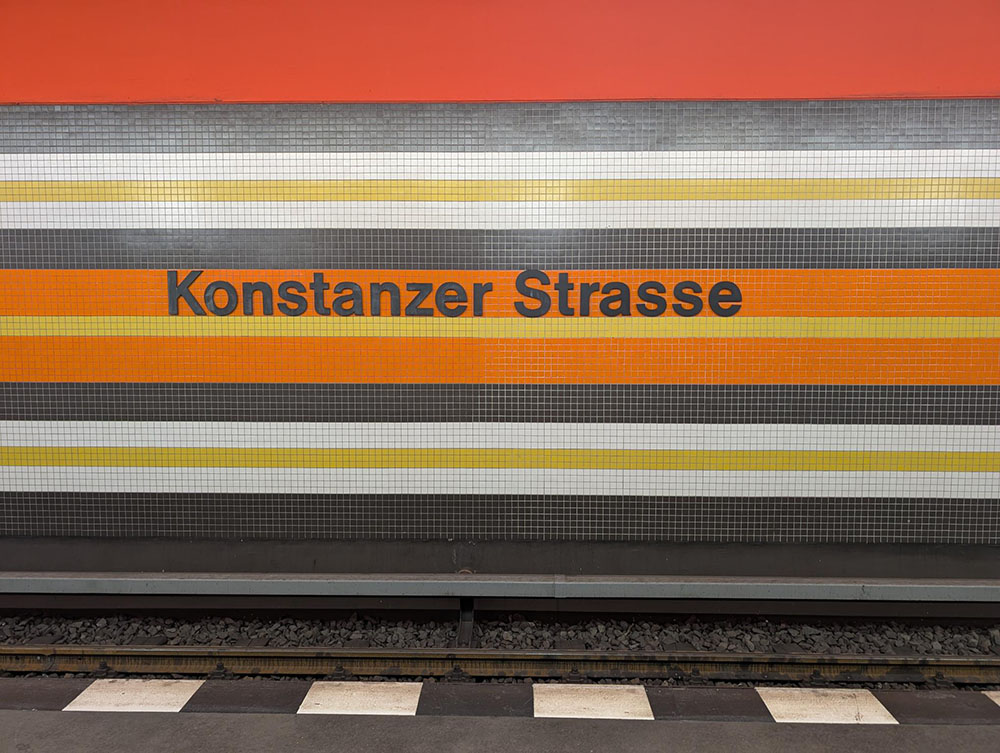
View of decorative signage at the Konstanzer Straße underground station in Berlin
Signage at Konstanzer Straße metro station
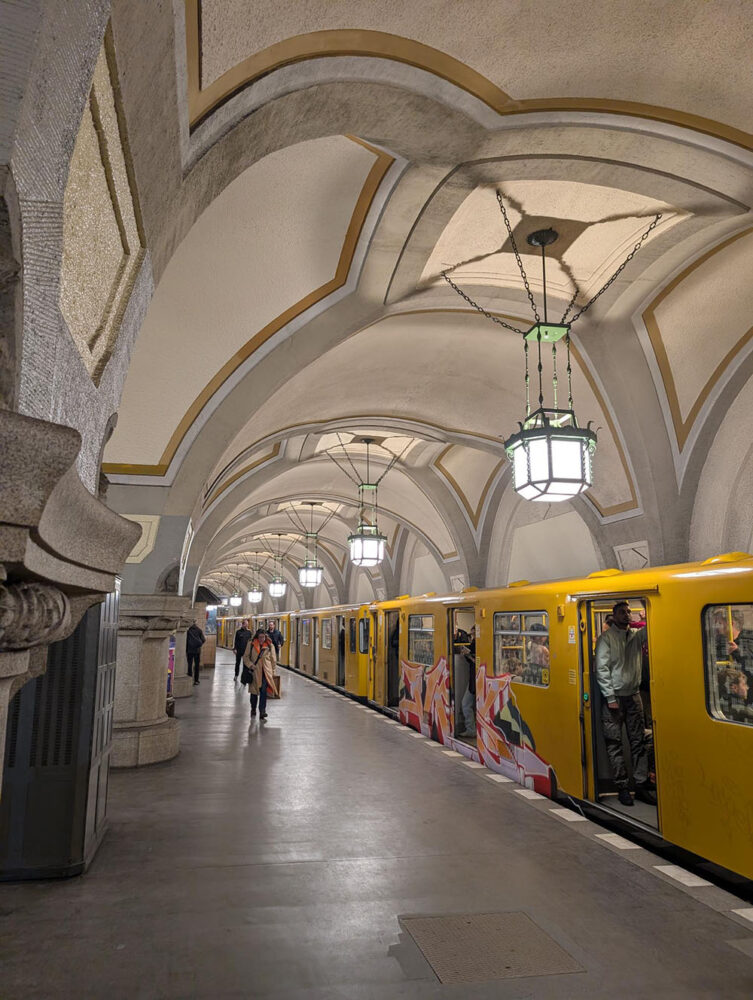
View of platform and metro car at Heidelberger Platz underground station in Berlin
Platform at Heidelberger Platz metro station
View of decorative signage at Fehrbelliner Platz underground station in Berlin
Signage at Fehrbelliner Platz metro station
View of a metro car in an underground station in Berlin
Metro car and platform

Gabrielle Migdalska, Digital Collections Support Officer

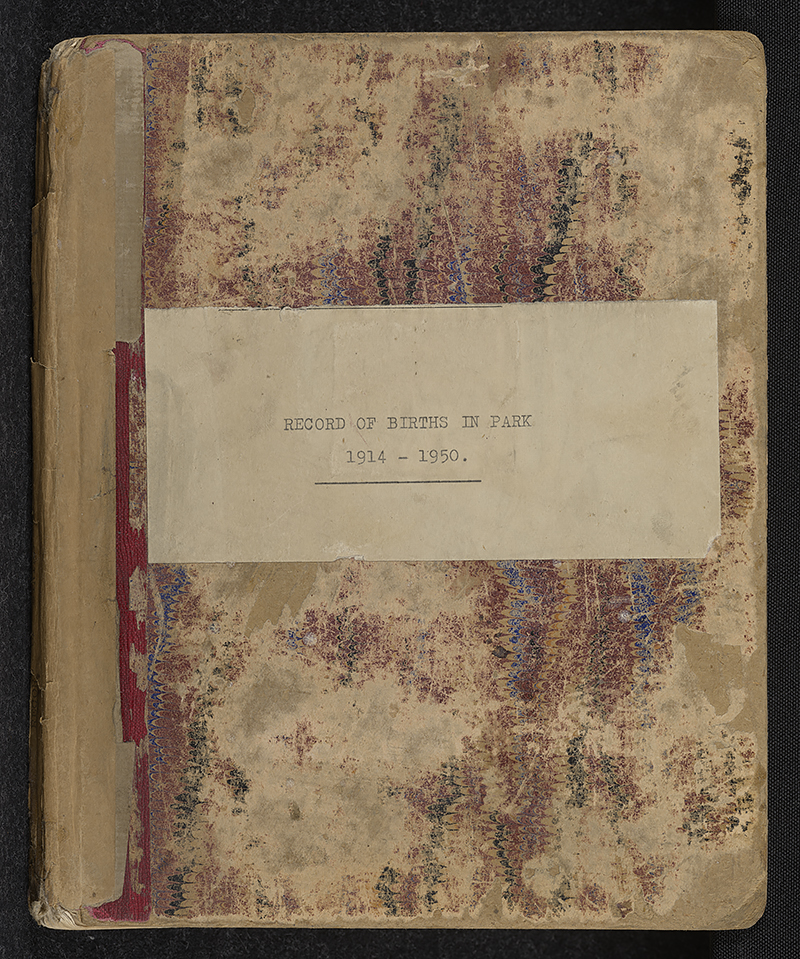
The Art of Documentation: Capturing the Art Collection

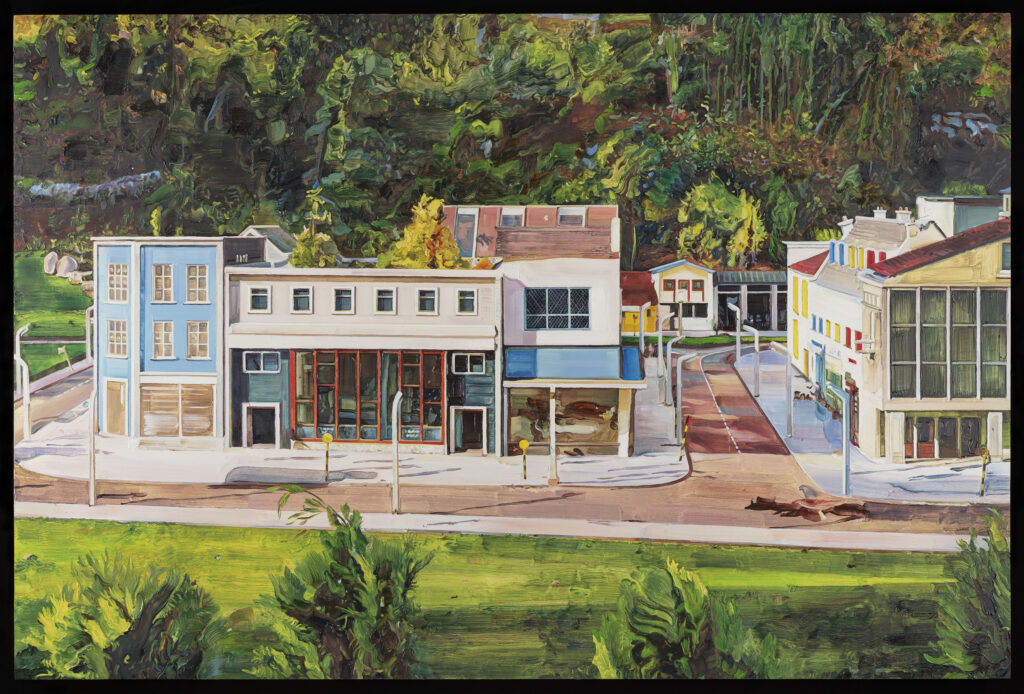
Brightly coloured painting of model houses with lush greenery in the background.
Disaster Painting 2, Esther Forse (EU6028)


For the last two years we have been working on an exciting project to digitise the University of Edinburgh’s Art Collection. This has been a joint effort between both the Conservation and Collections Management and CHDS teams to create new visual records of the University of Edinburgh’s impressive Art Collection.

Continue reading “The Art of Documentation: Capturing the Art Collection”

Digitising the Bulletin

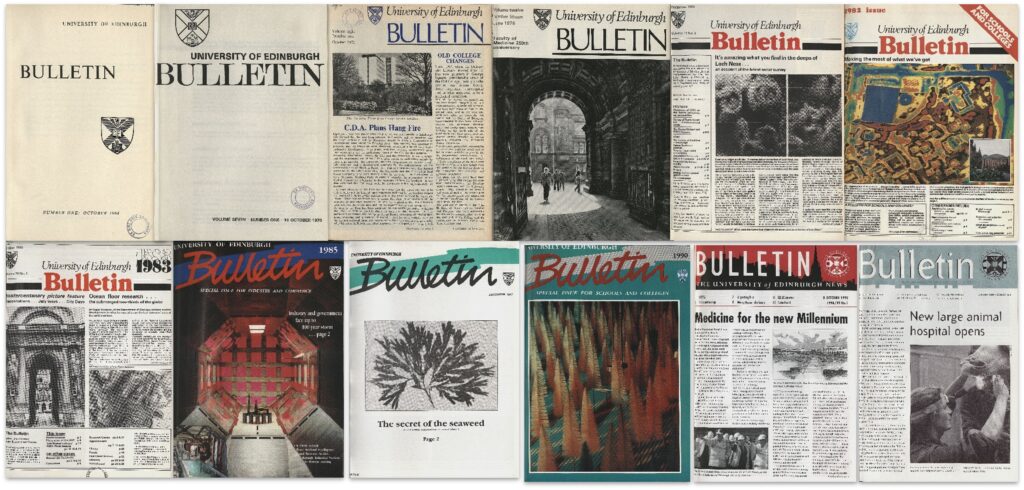
Collage of past Bulletin covers

The University of Edinburgh Bulletin (EUA IN1/PUB/4) is the institution’s internal magazine, covering news from around the University.  It was established in 1964, succeeding the University of Edinburgh Gazette which had been running since 1952. Since 2009, it has been available in digital form and is now a wholly digital publication.”  Grant Buttars, University Records Archivist

Continue reading “Digitising the Bulletin”

Reflectance (Transformation Imaging) Reflections

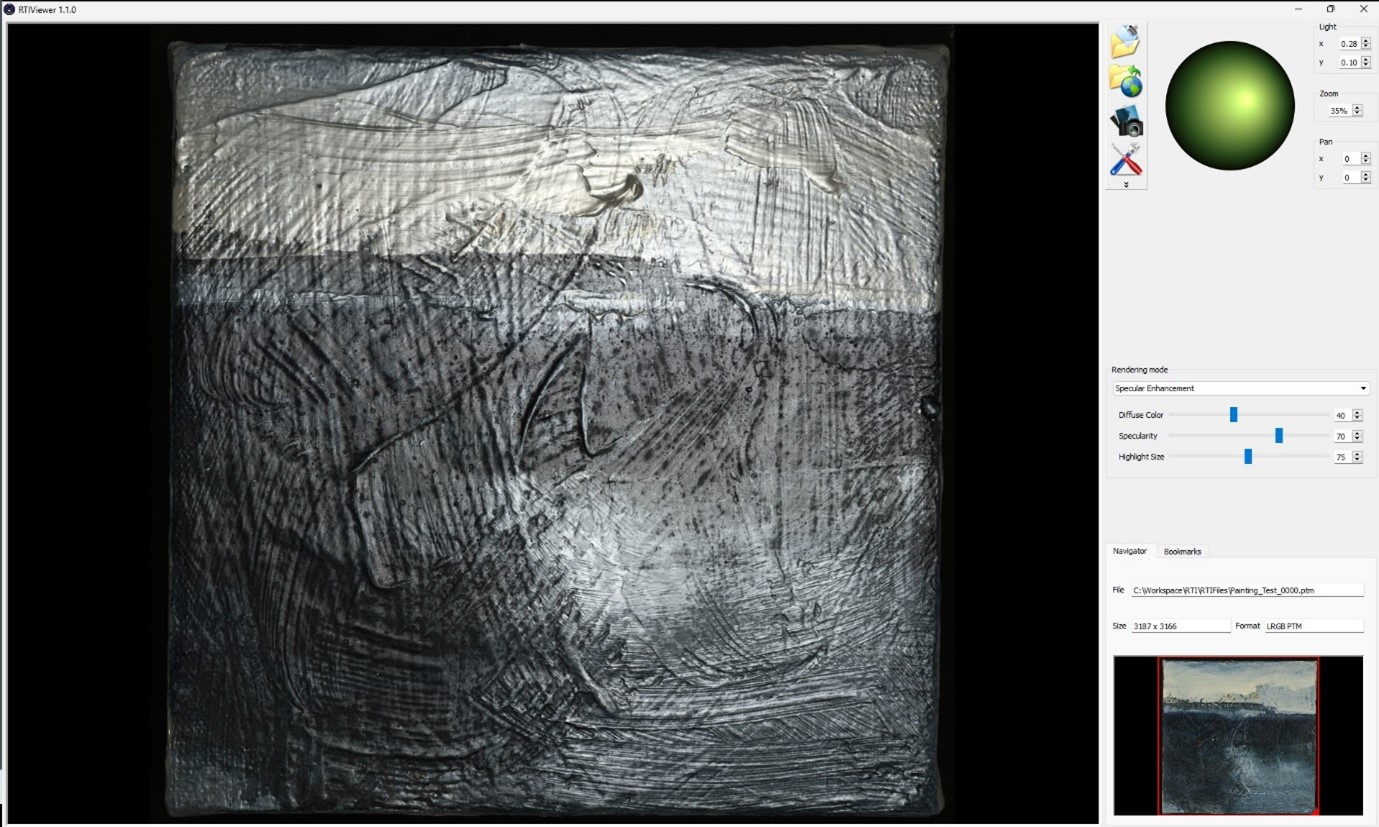
Image from the RTI process

Reflectance Transformation Imaging, or RTI as it is more commonly known, is described as ‘a computational photographic method that captures a subject’s surface shape and color and enables the interactive re-lighting of the subject from any direction. RTI also permits the mathematical enhancement of the subject’s surface shape and color attributes. The enhancement functions of RTI reveal surface information that is not disclosed under direct empirical examination of the physical object’ by Cultural Heritage Imaging https://culturalheritageimaging.org/Technologies/RTI/ 

I think of it as raking light on steroids- essentially you have a camera at the top which fires in sequence with individual lights located in a circle around the item, and then the registered images can be engaged with interactively through the freely available RTI Viewer https://culturalheritageimaging.org/What_We_Offer/Downloads/View/index.html 

Continue reading “Reflectance (Transformation Imaging) Reflections”

Getting to Grips with Goobi on the Lyell Albums

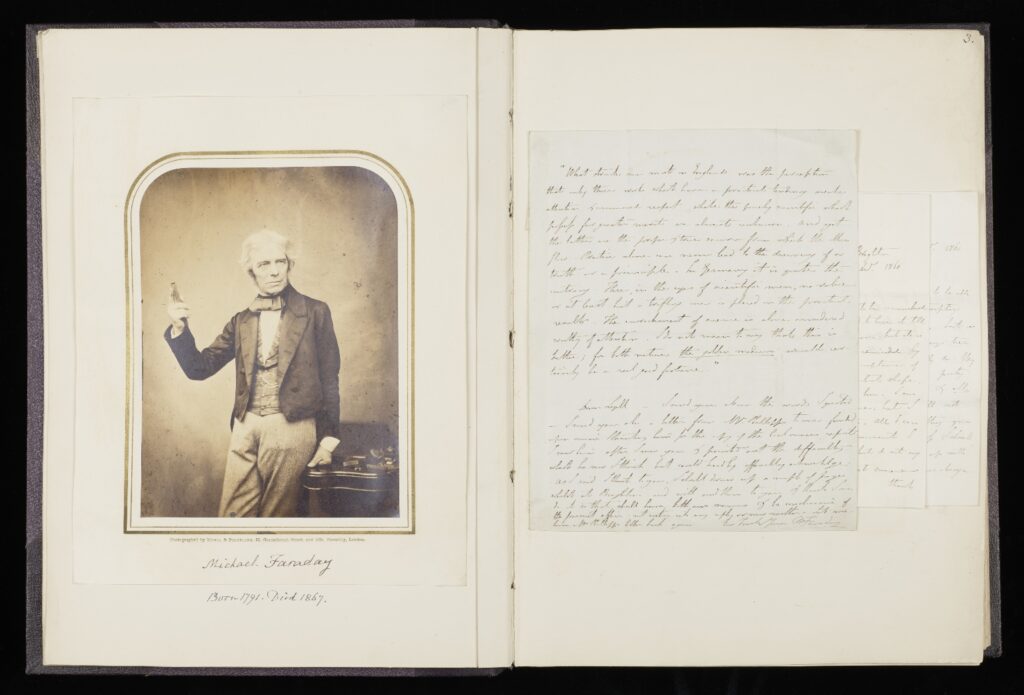
Image of a spread of pages from the Sir Charles Lyell. One one page there is a handwritten letter. On the other is an image of the Scientist, Michael Faraday.

If you have been following the CHDS blog for the past few years you will have seen some of our content relating to the digitisation of the Charles Lyell Collection held by the University of Edinburgh (links to some of our past blogs can be found here and here). This collection is made up of material belonging to the Geologist, Sir Charles Lyell (1797-1875) and contains geological specimens, around 300 notebooks, correspondence, and other papers relating to his work.   Continue reading “Getting to Grips with Goobi on the Lyell Albums”

Association for Historical and Fine Art Photography Conference 2024

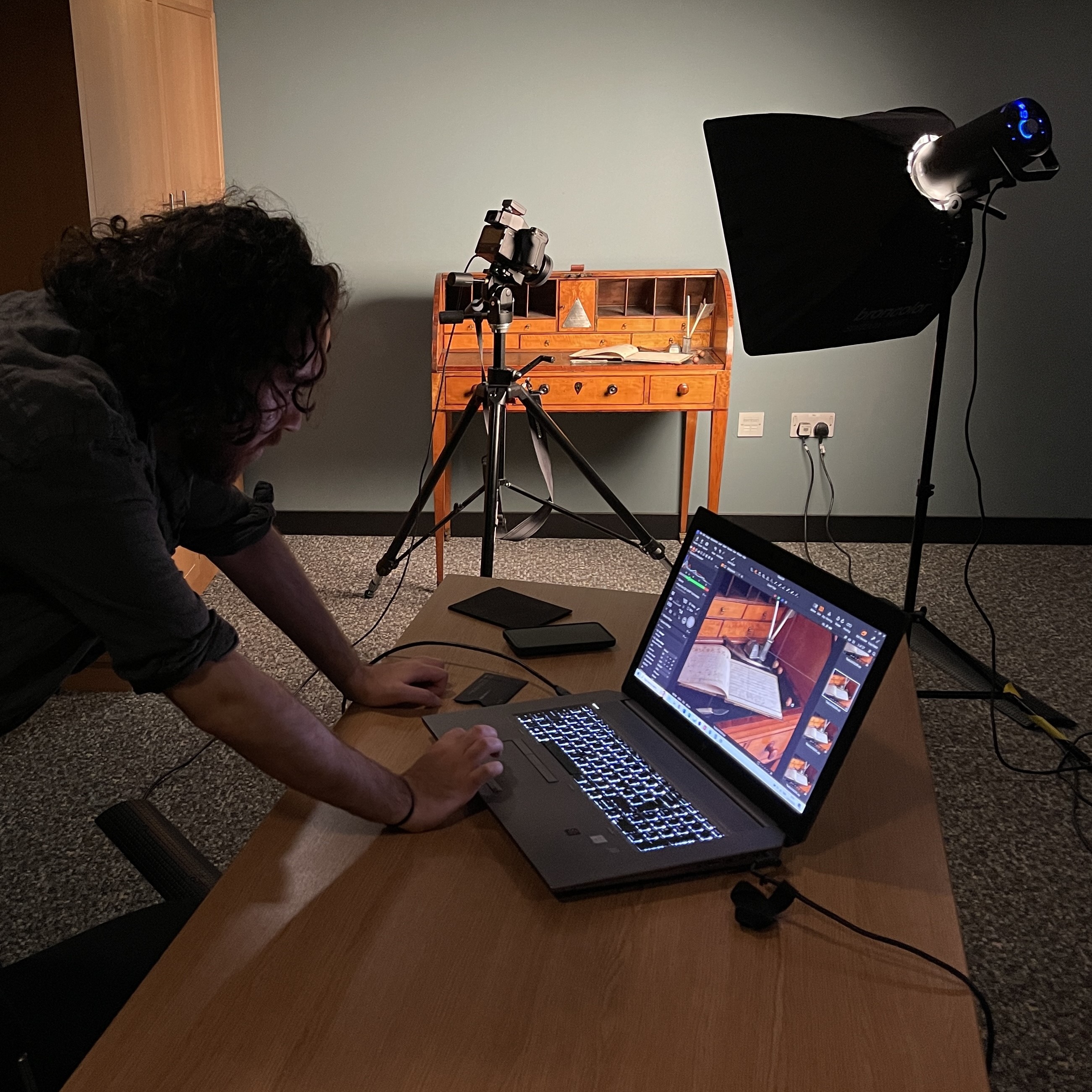
The Cultural Heritage Digitisation service team have attended the annual Association for Historical & Fine Art Photography conference for well over a decade and have contributed to presentations at the annual conference. Susan Pettigrew the studio manager was Chair of the AHFAP Libraries and Archives Special Interest Group until the end of 2023. AHFAP is an important conference for CHDS in that it’s our network connection to the UK wide community of Heritage photography and digitisation.

Continue reading “Association for Historical and Fine Art Photography Conference 2024”

Virtual Geology

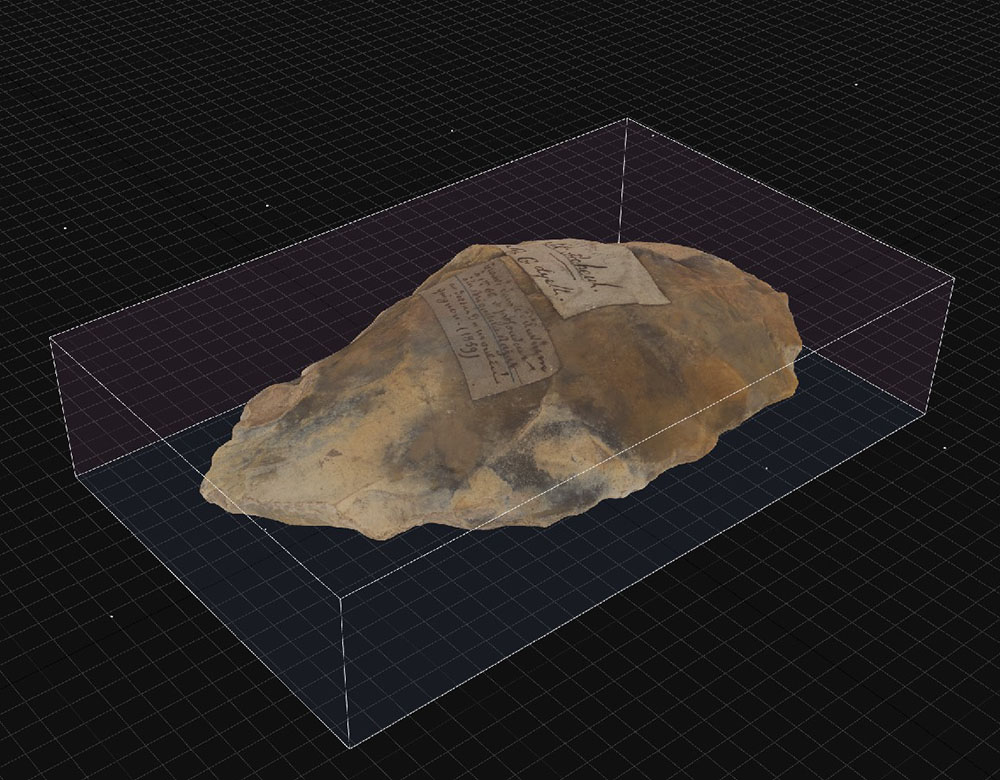
3d model of a flint tool.

It has been a longheld desire for the CHDS to offer a 3D Digitisation service, and although not 100% there yet, we are several steps closer. Back in 2021, Connor Wimblett did an internship with us looking into the feasibility of offering 3D for the Heritage Collections. You can find out more by reading his blog here.

Continue reading “Virtual Geology”

Highlights of the OneHealth Project

This spring the short but broad digitisation project, OneHealth, reached its end. The OneHealth project was focused on early animal welfare history, utilising new material brought in from a trio of organisations: Royal Zoological Society of Scotland, The Royal (Dick) School of Veterinary Studies, and the animal welfare charity OneKind. During those 6 months, we had a vast and diverse materials pass through our studios. From the historically rich early records of Edinburgh Zoo to morbidly curious Veterinary School implements to the delightfully pet centric magazines of the OneKind charity, the project spanned a wide range of items.

Continue reading “Highlights of the OneHealth Project”

World Photography Day 2024

Today is World Photography Day, ‘an annual celebration of the art, craft, science and history of photography.’ This year, we’d like to turn the spotlight on the amazing photographers working in the Cultural Heritage Digitisation Service by allowing them to highlight their favourite collection items they’ve photographed, and to share a piece of their own work as well. We hope their insights into the medium and their technical process will prove both interesting and informative! 

Continue reading “World Photography Day 2024”