Any views expressed within media held on this service are those of the contributors, should not be taken as approved or endorsed by the University, and do not necessarily reflect the views of the University in respect of any particular issue.
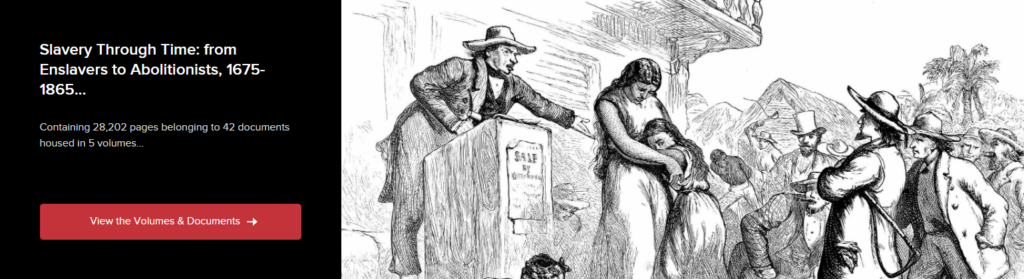
For over 400 years, more than 15 million men, women and children were victims of the transatlantic slave trade. And on 25th March every year, the International Day of Remembrance of the Victims of Slavery and the Transatlantic Slave Trade offers the opportunity to honour and remember those who suffered and died at the hands of the brutal slavery system, while also raising awareness about the dangers of racism and prejudice today.
At the Library we have access to a range of digital resources that give you access to original primary source material from archives around the world that allow you to find out more about the Transatlantic Slave Trade and the victims of slavery. These are a few that you might like to explore:
As part of the 2022 Dissertation Festival, running from 7th-18th March and facilitated by the Academic Support Librarians, Digital Skills and IAD teams, I was invited to attend an online event exploring how to make the most out of resources related to Gender Studies in your dissertation. A recording of the event is available to watch (42 minutes):
Beginning your search with Subject Guides
Throughout my time as both a Digital Engagement Intern within Library & University Collections and an undergraduate student, I’ve become aware of just how valuable the virtual Subject Guides are for beginning your research, whatever your field of study. The Gender Studies Subject Guide provides access to databases, journals, periodicals, bibliographies and so much more, as well as initiatives and research projects conducted at the university.
Going beyond DiscoverEd
Of course, DiscoverEd is a fantastic tool for navigating the rich resources available through the university, and this event was a great reminder than you can improve the scope of your searches further through Boolean operators and considering the terminology you use. Although the terms we use around gender and sexuality have progressed, it’s worth recognising archaic terms, particularly when accessing historical databases. This event also highlighted the new Yewno service which allows you to build visual maps through cross-referencing keyword searches across library databases. All you need to do to access it is log-in via your institution and there are lots of handy instructional videos to help you get started!
Accessing the Centre for Research Collections
The second half of the event discussed some of the collections held by the university, including the Lothian Health Service Archive which contains a wealth of health-related material. A key takeaway for me was in recognising the multidisciplinary nature of Gender Studies and how much material is available in other historical archives and databases. I was a bit daunted about accessing the Centre for Research Collections at first but having a clear idea of what you’re looking for and using the support materials available online will help you get the most of it the rich resources within them.
Whatever your topic, the Dissertation Festival has a wide range of online events which will help you get the most out of the resources available to you.
Tristan Craig Digital Engagement Intern (Equity, Diversity and Inclusion)
A large part of the work that the Academic Support Librarian team complete relates to training and providing Information Skills guidance, whether that's in our individual schools or sessions which are open to all. If you're a regular reader of this blog you'll already know about LibSmart, our online information skills course, but did you also know about some of the other training on offer?
Have you heard about Library Bitesize?
These short introductory sessions deal with a range of topics that we think will provide a good foundation in areas our students need to know about. They're 30 minutes long and are run by ASLs and the Digital Skills team to help you get more information about skills and resources you might need to support your studying. While they're aimed at beginner level and are particularly appropriate for Undergraduates, we think these are of use to students at any level of study. Just some of the topics include:
Building complex searches for systematic reviews
Choosing a reference manager
Finding historical documents online
How to reference and avoid plagiarism
Introduction to copyright
Introduction to resources for film studies
Introduction to China-related information resources
If you're looking for advanced training sessions, you may be interested in our collaboration with the Institute for Academic Development. Together we run longer sessions which are usually attended by postgraduate students, though undergraduates are welcome too! These are themed around research and referencing. For example:
We also run 'Getting the best out of the library' sessions for PGT and PGR students at the start of term, and are part of the IAD's mid-semester welcome event for postgraduate students. For more information visit the IAD's Postgraduate pages.
If training sessions don't work for you, what about a one-to-one appointment?
All our ASLs offer individual appointments to help students address specific questions about their work or research. A range of appointments are available via the MyEd Event Booking System - search for 'literature search clinic' to find available appointments with librarians from each college, or find the subject area specific to your needs.
Alternatively you can contact us directly by locating the ASL which works with your subject area. There's more information about the one-to-one appointment system here.
We hope that with all these options for training available you will find something useful to support your studies. If we don't offer a suitable session for your preferred learning style, why not get in touch with us to discuss?
By now we hope the name LibSmart is familiar to you. Whether you've seen a slide in a presentation from an Academic Support Librarian, a page on the display screens in the library, or you're just an avid reader of this blog, we hope you know that our online information literacy course is up and running, ready for any staff or students at the University of Edinburgh to self-enrol via Learn.
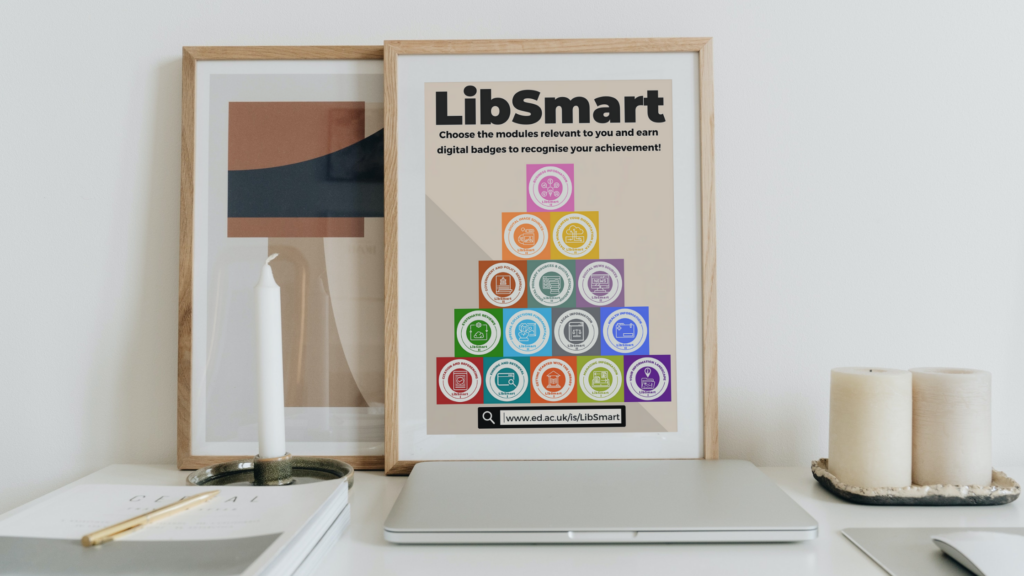
You may also know that for every module you complete in LibSmart you receive a Digital Badge, issued to you by the ASL team via Badgr. We've been keeping an eye on the number of students enrolled and also the number of badges we've issued for each module, and we're starting to see some trends emerge even though it's still early in the academic year.
LibSmart badges
For LibSmart I, we've definitely seen the most badges issued for the first module Getting Started With The Library. This isn't a great surprise as it is the first module and therefore a logical place for people to start. We're also seeing great numbers in our Your Information Landscape module which helps students orientate themselves with the resources that are helpful for their subject area. We've also seen the most growth month-to-month in our Referencing and Plagiarism module, perhaps because we're getting close to assessment time now and people are making sure they're familiar with how to reference correctly for their assignments.
When it comes to LibSmart II, we've had a nice even spread of badges being awarded across all modules. The most popular so far has been Data mindfulness: finding and managing data for your dissertation, which shows a real appetite for assistance with dissertation and thesis work. This is great news as this is exactly what we hoped LibSmart II would do - help those at an advanced stage of study complete the big pieces of work! We've also got a three-way tie in second place for the Health Literature, Digital Images and Special Collections Fundamentals modules all having the same number of badges awarded. Because we assume these would appeal to students of quite different disciplines, it's great to see the word is getting out to different schools!
Following on from my general tips for finding resources and navigating the online library, this blog post will cover why you should check out Subject Guides, and highlights some resources, old and new, that you may not already know about for studies.
When you are looking for resources, remember not everything in the Library collection is on DiscoverEd, so it’s best to check out your Subject Guide.
Subject Guides bring together all the most relevant library resources for a subject or topic. These guides, put together by Academic Support Librarians (ASLs), are always a good place to start when you’re looking for resources. ...continue reading "Finding Resources: Subject Guides"
Most researchers have heard of and understand the needs of a systematic review (SR), however the concept of a mixed methods review (MMR) can be confusing. The types of questions students and researchers ask can include:
Can I do this type of research?
How do I combine the data?
My quantitative and qualitative data are different – how do I make sense of this?
MMRs differ from the traditional model of SR as they aim to answer complex interventions and social policy type questions. They go beyond what works and look to highlight the complexity of what is happening, to explain why things make an impact and what may influence how an intervention works, offering context to interventions.
To answer such questions MMRs need to draw from both quantitative and qualitative material (Pearson et al, 2015), but this does not mean they cannot be systematic!
To be systematic they should demonstrate the same transparent and explicit approach that established SR methods require - so have a protocol, as well as detailed reporting of methods. There would need to be appraisal and analysis of the included literature. They would need to show a rigorous research process (Gough et al, 2017).
There are different review approaches included in this type of research, but it is important that the research question uses both qualitative and quantative data. If the research question does not then it may be better to use another type of review method. An overview of review types can be found in an article by Sutton et al (2019).
How the types of data are combined depends on the research objectives of the review.
The resource SAGE Research Methods (which is available to all staff and students at the University via our Library Databases pages) has lots of information and advice on the ways that the differing data can be analysed and combined, as well as an overview of this family of research methodology.
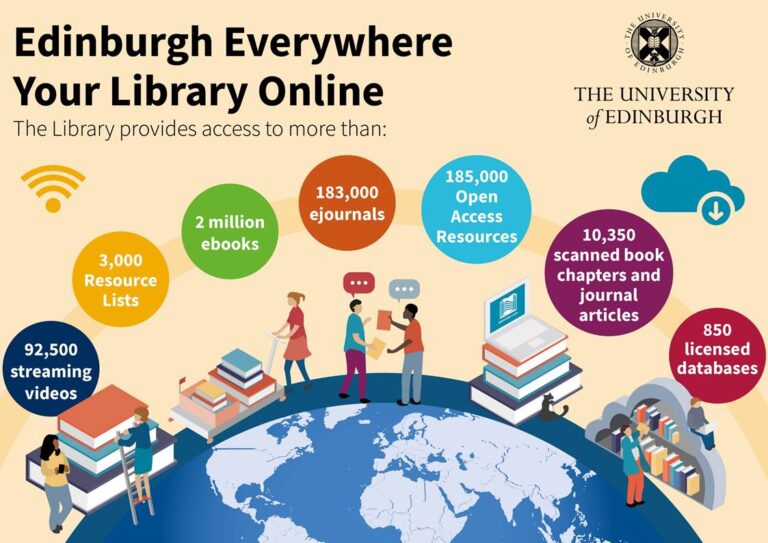
The Online Library is a vast resource. Whatever you study, you will find what you need in the Library collections. For all that it is wide and wonderful, however, I know (from personal experience) navigating the Online Library can be overwhelming. Read on for tips on where to look for resources and how to get the best out of the Online Library...
Subject Guides
Subject Guides are a great place to start your search for resources. If you haven’t already, head over to the Subject Guides list and find all the most relevant library resources for your subject and more...
On 2-4 November I attended the LibPMC Conference (International Conference on Performance Measurement in Libraries). The conference content was really varied, including a focus on the needs of stakeholders and communities and actively using qualitative and quantitative data to improve services and the user experience. Here are some highlights.
But can it last? How the pandemic transformed our relationship with data. Dr Frankie Wilson, Bodleian Library
Knowledge is PowerBI: How data visualisation helped inform services during the pandemic. Elaine Sykes, Liverpool John Moore’s University
Using return on investment to tell the story of library value and library values. Prof Scott HW Young, Prof Hannah McKelvey - Montana State University
Assembling a Virtual Student Library Advisory Board during COVID-19. Prof Chantelle Swaren, Prof Theresa Liedtka – University of Tennessee at Chattanooga
Charting the Change: Analysing How Online Delivery Made A Difference to Who Is Accessing Academic Skills Programmes. Louise Makin, Academic Engagement Manager, Liverpool John Moores University.
The past eighteen months have been quite isolating for staff as well as students at academic institutions, and this has meant that opportunities for networking and visiting colleagues from other universities have been in short supply. Recently I was invited to visit the University of Dundee's Main Library thanks to Kayleigh McGarry, Digital Literacy and Service Development Librarian.
Friday's actually my day off from work and childcare. What did I choose to do with my time to myself? Go on a field trip to another law library, obvs. pic.twitter.com/zed2JYiHUB
Although Kayleigh works across all subject areas in Dundee, she and I both have a specialist interest in Law as we previously worked in the Scottish Courts and Tribunals Service Library Service together. The Law collection at Dundee is housed in the Main Library and I was delighted to see a familiar face during my visit!
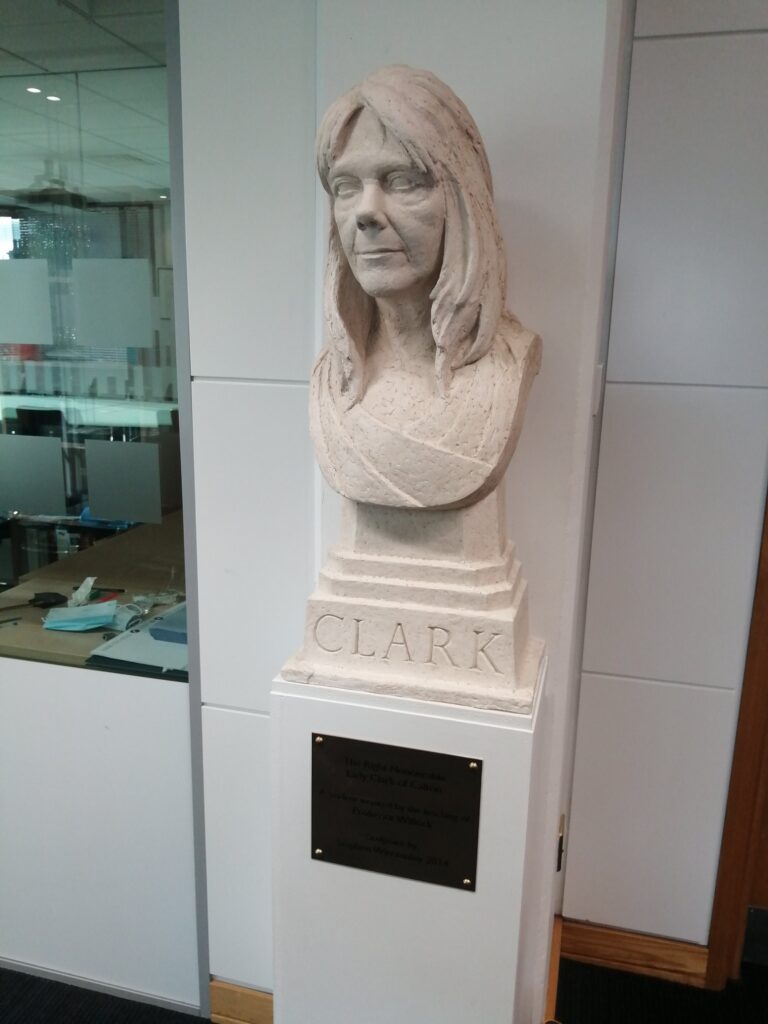
Bust of Lady Clark of Calton, Senator of the College of Justice and formerly Chairman of the Scottish Law Commission.
While I was interested to view the Law collection, it was also helpful to see how another institution have dealt with the challenges of the pandemic with regards their study spaces, group study rooms, and moving around the library. Most of the actions that have been taken in Dundee are very similar to our own service adjustments in the past year. Students are now able to use most study spaces on a drop in basis just like in our own libraries, and masks are worn throughout the building. The usual hand sanitising procedures and one-way systems are in place, and overall staff reported great cooperation from students during this tricky time. It was a real pleasure to see students back on campus and making the most of the available facilities. I have to confess that I'm quite jealous of the library's podcast and recording studio, and seeing their makerspace reminded me of the brilliant facilities we have in the uCreate Studios on the first floor of our own Main Library.
Overall I found the visit to be both reassuring - the challenges we've faced as staff and students at Edinburgh are not unique, and knowing that other university library services have made similar choices to our own suggests that we're all doing the best we can under the circumstances - and inspiring, because Kayleigh and I have a plan in the works to further encourage networking amongst our colleagues across HE institutions in Scotland. Hopefully this will be the first of many renewed opportunities for visiting libraries and sharing experiences to come.
SarahLouise McDonald Academic Support Librarian to the School of Law
The Main Library entrance on George Square. [Taken by Paul Dodds, copyright of the University of Edinburgh]As the semester gets going you may be keen to visit one of our many beautiful libraries to find materials, use a study space, or generally just soak up the atmosphere.
However we know that after the past year some students may be anxious about coming on to campus, and may be worried about what to expect. In order to help with that we’ve prepared Library Orientation Guides for each of our sites so you can familiarise yourself with the building before your visit. It includes information on what’s in the collections, photos of the library, and links to other helpful resources you may want to use. You can find them here:
You’ll also find a guide to Using the Library Online, which we think will be helpful for our online or distance students, or those who are self-isolating or in quarantine.
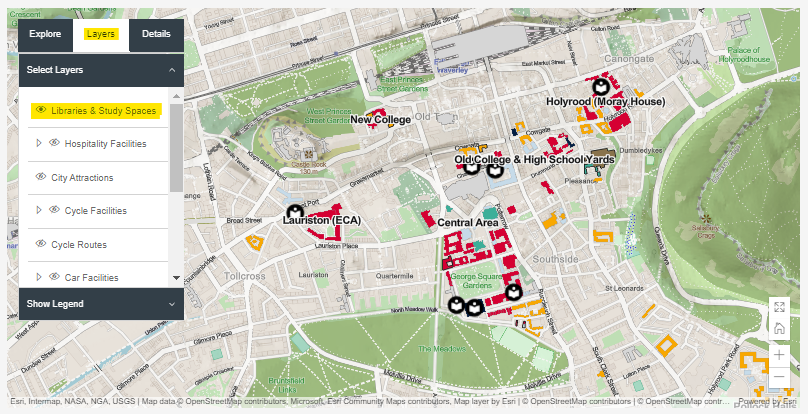
Other preparations for visiting campus may include looking at maps. Did you know we’ve got an interactive campus map? If you visit the Maps page and use the key to select the Layers tab, and then click the eye icon to make Libraries and Study Spaces visible, you can see all our locations across the city!
We look forward to seeing you on campus soon!
Note: The Microsoft Sway platform uses moving images in their templates, and each of the above Sways use one moving image at the top of the page. If you require the information in an alternative format please contact us by email: library-academic-support@mlist.is.ed.ac.uk.
 ...continue reading "The Transatlantic Slave Trade and Slavery: primary sources"