

Planning early made all the difference: How I funded my postgraduate studies
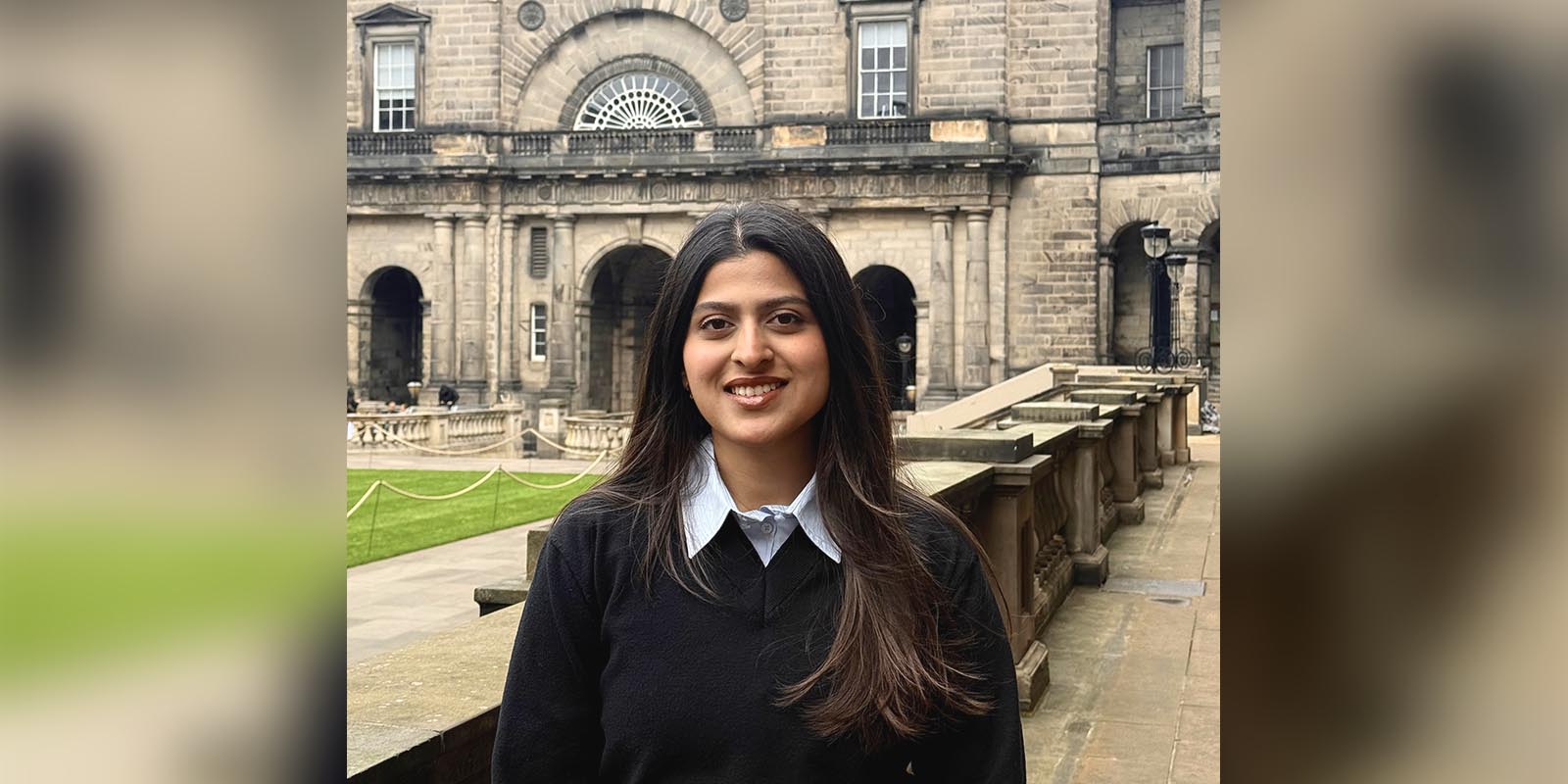
By Meetha, from India, studying Accounting and Financial Management MSc
Hi, I’m Meetha, I’m from India and I’m currently pursuing a masters degree in Accounting and Financial Management at the Business School.
I know that funding and tuition fees can be confusing for many students. There are numerous options available, and it can be difficult to decide which one is right for you. I hope that by sharing my experience, you will be able to identify a few options that may work for you.
Finding information about fees
I used the University’s degree finder to understand the tuition fees for my programme. I explored several courses before applying, carefully noting down their fees.
Some programmes also require an application fee. From what I recall, it ranged between £60 to £80. Not all programmes charge this fee, so I would strongly recommend checking the specific details for your chosen course on the Degree Finder. Overall, I found the process straightforward, and the University website was easy to navigate.
How I planned and budgeted
I funded my studies primarily through an education loan, which covers about 85% of the costs, while the remaining 15% comes from my family savings.
In addition to tuition fees, it is essential to budget for monthly expenses such as rent, groceries and other miscellaneous costs. Unexpected expenses can arise, so it is important to plan realistically.
If you’re an international student, keeping an eye on exchange rates can also be helpful, as they fluctuate. When the rates are favourable, it might be worth exchanging money in advance. While I’m not a financial adviser, this approach worked well for me.
How paying fees works in practice
I opted to pay my tuition fees in three instalments: October, December and February.
The University provides an online portal where you can view your fee details and make payments. You can pay either via bank transfer or by card. I personally find card payments more convenient.
I was also required to pay an initial deposit within 28 days of receiving my offer and to outline my funding plan. After paying the deposit, I had some time to arrive in Edinburgh, settle in and get familiar with the city before my first instalment in October.
Getting help and support
If I had any questions or needed support, it was clear to me who to contact. Before receiving my offer, I communicated mainly with the Enquiry Management team, who were very helpful and responsive to emails I sent them.
There is also a dedicated Student Fees team you can contact directly. They can guide you through payment options, instalment plans, or full payment processes, and provide detailed instructions tailored to your situation. In my experience, they typically responded within one to two working days.
How I found and secured funding
I received my offer in December 2024 for the September 2025 intake, which gave me plenty of time to explore funding options.
Like any student, I explored the scholarship section to identify opportunities I was eligible for. If you are an international student, I highly recommend checking region-specific scholarships as well.
Some scholarships are automatically considered, while others require a separate application. Make sure to prepare your personal statements in advance and apply as early as possible once applications open.
Scholarships and student funding
For my loan, I applied through a local bank. I would strongly advise starting early, as the process involves extensive paperwork and documentation. It can take up to a month for approval. When applying, ensure you provide a detailed breakdown of both tuition fees and living costs.
I began gathering my documents seriously in June, about three months before my course started. It is also crucial to stay on top of deadlines. For example, submitting your degree certificate is necessary for the University to issue your CAS (Confirmation for Acceptance of Studies) which you need before applying for your visa. This process can take time, so planning ahead is essential.
Final advice
My biggest piece of advice is simple; start early. Planning ahead makes a significant difference. Secondly, budget carefully and realistically. This may seem straightforward, but it is incredibly important.
Explore how other students have also funded their studies
Got questions about student life at Edinburgh?
Meetha was sharing experiences of paying for Postgraduate Studies at Edinburgh during our ‘Discovery Day’ online event that took place in March 2026. Find out more about our online recruitment events: