

The era of the aged
In a recent blog, Prof Sue Welburn set out the priorities of the UK-China Health Research Alliance (UKCHRA). One of the issues flagged – healthy ageing was followed up within the UK China Science and Innovation Collaboration Forum. Here Sue shares her thoughts on the challenges and opportunities around health ageing.
Shared commitments and strategic priorities
In recent years, the UK and Chinese governments have committed to fostering collaboration between their world-leading research institutions. This is seen as a transformative, science-led way of turning global challenges into viable solutions. Both countries made a commitment that research should be secure and reciprocal, with research outcomes shared amongst partners in compliance with the data protection and intellectual property laws in each country. The details of research priorities were explored at the UK–China Science Innovation Collaboration Forum, which I attended in March 2026.
There is no shortage of shared challenges between the two countries, but rather a need to prioritise. Three priorities have emerged where we can deepen understanding, share experience, and deliver impactful, solution-focused pathways.
- Net zero technologies
- The future of food, and
- Healthy ageing
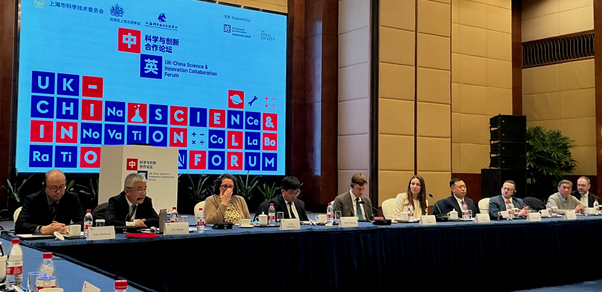
Panel discussions at the 2026 UK-China Science & Innovation Collaboration Forum held in Shanghai, March 2026
Why healthy ageing matters
As the Dean of the ZJE Institute, with its focus on biomedical research, I am excited by the opportunity to address some of the scientific, technological, and systemic challenges posed by an ageing population. The fact that I have just met my third grandchild in no way influenced my interest in the topic!
It is clear that both the UK and China are seeing rapid changes in population structures. This ageing population, in turn, places increasing demands on healthcare systems, social infrastructure, and the economy. Addressing these challenges requires joined-up thinking so that we can combine biological science, healthcare systems, and social policy. The aspiration is to ensure that living longer, for most people, is synonymous with living well.
The UN Decade of Healthy Ageing
The UN has designated this the Decade of Healthy Ageing, which aims to improve the lives of older people, their families, and communities. The World Health Organization focuses on changing how we think, feel, and act towards age and ageing; developing age-friendly environments; delivering integrated, person-centred care; and ensuring access to long-term care. It emphasises equity, recognising the diverse experiences of ageing, and calls for coordinated action across governments, civil society, and the private sector to promote dignity, wellbeing, and independence in later life. The UK-China alliance is well placed to act as a catalyst for many of these changes.
Research challenges and system constraints
Research on the impact of an ageing population is advancing rapidly; however, there are persistent challenges that limit progress spanning biomedicine, technologies, healthcare systems, and wider society.
For starters, ageing is not a single process but a complex interaction of cellular damage, genetics, and environmental factors. We still do not fully understand the primary and secondary drivers of ageing, or how these processes interact. There are also inequalities linked to ageing, which influence outcomes for individuals and groups. These factors include income, education, gender, geography, and culture.
While lifespan is relatively easy to measure, there is no universally agreed definition or metric for healthy ageing. We lack longitudinal datasets that track function, independence, and wellbeing over time. Progress would also be supported by improved biomarkers that go beyond the presence of disease. Data are often collected separately across healthcare, social care, and lifestyle domains, making it difficult to integrate biological, clinical, and social insights into coherent narratives.
Researchers have traditionally focused on single diseases. However, older people commonly experience multiple conditions simultaneously. This complexity means that older people are often excluded from clinical trials. Therefore, the interactions between major age-related conditions – such as diabetes, cardiovascular disease, and dementia – require further exploration.
Shifting systems: prevention, diagnosis, and innovation
Whilst the need to shift from reactive care to preventative and community-based models is widely acknowledged, progress has been slow – particularly where health and social care budgets are under pressure.
It is worth noting that China’s health system tends to achieve a better balance between preventative and reactive care. We know that preventative approaches deliver long-term benefits, yet funding cycles continue to prioritise short-term outcomes. This challenge is compounded by limited evidence on which interventions have the greatest long-term impact – or when they are best deployed. Meanwhile, most health systems remain designed around acute care rather than the realities of long-term ageing. This is not helped by a shortage of geriatric specialists and integrated care models, alongside a need to better connect health services, social care, and community support.
Innovation within health systems is often slow to be adopted, with weak linkages between research, policy, and service delivery. While the potential of AI, wearable technologies, and digital health is significant, the evidence base remains limited. These challenges are further compounded by digital exclusion among older populations.
Opportunities for collaboration and breakthroughs
This is a long list of challenges – but it is exactly why delegates at the conference could see the potential to move the needle. Some steps are relatively simple. For example, mapping current initiatives into a shared database or agreeing protocols for longitudinal studies, especially those associated with dementia. There is also potential to harmonise standards for biomonitors tracking physiological indicators such as blood markers.
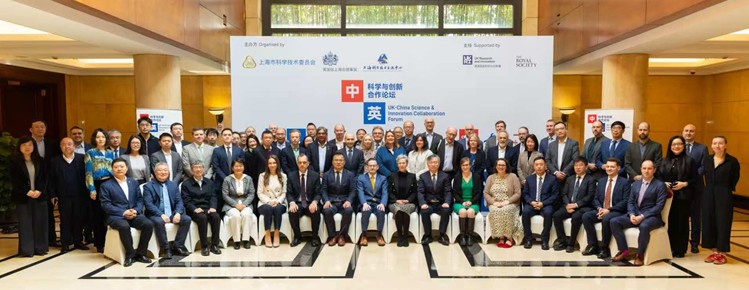
2026 UK-China Science & Innovation Collaboration Forum held in Shanghai, March 2026
The discussions highlighted the need for more age-sensitive, integrated approaches to assessment and care. Underdiagnosis in older people is common across both acute and chronic conditions. This is due to a number of factors: symptoms are often atypical, masked by comorbidities, or misattributed to ageing. Time-pressured services and fragmented care contribute to missed or delayed diagnoses. This leads to poorer outcomes, avoidable complications, and reduced quality of life. For some conditions, such as dementia, screening may need to start decades before retirement age. Here, it should be possible to differentiate between different types of dementia and pool datasets to improve early diagnosis from its current low levels of around 10%.
We can work across diagnosis, treatment, prevention, and control. Cell therapies hold significant promise for treating diseases of ageing by repairing, replacing, or regenerating damaged tissues. Stem cell therapy and immune cell engineering offer potential in conditions including neurodegeneration, cardiovascular disease, and musculoskeletal decline. These therapies could address underlying causes rather than symptoms, improving function and extending healthy lifespan. For this area to realise its full potential, it requires further research, robust clinical trials, and clear regulatory frameworks to address issues of safety, scalability, cost, and long-term efficacy.
The scale of the challenge – and opportunity
To focus our minds on the scale of the challenge, by 2050 the UK is projected to have around 8.5 million people aged over 80 (up from roughly 3.2 million now). In China, there will be nearly 100 million people aged over 80. By 2050, I will be part of the 11% of the UK population aged over 80. Like all structural challenges, we should have focused resources on healthy ageing a generation ago- but this feels like a meaningful step in the right direction.
Written by Prof Sue Welburn, Executive Dean, Zhejiang-University of Edinburgh joint Institute.