

Advancing women in science: mentorship, environment, and independence
International Women’s Day is a moment to celebrate successful women in science. It is also an opportunity to reflect on the environments and support systems that enable their success.
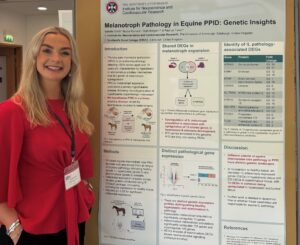
Today, we feature Isabelle Smith, a third-year PhD researcher at the Zhejiang-Edinburgh Institute (ZJE), whose work in Biomedical Science is already gaining international recognition. Next week, we will talk to Professor Sue Welburn and explore her distinguished career that led to her being honoured with an OBE.
A childhood spark
Isabelle’s fascination with science began long before she stepped into a laboratory as a student. Growing up, she often visited her mother’s forensic laboratory. “She does magic on a daily basis,” Isabelle remembers. Watching her mother work sparked a curiosity that would shape the way she approached problem-solving, observation, and inquiry.
High quality mentorship
For Isabelle, mentorship has been less about instruction and more about cultivating confidence — the confidence to ask bold questions, collaborate across disciplines, and trust her own developing expertise.
Behind every “finished” PhD student, she said, there is a pyramid of support. Too often we celebrate outputs — publications, awards, fellowships — without recognising the layered mentorship that makes this process possible.
Isabelle works with two supervisors: Dr Ruth Morgan, a veterinary clinician, and Prof Paul Le Tissier, a physiologist. Her PhD sits between veterinary practice and laboratory physiology, requiring genuine interdisciplinary collaboration. Clinical insight informs experimental design; laboratory findings refine understanding of equine disease in real-world contexts.
Despite Paul’s responsibilities across undergraduate and postgraduate programmes, he makes time for focussed one-to-one discussion. His assurance that no question is “stupid” has helped Isabelle feel valued at her stage of development rather than measured against some distant benchmark. This kind of mentorship is steady but transformative.
She also described the encouragement she received when beginning her teaching journey as part of her PhD. Entering a classroom at 23 to teach students close to her own age could have been daunting but under the guidance of Dr Laura O’Hara, Isabelle has grown confident in the classroom and recognises it as a space for reciprocal learning. Good mentors do not remove challenge; they make growth feel possible.
Supportive research environments
From the outset of her learning journey at the ZJE, collaboration has defined Isabelle’s research identity. Without cross-disciplinary engagement, she reflected, “it’s very easy to get kind of a tunnel vision.” The structure around her — linking veterinary medicine and physiology — ensures her work remains holistic and relevant to the wider equine science community.
But environment is more than research design. It is also culture.
Informal postgraduate discussion groups created small, intentional spaces for dialogue. These forums allowed Isabelle to talk openly about imposter syndrome, career uncertainty and academic pressure. “It was this open dialogue,” Isabelle explained, where students were “a lot less scared to ask questions.”
Such openness reflects a wider norm of transparency and intellectual humility. In her words, nurturing environments are those where “no one’s a finished product” and people are “willing to learn together.” Teaching is framed as a two-way exchange rather than a top-down transaction — “everyone in the classroom should be learning in some way or another.”
These seemingly simple practices — flattening hierarchy, encouraging questions, normalising uncertainty — create psychological safety. They allow emerging researchers not simply to perform, but to develop confidence and professional identity.
Isabelle also draws strength from women who have shaped her journey. “It’s really great having these powerful women and role models in science that are really driving the field—and we definitely need more of them this day and age,” she says. She cites mentors like Professor Sue Welburn, whose trust opened early opportunities, and Professor Anne White, whose expertise in hormone research guided Isabelle through key challenges. Colleagues across ZJE continue to inspire her through collaboration, resilience, and mentorship.
Recognition on an international stage
Isabelle was recently awarded the Steve Bishop Collaboration for Innovation Award from the British and Irish Society of Animal Science. This accolade honours her innovative approach to animal research. Isabelle will now take her work to UCLA for a month, adapting human cell culture techniques to equine tissues—a move she describes as “a transformative edge” for her research.
Her aim is not merely to learn the technique, but to adapt and translate it for horses — creating a platform that could extend to other domesticated species, including dogs and cats. By the age of 26, she will have worked across three national contexts — the UK, China and the United States — gaining exposure to different academic cultures, laboratory systems and collaborative networks.
For an early-career scientist, this represents more than recognition. It signals growing autonomy and international standing. Competitive awards, research exchanges and defined leadership moments provide the bridge between doctoral training and independent scholarship.
Independence, when carefully supported, becomes not a leap into the unknown but a deliberate step forward. Isabelle is now taking that step — from Edinburgh to California — carrying with her both structured support and emerging confidence.
Celebrating progress and possibility
Reflecting on International Women’s Day, Isabelle emphasises confidence, visibility, and mutual support in science:
“International Women’s Day is a reminder that women deserve to take up space in science. You’ve proven you belong there — so be confident, be proud, be yourself and be heard. We need to build each other up, because progress happens when women support women.”
Her journey shows how institutional support, collaboration, and determination can propel early-career researchers to meaningful achievements and help them inspire others. At ZJE, nurturing talent like Isabelle’s isn’t just about research; it’s about building confidence, ambition, and a future where women scientists continue to make an extraordinary impact.
Further information
View a short interview with Isabelle Smith for International Women’s Day 2026
Part one – Isabelle Smith for International Women’s Day 2026