In recognition of World AIDS Day 2025, we had the opportunity to speak with Dr Jaime Garcia-Iglesias, Chancellor’s Fellow at the Centre for Biomedicine, Self and Society at the Usher Institute.
Jaime is a public health sociologist whose work explores sexuality, digital health, and people’s lived experiences of infectious diseases.
What first inspired you to study how people experience infectious diseases like HIV/AIDS?
That’s a really interesting question, and one I have often wondered myself. In part, I was drawn to just how important and ever-present HIV seemed for gay men like myself, even though I was born at the very end of the AIDS crisis. I was also very interested in how things have changed so much in the past decade: we now have many ways of effective prevention and treatment, including PrEP, as well as the knowledge that people on effective treatment cannot pass it on.
For someone who has never thought deeply about HIV before, what is one thing you wish they understood?
HIV is not, and has never been, only a medical problem. It is true that it is a virus, but it is so much more. HIV cannot be understood without thinking about the stigma and fear that people face, about global health inequalities, and about gender and sexual discrimination. Solving HIV is not just about biomedicine, it will also require profound structural changes: fighting inequality, sexism, and misinformation, building peer support and trust, and involving communities in policy and research.
Can you share a moment in your research that made you stop and think differently about HIV or public health more broadly?
I have been very lucky to do work with fabulous colleagues during the COVID-19 pandemic. So much of what was happening and how governments and communities were responding reminded us of what we knew about the early days of the AIDS crisis. COVID showed us, however, how much more we must learn: like HIV, COVID-19 most heavily impacted those communities who were already underserved, on the margins of policy and healthcare. We need to understand that the best way to prepare for pandemics is to fight social injustice and inequalities.
If you could challenge one common assumption or myth about HIV/AIDS, what would it be and why?
That HIV was a crisis, but it is no longer an issue. HIV was a massive crisis in the 80s and 90s, and while we are—thankfully—no longer in that position, HIV remains an important public health issue: over 40 million people worldwide live with HIV, and 1.3 became newly infected in 2024.
Looking toward the future, what gives you hope about how society can continue to support people living with HIV and prevent new transmissions?
I am always amazed at the incredible work that community organisations do to support and advocate for people living with HIV. Here in Edinburgh, we have fantastic ties with communities.
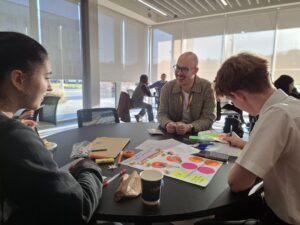
Earlier this year, we hosted students from local high schools to learn about HIV and develop their own anti-stigma posters. It was so fun to work with them (even if I felt so old!), and so gratifying to see how passionate they were to learn more and fight prejudices! (Pictures below).