14.00-15.00 Edinburgh local time – Zoom Webinar (Register via Eventbrite here)
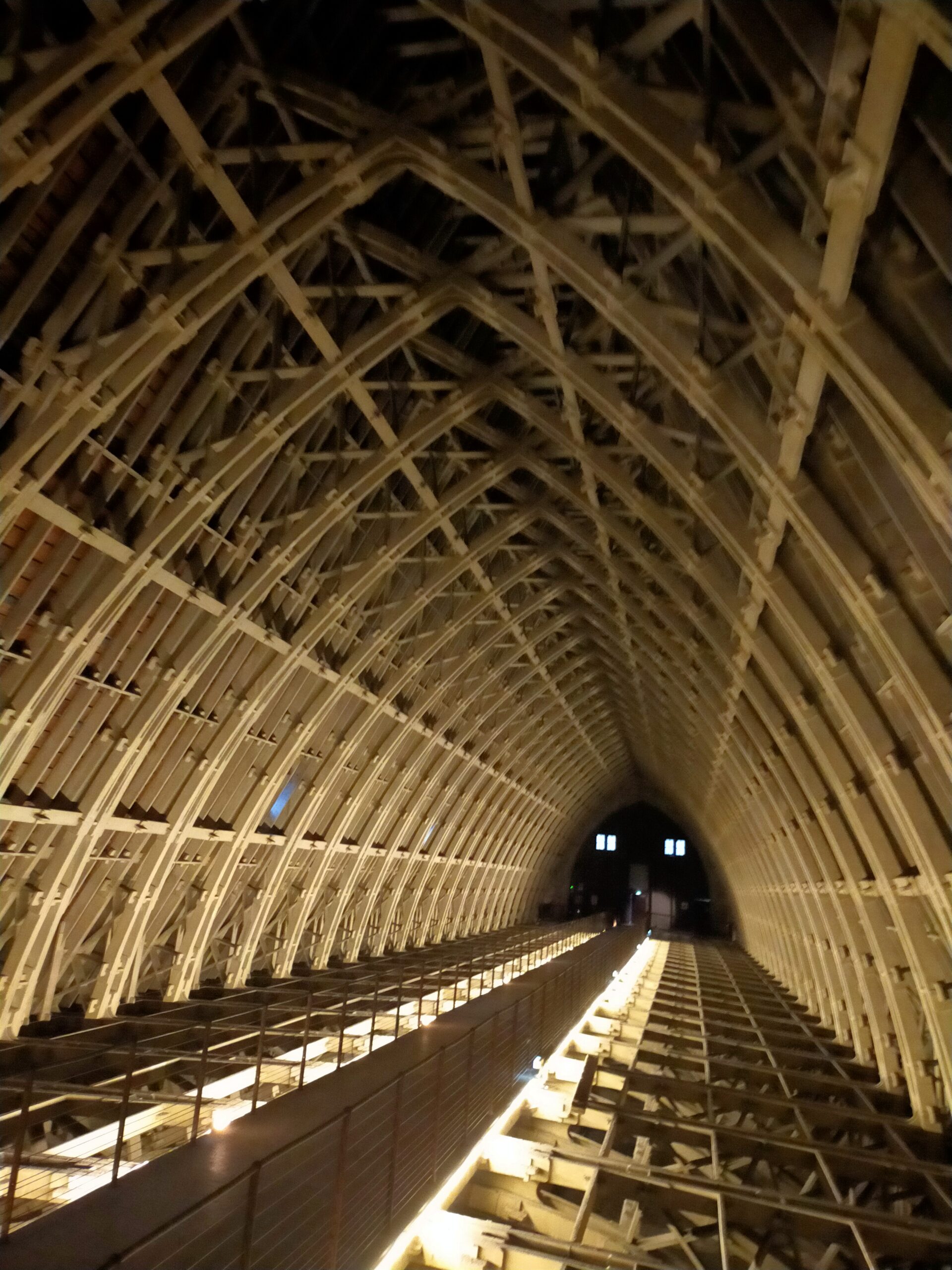
The new concrete roofs in major French churches after WW1 destruction, from patents to innovative practice
Dr Dimitris Theodossopoulos
Senior lecturer in Architectural Technology and Conservation
ESALA, University of Edinburgh
The pioneering experimentation around innovations and patents for reinforced concrete (RC) in early modern construction, as also their transition and application in large scale to mainstream technology, have been researched extensively. Less is known though on the role of patents and innovation in monumental reconstruction and their relationship with the practice and knowledge of traditional techniques, in contemporary preservation projects. Two French architects created very elaborate reconstructions of roof trusses for major churches in N. France heavily damaged during the First World War. They were both architectes-en-chef des monuments historiques (ACMH), but also affiliated with Anatole de Baudot, a pioneer of concrete architecture. Henri Deneux is well-known for his patented system of prefabricated light concrete bars in the reconstruction of the roof trusses in Reims Cathedral. His impressive designs are framed with two other churches in Reims (Saint-Jacques, before the cathedral and Saint-Remi afterwards) in a scheme called corset, where he gradually combined the truss with a concrete portal frame that braced the space above the stone vaults. A similar holistic engagement informed also same operations by Emile Brunet in the Basilica of Saint-Quentin, but with cast-in-situ frames. This paper explores whether this unified assembly was the outcome of a creative process initiated by the truss or a process freed from the original structural scheme of the destroyed vaulted space. The study examines also how far the designers believed the truss would firm up their control over the weak remains and the possibilities of a fertile debate among them.
Dimitris Theodossopoulos
Dimitris Theodossopoulos is a senior lecturer in architectural and conservation technology at the school of Architecture (ESALA) at the University of Edinburgh. He is a civil engineer from Greece, specialised in conservation from the Sapienza University, ultimately receiving a PhD in Edinburgh on the structural aspects of stone vaults. His current research interests in medieval stone vaulting explore their technology, architecture and transfer in Greece (particularly seismic behaviour) as also the technological culture in the reconstruction of major churches in N. France after WW1 (both traditional and modern concrete systems) – and more broadly the experiential teaching of construction history through models.