

Week 13: Floor Plans & Commissions
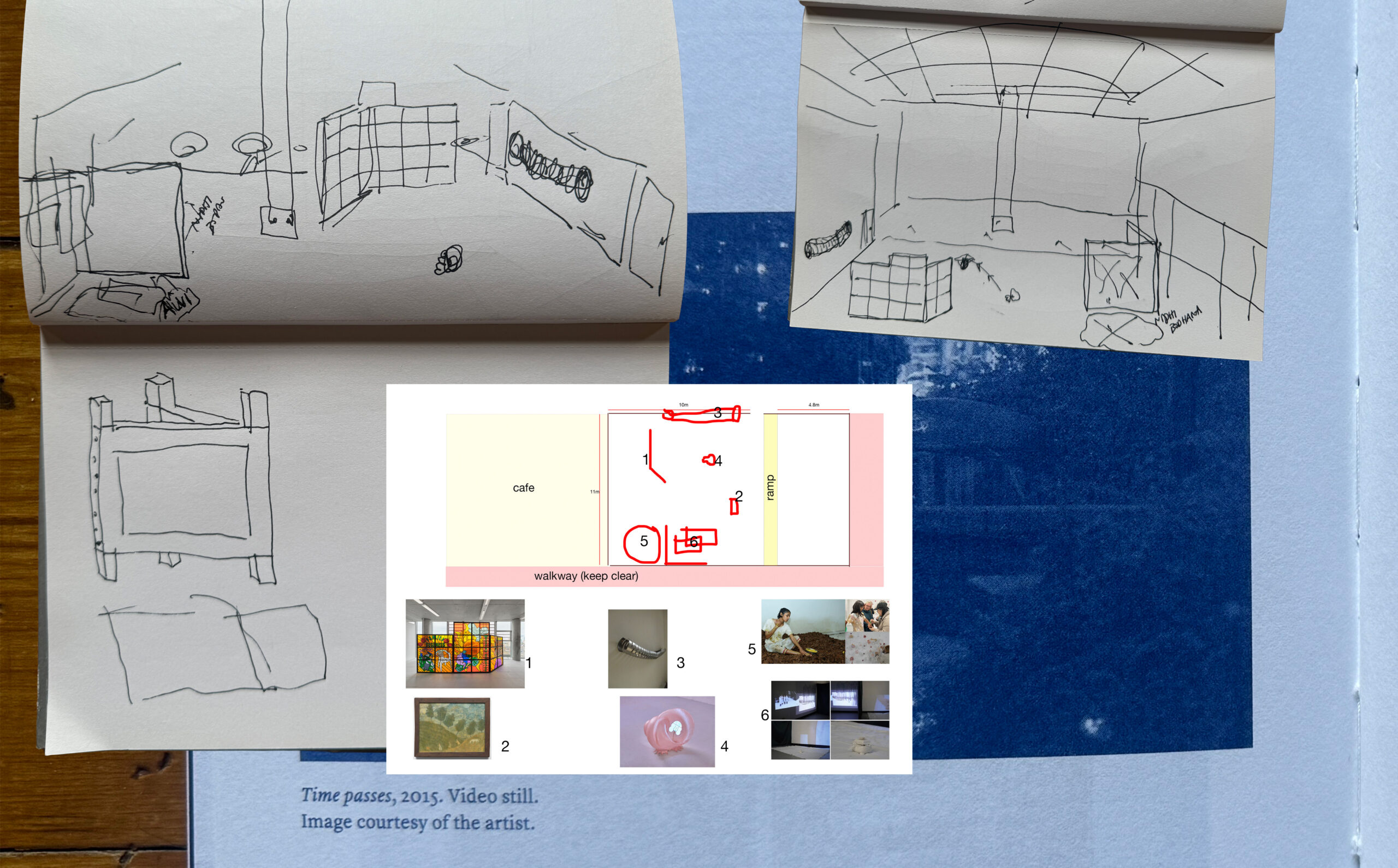
Floor Plan & Exhibition Design
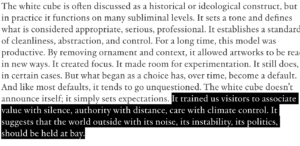
Screenshot of Formafantasma, “On Exhibition Design” in Mousse Magazine
As I have been working out the exhibition design for my project, Formafantasma’s article “On Exhibition Design” in Mousse Magazine has been critical in guiding my thinking about “how exhibition design can articulate a position, rather than simply hosting one” (Formafatasma 2026).
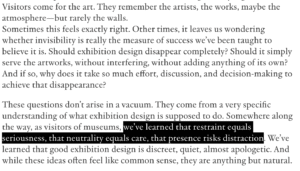
Screenshot of Formafantasma, “On Exhibition Design” in Mousse Magazine
In particular, aspects such as the suspended wall texts and canvas works at the Diriyah Biennale offer more exciting yet approachable ways of interacting with the works, challenging the expectations and neutralization of the white cube. As such, I have two key layouts for the exhibition I have been experimenting with:
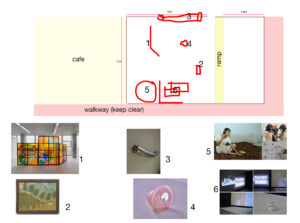
Exhibition Floor Plan #1
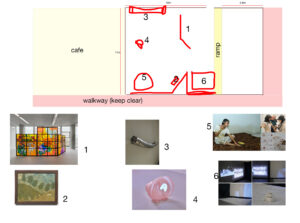
Exhibition Floor Plan #2
In the first plan (which I am now leaning towards), Mia Kokkoni’s painting is suspended from the rafters of the building (there are multiple examples of objects, banners, and other weighted items being suspended from the rafters so this should be permitted). This layout incorporates portable white walls as Alvi Östgård’s work “Savn” necessitates a wall to project onto, though I am considering building bespoke walls that incorporate fabric stretched over exposed wood frames or hanging curtains to divide the space, so that the exhibition includes no white walls at all, fostering zones of interaction between works that reflect the exhibition themes at large.
On Commissions and Contemporaneity
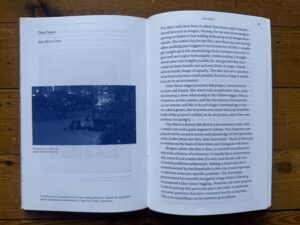
Photograph of Guttu, Anna Hjort, “Time Passes” in Cervetto, Renata, On Boycott, Censorship and Educational Practices The Fellow Reader #1, pp 136-137.
I recently came across artist Ane Hjort Guttu’s work Time Passes, a film produced for eating or opening a window or just walking dully along, a solo show of Guttu’s at the Bergen Kunsthalle. Commissioned for the exhibition, this work responds to a proposed ban on street begging in Norway. This work highlights the role of commissions to connect to local and contemporary issues, sparking dialogues between artistic practice and members of the local community.
Recent anti-immigration rallies in Edinburgh demonstrate the need for intercultural dialogues that recognize the richness of culture that diversity brings to local communities, and Nidhi Bodana’s commissioned site specific work and performance will be crucial to offer a “site of healing, visibility, and reclamation, inviting audiences to move from passive viewing to active witnessing, from silence to solidarity” (Nidhi Bodana, artist statement). Having spent time with these artists’ practices, I am beginning to feel confident that the dialogues between these works invite audiences to reflect upon their own identity, and inspire publics to consider how community is strengthened through being accepting, understanding, and inclusive of diverse cultures and populations.
References
Bodana, Nidhi, quote from Artist Statement. Accessed via: https://bodananidhi.co.uk/
Formafantasma, “On Exhibition Design” in Mousse Magazine, 2nd March 2026, accessed via: https://www.moussemagazine.it/magazine/on-exhibition-design-formafantasma-2026
Guttu, Anna Hjort, “Time Passes” in Cervetto, Renata, On Boycott, Censorship and Educational Practices The Fellow Reader #1, de Appel, Amsterdam, NL, 2015, pp 136-140.