

Week 8: Summerhall CAP Exhibition Planning & the Archive
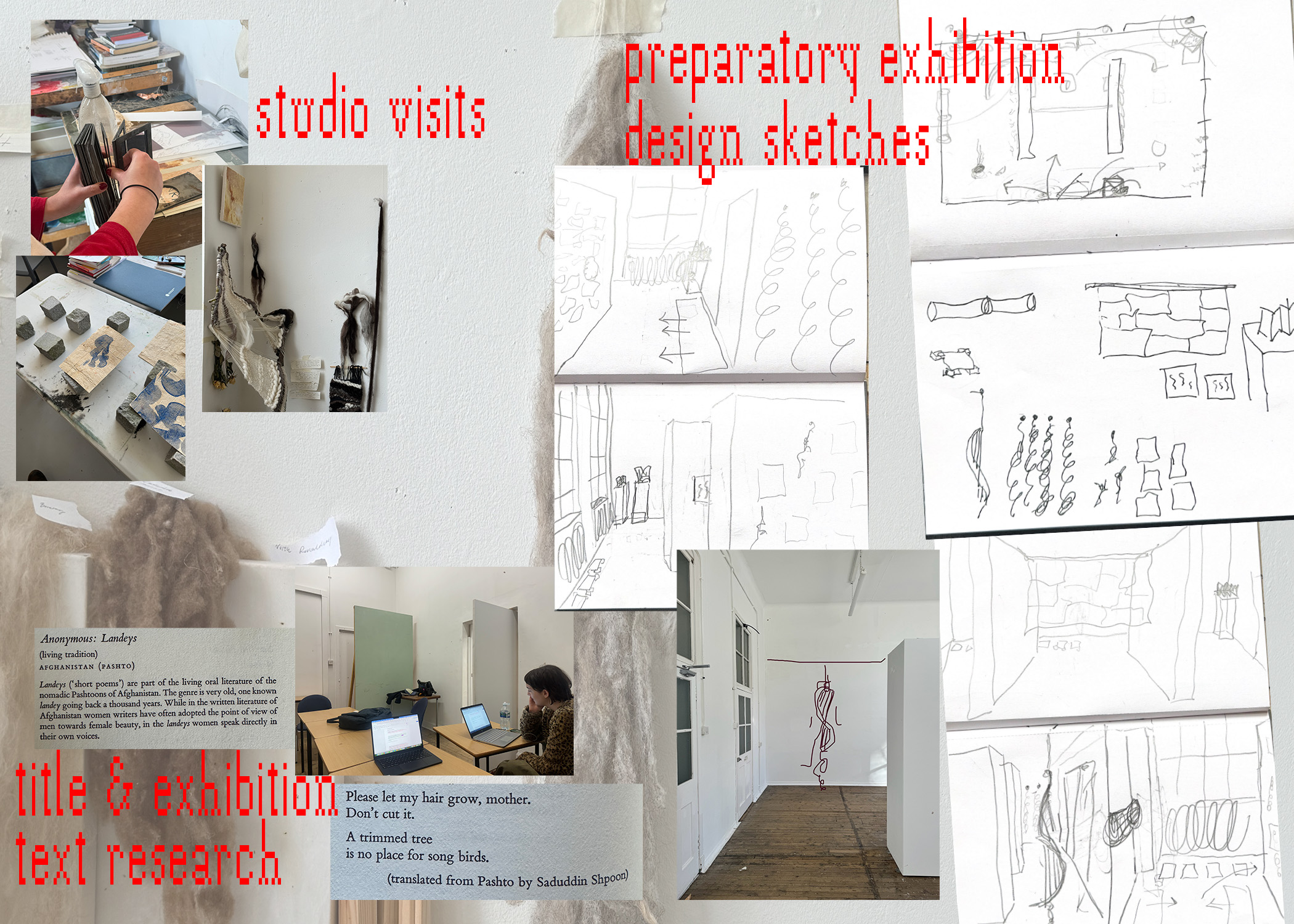


Collage of preparation research & sketches for the CAP exhibition @ Summerhall. Also featuring photos of Cosman, Carol, Joan Keefe, and Kathleen Weaver, eds. The Penguin Book of Women Poets. Harmondsworth: Penguin, 1978, pp 291-292.
a trimmed tree is no place for song birds
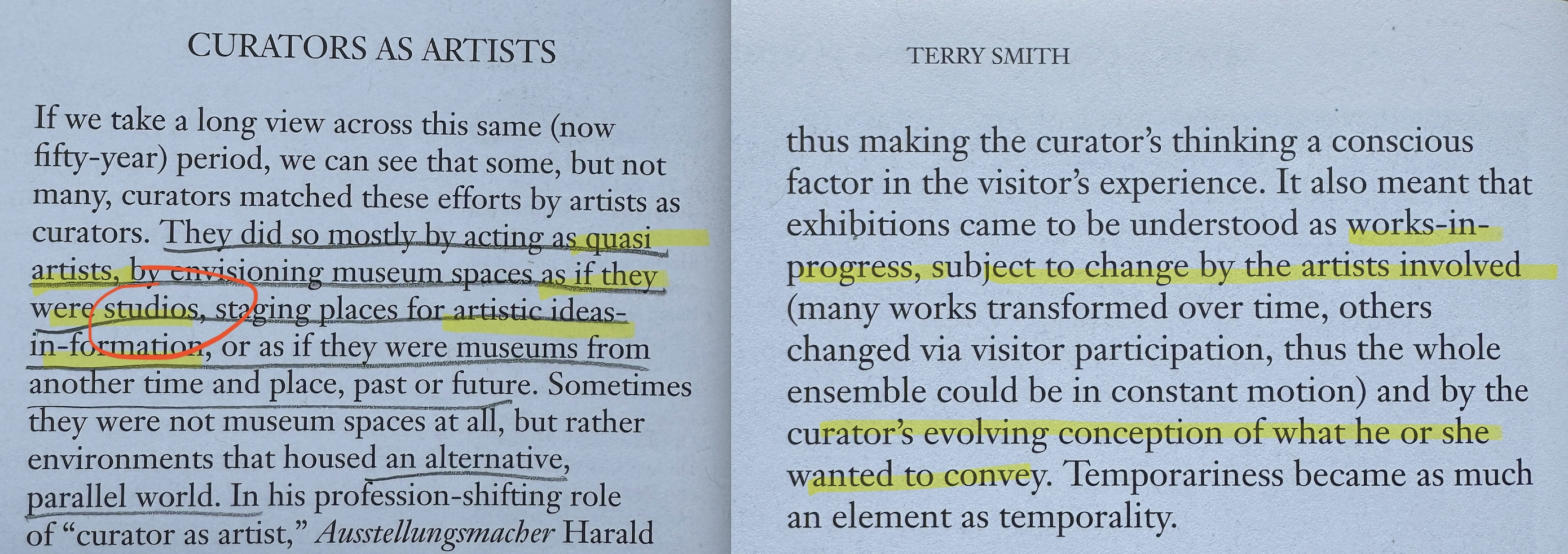
Much of my time this week has been spent preparing the exhibition of CAP students Ellie and I are curating. As such, I have been reflecting on the urge/decision to include ephemera from these artists’ practices. The making visible of this artistic research (including sketches, material studies, drawings) in many ways reflects upon my own situatedness as an artist/curator and a subliminal instinct to “[stage] places for ideas-in-formation”(Terry Smith, 131).
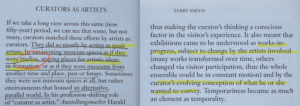
Image of Smith, Terry, and Independent Curators International. Thinking Contemporary Curating. New York: Independent Curators International, 2013, pp 131-132.
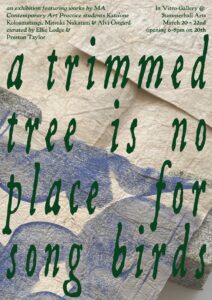
CAP Exhibition flyer, designed by author. Featuring personal image from studio visit in Kato’one Koloamatangi’s studio.
 In many ways this ephemera could be viewed as the creation of a living archive, akin to the self archiving practice of the Woman’s Art Library. Rather than select specific objects/artefacts, our approach also reflects this non-hierarchical and ‘uncurated’ method of developing a living archive; we communicated a desire to exhibit ephemera from their practices but prompted artistic self-selection, hopefully (I will reflect on this after the exhibition in week 10) manifesting in the cultivation of dialogues surrounding this living archive in the exhibition.
This line of thought was bolstered by Siobhan McLaughlin’s notion of the artist-as-gardener (from this week’s readings) at it relates to my own situatedness as an artist curating the practices of others: given the areas of overlap between my ISCP themes and the exhibition, the process has felt akin to “sowing seeds of ideas from [my] own personal practice, growing them in collaboration with [the] invited artists, so that the exhibition is both presentation of artworks and a grown stem of artistic research”(Siobhan).
On the Archive
While I am unsure the place that an archive could take in my speculative curatorial project, I found that the reading room at the Talbot Rice exhibition “the dead don’t go until we do” functions in a similar manner to the archive: it “[creates] an open space for discussion to reevaluate critical issues, such as identity, trauma, testimony, collective memory… by pushing people into questioning and thinking”(Durukan & Akmehmet, 133).
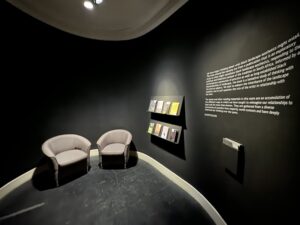
Photograph of the reading room that is a part of MADEYOULOOK’s installation Mafolofolo, 2022 – ongoing, at the Talbot Rice Gallery’s exhibition The dead don’t go until we do. Image courtesy author.
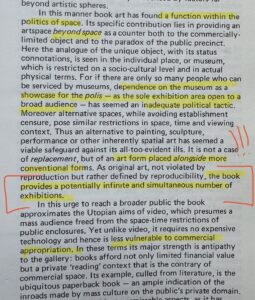
Annotated image of Linker, Kate.” The Artist’s Book as an Alternative Space.” Studio International 195, no. 990 (1980): 77.
Publication as Alternate Space
The role of the reading room in offering dialogues and dissemination brings me back to the publication as curatorial form: the art critic Kate Linker’s essay “The artist’s book as an alternative space” demonstrates the role that publications can play: “the book provides a potentially infinite and simultaneous number of exhibitions”(Linker, 77).
Admittedly, this reflects my own biases towards physical exhibition making. The temporality of exhibitions results in their fading from memory in a way that the artworks themselves (books, films, visual art, music) do not (at least for me). The living-with (books on the shelf, the soundtrack to a season of life, print-out of a painting taped on the studio wall) that art objects traditionally enable offer a prolonged and complicated experience that the physical temporality of an exhibition does not, at least without its documentation or re-shaping into a more portable, and extended form: the book. Rather than view the publication as facsimile, I am interested in it offering an extension of the themes and dialogues presented in the exhibition, further democratizing the exhibition to audiences farther afield.
Moving into next week, I am re-workshopping my title, tightening in on included artists and beginning to look at a budget, while also developing (and installing) the CAP exhibition in Summerhall.
References
Linker, Kate.” The Artist’s Book as an Alternative Space.” Studio International 195, no. 990 (1980): 75-79.
McLaughlin, Siobhan, “Artist-as-Gardener: Thoughts on artist-run spaces”, April 29, 2022, https://www.siobhanmclaughlin.co.uk/artist-as-gardener
Smith, Terry, and Independent Curators International. Thinking Contemporary Curating. New York: Independent Curators International, 2013, pp 131-132.
Nesli Gül Durukan & Kadriye Tezcan Akmehmet (2021) Uses of the archive in exhibition practices of contemporary art institutions, Archives and Records, 42:2, 131-148. Accessed via: https://www.tandfonline.com/doi/full/10.1080/23257962.2020.1770709
from collage of Summerhall exhibition preparation/research:
Cosman, Carol, Joan Keefe, and Kathleen Weaver, eds. The Penguin Book of Women Poets. Harmondsworth: Penguin, 1978, pp 291-292.