

🎯Curatorial Focus:
My curatorial focus is on the anxiety of women presented in contemporary photography. From a feminist perspective, I explore the predicaments that contemporary women face under the multiple pressures of social structure and cultural expectations. These pressures often do not manifest as dramatic events but exist in a continuous, repetitive and hard-to-articulate state, gradually internalizing into anxiety, unease and self-doubt.
📖Curatorial Concept:
This exhibition explores how women navigate identity formation between being looked at and looking at themselves, how they resist societal expectations, and strive to break long-standing gender stereotypes. It treats photographic and video works as a means of documenting emotional and social experiences, using visual techniques to reveal the invisible but ubiquitous pressures that shape women’s lives.
The exhibition adopts a “multi-thematic/non-linear” structure, presenting female anxiety not as a singular narrative but as a cluster of states interwoven by multiple social, cultural, and visual mechanisms.
I chose photography as my main medium because photography is highly dependent on viewing, and viewing itself is closely related to the gender power structure. Female anxiety often stems from being stared at, being regulated, and being defined. Photography is both part of the problem and can also serve as a mechanism for reflection and resistance. Moreover, photography can capture those overlooked daily moments, allowing the persistent anxiety state to be seen.
📷Selected Works for Exhibition:
Eryao Zhang :
Layout design:
Place the art installation beneath the video projection captured by the artist.
Use spotlights to light the art installation.
1.Woman Lying on the Lawn
A naked woman lies horizontally on the grass and is “discovered” by a group of well-dressed little people. It shows that women are the objects of gaze, while the group is the viewer and researcher. It directly corresponds to Laura Mulvey’s male gaze mechanism – treating the female body as a landscape. However, the artist has reversed the scale, making the female body huge and the viewers tiny, revealing that even if the female body is large, it loses its subjectivity in front of the social order.
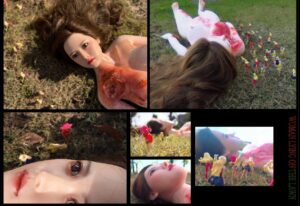
Fig 1 :Woman Lying on the Lawn
2.Regurgitate
This is a work about the “myth of procreation”, a mechanical puppet installation, with the setting of the installation built and filmed. “The stork brings the baby” is a cover-up of the female body, de-physicalizing the real female reproductive process, and using fairy tales to smooth over the reality of the female body. The disappearance and reappearance of the baby in the installation is not a one-off event, but a cycle, symbolizing the same way that female identity is allowed to emerge and pushed back in social discipline, and the mother role is activated and fades away in a specific context.

Fig 2 :Regurgitate
Tammy McMaster Stewart:
Layout design:
Single wall
Single spotlight
Surrounding space slightly darker
Work enlarged to near life-size scale
A Woman at Her Worst
In her art, titles carry potent meanings, challenging societal stereotypes that women must be prim and proper—that anger makes them appear “out of control.” Such emotions are amplified and labeled, directly pointing to women’s disciplined state within patriarchal structures. The artist references “masculine within the feminine,” exploring land boundaries and political control while also carrying metaphorical implications for the regulation of the female body.
Fig 3 :A Woman at Her Worst
Olga Steinepreis:
Layout design:
Warm-toned lighting
Artworks are hung horizontally and arranged for display
There is no central artwork
1.I’ve Had a Dream…
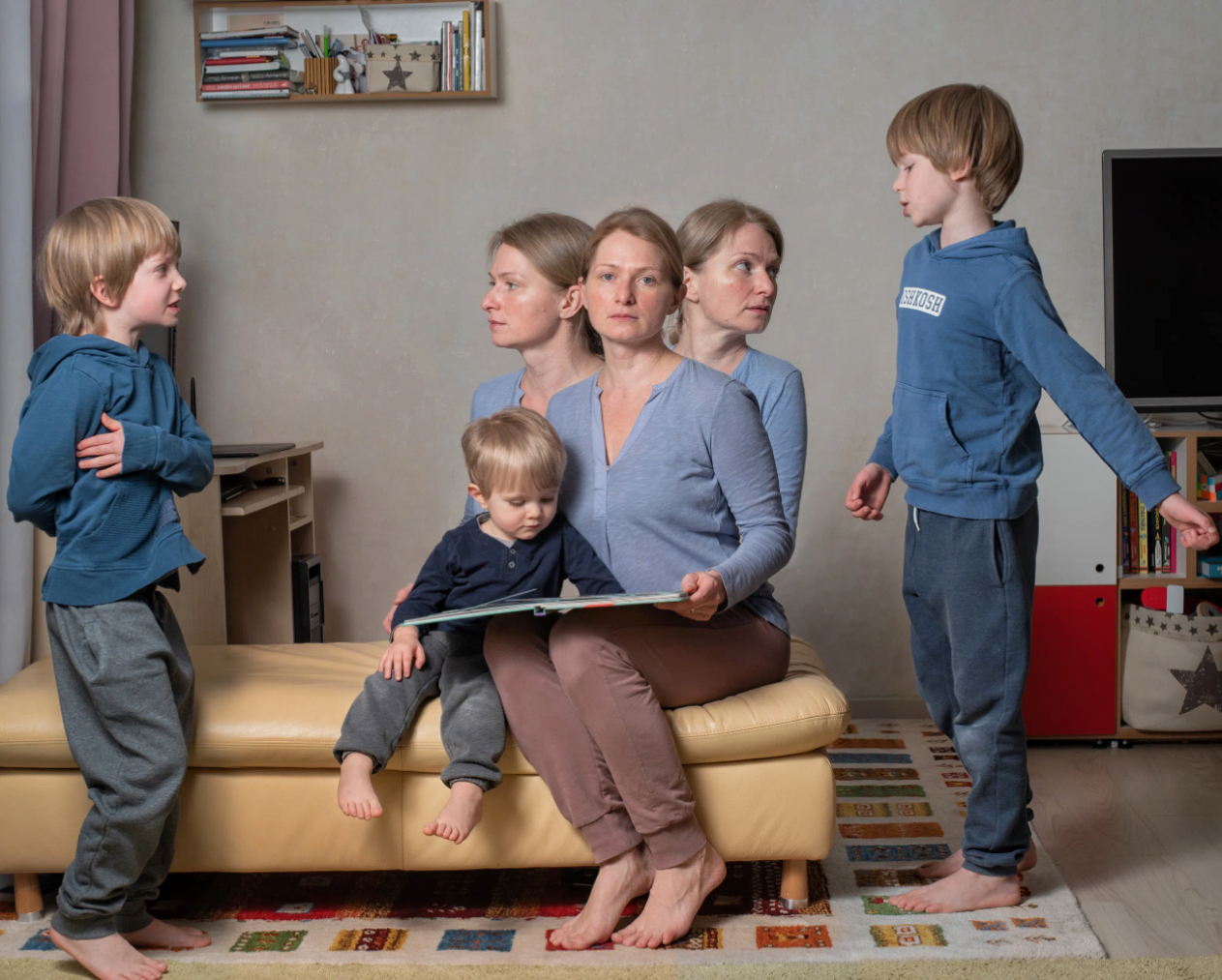
This is a continuous photography series that explores the issues of pressure and identity of female roles through self-portraits and composite images. In the photographic works, there are simultaneously images of facing heavy housework and the longing for the past self and dreams, thereby reflecting the expectations of society for the role of mother and the struggle of mothers between reality and dreams.
Fig 4 :I’ve Had a Dream…
2.My Mother Doesn’t Work
This work originated from a casual remark made by the artist’s son, revealing the social perception that the daily labor of housewives is often overlooked and not regarded as “real work”.
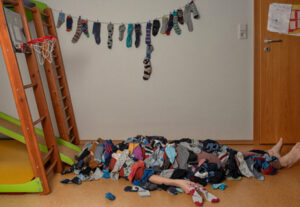
Fig 5 :My Mother Doesn’t Work
Juno Calypso:
Layout design:
Walls feature a low-saturation rose hue.
Artworks need not be arranged uniformly; varied hanging positions are encouraged.
Supplement lighting with cool white lights and soft pink tones, create localized shadows.
Floor design incorporates a pink carpet, offering visitors a soft-touch experience and engaging them physically.
A narrow, long mirror is placed beside the carpet, allowing visitors to see themselves as they move—a reversal of the female gaze.
Joyce II
Through the fictional character Joyce, an artistically self-directed and self-performed character, various exaggerated and seemingly ideal yet strange scenes are presented. This approach explores the loneliness felt by modern women in the rituals of beauty, desire, and self-expectation, as well as the “perfect woman” standards constructed by society. It reflects on the tension and contradictions between the female body, cultural norms, and personal identity.
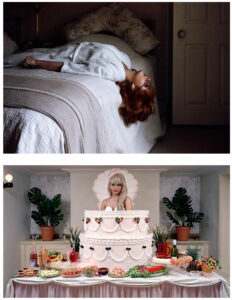
Fig 6 :Joyce II
At the end of the exhibition, an “Invisible Notes” area is set up.
Anonymous notes / postcards can be used to answer the following questions.
Related questions:
What anxiety or unfair treatment have you experienced in the past?
What pressure do you carry every day?
What would you like to say to another woman?
……
Finally, stick the note on the translucent wall.
Over time, the wall slowly becomes full, showing shared anxiety and invisible pressure.
Set up a reading area:
Provide relevant feminist photography, books and magazines by the relevant artists. The audience can sit down and read.
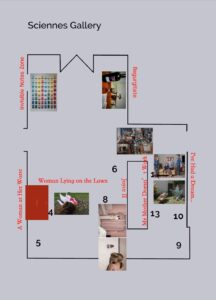
Fig 7 :Spatial Layout Design for a Personal Curatorial Project
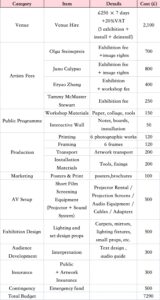
Fig 8 :Budget Sheet for a Personal Curatorial Project



Leave a Reply