Course Reflections:
Through the course of study, my understanding of the concept of curation has undergone a significant transformation. Initially, when I first encountered curation, I merely thought it was about setting a theme, selecting artists and works, and presenting them to the public. However, as I delved into the study of curation in public projects and related literature, I gradually realized that it is a practice that involves space, institutions, audience interaction, and has educational significance.
Curating is not a linearly completed task but a continuous process that is dynamic. It is a temporary gathering or dialogue among different participants and ideas (Grammel, 2011). It involves the interaction between the audience and artworks, as well as the negotiation between curators and artists. Curators are not artists but rather a bridge connecting art and the audience. As Grammel puts it, “I understand curating as a mediating activity, not because it dresses culture for audiences, but rather because it continuously emphasizes the impossibility of the unmediated (Grammel, 2011).” Therefore, the work of curators is not merely the selection and arrangement of artworks, but rather a production mechanism that constructs a spatialized and meaningful context.
Through reading Hudson’s proposal of the concept of the “user-generated museum,” I came to realize that, in the traditional view, curators hold the power of decision-making and interpretation, while audiences are placed in a passive role. In Hudson’s description, he states, “We hope to create a space dedicated to public projects; this is our primary goal (Hudson, 2017).” Audiences are not merely active participants but can also become co-creators. “Creating an institution created by and through its users, so that content and functions are increasingly determined not by those in authority, but by redistributing authorship and power, thereby making the institution a true embodiment of its community (Hudson, 2017).” Curation is not merely about serving art and presenting artworks; it can also facilitate interaction among the public and possess certain social functions.
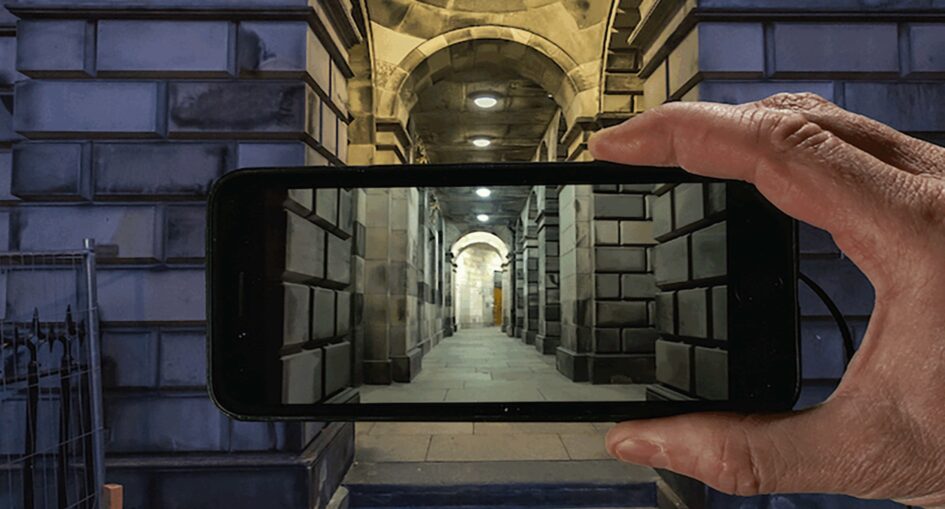
Through my coursework, I have learned the importance of public programs, and an increasing number of arts organizations are beginning to prioritize such activities—including lectures, seminars, workshops, and film screenings. Curators no longer merely display artworks; they also undertake the responsibility of educating and guiding audiences to understand the works. Public programs can attract diverse audiences through various activities and help viewers better understand artworks and artists’ intentions by providing more opportunities for discussion and interaction. For example, the “Night Walk for Edinburgh” organized by Fruit Market attracted tourists, offered artists opportunities to expand their existing bodies of work, and allowed local residents to engage with the art over a longer period by incorporating the works into the gallery’s collection.
Night Walk for Edinburgh Activity
Course Insights:
Having recognized the significance of public projects in curating, I have incorporated relevant public projects into my personal curatorial content: these are hosted and organized by the curator themselves, inviting participating artists to participate, exploring the body, social structure and visual expression methods within the context of feminism, introducing the inspiration and methods of work creation. A question-and-answer session is set up to promote communication between the audience and the artists. Participants can express the unspeakable pressures and emotions in daily life through collage and painting, and finally, based on the participants’ works, a “visual diary” is created to respond to the theme of the exhibition.
References:
Grammel, Søren. “A Series of Acts and Spaces.” On Curating 8 (2011): 33-38.
Hudson, Alistair. “Building a user-generated museum: A conversation with Alistair Hudson.” Open Democracy (2017).



Leave a Reply