

This week, I continued to explore the theoretical connections between the articles I read last week and my SICP regarding location selection and the construction of public projects.
As for why I chose to hold my exhibition in Edinburgh rather than in the rural area where the development is needed, I referenced the Middlesbrough case study mentioned in Building a User-Generated Museum: A Conversation with Alistair Hudson[1]. For this reason, I did not choose to hold the exhibition in peripheral areas with difficult socioeconomic conditions, or in places where contemporary art is not understood or accepted[2].
As mentioned in the lecture slides, the article by Mick Wilson and Paul O’Neill states: “Curating also serves as a site of resistance, contesting dominant neoliberal narratives of individualism and market-driven culture in favor of public engagement.” Therefore, I will incorporate public programs into my exhibition, which focuses on the urbanization of rural areas and explores solutions to rural issues. My workshop focuses on the concept of “home” within the hearts of international students and immigrants, while my online accessible platform public project supports participation for all.
The second public program called “Create Your Tiny Village”. I will invite Kefan Zhang, a student in the ECA CAP program, to lead a handmade workshop at the Summer Hall Sciennes Gallery on the first day of the exhibition—August 15—from 2:00 to 5:00 p.m. We will invite visitors to design a model of the countryside that leaves the strongest impression. This model can be a sketch or a handmade object.
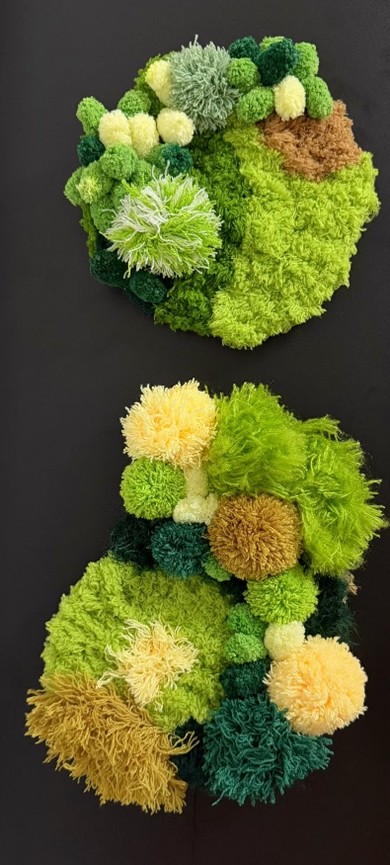
Untitled Kefan Zhang 2026 Yarn, cotton thread, pom-poms, etc. Variable size
In addition, this week I visited the exhibition Ilana Halperin: What is Us and What is Earth at the Fruit Market[3]. By closely observing the exhibition’s facilities and layout, I learned how to display archival materials, how to implement accessibility features for the blind, and the standard conventions for exhibition labels. I noticed that the gallery’s entrance door had Braille for the blind to touch—an accessibility feature I had not previously considered. The exhibition’s textual materials consisted of three parts: first, the guidebook distributed to each visitor by gallery staff; second, a freestanding display case at the entrance showcasing key textual materials; and third, a book placed on a chair. I chose to present my SICP rural photo archive using the display case format, and this visit further validated the feasibility of my idea.
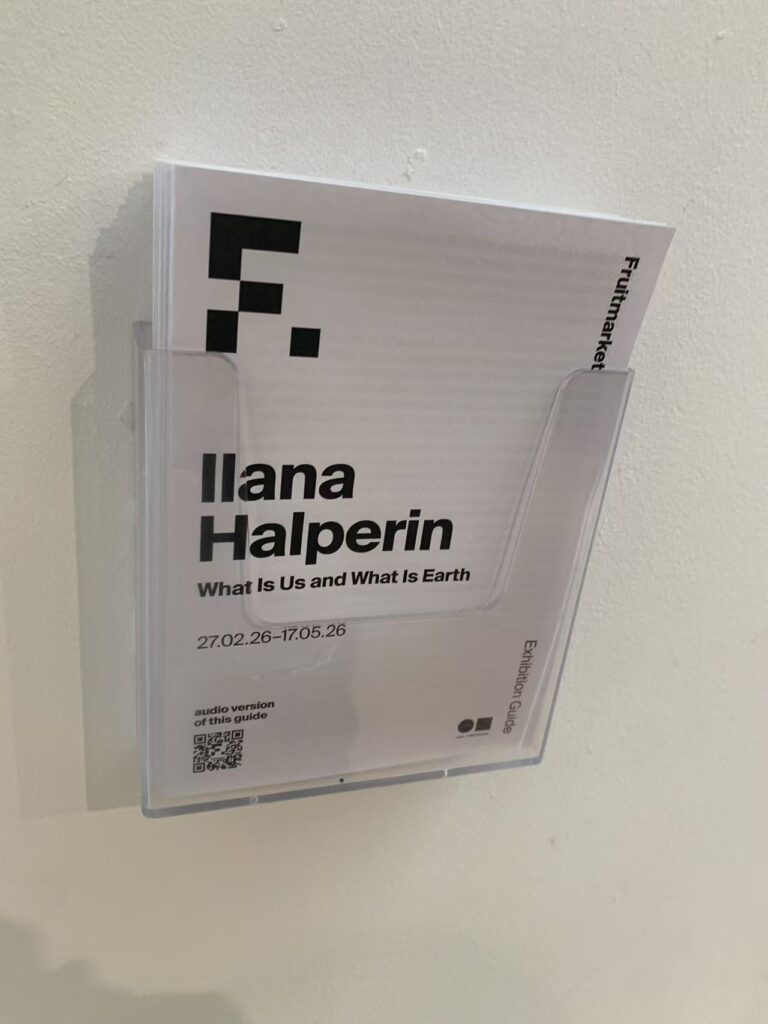
A display method I’ve learned: upright display case
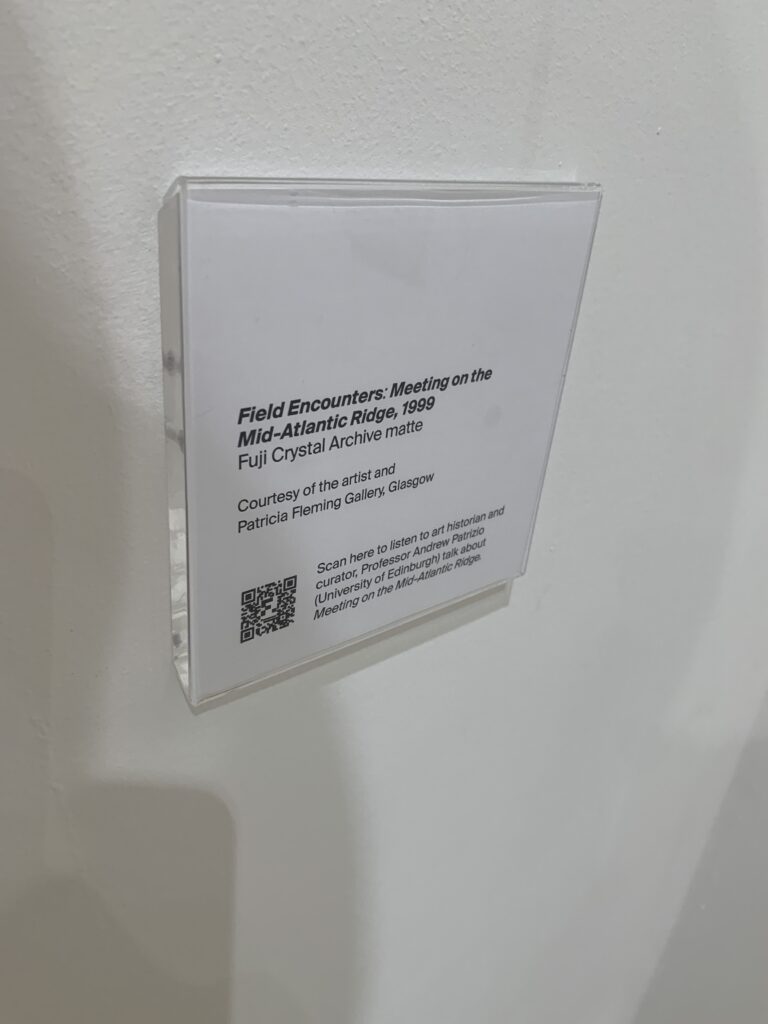
I learned how to write exhibition labels.
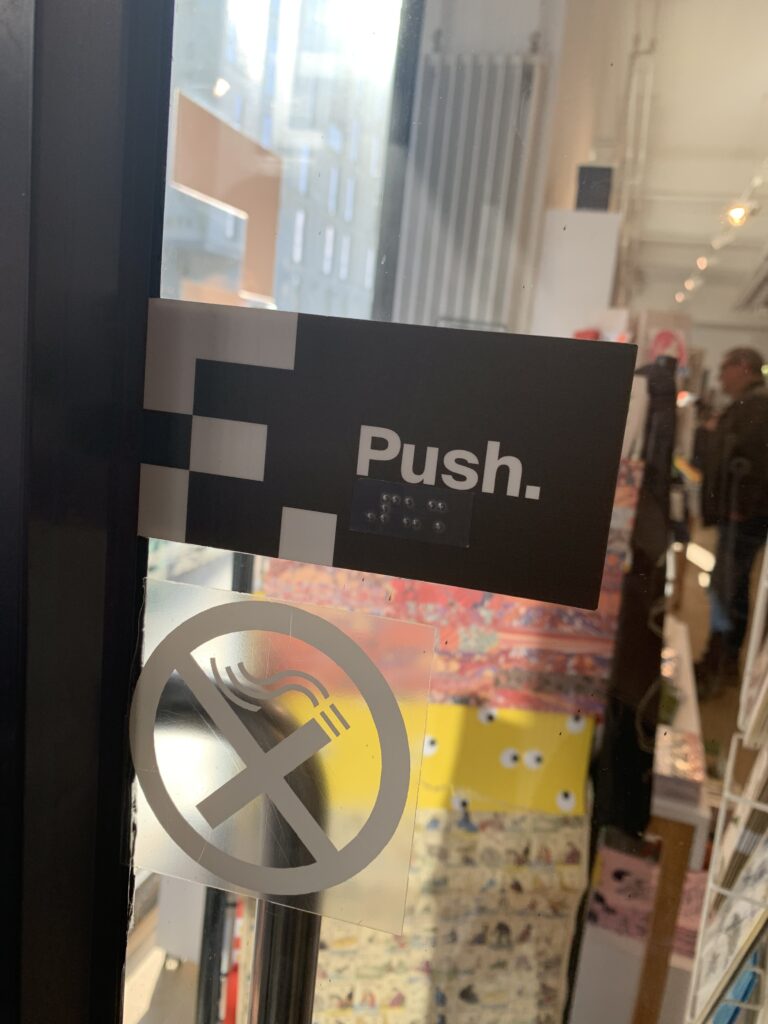
I noticed the Braille text at the entrance for blind people to read.
[1] Alistair Hudson, Building a User-Generated Museum: A Conversation with Alistair Hudson, openDemocracy, 5 May 2017, https://www.opendemocracy.net/en/building-user-generated-museum-conversation-with-alistair-hudson/ (accessed 30 March 2026).
Middlesbrough is in the north-east of England. It’s what you might call a post-industrial town. It was a small farm, and then they discovered iron ore and coal in around 1830 and then it just exploded like an American frontier town. So it’s a town of migrants by origin, and has been reliant essentially on the iron and steel industry, which has been in decline since post-war. And as a consequence of that, it’s always been a place which has had difficult socio-economic circumstances, and now it’s probably in a position where it comes top of the table in most surveys of places in Britain in terms of disenfranchised communities, and high indices of deprivation. And then the steel works closing the year before last, from a psychological point of view, is almost the end of the very reason the town exists. So historically it has been a troubled place, but it has huge potential and lots of positives. But it naturally makes it a place where there are a lot of intense versions of all the problems we see in British post-industrial, post-colonial society. So it’s not one that’s necessarily receptive to the idea of an art gallery.
[2] Alistair Hudson, Building a User-Generated Museum.
You had that ‘Bilbao effect’ and everything that’s required in order to drive yourself forward in a precarious economy, and I guess at the beginning it sort of worked, and had a splash. But it’s always had resistance from all the usual things like, you know, ‘we don’t need an art gallery, we need schools and hospitals’, ‘we don’t need contemporary art, we don’t understand it, it’s not for us, why would we be interested in it’ – all those kinds of dialogues.
[3] Ilana Halperin: What is Us and What is Earth – Fruitmarket



Leave a Reply