

Week 1|Curatorial Orientation: Scale, Publicness, and Philosophical Frameworks


1.Exhibition Scale as a Curatorial Condition
Over the past few years, I have encountered exhibitions operating at radically different institutional scales, ranging from Huang Yuxing’s solo exhibition Under the Vault of Heaven at Long Museum West Bund to the materially modest and process-oriented exhibition paper trails at & gallery. These encounters prompted me to reflect not on artistic style, but on how curatorial authority, meaning, and spectatorship are constructed through scale, space, and institutional context.
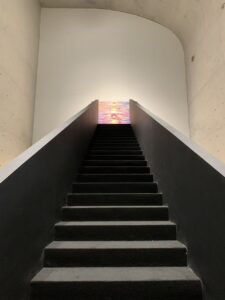
Figure 1. Installation view of Huang Yuxing: Under the Vault of Heaven, Long Museum West Bund, Shanghai, 2023. Photograph by the author.
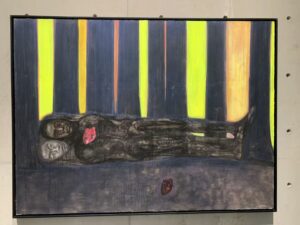
Figure 2. Installation view of Huang Yuxing: Under the Vault of Heaven, Long Museum West Bund, Shanghai, 2023. Photograph by the author.
Website: http://www.thelongmuseum.org/en/exhibition-369/detail-1847.html
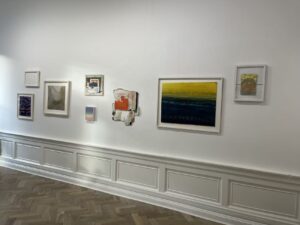
Figure 3. Installation view of paper trails, &Gallery, Edinburgh, 2026. Photograph by the author.
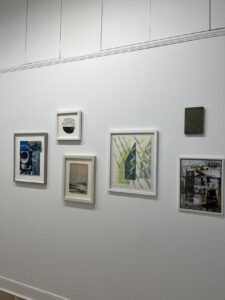
Figure 4. Installation view of paper trails, &Gallery, Edinburgh, 2026. Photograph by the author.
Website: https://andgallery.co.uk/exhibitions/121-paper-trails/overview/
2.Micro-Curating and Centre–Periphery Relations
This awareness of scale is reinforced by the course readings. Micro-Curating: The Role of SVAOs (Small Visual Arts Organisations) highlights the historical importance of small organisations as sites of experimentation, flexibility, and local engagement within exhibition-making. These organisations complicate assumptions that innovation primarily emerges from large institutions.
Similarly, the editorial Centres / Peripheries – Complex Constellations challenges fixed hierarchies within curatorial discourse, proposing centre and periphery as relational and context-dependent positions rather than stable categories. In contrast, On Curating presents reflections by internationally established curators working within biennials and major institutions, revealing a pragmatic engagement with scale, visibility, and institutional constraints. Taken together, these texts suggest that curatorial practice is shaped less by scale itself than by the conditions under which exhibitions are produced.
3.Public Space, Curating, and Governance
My interest in curating in public and semi-public spaces is closely related to my personal experience. Because the family is engaged in real estate-related work, I observed how works of art are incorporated into architectural and urban development projects, playing a role between aesthetic presentation, public visibility and economic logic. This experience prompted me to rethink that public space does not exist naturally, but is continuously produced through curatorial, design and management.
This concern resonates with philosophical approaches to space and governance. Michel Foucault’s analysis of spatial organisation highlights how power operates through visibility and circulation rather than direct control. Giorgio Agamben’s writing on the state of exception further complicates this by examining how inclusion and exclusion are structured within public space.These ideas provide me with a perspective for understanding curatorial practice, allowing it to be viewed not only as a cultural intermediary but also as a practice of participating in spatial governance.
4. Personal Background and Research Direction
I completed my undergraduate studies in Qufu, a place closely associated with Confucianism, which sparked my ongoing interest in how spatial order, ritual practices, and ethical structures shape collective experience. This has influenced my curatorial approach, which aims to juxtapose contemporary art with Chinese philosophical traditions and Western critical theory.
At this stage, I am not attempting to provide definitive conclusions, but rather viewing curating as an open research process. I am concerned with how curatorial practice can maintain its criticality across different institutional scales, and how publicness can be negotiated and reconstructed within economic and spatial constraints. These questions will continue to guide my research and practice in my coursework.
Notes
1. Yuxing: Under the Vault of Heaven, curated by Lu Mingjun, exhibition held October 26, 2023–January 1, 2024, Long Museum West Bund, Shanghai.
2. paper trails, exhibition held January 10–31, 2026, &Gallery, Edinburgh.
3. Bilbao Yarto, Ana Edurne. Micro-Curating:The Role of SVAOs (Small Visual Arts Organisations) in the History of Exhibition-Making. 2018.
4. Thea, Carolee, and Thomas Micchelli. On Curating : Interviews with Ten International Curators. First edition. New York, N.Y: D.A.P./Distributed Art Publishers, 2009.
5. Ronald Kolb, Eva Krivanek, Camille Regli, and Dorothee Richter, “Centres ⁄ Peripheries – Complex Constellations,” Notes on Curating, no. 41 (June 2019): 3–11.
6. Foucault, Michel, and Jay Miskowiec. “Of Other Spaces.” Diacritics 16, no. 1 (1986): 22–27. https://doi.org/10.2307/464648.
7. Agamben, Giorgio, and Kevin Attell. State of Exception. 1st ed. Chicago: University of Chicago Press, 2005. https://doi.org/10.7208/9780226009261.