

Week 2 |Mapping Curatorial Infrastructures and Collective Agency


1.From Scale to Infrastructure
In this week’s study, I extended the first week’s focus on the size of the institution to the discussion of infrastructure conditions. The scale of the curation is not only the size of the physical space, but also a set of operating systems. Following Terry Smith’s account of the Visual Arts Exhibitionary Complex (VAEC), contemporary curating not as an isolated practice but as a structurally embedded activity within a dynamic Visual Arts Exhibitionary Complex, where institutions, formats, publics, and power relations interact to produce meaning. This change in perspective makes my core problem change from the size of the gallery to how curatoral authority and publicity are built at different nodes of the exhibition ecosystem.
2.Field Note: Visiting RSA200 at The Mound
Visiting the Royal Scottish Academy (RSA) and National Galleries of Scotland at The Mound provided a concrete example of a different institutional model. Unlike the contemporary or micro-spaces discussed in Week 1, The Mound represents a site of deep establishment history. The RSA200 celebration demonstrates how publicness functions as a curated claim. It is not a neutral cultural place, but is jointly generated through institutional partnerships, heritage narratives and the governance of shared spaces. In Smith’s VAEC model, this field represents the traditional and core institutional node, and its curatorial proposition is often closely related to the cultural identity and historical legitimacy of the country.
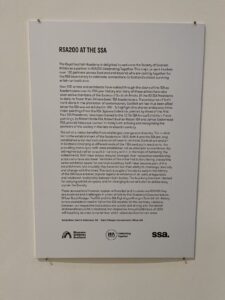
Figure 1. Wall text panel for “RSA200 at the SSA,” SSA 127th Annual Exhibition, Royal Scottish Academy, Edinburgh, January 24, 2026. Photograph by the author.
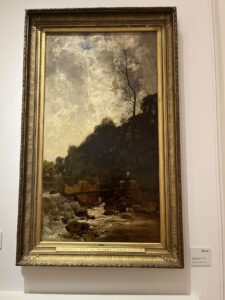
Figure 2. Robert Noble, Summer-time, ca. 1895. Oil on canvas, 167.7 x 91.4 cm. Royal Scottish Academy Diploma Collection. Displayed at the SSA 127th Annual Exhibition, Edinburgh, January 24, 2026. Photograph by the author.
3. Collective Action within Frameworks
The SSA 127th Annual Exhibition at The Mound illustrates how collective formations find space within established institutional infrastructures. The collective action here does not operate independently outside the system, but as an operational response to institutional norms. This model reveals how resources circulate in a highly regulated field, and how agency is negotiated between the artist’s collective and the official management framework. This curatory shows the role of curators as coordinators, and must constantly strike a balance between protecting collective originality and complying with institutional restrictions.
Notes
1. Smith, Terry. “Mapping the Contexts of Contemporary Curating: The Visual Arts Exhibitionary Complex.” Journal of Curatorial Studies (BRISTOL) 6, no. 2 (October 2017): 11. https://doi.org/10.1386/jcs.6.2.170_1.
2.https://elephant.art/brief-history-collective-action/ ,accessed January 25, 2026