New Materialism is the idea that instead of viewing materials from a human-centred point of view, we should consider how materials impact us and the world around us. It is the shifting of our views from passive separation of self from stuff, to considering the connection between ourselves and objects and how materials shape the world around us. It promotes appreciation of non-human matter and better choices towards materials.

This is an important concept in animation. Every second of animation is entirely reliant on what materials were used to produce it. While this is true for all animation- as the style of the end result depends on the possibilities and limits of its medium – this is especially true for traditional animation techniques. Each frame of traditional animation must be made by hand using physical materials, the choice and qualities of which strongly affects the outcome.

In Cradle to Cradle, Braungart states that “Everything else is designed for you to throw away when you are finished with it. But where is ‘away’? Of course, ‘away’ does not really exist. ‘Away’ has gone away”, and in The New Materialism by Simms and Potts, it is stated that “We should move to [a society] in which value is created with more of a ‘closed-loop’ of material loop in which we repair, reduce, reuse [and] recycle.”
Unfortunately for stop-motion animators, this remains true as the nature of the puppets is that they break consistently throughout filming and have to be frequently replaced.
Materials chosen to build puppets have to be thought about in depth, as the material chosen heavily affects the outcome of the animation. The average puppet is made from a metal or plastic armature, clay, resin and fabric as these are the easiest and cheapest to acquire and possess all the desirable qualities to animate. However, puppets are also often made of materials such as wood, paper or any material you could feasibly animate with. Each material chosen will give a different movement and stylistic result, for example clay is very malleable, can be used for drastic movements and often fingerprints leave visible textures, compared to 3D printed puppets which will be stiffer but instead offer much higher detail and consistency. There is a sense of new materialism mindset between selection of these materials, as the material has the power in this scenario.
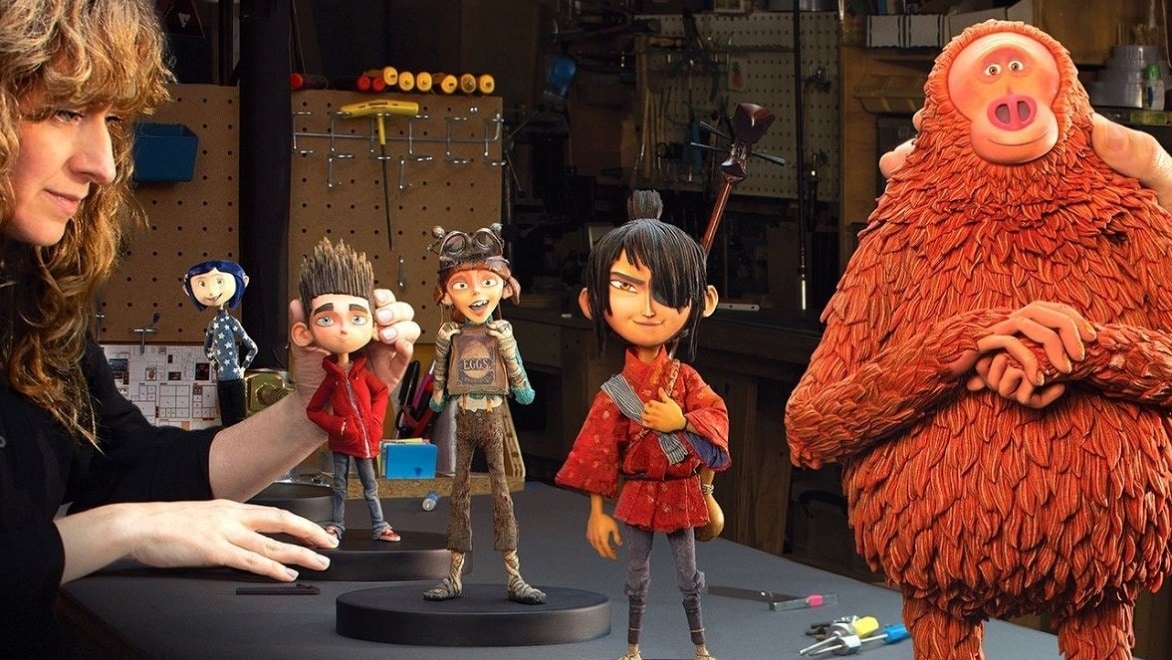
However any material chosen will frequently break upon use due to repetitive movements. It is very difficult to build a puppet that is sturdy and durable enough to not break, whilst using materials that are lightweight and malleable enough to animate with. Whilst a break is almost guaranteed to happen, there are ways to reduce this and prevent it entirely for smaller scale films or personal projects. The obvious answer is to source a higher quality material of choice, which will result in better longevity, will look better on screen, and the puppet will have more range of movement. Sometimes though, this isn’t possible, so it’s good to invest in a puppet maintenance kit so that damage can be reduced. It is important to acknowledge that sometimes in order to reduce environmental damage, you have to “consume” more. In this case, making sure you have a set of good quality materials in order to fix your puppets, such as glues, paints, and clays, can prevent more wastage than buying and using said products will cause.
List of Basic Materials Needed for Stop-Motion
Bibliography
- Braungart, M. and Mcdonough, W. (2002). Cradle to Cradle : Remaking The Way We Make Things. London Vintage.
- Simms, A. and Potts, R. (2012). The New Materialism: How Our Relationship with the Material World Can Change for the Better. Real Press.
- Emma (2022). Stop Motion Animation workshops for ages 8+. [online] StopMoGo. Available at: https://www.stopmogo.com/basic-toolkit-for-stop-motion/.
Image Credits
- RCA Website. (n.d.). Sustainable Materials in the Creative Industries. [online] Available at: https://www.rca.ac.uk/research-innovation/projects/sustainable-materials-creative-industries/
- XRender. (2023). GRUFF – A Paper-cut Independent Animated Short | XRender News Center. [online] Available at: https://www.xrender.cloud/news/120000008bd1649e018dc5a8ddd40026 [Accessed 23 Jul. 2025].
- Autodesk.com. (2022). LAIKA | Pushing Boundaries with Cloud-Based Production | Autodesk. [online] Available at: https://www.autodesk.com/customer-stories/laika-cloud-based-production.