Engaging students in their nursing education is a key focus for the teaching team on the pre-registration programmes in Nursing Studies. There is always a drive to listen to the student voice and amend our programmes to ensure they meet the needs of current learners. Attention is taken to consider the needs of the increasingly diverse group of learners within our cohorts, looking at strategies to support those with specific learning difficulties, dyslexia, ADHD and ASD (Sedge-wick Muller 2022, Cohen et al 2024, Dumitru et al 2024). As the learner cohort moves from millennials to a more Gen Z dominant group, evidence suggests that curricular design should incorporate more gamification (Dodson & Thompson-Hairston 2025), active and interpersonal learning approaches (Seemiller et al 2019) and consideration of GenAI and the associated critical thinking and questioning skills (Chan & Lee 2023).
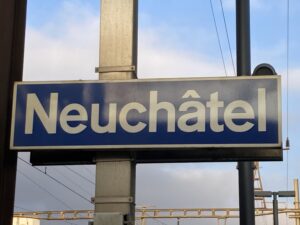
With a view to incorporating more active approaches in our nursing curriculum, I set off to join a European Federation of Educators in Nursing Science Workgroup on active learning in Neuchatel, Switzerland in December. It was a vibrant group of educators from all over Europe and we tried all sorts of active approaches from ball games in the classroom to poetry and artistic approaches for reflection. We tried out VR headsets and eye tracking video technology for learning in clinical skills, explored escape rooms developed in a Slovenian Emergency Department and considered the effectiveness of podcasting as an assessment technique.
Throughout the workshop there were opportunities to talk to colleagues and exchange experiences. While we always expect to have things in common, I was struck by the similar challenges that we all face and the overwhelming desire to engage students and enthuse them about a future career in our profession. It is no secret that times are tough in both education and healthcare Europe-wide but the workgroup buzzed with the energy and enthusiasm of committed people who are striving to make positive developments for students. The network of educators were all committed to taking a student-centred approach to supporting learning and sharing ideas to produce sustainable resources that are of mutual benefit.

Of course a short trip to Switzerland was a delight with beautiful places, food and people. I had the great privilege of meeting up with Nursing Studies ‘family’ from across Europe; a former masters student from Switzerland who I’d first met in Edinburgh in the early 2000s, a group from Malta who had worked on a recent EU project with NS colleagues and a PhD student from Slovenia working with two NS supervisors. It is lovely to be part of the Nursing Studies network that spans the globe and to connect with so many educators who are pushing the boundaries of educational practice to prepare nurses for the future.