

Welcome!
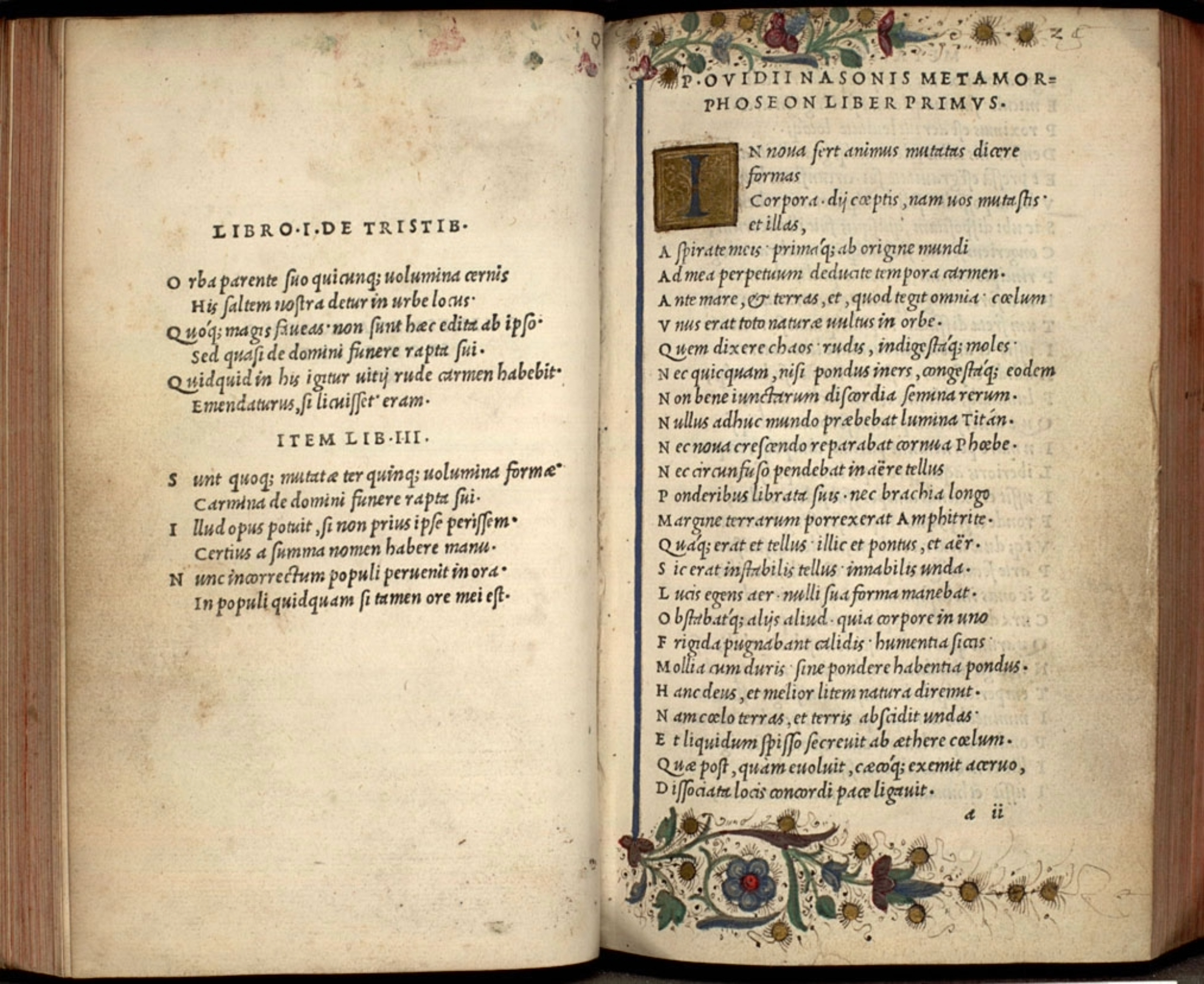
Welcome to the blog for Classical Literature in the Renaissance, a project sponsored by the Royal Society of Edinburgh and hosted by the School of History, Classics and Archaeology at the University of Edinburgh. This blog accompanies a one-day symposium, to be held in Edinburgh on Tuesday 9 June 2026. For details of this event, see below or visit this link: Symposium: ‘Classical literature in the Renaissance’ | School of History, Classics & Archaeology | History Classics and Archaeology.
About the Project
The pervasive presence of the literature of ancient Greece and Rome in the culture of the period traditionally associated with the Renaissance has been the object of scholarly study since before Georg Voigt published his influential study Die Wiederbelebung des classischen Alterthums, oder das erste Jahrhundert des Humanismus (“The Revival of Classical Antiquity, or The First Century of Humanism”) in 1859. Since then, a vast body of scholarship has examined the afterlife of the Greek and Roman classics across a variety of media; milestones include the work on manuscript traditions conducted by Paul Oskar Kristeller and the ongoing Catalogus Translationum et Commentariorum, and studies of individual authors such as Vladimiro Zabughin’s Vergilio nel rinascimento italiano da Dante a Torquato Tasso (2 vols, 1921-1923) and James Hankins’ Plato in the Italian Renaissance (2 vols, 1990). Even so, much work remains to be done both on the complexities and idiosyncrasies of the Renaissance reception of classical authors and on the broader implications of these patterns of reception for the dynamics of cultural transmission on a more general level.
A number of recent studies demonstrate the progress that can still be made in reaching a fuller understanding of the fortunes of Greek and Roman literature between the fourteenth and the seventeenth centuries. Work on Renaissance receptions of individual authors includes illuminating studies of the afterlife of Apuleius by Robert Carver (The Protean Ass, 2007) and Julia Haig Gaisser (The Fortunes of Apuleius and the Golden Ass, 2008), and of Renaissance responses to Lucretius by Alison Brown (The Return of Lucretius to Renaissance Florence, 2010), Gerard Passannante (The Lucretian Renaissance, 2011), Stephen Greenblatt (The Swerve, 2011), Ada Palmer (Reading Lucretius in the Renaissance, 2014), and others (including Norbrook, Harrison and Hardie [eds.], Lucretius and the Early Modern, 2015). An overview of Renaissance attitudes to and adaptations of the works of Virgil by David Scott Wilson-Okamura (Virgil in the Renaissance, 2010) has been complemented by studies of the place of the Roman poet in particular national traditions (Usher and Fernbach [eds.], Virgilian Identities in the French Renaissance, 2012; Matthew Day, English Humanism and the Reception of Virgil c. 1400-1550, 2023) and even in more restricted geographical locations (Craig Kallendorf, Virgil and the Myth of Venice, 1999; Jeffrey A. Glodzik, The Reception of Vergil in Renaissance Rome, 2023).
Fundamental work on Renaissance engagements with Greek authors has been done by David Lines (Aristotle’s Ethics in the Italian Renaissance, 2002), Marianne Pade (The Reception of Plutarch’s Lives in Fifteenth-Century Italy, 2 vols, 2007), Marc Bizer (Homer and the Politics of Authority in Renaissance France, 2011), and William Weaver (Homer in Wittenberg, 2022); and scholarship continues to examine the routes by which the study of Greek spread across Renaissance Europe (Ciccolella [ed.], When Greece flew across the Alps: The Study of Greek in Early Modern Europe, 2021). Issues of canon formation (Morra [ed.], Building the Canon through the Classics, 2019) and translation (Paul Botley, Latin Translation in the Renaissance, 2004; Bastin-Hammou, Di Martino, and Dudouyt [eds.], Translating Greek Drama in Early Modern Europe, 2023) remain central topics in the study of this hugely influential period of European history, and art historians (Paul Barolsky, Ovid and the Metamorphoses of Modern Art from Botticelli to Picasso, 2014) and students of neo-Latin and vernacular literatures (Jonathan Bate, How the Classics Made Shakespeare, 2019) continue to explore the enormous contribution made by material drawn from Greek and Roman literature to the productions of Renaissance painters, sculptors, and writers.
The varied and ubiquitous nature of the afterlives of ancient authors and their texts during the period of the Renaissance demands an interdisciplinary approach to the subject. This project seeks to bring together scholars from a range of different disciplines and with a variety of different interests to consider the most important questions currently addressed in research in this area. The privileged position enjoyed by classical texts in Renaissance art and literature remains fundamental to an understanding of how and why these texts have come to be read as they are today.
(Image: Edinburgh University Library, Dd.6.75)