
In Session 8, we asked participants to share photos that responded to the following two prompts:
- What is your understanding of how students’ (yours or others) experiences are shaped by wider socio-political, racialised, historical and economic structures and dynamics?
- What has been your experience so far of participating in these culture circles?
What follows are the photos and descriptions we received from participants (along with our own responses to the second prompt).
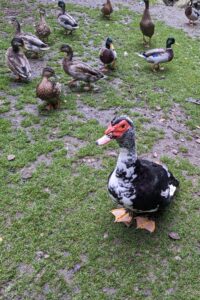
THE UGLY DUCKLING:
In a predominantly white city, I feel like I stick out like a sore thumb. Like this duck, I feel ostracised by the others for the way I look. This duck acted no different but when they tried to interact with the others, they were intimidated by the way the duck looked and kept their distance.
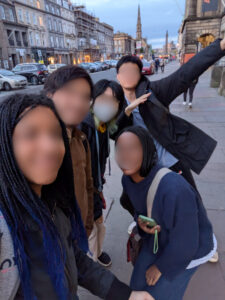
CELEBRATING OUR DIFFERENCES :
Being a part of this culture circle has made me realise how much we should truly be celebrating our cultural differences as my university classmates are all so different (Jamaican, Vietnamese, Chinese, Angolan) and we should be proud of who we are! We are stronger together!
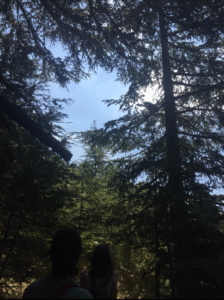
THE SKY ABOVE:
This photo represents the dynamics that one must navigate at university, as shown by the trees in the photo which form a canopy overhead. The limited view of the sky reflects how opportunities can sometimes be obscured by systemic barriers, but the persistence to move forward is what propels us.
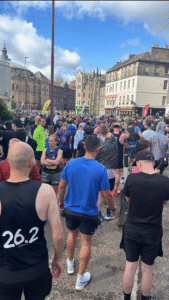
STRIDE IN UNITY:
This photo represents what the experience of the culture circles has meant to me. The experience has involved students from different backgrounds engaging in dialogue together, to reach a common goal. Similar to the runners at the Edinburgh Marathon Festival, the culture circles have fostered a sense of community and shared understanding between its participants.
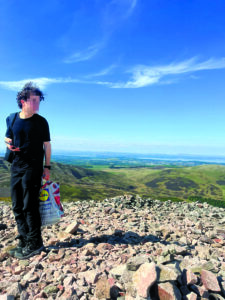
This picture represents the experience that some students may have. Indeed, I went to Pentlands with some friends, and I was the only one with a Lidl bag. It may seem insignificant, but in reality, this bag reveals a lot of aspects. The first is that I went hiking with people who were mostly white, and I was the only one who shopped at Lidl. The bag then highlights this economic gap.
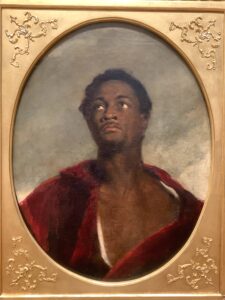
This image represents my experience in this circle. These workshops have allowed me to highlight my culture and the representation of other minorities. We never talk about it, but Ira Aldridge is a role model. He was the first Black actor to play Othello, providing an example and new visibility for minority groups.
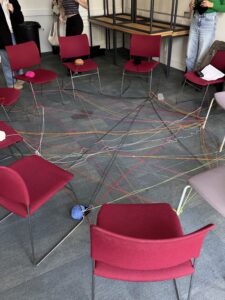
ENTANGLED VOICES – A Tapestry of Student Experience:
This image was taken during one of our culture circle workshops. The colourful threads weaving between the chairs reflect the diverse, sometimes intersecting, experiences of students. Each thread can be seen as a voice or a story—some stretch across the space boldly, others lie quietly among the rest. Sometimes I found myself initiating conversations and receiving response, while at other times, ideas I had previously shared returned to the circle through someone else’s words. Our experiences are shaped by different socio-political, racialised, and economic forces, yet moments like this reveal how we are connected—imperfectly, spontaneously, but undeniably.
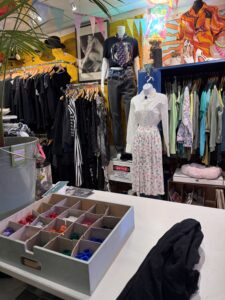
ORDER IN CLUTTER – Finding Place in the Community:
This was taken during my volunteer work at a charity shop. Every item in the image has been sorted into categories—by colour, type, size—creating a sense of order within variety. Volunteering here, I often noticed how people and things with similarities tend to gather, consciously or not. It reminded me of how we, as participants in the culture circles, gradually found affinity with those who shared similar concerns or experiences. There’s comfort in finding belonging, but also a reminder that categories—like those in the box—are shaped by broader social structures, histories, and economic roles we may or may not control.
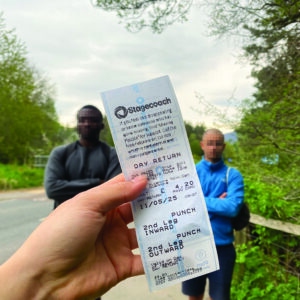 REALIZING THE COMFORT:
This captures a moment from a weekend trip to Aviemore with two of my flatmates. As we completed our final years, we celebrated both the end of our university lives and flat living together. Trekking, swimming, joking around, and chatting a lot while staying in a shared hostel dormitory — this trip is our genuine way of creating good times together as students, even with a tight budget. As an international student with a limited budget, moving each year has been unavoidable. Having lived with many different students over the past five years, this year’s flat has made me realize, for the first time, that I don’t need to compromise my identity just to create a comfortable home away from home. My flatmates have made me comfortable being myself, regardless of our cultural and ethnic differences, and we’ve made that possible together by being genuinely curious about each other’s lifestyles, which show our differences. We’ve been respecting each other’s cultural backgrounds by sharing them daily, not only through chitchats but by behaving as who we are, respecting our own identities. Although we’ve each shared a commonality of being culturally and ethnically non-dominant in Edinburgh, the comfort was about making each other feel good about being who we are.
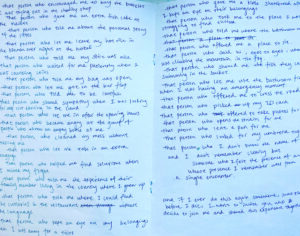
LEARNING FROM THEM:
This is a picture from my sketchbook pages. As part of my art practice, I was recalling moments when I felt intangible warmth from strangers while traveling and living in different countries around the world. The experience of participating in the workshops made me want to believe in such moments even more, simultaneously, the need for more holistic dialogues about them. I’ve felt the warmth from; that person who was curious about my experiences of living and studying in Edinburgh as an international student that person who listened to me without interrupting that person who asked me about my life back home that person who asked me about my family and my relationship with them that person who was curious about an international student’s struggles, studying and living in Edinburgh that person who gave me space to respond when I was struggling to find good English vocabulary to describe my feelings that person who didn’t make me feel left alone during group conversations that person who tried to learn about my cultures as much as sharing theirs that person who shared cultural contexts with me neutrally that person who didn’t give up talking to me assuming I wouldn’t understand because of my cultural and ethic background that person who didn’t overreact when they found out about unexpected cultural differences, and instead, asked questions with respect and curiosity that person who listened to me.
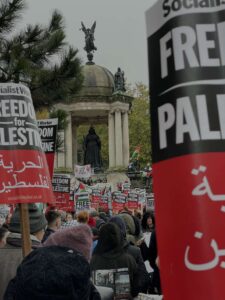
VOICES IN THE STRUGGLE:
This photo captures a protest for Palestine, a collective cry for justice, resistance, and visibility. As a Palestinian student, this is not just a political event, but a personal reality. My experience of education is shaped by the violence my people face. Being part of this protest is both an act of mourning and defiance. It reminds me that the university is not separate from the world’s struggles, instead it is embedded in them. My learning is fuelled by the need to understand the structures that continue to affect our lives. Participating in these protests is not separate from academic life; it is part of an education rooted in solidarity and ethical responsibility.
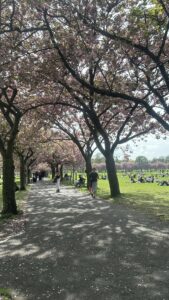
SPACES OF REFLECTION:
This image of cherry blossoms in the park reflects my experience in the culture circles—spaces of calm, collective presence, and unfolding thought. Just like the soft spring light filtering through the trees, the conversations in these circles have felt gentle yet enlightening. They have offered me the chance to slow down, listen to others’ stories, and begin to trace the deeper structures that shape our lives. This space has provided me a way to reconnect with the community.

£0.00 – GETTING BY:
This receipt shows more than a free doughnut—it captures a week when I had no money, and small tools like Lidl Plus and UNiDAYS made the difference between eating and not. It’s easy to overlook how much thought, effort, and planning goes into survival when you’re a student with limited resources. Budgeting apps, loyalty cards, discounts, they become lifelines, not just conveniences. This photo reflects how economic structures quietly shape student life. We’re expected to focus on studying and building our futures, yet the reality is many of us are already fighting to meet basic needs. Getting something for free isn’t just a win; it’s a strategy. For me, this image is a quiet resistance to the idea that student life is carefree or fully supported. It’s about resourcefulness born of necessity. It’s a reminder that while policies and support systems often fall short, we find small ways to survive, and that deserves recognition too.
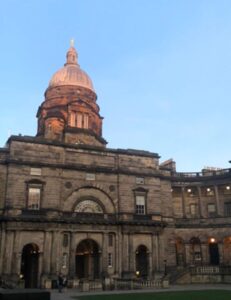
GRATITUDE IN STONE:
I took this photo right after a culture circle session. The building looked especially beautiful in the light that evening, and I felt grounded in a moment of gratitude. After speaking about my experiences and reflecting on both the challenges and privileges in my life, I saw this space differently, not just as a historic university building, but as a reminder of how far I’ve come to be here. The culture circle created a space where I could speak honestly and listen deeply. It’s easy to move through academic life without stopping to think about what it took to get here or who isn’t in the room. These conversations reminded me that I carry both struggle and opportunity, and that awareness is a form of responsibility. This image captures that pause. The quiet outside mirrored the clarity I felt inside, grateful, lucky, and more connected to myself and those around me. The beauty of the building didn’t change, but my relationship to it did.
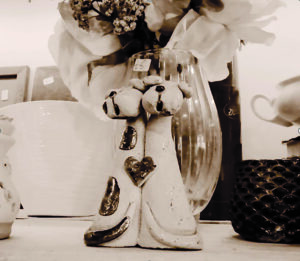 BELONGING:
I chose this image to represent my experience of navigating being a minority at university, finding other people of colour, and feeling seen. I was especially thinking of the only other student of colour in my course, and how we immediately bonded over our curly hair, shared backgrounds, and living in similar hometowns. I feel I am able to make friends and find belonging in any space, regardless of race, but sometimes finding someone who looks like you really helps you push through feeling alone. I like to think these porcelain dogs are us clinging to one another in amidst of struggles we both experience, we will always have each other’s backs.
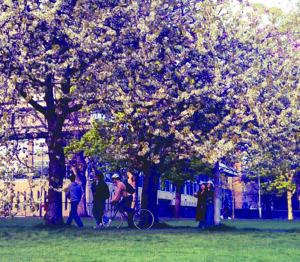 IN BLOOM:
I chose this image to represent my experience participating in these culture circles, as I feel they have made me ready to go off and blossom at the university. From feeling more confidence to push back against ignorant comments, to light-heartedly laughing with the others about seasoning food, the circles have given me a space to feel understood. They have expanded my mind to the experiences of others and further increased my empathy for those from all walks of life. I will never forget one comment that stuck with me and made me feel incredibly empowered: ‘It’s not just my history; it’s your history too.’ I feel more freedom to be myself, take up space when needed, and voice my feelings despite how quiet I can be about my struggles. I am very grateful for the culture circles.
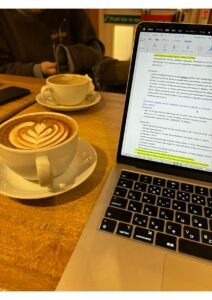 DIFFERENT SPENDING HABITS BETWEEN STUDENTS:
This picture depicts how students’ studying experience might be shaped by economic structure and dynamics. As an exchange student at this university, when I think of my studying experience, I realized that it really depends on who I study with, and it can be connected to their socioeconomic status. When I study with other exchange students from any country, we usually go to get a coffee and study at the café. However, when I study with friends who will be studying at this university for four years, we are more likely to go to a library or any other university buildings. Given the story I heard from my friends staying for four years here, I would say they need to save money not only for the tuition, but also for the flat where they will live in for the next three years. This can also be applied to the other aspects of our university life. Compared to going out with exchange students, permanent students seem to be more aware of their spending habits while still having fun. Thus, I would say their studying environments differ depending on their socio-economic status.
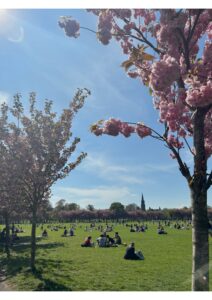
DIVERSITY AT EDINBURGH:
This picture taken at the meadows represents my experience of being in this culture circles as a metaphor, since I found there are two similar points between the meadows and my experiences of these project. Firstly, in this picture, there are a lot of people spending time at the meadows in different ways. In this way, the members of this project are really diverse and have different backgrounds, and I listened to different narratives of which we have experienced, such as being discriminated. I found that this is similar to being at the meadows where people there spend time to do different things. It was really a valuable experience for me to be in a diverse environment and discuss various topics such as race. Moreover, being at the meadows always makes me feel calm and relaxed. Even though our experiences are all different, members always listen to others’ opinions and accept it. Therefore, I felt comfortable in this environment which allowed me to share my own experience and thoughts without hesitation.
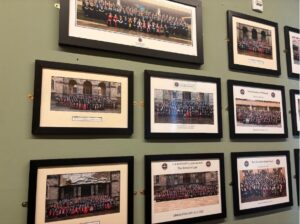
This photo resonates with me as I remember in the early weeks of university walking past these law graduation photos and taking a moment to see if there are any people who look like me, people of colour. I felt like I needed to make it to this wall of photos to help encourage other students who might walk past and look for that person of colour.

This photo is from a BWE (Black Women Edinburgh) magazine launch. It showcases how important these societies that represent POC are to me personally with me meeting almost all my friends through them.
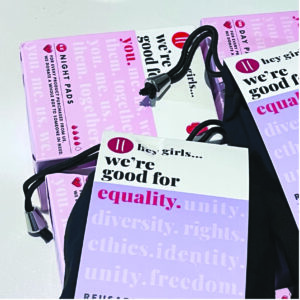
MORE THAN JUST A PAD:
This photo shows a free menstrual care pack I recently received from the university. As I come from a place where period products are still highly commercialized and rarely available for free, I was surprised that something as basic as a pad is treated as a right rather than a commodity. The words printed on it including “equality”, “diversity”, “freedom”, finally meant something real to me. It made me realize that menstruation is being considered as a public concern, which is something that can be spoken about openly and addressed through institutional care. And it also reminded me that structural support can start with something as small, just like a pad, with a moment when someone doesn’t have to feel embarassed, just to be taken care of.
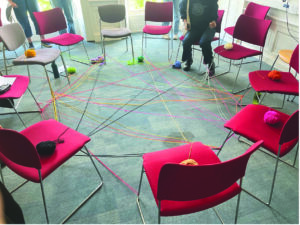 MORE CONNECTED THAN WE THINK:
In one of our recent culture circle sessions, we used colorful yarn to mark moments of connection—whenever someone’s experience resonated with us, we passed the thread along. By the end of the session, the floor was covered in yarn, with lines running in every direction, each strand representing a moment of empathy, understanding, or shared experience. It really reminded me that our experiences are not isolated. Even though we all come from different backgrounds, this activity made me realise how often we carry similar struggles—and how much it means to feel understood.
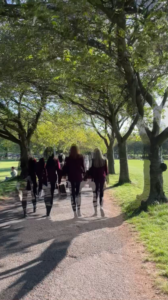
ECHOES OF THE SELF – Mridula
After each session, I found myself reflecting on all that we carry, the traces that follow us, the invisible lines etched around us, the histories that sit on our shoulders. One theme that has stayed with me is how we relate to these traces. At times, they anchor and support us, yet at other times, they become heavy weights that bring us down.
Why do we shift so drastically between feeling empowered and feeling constrained by our own sense of self? What expectations and pressures are tied to the stories we inherit? How are our identities and histories turned against us, weaponised as tools of shame or erasure?
You’ve lost a part of your own self by not knowing your history. This statement from a participant lingers. What happens when we fail to acknowledge not only our own traces, but also those of others?
Through this group, we hoped to create space to sit with discomfort, to name and speak into our traces, to gently shine light on them rather than turn away. In doing so, I hope we have opened the door to further conversations, ones where we can be seen beyond the confined roles we are expected to inhabit. Perhaps then, we can walk more freely (shoulders lighter, heads held high) not apart from our histories, but in step with them. Perhaps then, we can hear the echoes of our stories, not fading into silence, but resonating, acknowledged and held by those around us.
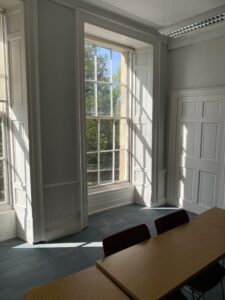
A RAY OF LIGHT COMING IN – Karen
This room has housed many of our culture circles. I came in this morning to work and popped into this room to see if I would find an inspiration for the photo-voice. The room has a warmth and a meaningfulness to it for me now. The light and green coming in this old building lightens me up. I feel that these circles gifted us with some needed moments of connection, not only easy connections when we resonate and bounce off each other easily, but also challenging encounters, of those that might ignite a change in our perceptions. I was heartened to see how considerations about your social locations in wider social and racialised networks increasingly made themselves present in the everyday of your experiences and wonderings. This way of educating and researching feels enlivening to me like these rays of sun that give life to an otherwise dull room.
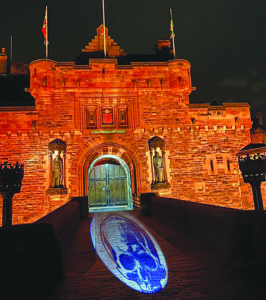
SEEING PLACES DIFFERENTLY – Candela
I took this photograph during an XR Edinburgh action. The reason why I chose this photo is that many years ago, I was walking with a good friend in the castle esplanade. While we were walking, he kept telling me how he didn’t understand how all these tourists kept taking photos of the castle. I asked why, and he explained that the castle for him was a symbol of oppression, of colonial wealth extraction and of death. At the time, although I could understand what he was saying, I didn’t see what he saw. Participating in the culture circles and listening to all of your experiences has reminded me of this conversation, and allowed me to suddenly see what my friend was seeing much more clearly.
