Any views expressed within media held on this service are those of the contributors, should not be taken as approved or endorsed by the University, and do not necessarily reflect the views of the University in respect of any particular issue.
Press "Enter" to skip to content

Category: Local-Global Connections

Posts connecting local and global justice issues

Will Class Become Caste and Birth Become Destiny?

jeremywaldronportraitThe University of Edinburgh’s Annual Gifford Lecture Series has now begun. Professor Jeremy Waldron is University Professor at the New York University Law School. Professor Waldron’s work in jurisprudence and political theory is well known, as are his articles on constitutionalism, democracy, homelessness, judicial review, minority cultural rights, property, the rule of law, hate speech, human dignity, and torture. This post appeared originally on the Gifford Lecture Blog.

In a stimulating opening Gifford Lecture tonight, Professor Jeremy Waldron emphasised the urgency of not only eradicating ‘surface inequality’ in public legal relations, but in carrying out a theological and philosophical examination of what may underpin human equality in a world where ‘grotesque differences in economic lives’ create the risk of ‘leech and leak’ to undermine our commitment to a common humanity. We re-assure ourselves that the ‘surface inequality’ between rich and poor is compatible with an inviolate ‘basic human equality’ which underlies our mutual existence. But is that weakening in our society, such that the view may emerge that ‘the poor are not fully human’ and ‘only the prosperous live fully human lives’? Is there a danger now that a ‘conditional’ legal status due to the vicissitudes of life, such as that of an African-American in jail, becomes re-inforced as a ‘sortal’ status of permanent identity to delineate rights and all human potential, in like kind to the evils of slavery or apartheid in the past?

Comments closed
Climate Change: Moving Beyond the Smoke Screen

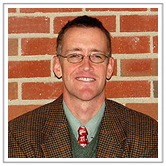
GB Profile pictureIn this guest post, Geoffrey Buckley, Professor of Geography and Undergraduate Chair at Ohio University, Athens, Ohio, reports on a recent departmental seminar on climate change, and the important issues that it raised for research and policy-making.

Dr. Judith Curry, professor of Earth and Atmospheric Sciences at the Georgia Institute of Technology, visited Ohio University in Athens, Ohio recently to discuss, in her words, the “state of the climate debate.” She was a guest of the George Washington Forum, a group that, according to its website, endeavours to bring “civic education and intellectual diversity” to campus. Curry, an outspoken critic of the work of the Intergovernmental Panel on Climate Change (IPCC), confirmed her reputation as a “climate heretic” early on in her presentation, stating: “It’s a name I’m proud to bear. I’m not telling anybody what to do; it’s the honest broker role.” Unfortunately, it’s a role that does not suit her.

Comments closed

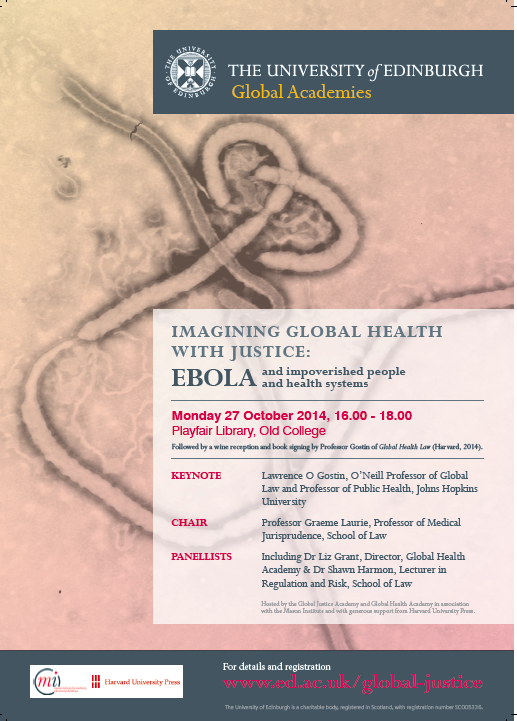
Ebola: Judging Reactions and Responses. What Happens Next?

LG Ebola 27 Oct 2014

The University of Edinburgh’s Global Academies have announced their Autumn 2014 Ebola Series in response to the current global crisis. In this short post, Dr Harriet Cornell from the Global Justice Academy reflects on how the global response to Ebola has unfolded in the press, and criticisms that have been voiced by experts in the field.

This evening’s Ebola headlines are divided between pleas for world help from Liberia’s President, Ellen Johnson Sirleaf, and blame for the spread and devastation of the outbreak been laid squarely at the doors of the world’s supranational bodies: the World Health Organisation, and the United Nations. Then there is the intersect between the outbreak of the disease in West Africa, and the western media response, with The Guardian running a comment piece entitled The problem with the west’s Ebola response is still fear of a black patient’.

Comments closed

The Islamic State and Al Qaeda: the Return of Jihad to the Middle East

Ewan SteinThis guest post is by Dr Ewan Stein, Lecturer in Politics and International Relations at the University of Edinburgh. A longer version of this post will appear as an article in the journal Afkar/Ideas, published by the Institut Europeu de la Mediterrània, Barcelona.

By the time of the 2010-2011 Arab uprisings Al Qaeda was a peripheral actor in regional politics. It now finds itself in competition with a new, perhaps more powerful, jihadist actor in the Islamic State (IS). But IS and Al Qaeda pursue complimentary, rather than divergent, strategies and the IS phenomenon represents a logical evolution for global jihad.

Following 9/11 and the destruction of its Afghan stronghold Al Qaeda had become a decentralised network of affiliates. The uprisings initially pushed global jihad as a strategy to improve the plight of Muslims in the Middle East even further to the margins, and the death of Osama bin Laden in June 2011 registered as a footnote to the much larger political convulsions of the time.

Comments closed

Minority Women and Politics of Austerity in France and the United Kingdom

A guest blog by Akwugo Emejulu, University of Edinburgh and Leah Bassel, University of Leicester, in which they argue that in order to counter the asymmetrical effects of the current economic crisis, intersectional analyses and coalition building are required. They consider how researchers might capture the effects of austerity on representations of minority women’s vulnerability as well as their activism. They do so by drawing on their current empirical project, ‘Minority Women’s Activism in Tough Times’, which explores the impact of the crisis on minority women in Scotland, England and France.


At the time of writing, the UK is undergoing the most extensive reduction and restructuring of its welfare state since its enactment after the Second World War (Taylor-Gooby and Stoeker 2010; Yeates et al 2011). The Conservative-Liberal Democrat Coalition Government is presiding over a 27% cut to local government—the key mechanism for delivery of public services—and a 68% cut to the social housing budget (Taylor-Gooby 2011: 4). Whilst France was not implementing as stringent measures until the January 2014 budget was announced, a key policy aim of the Socialist government is austerity (Clift 2013). The headline of President François Hollande’s 2013 budget, which he described as ‘the biggest budget shock of the past 30 years’ (Guélaud 2012), was a commitment to cutting the deficit to 3% of GDP in 2013 (L’Express 2012). However, the beleaguered Socialist government missed this budget target (BBC 12 March 2013).

Comments closed

What Does It Mean To Be A Socially Responsible University?

A guest blog by Dave Gorman, Edinburgh University’s first Director of Social Responsibility and Sustainability.

“I’ve got principles….and if you don’t like them well I’ve got other principles”
Groucho Marx

I love Groucho Marx, but he did once say that he wouldn’t want to be a member of a club that would allow him as a member, so we continue to work to improve our approach to make sure we stick to our principles, and I wanted to share some emerging thoughts on where we are heading.

The University’s own Strategic Plan calls for us all to help make a significant, sustainable and social contribution to Scotland, the UK and the world. We have been trying to do just that, publishing a Social Responsibility Strategy in 2010, a Climate Action Plan in 2010 and more recently undertaking a review of the University’s approach to socially responsible investment. We’ve also been thinking hard about how these issues should feed into the University’s approach to learning and teaching.

Comments closed
css.php

Report this page

To report inappropriate content on this page, please use the form below. Upon receiving your report, we will be in touch as per the Take Down Policy of the service.

Please note that personal data collected through this form is used and stored for the purposes of processing this report and communication with you.

If you are unable to report a concern about content via this form please contact the Service Owner.

Please enter an email address you wish to be contacted on. Please describe the unacceptable content in sufficient detail to allow us to locate it, and why you consider it to be unacceptable.
By submitting this report, you accept that it is accurate and that fraudulent or nuisance complaints may result in action by the University.

  Cancel