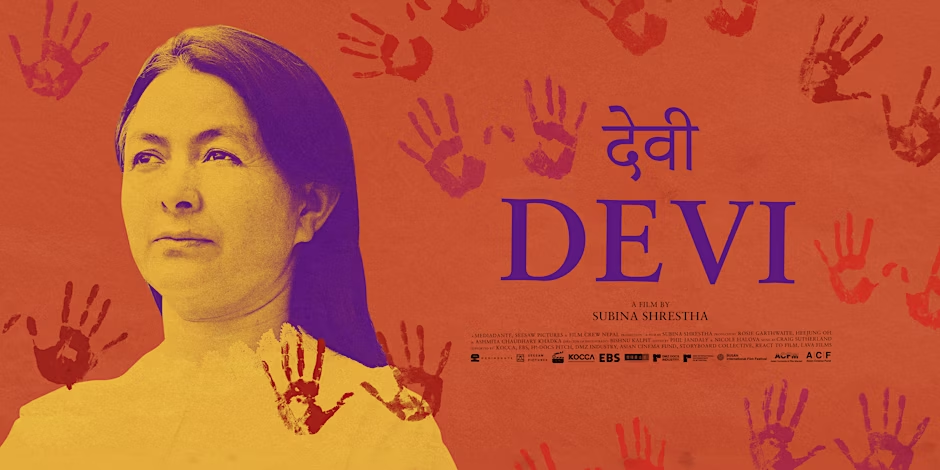
 Last Thursday, PeaceRep, Gender.Ed, and the Global Justice Academy hosted the Scottish Premiere of ‘Devi’ a documentary on the life of Devi Khakda—former member of the Nepali Constituent Assembly—who has dedicated herself to securing justice for victims of sexual violence during the Nepali civil war.
The documentary masterfully juxtaposes Nepal’s stunning landscapes with intimate glimpses of Devi’s family life during traditional holidays, contrasting these moments with her tireless efforts to document the horrific sexual crimes committed by both government forces and Maoist rebels during the war. Central to the film is Devi’s own story: the rape she endured at the hands of government forces as a means to lure her brother—who had procured explosives for the Maoists—out of hiding. This crime propelled her to join the Maoist forces alongside other women, fighting for gender equality.
The documentary delves into the reasons why, even 14 years after the end of the war, survivors of sexual violence still struggle to get justice. This includes political factors, as many perpetrators now hold positions of power, whether in government or as functionaries within the peace process. The Communist Party, despite having once weaponised Devi’s story—coaxing her into recounting her trauma at a press conference for political gain—has little incentive to pursue justice for victims today. The documentary also explores institutional barriers.  The Truth and Reconciliation Commission, tasked with documenting crimes committed during the conflict and deliver justice, sealed the files of the mere 314 rape cases originally reported at the war’s end, struggling to gather evidence and failing to register new complaints, which are estimated to be at least five times higher. A strict statute of limitations on rape further impedes legal recourse for victims. Finally, the documentary delves into the social factors which may deter women from reporting the crimes of which they were victims. Survivors face being ostracised as ‘fallen women’ and risk societal rejection, including abandonment by their husbands, leaving them unable to rebuild their lives.
The documentary explores themes of trauma, justice, and the social constructions of gender roles and violence. It highlights the complexities of reconciliation in a post-war society where male leaders refuse to acknowledge the contributions of female combatants or the suffering of female victims. At its heart, it also portrays Devi’s deeply personal struggle: balancing her activism and fight for justice with her own trauma, her family life, and the inter-generational wounds reflected in her fraught relationship with the very daughter she seeks to protect through her work.
The event concluded with a Q&A session featuring the documentary’s director, Subina Shrestha. She shared her experience of meeting Devi for the first time, when Devi handed her a diary detailing the rape she suffered and her decision to join the rebels. Shrestha also reflected on how wartime rape remains an unspoken issue in Nepal. The discussion provided deeper insight into the making of the documentary, particularly the ongoing trauma Devi continues to endure while she tirelessly gathers witness testimonies and lobbies the Nepali government to secure justice to victims.