Any views expressed within media held on this service are those of the contributors, should not be taken as approved or endorsed by the University, and do not necessarily reflect the views of the University in respect of any particular issue.

Volunteering in the DIU

I have been volunteering with the Digital Imaging Unit for about a year, during which time I have been researching and adding metadata to their digital collection, as well as selecting images for a recent postcard project. It has been a wonderful opportunity to get to know the breadth of the University’s Collections and contribute to its online visibility.

As a student of the (MA) Fine Art degree  looking to start a career in the archive and museum sector, volunteering with the DIU has not only provided me with relevant work experience, but also enriched my visual and art historical knowledge by exposing me to an incredible variety of pictorial material.

The collection has a number of beautiful images of old Edinburgh and it is remarkable to see how, in some ways, so little has changed in the city landscape.

0014281d

Glass-plate slides are such wonderful objects and these have incredibly vibrant colours. This particular image seems to be a photograph of the Bois de Boulogne, a park close to where my grandmother lived in Paris.

Bois du Boulogne.

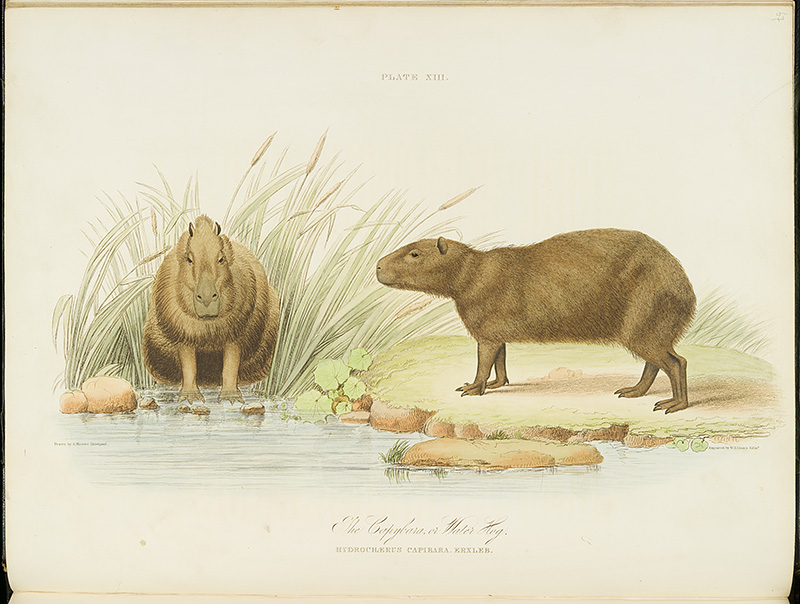
The Capybaras, or Capivaras, are a type of giant rodents indigenous to the region I grew up in Brazil. It was a lovely surprise to discover this image in the University’s collection of Zoological Illustrations.
0010936d

One of the many fascinating items I’ve had the pleasure to research for the DIU, a 17th century book detailing comet sightings throughout history, accompanied by intricate illustrations.

0024479d

Pigs, pumpkins and ostriches… what more could you want?

0055403d

Alice Tod

Facit Calculator Photography

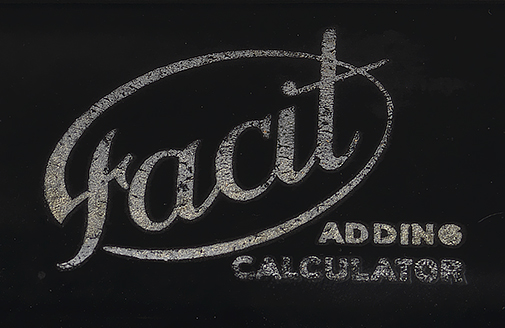
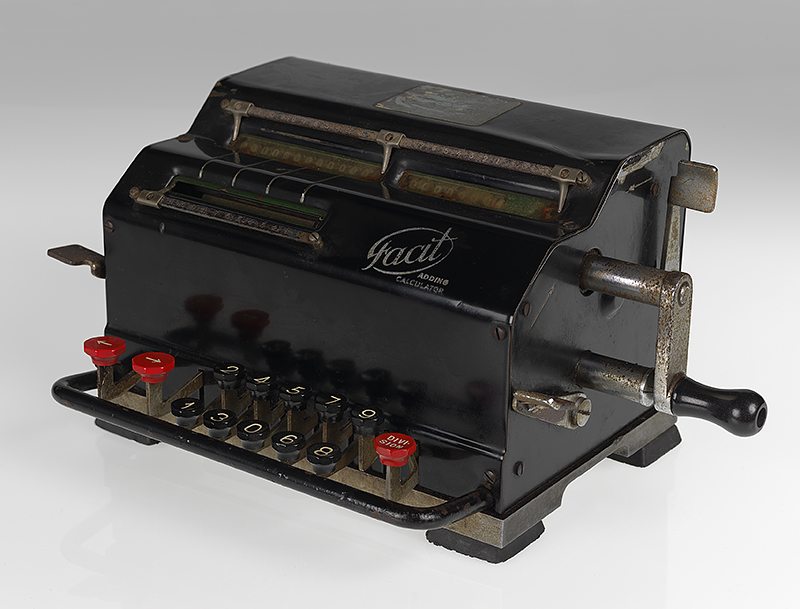
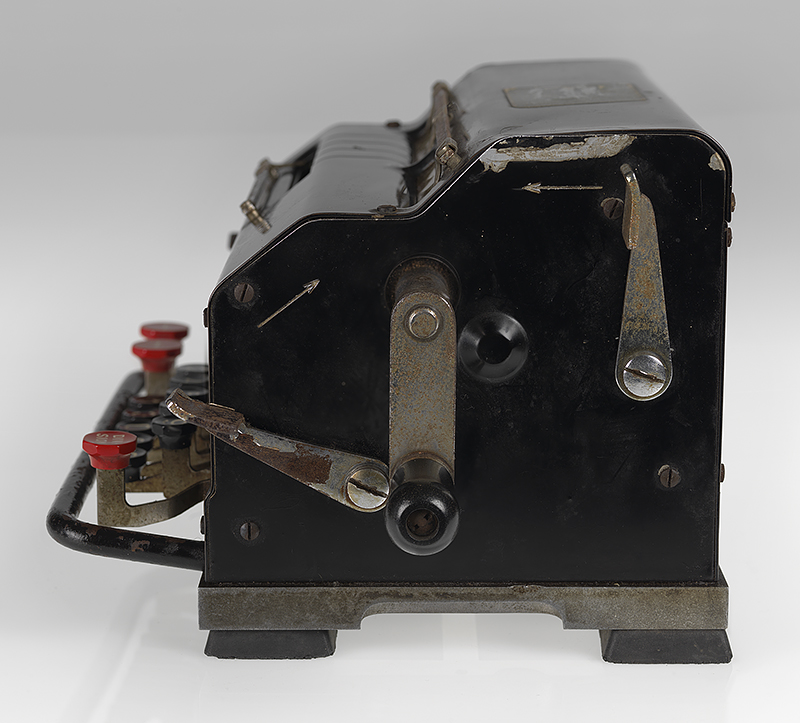
0055792dThe Digital Imaging Unit recently had the mechanical calculating machine from the Godfrey Thomson Project to photograph. The calculator has this beautifully resolved logo which struck me as a little unusual for such an early and niche product. However discovering the company was Swedish explains such attention to design. The swift rise and decline of the company is a stark warning about ignoring research, development and competition http://en.wikipedia.org/wiki/Facit
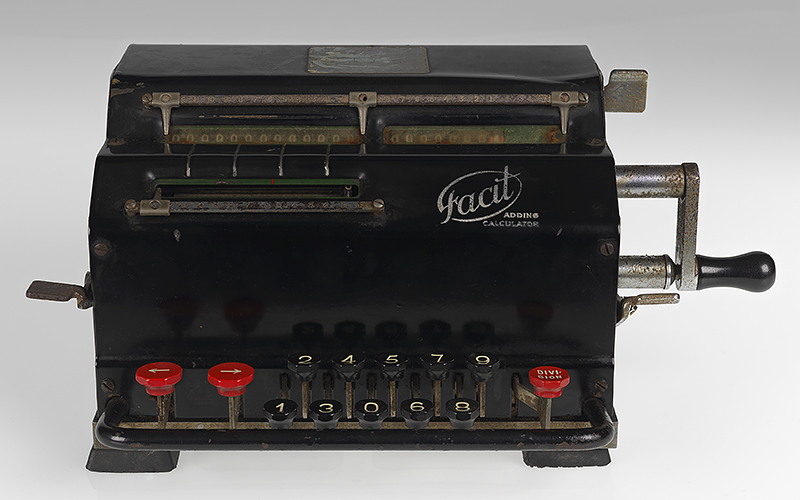
The calculator was photographed using the DIU infinity table lit from below with key and fill lighting arranged carefully to maximize all the detail and information present in the calculator. This was a challenge given the black colour and metallic reflective nature of the material. In addition multiple exposures were taken and the final set of images were assembled in Adobe Photoshop.

Malcolm Brown

0055792e0055795d0055800d

Digitising Darwin

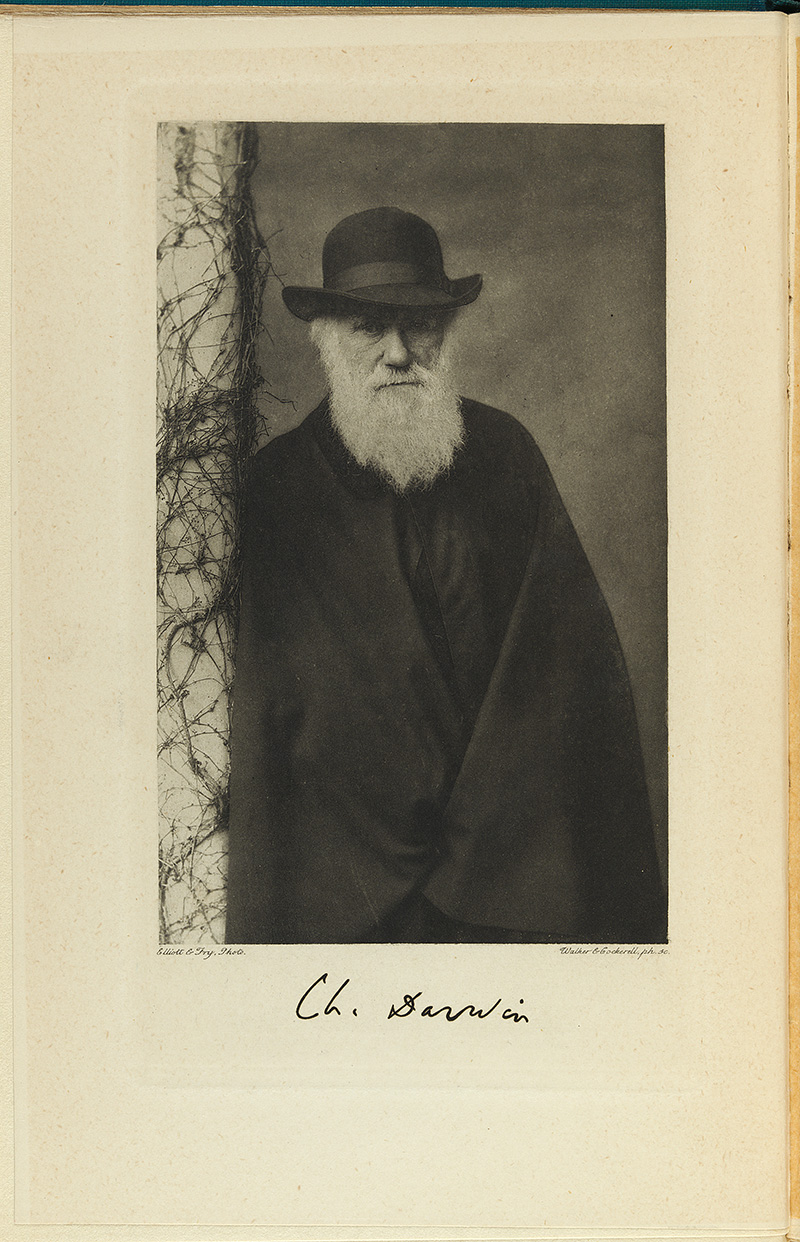
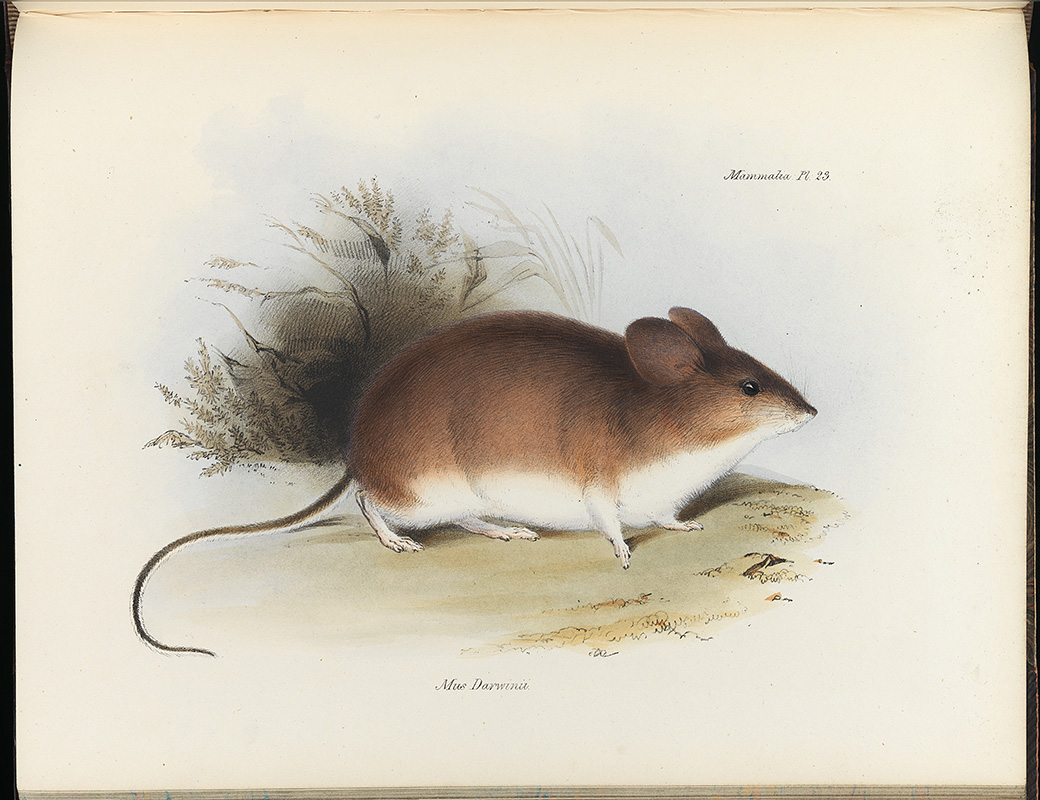
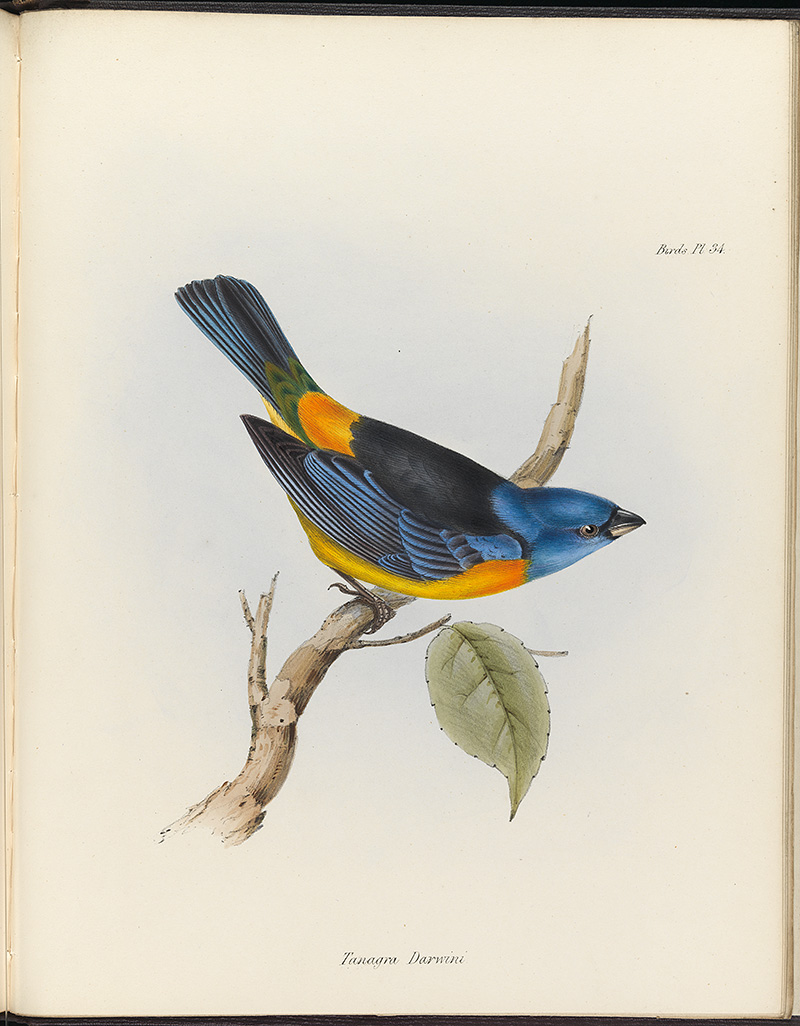
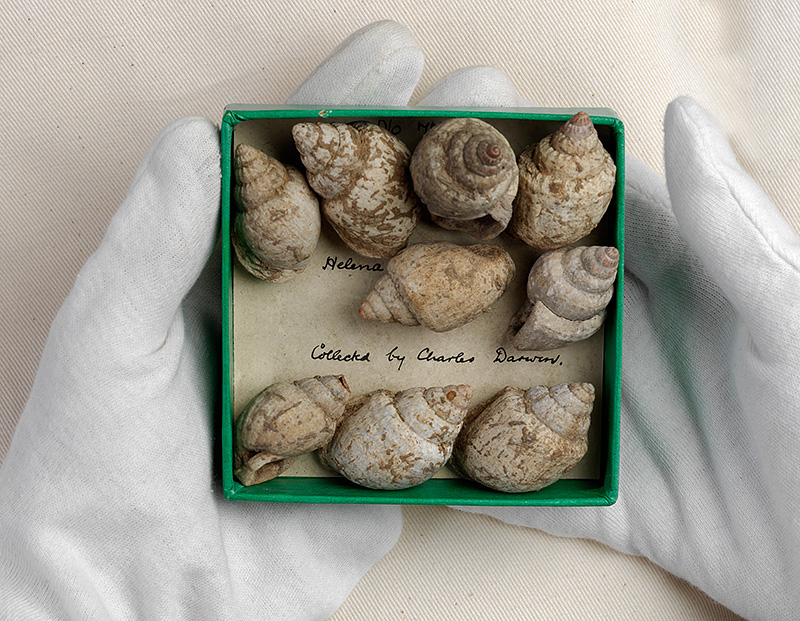
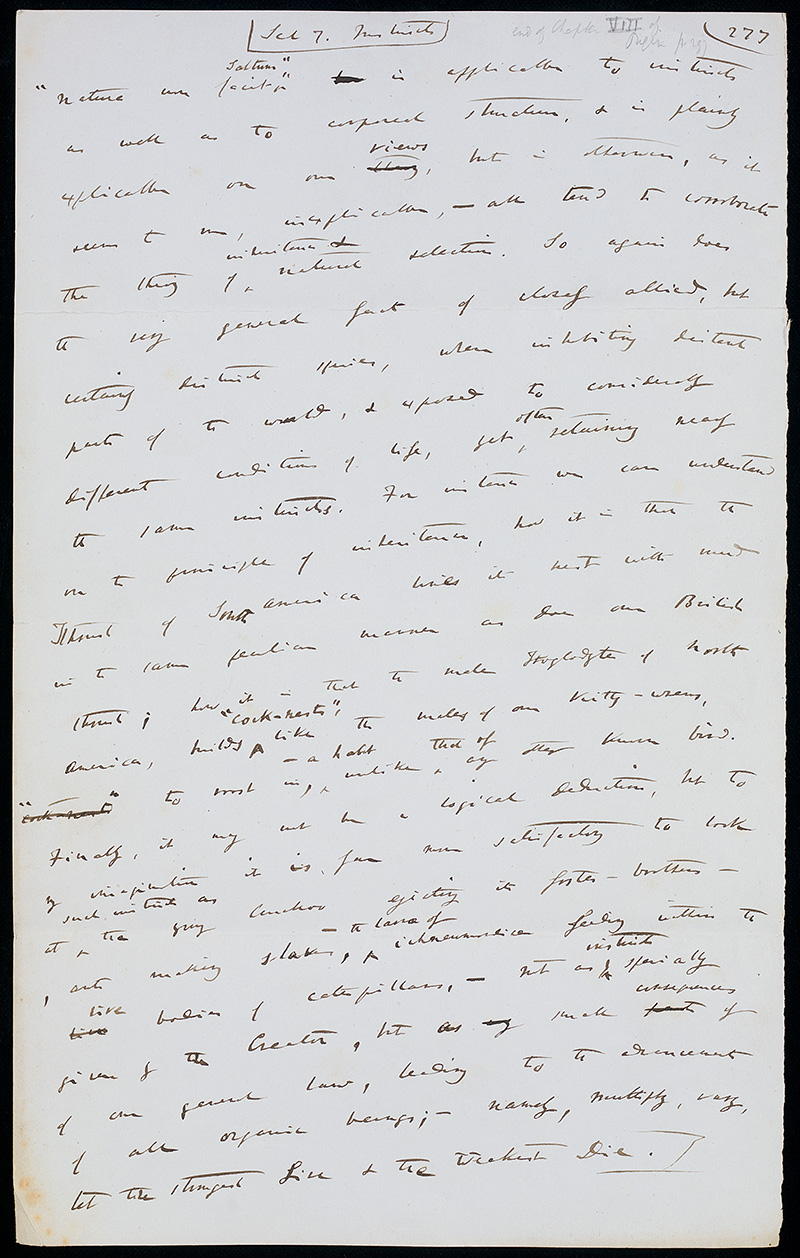
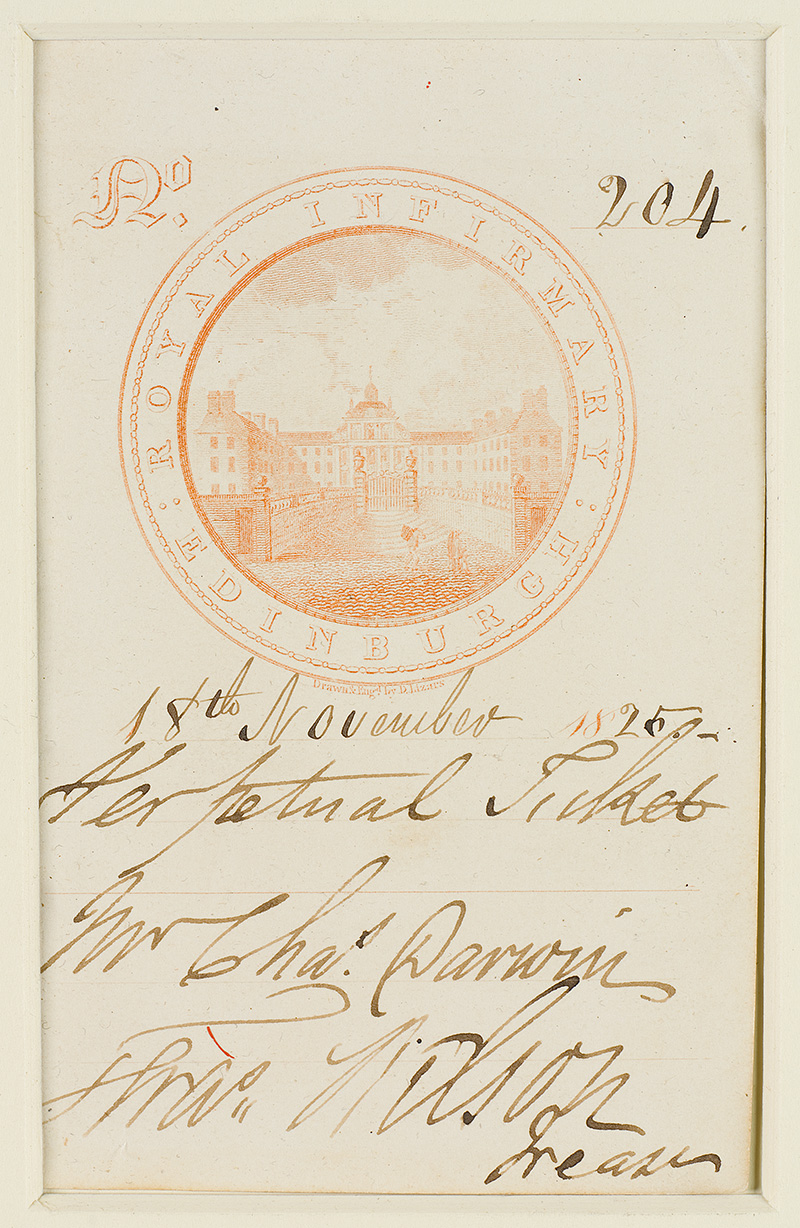
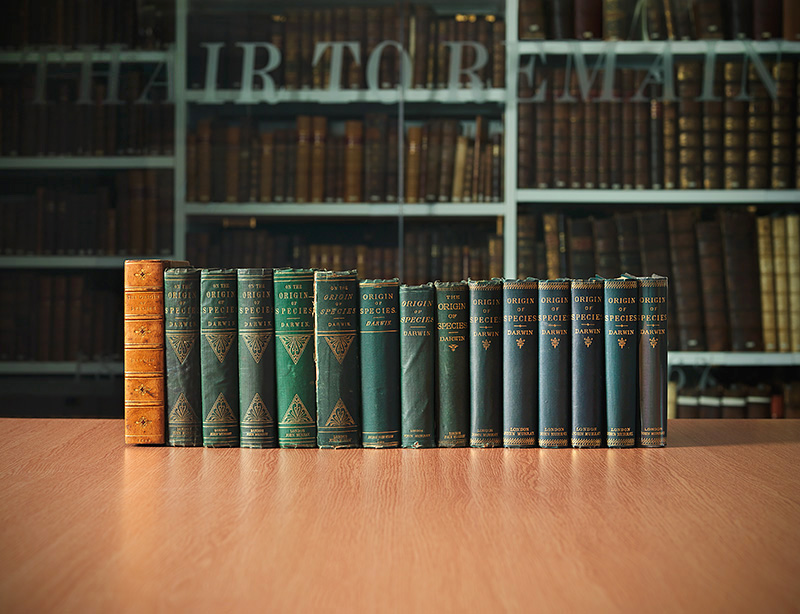
Heiskell DarwinOver the years several Darwin originals have made their way to us for photography- a handwritten sheet from the manuscript of ‘On the Origin of Species’, his class cards, letters and recently some shells collected by Darwin during the voyage of the Beagle which had been rediscovered amongst Lyell’s geology collection. This week I was delighted to receive a whole trolley load of books from the Darwin collection which were being photographed in preparation for a printed catalogue. The Rare Books and Manuscripts team have already completed the online cataloguing (see their blog about this mini-project here http://libraryblogs.is.ed.ac.uk/blog/2013/08/30/darwins-voyage-of-discovery/ ).
Much of what arrived in the DIU was from the Heiskell Darwin collection- a donation of first editions made to the University in 2012 from the Heiskell Bibliographical Foundation, although some beautiful plates from the ‘The Zoology of the Voyage of H.M.S. Beagle’ came from our existing collection. As our image archive of Darwin is growing, I thought it might be nice to show some of the highlights here.
Susan Pettigrew

Heiskell Darwin Heiskell Darwin Heiskell Darwin Charles Lyell collection 0009323d 0009315d 0055917d

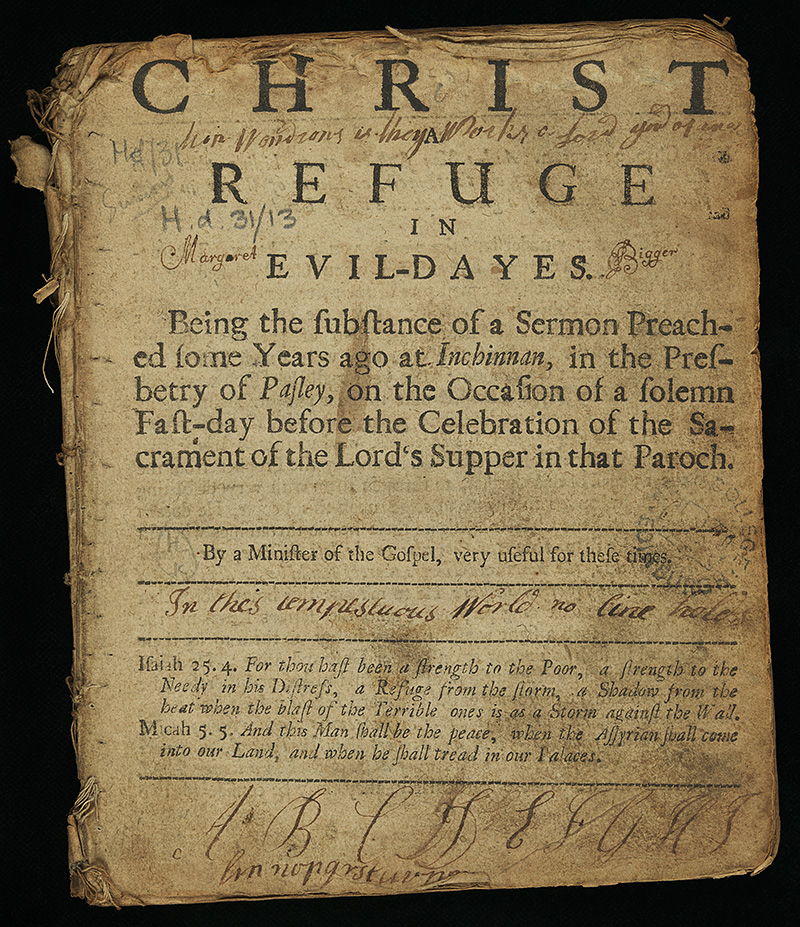
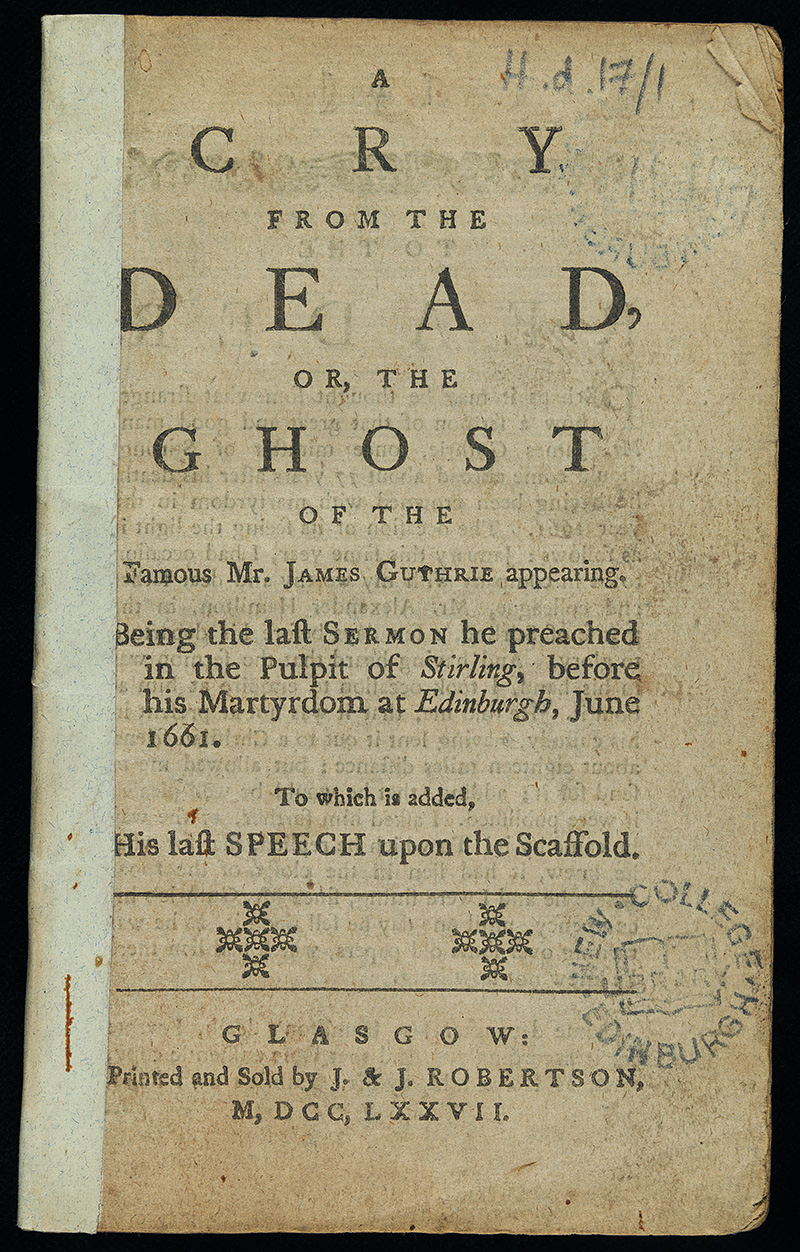
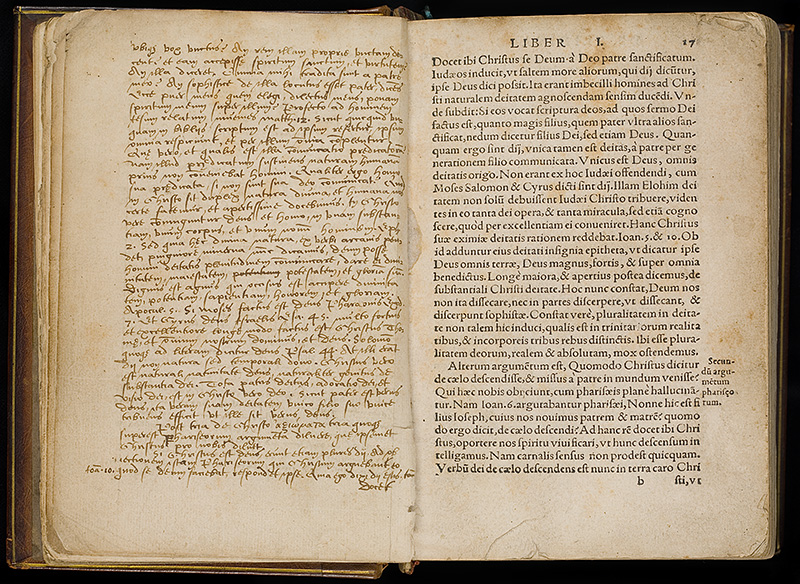
Damnation and Divinity

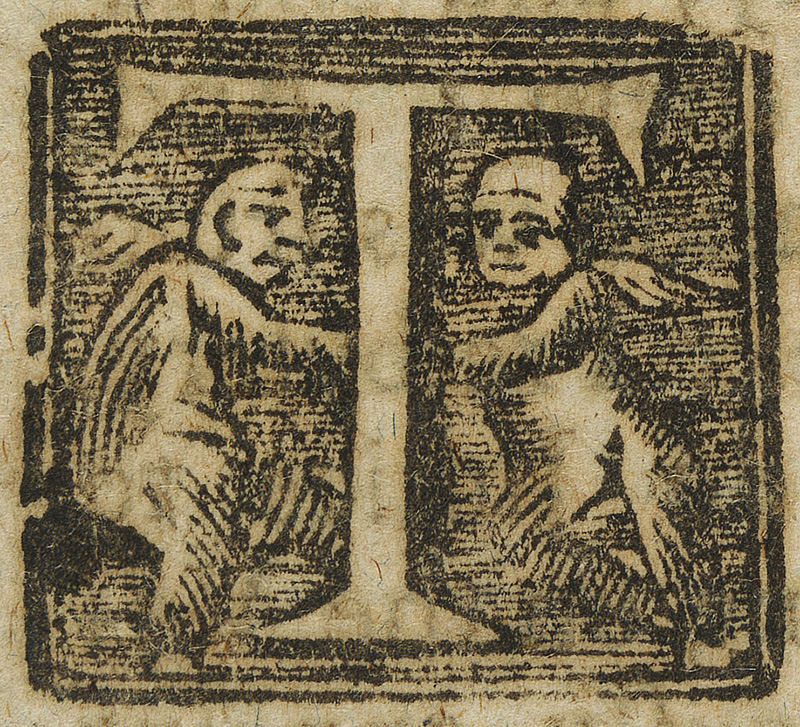
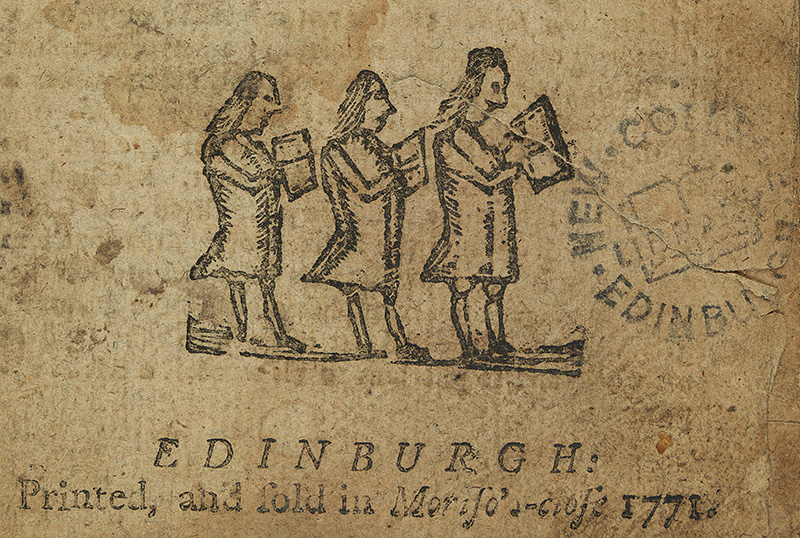
More Religious pamphlets for the English Short Title Catalogue (ESTC) came our way this week, mostly from New College Library. I always find the titles so fascinating, and some of them have lovely woodcut details too. The following are some of my favourites.
For more information about the ESTC see http://estc.bl.uk/F/GFIV3P5UCLQIQIHNQC1EQBU4HFL4Q9YYCCQ5XD4QM8XJRAED8Q-13504?func=file&file_name=catalogue-options


Susan Pettigrew

ESTC ESTC ESTC ESTC ESTC

Happy New Year!

Have you been doing too much of this recently?

0023244d

And started the year with a splitting headache…

0002258d

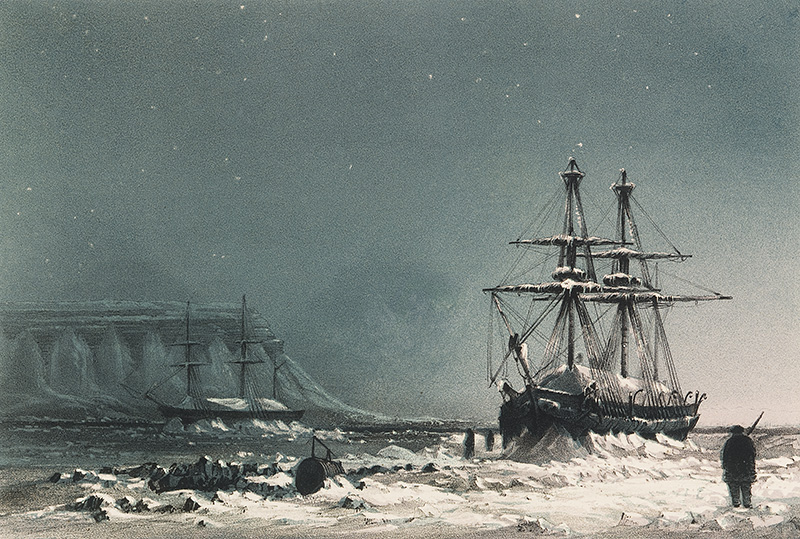
Or maybe you got stranded by the winter storms….

0011481d

And had to be looked after by others…

0009203d

Either way, now that we have started a new calendar

0001156d

The DIU team hope that 2014 will bring you manna from heaven!

0022378d


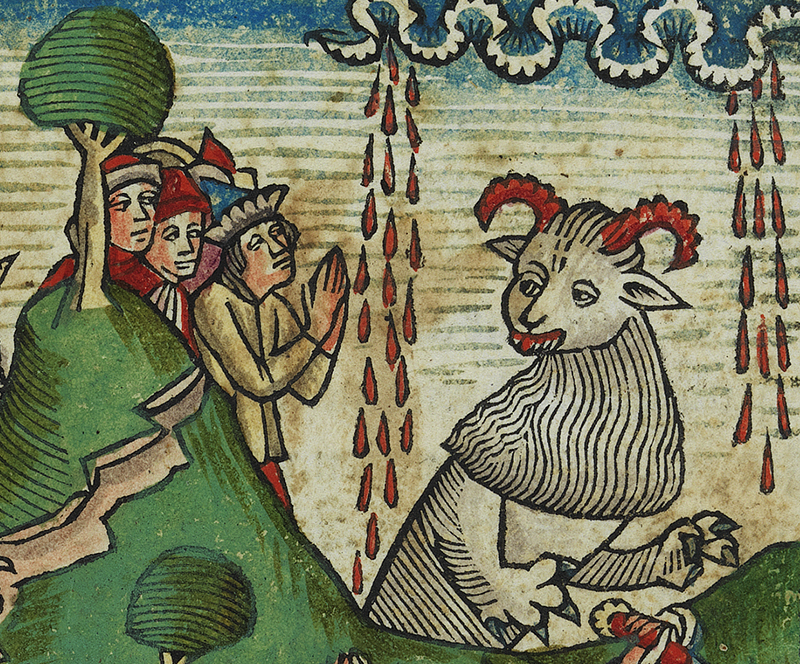
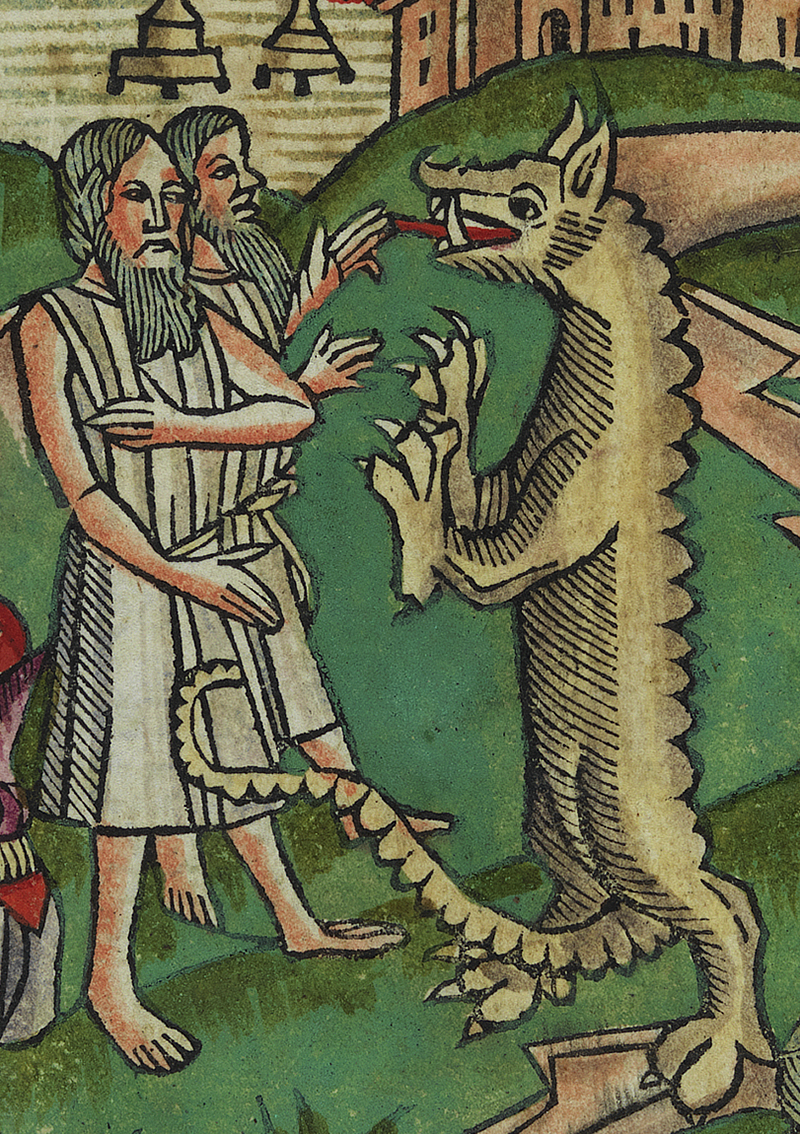
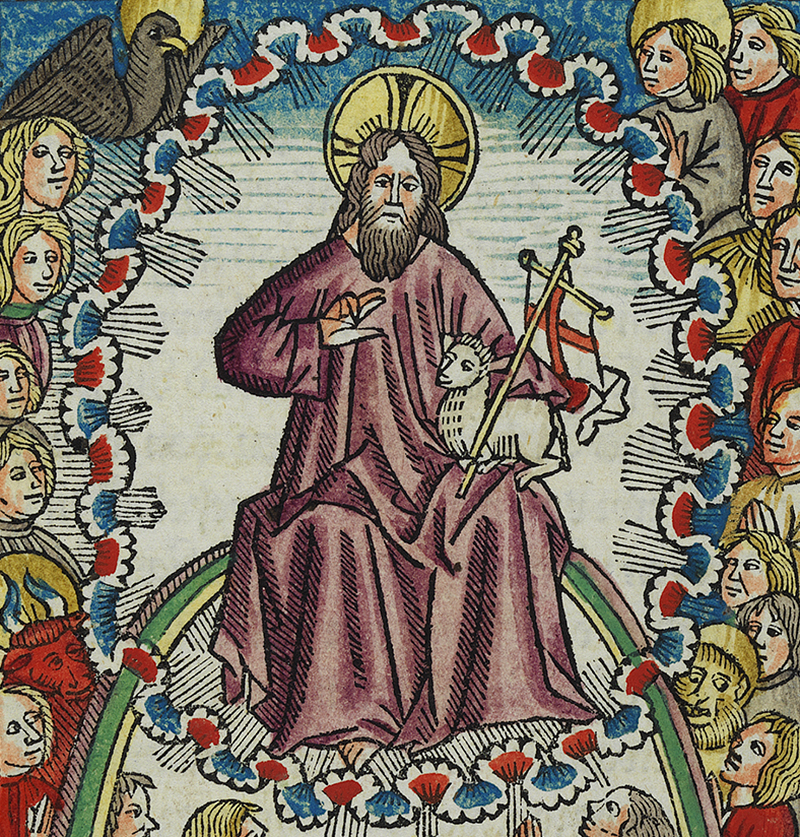
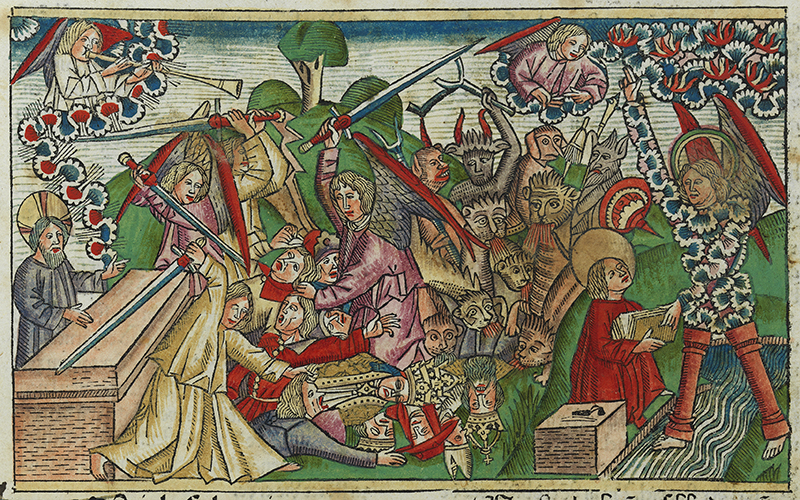
Photographing The Apocalypse Circa 1483

Recently the Digital Imaging Unit were asked to photograph all 8 illustrations from the book of the Apocalypse in Anton Koberger’s German Bible of 1483.  Shelf-mark Inc.45.2.  I have selected a few details from the illustrations here to demonstrate the quality of the line and its powerful descriptive impact. ” Koberger was the godfather of Albrecht Dürer, whose family lived on the same street. In the year before Dürer’s birth in 1471.”   Giulia Bartrum, Albrecht Dürer and his Legacy, British Museum Press, 2002, pp 94-96, ISBN 0-7141-2633-0  

Malcolm Brown

0055706d0055708d0055704e0055705d

CENSORED!

Last week I was sent a wonderful book, Deletrix – a collaboration between the artist Joan Fontcuberta, Catalan PEN and Arts Santa Mònica and it explores censorship and violence done to books. Thought provoking, and beautifully illustrated with images that have a strange haunting quality- indeed Fontcuberta challenges the audience as to whether the inherent beauty of the object can redeem the violence done to them. It has got me thinking about the items in our collections that have suffered changes at the hands of censors over the years.

Perhaps the one that immediately springs to mind is Micheal Servetus’ Christianismi Restitutio http://images.is.ed.ac.uk/luna/servlet/s/tv7257. It is thought to be the copy Servetus sent to Calvin; incensed by Servetus’ theories, Calvin ripped out the first 16 pages before he set the wheels in motion to have Servetus burned at the stake using his own books for the fire! (See http://en.wikipedia.org/wiki/Michael_Servetus for more information).
0009386d

However, there are many more censored images in the collection, often the result of religious belief & moral concerns. All the illustrations in the Genesis chapter of this French Bible appear to have God covered with Gold paint http://images.is.ed.ac.uk/luna/servlet/s/q28182
0026013dAnd there are many examples of people being defaced http://images.is.ed.ac.uk/luna/servlet/s/ir0qfd
0010570d

Further examples can be found below
http://images.is.ed.ac.uk/luna/servlet/s/75ig3v – perhaps an example of Victorian vandalism?
Or how about this one, where it looks as though the owners name and anathema has been deliberately erased http://images.is.ed.ac.uk/luna/servlet/s/55b726

More information on Deletrix can be found at the links below
http://nathaliepariente.wordpress.com/2012/11/05/nouvelle-exposition-joan-fontcuberta-deletrix/

http://www.flickr.com/photos/pencatala/sets/72157635582961896/with/10022317404/

http://www.youtube.com/watch?v=vr_AP8dK18w&feature=youtu.be

Many thanks to Ana González Tornero for the beautiful book, the links and information about the Deletrix Project.

Susan Pettigrew

Meteorites and Fossilised Rain Drops

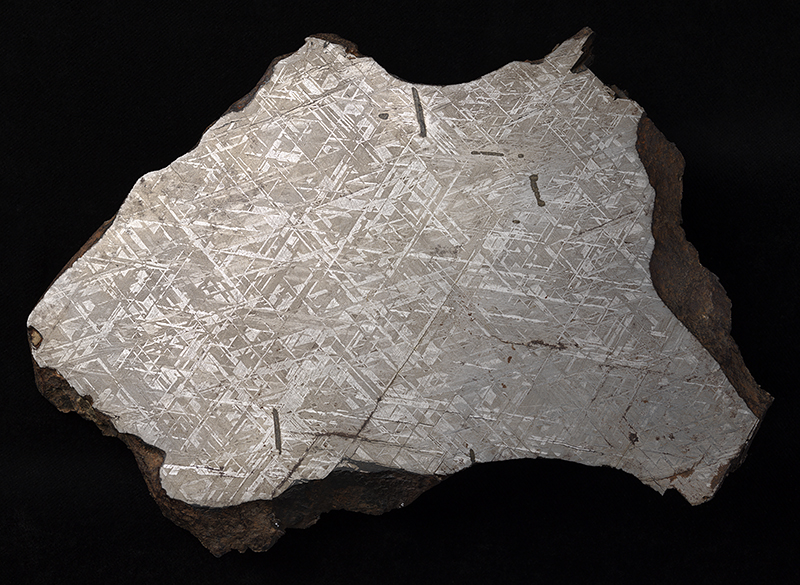
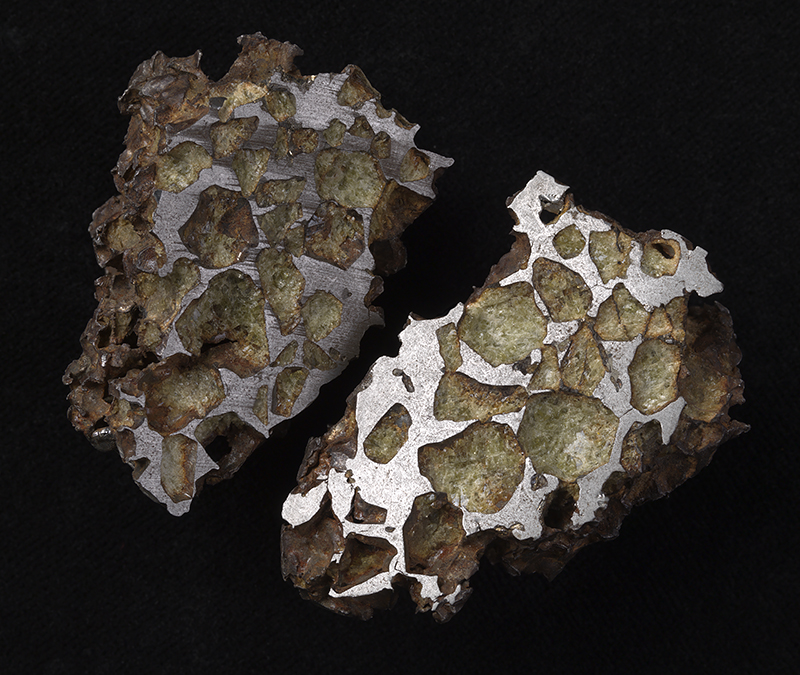
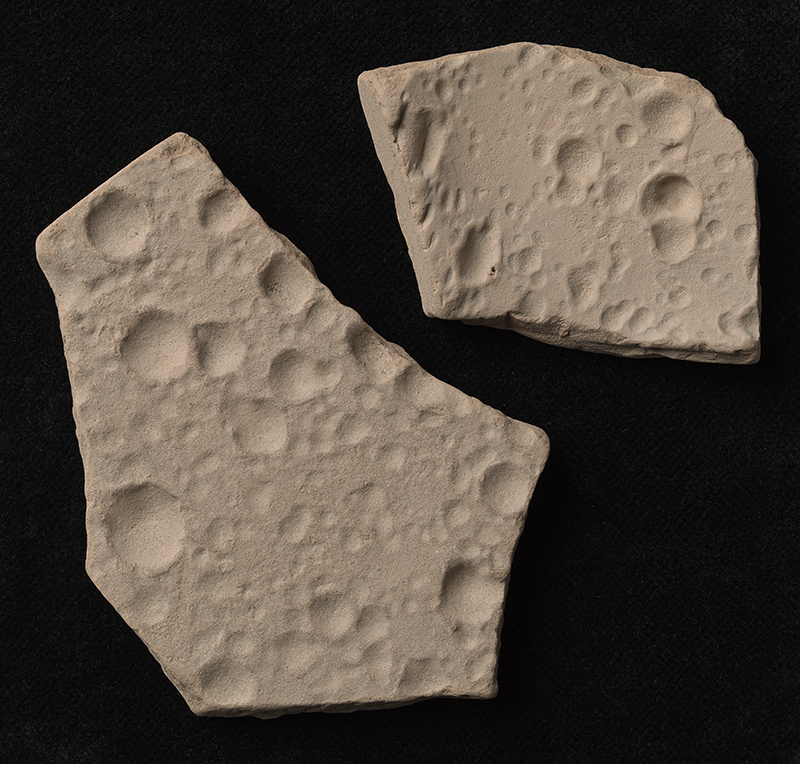
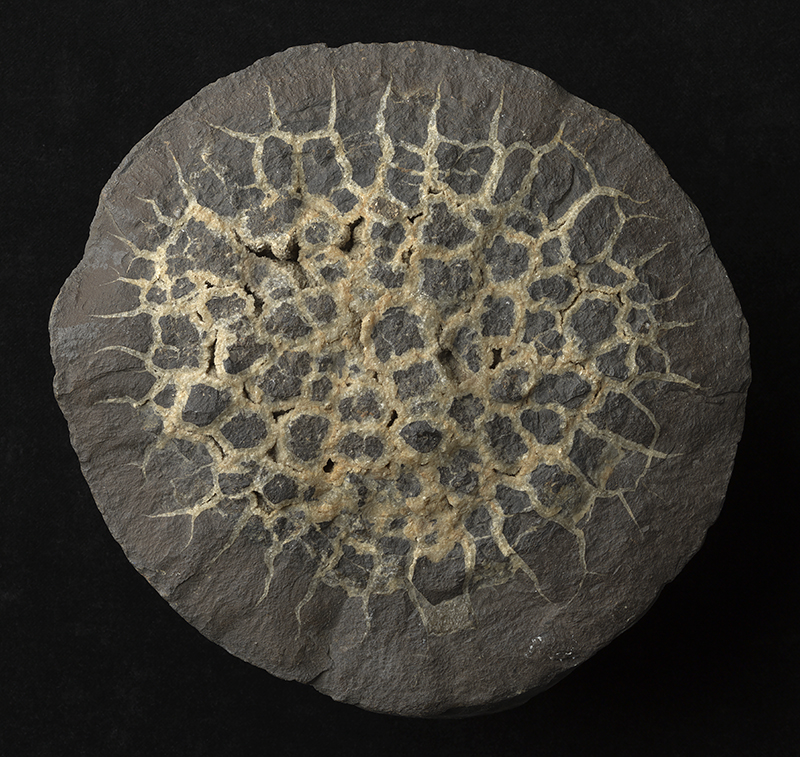
This week the Digital Imaging Unit have been photographing the Gibeon nickel iron meteorite EUCM.110.759.  This fell in prehistoric times in Namibia, named after the nearest town.  Made into tools by the Nama people. Analysed and confirmed as a meteorite in 1836. The wonderful pattern is called a Widmanstätten pattern. We have also been photographing the Imilac stony iron pallasite meteorite EUCM.0647.2008 found in the Atacama Desert in Northern Chile in 1822. The meteorites along with some amazing fossilized rain drops and various crystals will all feature in an exhibition opening in the Main Library exhibition space on December the 5th called Collect.ed.

Malcolm Brown

0031342d

 0031348d0031353d0031355d

Marking the Millennium?

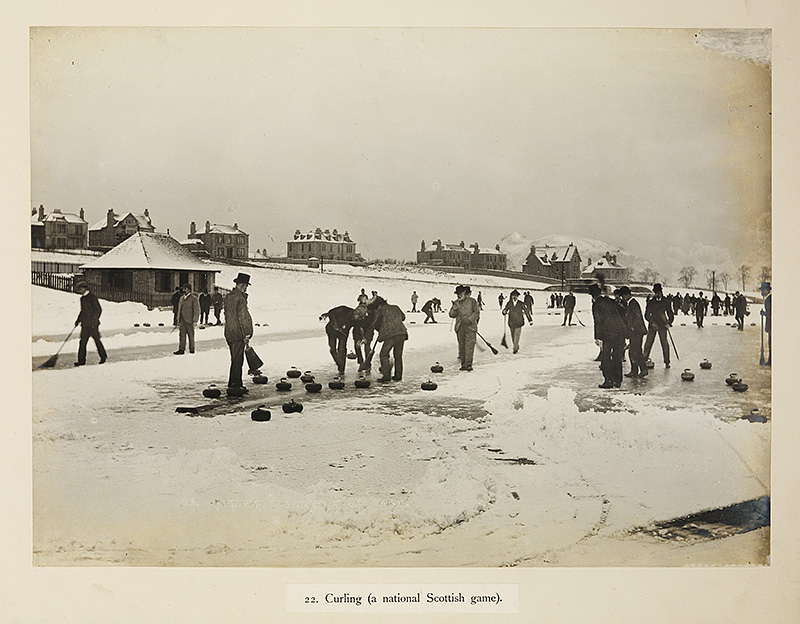
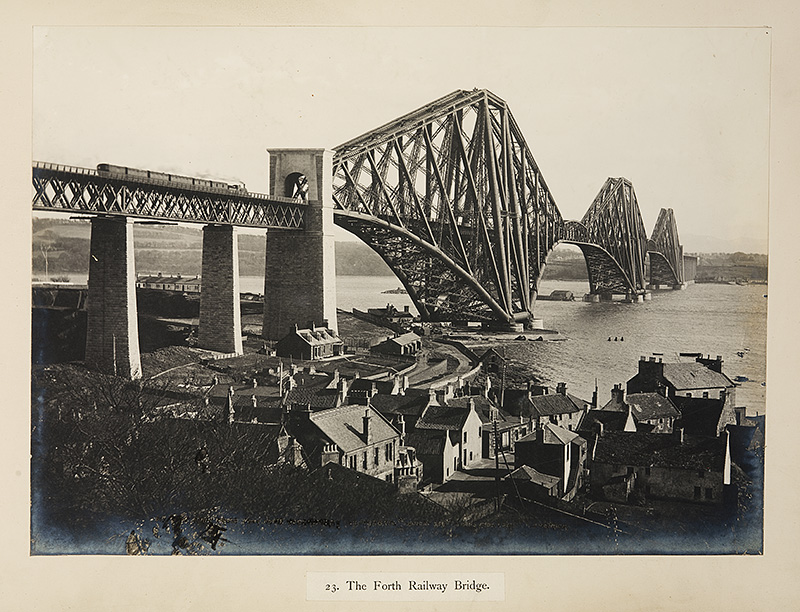
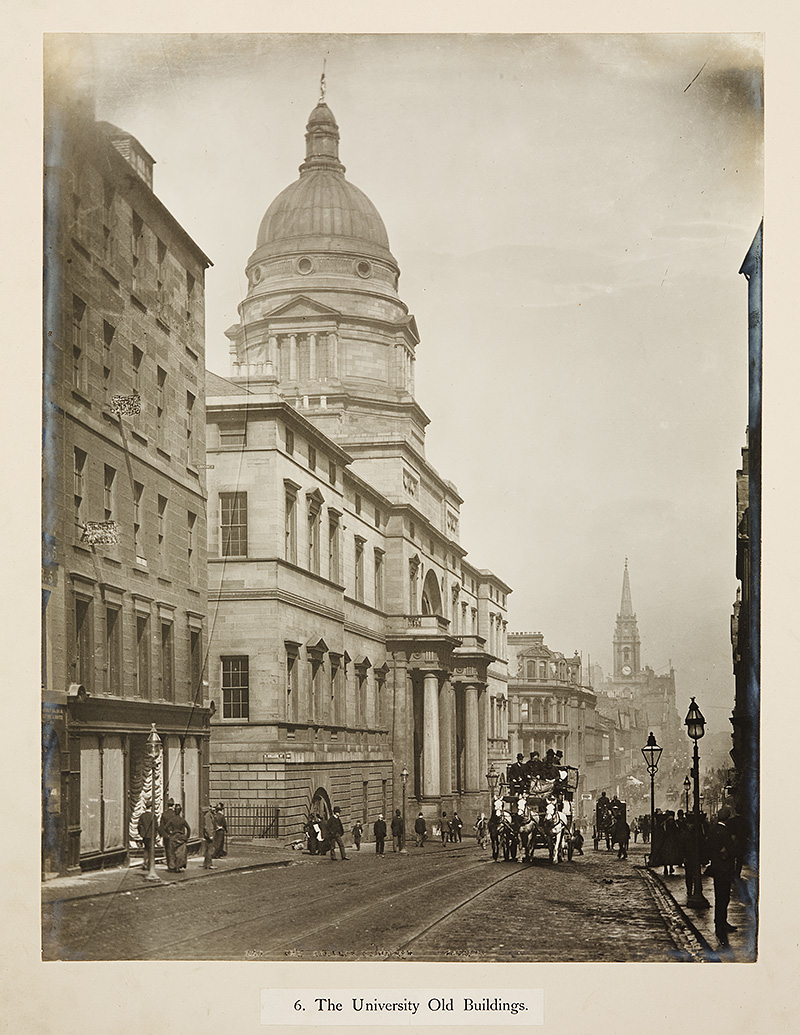
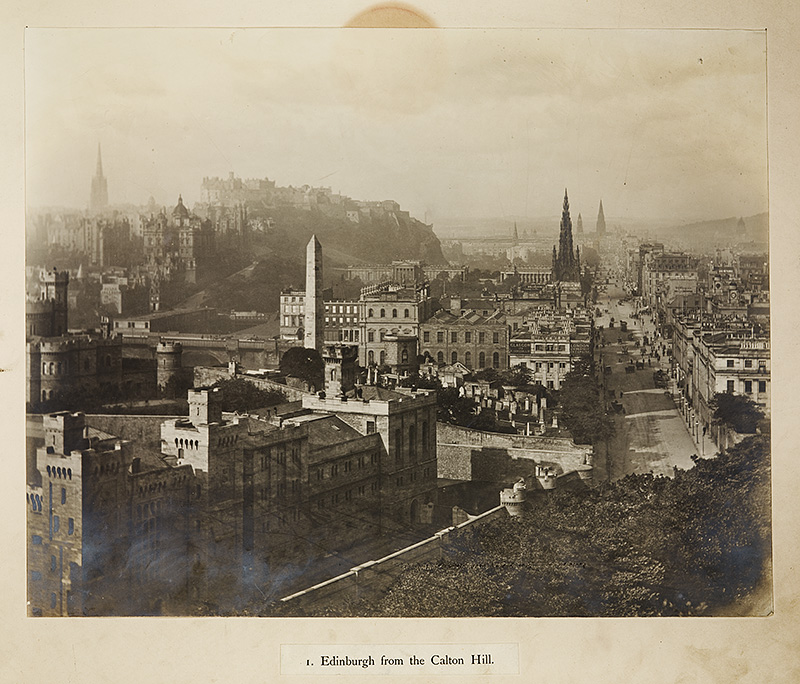
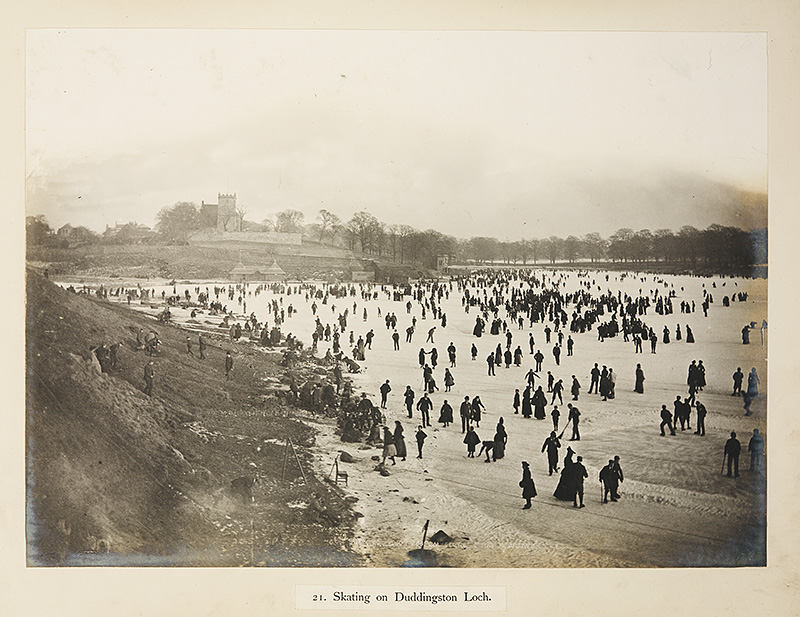
This week’s images all come from a lovely photograph album commissioned by the University in 1900 (Shelfmark EUA CA1/2). We don’t have much information about this volume but we think it was made to hail the start of the 20th century.  It contains 25 photographs of University buildings and views in and around Edinburgh, including some are fascinating scenes of Edinburgh life – when was the last time you saw people skating on Duddingston Loch?

Thanks to the Lost Edinburgh Facebook team Digital Imaging Unit images have appeared on the Lost Edinburgh Facebook page. As a result of this each image has received 1,331 + 1294 likes respectively and 216 + 161 individual shares. Also around 80 comments per image were generated and this  has brought the CRC Facebook page an additional 76 new likes since appearing on the site. The Lost Edinburgh Facebook page currently has 66,296 likes, probably making this the biggest audience for our images.

Susan Pettigrew

Curling (a national Scottish game). Edinburgh. The Forth Railway Bridge. The University Old Buildings. Old College. Edinburgh from Calton Hill. Skating on Duddingston Loch, Edinburgh.

Gems from the ECA Rare Books Collection

The CRC Assistant Rare Books Librarian has been busy cataloguing books from the Edinburgh College of Art Collection again, and has sent a few our way to photograph for upcoming talks and publications.

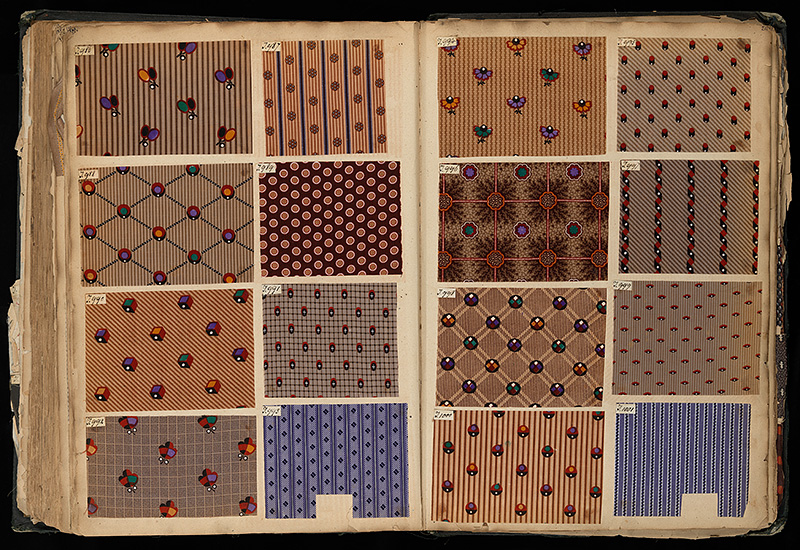
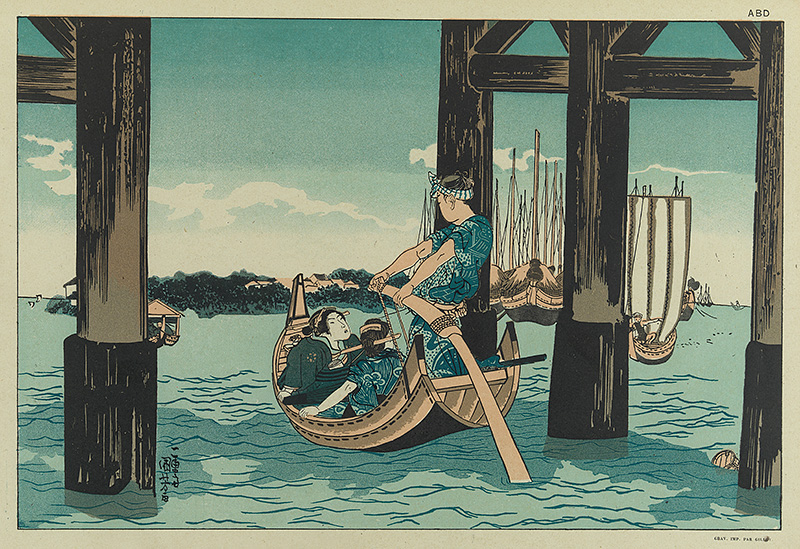
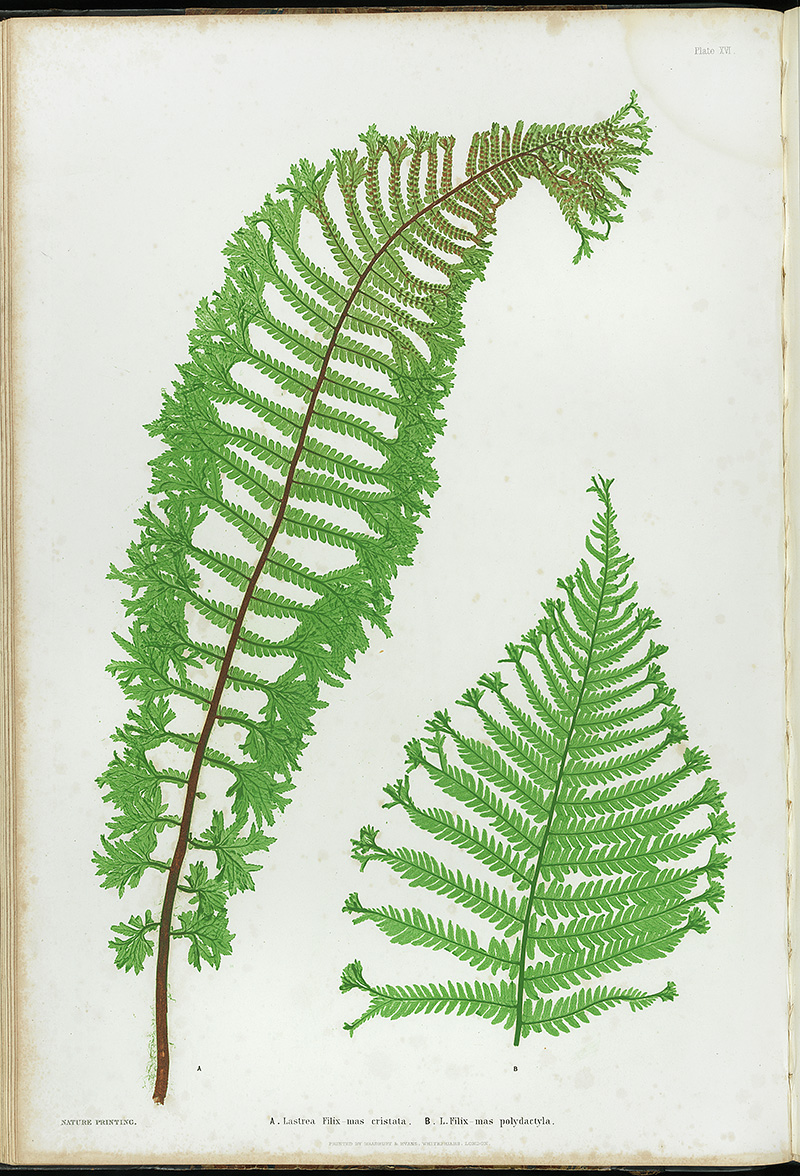
An amazingly diverse collection from 15th C. Sermons to etchings of Italian landscapes to 19th C. Japanese artistic review magazines and on to detailed plates of British Ferns, each book contains its own wonders.

Susan Pettigrew

0055609d
RECA.MS.26 Calico Samples Album, pp.200v-201r
0055628d
RECA.F.157 Le Japon Artistique, vol.3, no.17, pl.ABD
0055638d
RECA.FF.210 British Ferns, Moore, Thomas, pl.XVI
0055644d
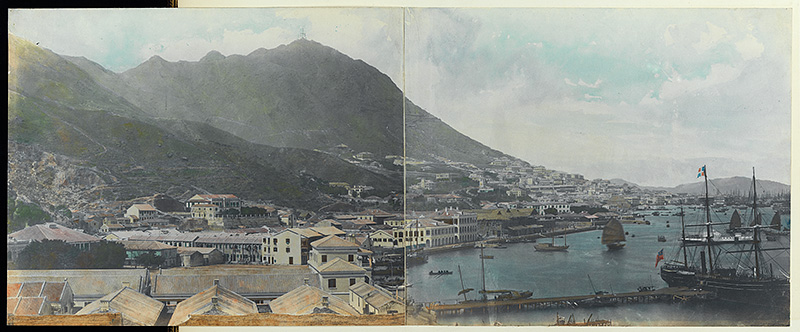
RECA.MS.8 China, Hong Kong, Shanghai, Macao: Photographs Taken on Lord Elgin’s Diplomatic Mission and Military Campaign in China 1857 – 1861, p.52


css.php

Report this page

To report inappropriate content on this page, please use the form below. Upon receiving your report, we will be in touch as per the Take Down Policy of the service.

Please note that personal data collected through this form is used and stored for the purposes of processing this report and communication with you.

If you are unable to report a concern about content via this form please contact the Service Owner.

Please enter an email address you wish to be contacted on. Please describe the unacceptable content in sufficient detail to allow us to locate it, and why you consider it to be unacceptable.
By submitting this report, you accept that it is accurate and that fraudulent or nuisance complaints may result in action by the University.

  Cancel