Any views expressed within media held on this service are those of the contributors, should not be taken as approved or endorsed by the University, and do not necessarily reflect the views of the University in respect of any particular issue.

Scottish Court of Session Papers; digitisation pilot

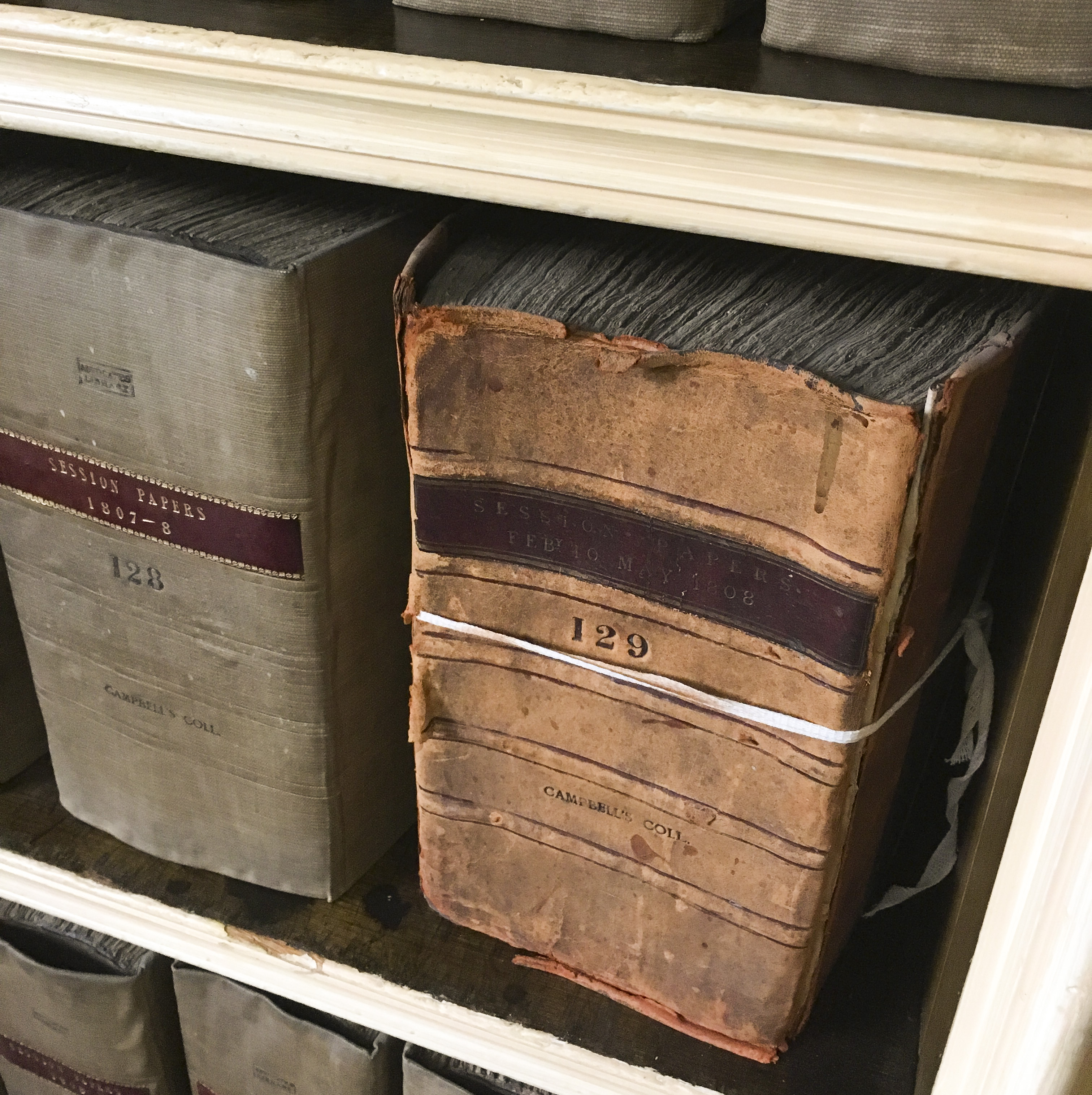
At present I am working on a pilot project, digitising the Scottish Court of Session Papers. The collection is held across three institutions; The Advocate’s Library, The Signet Library and the University of Edinburgh’s Library and University Collections. The collection itself consists of circa 6500 volumes, comprising court cases which span the 18th and 19th century.

The aim of the pilot is to determine the most effect digitisation methods for these materials with a view to a potential mass digitisation project covering the entire collection. The digitisation tests and experiments I have been undertaking have raised the many challenges that such a large project would present, namely around the issue of recording metadata and which digitisation practices to employ in relation to the condition and size of any particular volume.

Continue reading “Scottish Court of Session Papers; digitisation pilot”
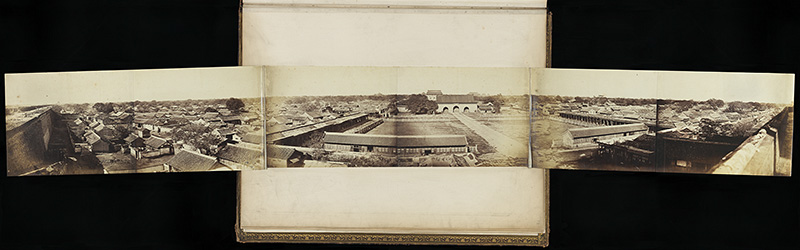
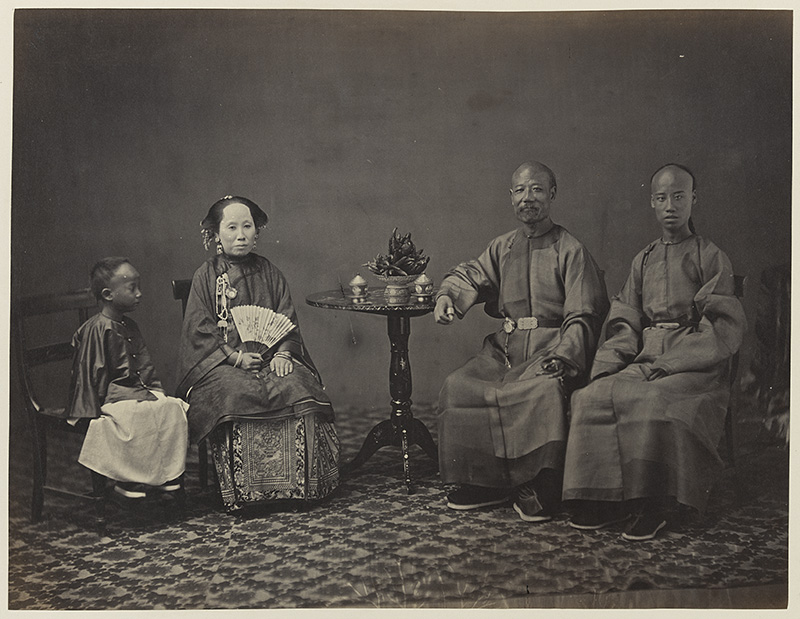
Panoramas and Portraits: 1860’s China

Following on from a visit from the Confucius Institute in September, it was agreed we should digitize our volume of photographs from Lord Elgin’s 1860 military campaign in China. Our former volunteer Caitlin Holton has already blogged about this album so you can read more about this fascinating set of photographs and their controversial history here

http://libraryblogs.is.ed.ac.uk/diu/2016/04/26/lord-elgin-records-19th-century-china/

We are very pleased to say that the complete set of photographs can now be found on LUNA, including the large fold-out panoramas. These proved quite challenging to capture, most needing to be photographed in 2 or 3 sections and stitched back together in Adobe Photoshop. Furthermore, the length of the fold-outs made it difficult to evenly light the photographs, while at the same time preventing shine. However, these old photographs show that panoramas are not a modern invention of smart phones and clever stitching software, they have been effectively produced since the earliest days of photography.

Below are some of my favourite images, and the full collection can be found here http://images.is.ed.ac.uk/luna/servlet/s/3n0c83

Susan Pettigrew, Photographer


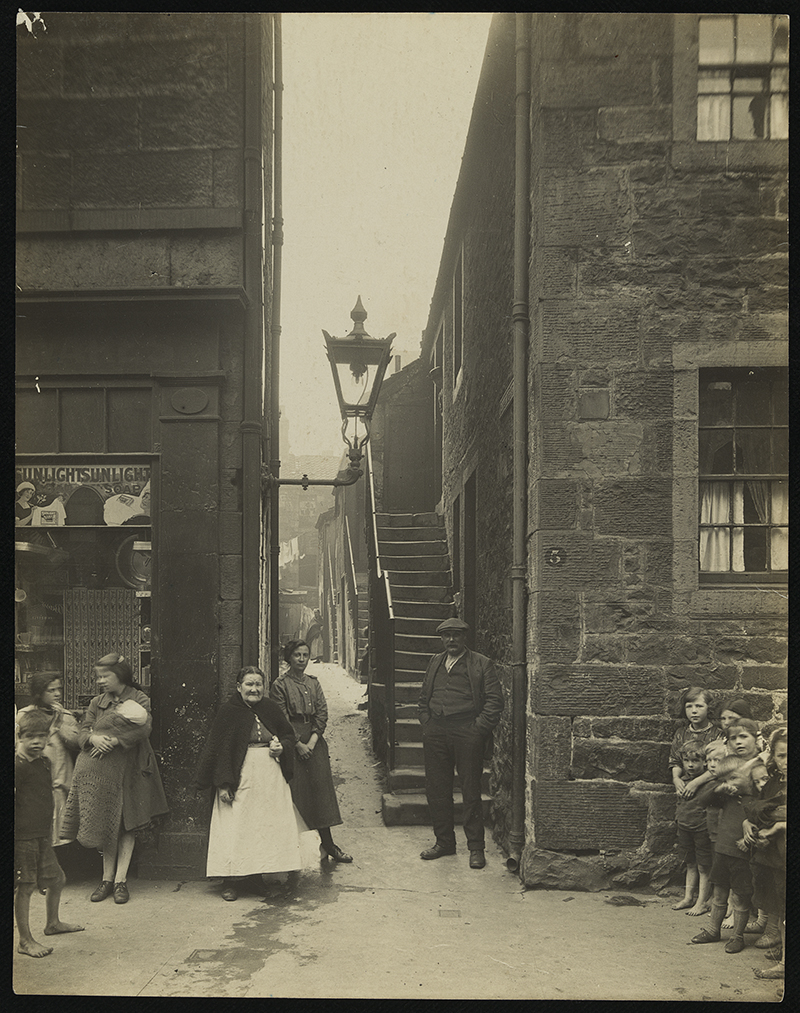
Around the World in 90 years- the Story of Historic Leith Improvement Scheme Photographs

When Fraser Parkinson first contacted us about the collection of historic photographs of Leith that he had been entrusted with, my colleagues and I at the Centre for Research Collections were very excited. The photographs were taken to show the slums of Leith prior to the ‘Edinburgh (Leith) Improvement Scheme of 1924’, where large areas were to be cleared and rebuilt. Fraser tells us that:

‘The Town Council Minutes of 3rd April 1924 propose the demolition or reconstruction of ‘certain houses, courts, and alleys unfit for human habitation’.

The concerns of William Robertson, Medical Officer of health for the City and Royal Burgh of Edinburgh, were that the

‘narrowness, closeness and bad arrangement, or the bad condition of the streets and houses, or the want of light, air, ventilation or proper conveniences or other sanitary defects are dangerous or injurious to the health of the inhabitants of the buildings in the said Areas, or of the neighbouring buildings.’

The scheme involved large-scale demolition in this area of Leith, and the re-housing of most displaced residents out-with the areas covered by the scheme.

These photographs were taken as a record of the area at this time by the City Council.  They provided the photographic evidence of the conditions that presented significant risk to public health at this time.’

Continue reading “Around the World in 90 years- the Story of Historic Leith Improvement Scheme Photographs”

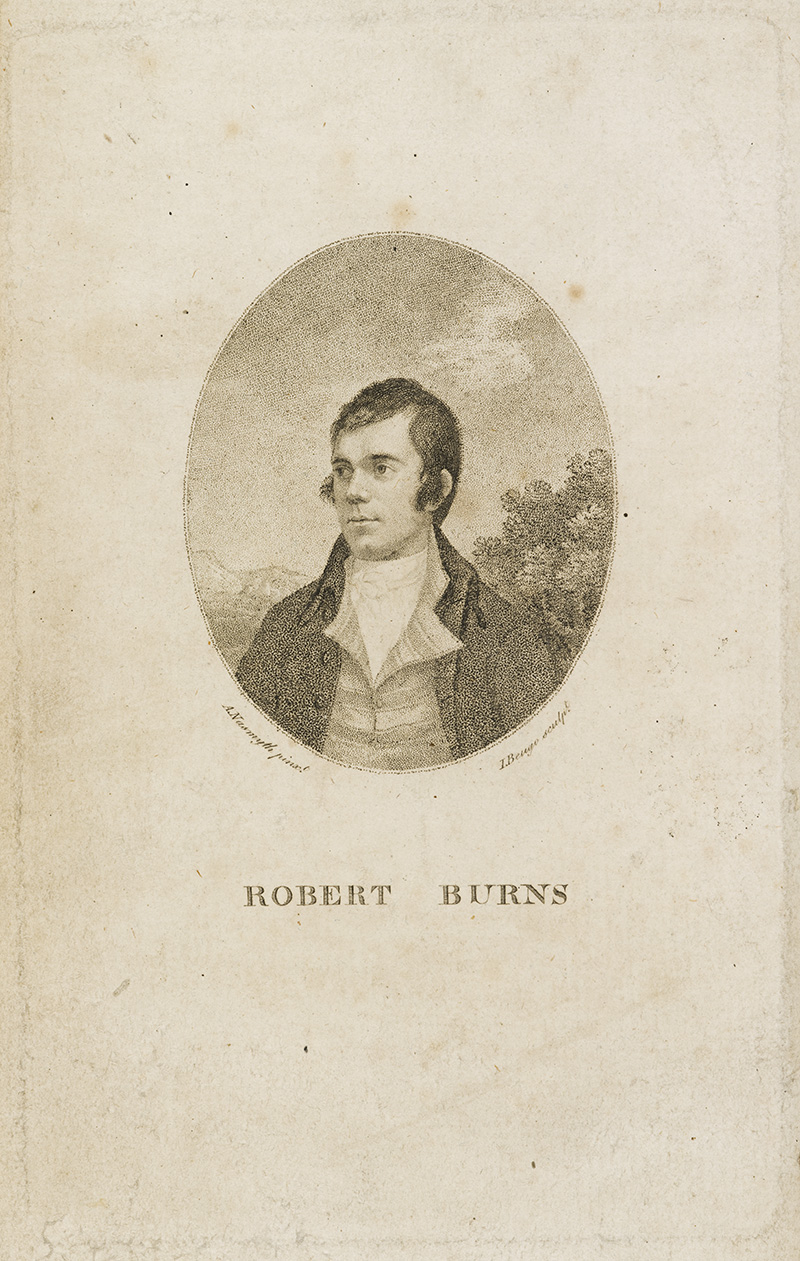
Getting Reacquainted with Robert Burns Through the Laing Collection

0012949d

The most important manuscript collection at the University of Edinburgh has long been acknowledged to be the Laing Collection. This treasure trove was donated to the University of Edinburgh in 1878 by David Laing (1793-1878) and contains a startlingly vast array of texts and artefacts. To gloss this diversity only briefly, the University’s description of the Laing collection attests that one can find more than 100 Western medieval manuscript books, a 9th-century Koran, over 3000 charters, manuscript poems, texts, and letters written by Robert Burns (1759-1796), the lovely illustrated “Album Amicorum” (book of friends) by Michael Van Meer (?-1653), and poetry by Elizabeth Melville (1582-1640). Even the handlist for the collection is itself an archival artefact of sorts, having been drawn up in 1878 at the time of the bequest and bearing traces of additions and corrections made over the years since.

As important as the Laing collection is though, I’ll admit that until a couple of months ago, I didn’t know much about it and I certainly hadn’t spent any time delving into what it has to offer. I’m an English literature PhD here at the University of Edinburgh and my research focuses on archives, digital humanities, and, in particular, the study of idiosyncratic texts, like concrete poetry and scrapbooks. I like that these works challenge traditional literary classifications and give some pause when users must decide how to read them, digitise them, or otherwise interpret them. These interests led me to volunteer with the DIU, where I have been working to enrich the descriptive metadata of digitised items from the University’s Special Collections and Library holdings. This is also what finally led me to the Laing collection.

Continue reading “Getting Reacquainted with Robert Burns Through the Laing Collection”

Lord Elgin Records 19th Century China

0055640d

One of the works in the ECA Rare Book Collection that places us firmly in a place and time in history is a book of photographs taken around the time of the notable expedition of Lord Elgin, James Bruce, to China on a diplomatic mission and military campaign. If one does not know much about Chinese history, which I must admit I know little of, you might view this image at first glance as simply another beautiful view of Chinese landscape and architecture. Upon further reading into the life of the 8th Earl of Elgin and the Old Summer Palace, as well as the photographers whose works are featured in the album, it becomes a much different story. One of these photographers was the talented Felice Beato who was known for photography that created images of war as a continuous process. He documented each stage of his subjects, including gruesome scenes of the aftermath of battles and seizes. This method provides great insight into the progression of Lord Elgin’s presence in China as many images fit into his timeline. Although the above photograph taken in 1860 seems to show a sturdy structure overlooking a stunning mountain range, it does depict a cultural landscape that was near the end of its time and one that was extremely vulnerable at the time. The caption for the image tells a snapshot of the gruesome story. The caption reads “View of the Summer Palace, Yuen-Min-Yuen, showing the Pagoda before the burning, Pekin. Octr 1860.” This could easily be one of the last photographs of the site before its infamous looting and burning on October 18, 1860. Many of the items taken from this event are still held today in the UK and other prestigious museums in Europe, although there is an ongoing conversation of where these works of great art and cultural importance belong.

Continue reading “Lord Elgin Records 19th Century China”

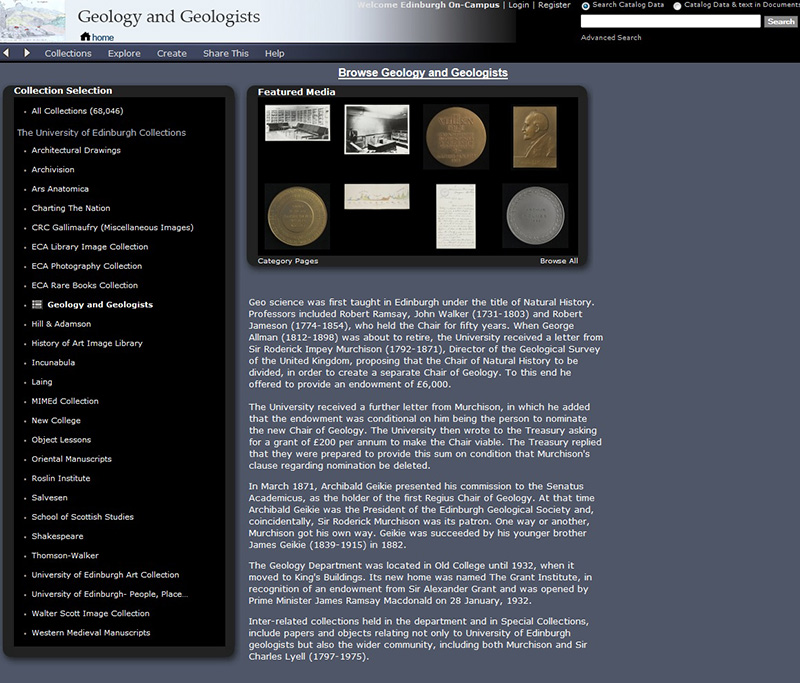
Explore the Geology with LUNA

LUNA3

Last week we were very excited to see a new LUNA collection go live- ‘Geology & Geologists’. This brings together images from the CRC’s Lyell collection (a wonderful mixture of correspondence and drawings), Arthur Holmes Geology medals, as well as recent images from The Cockburn Museum, School of GeoSciences. The Cockburn collection contains photographs of past Professors, and historic photos of the department as well as plates of fossilised fish.

Continue reading “Explore the Geology with LUNA”

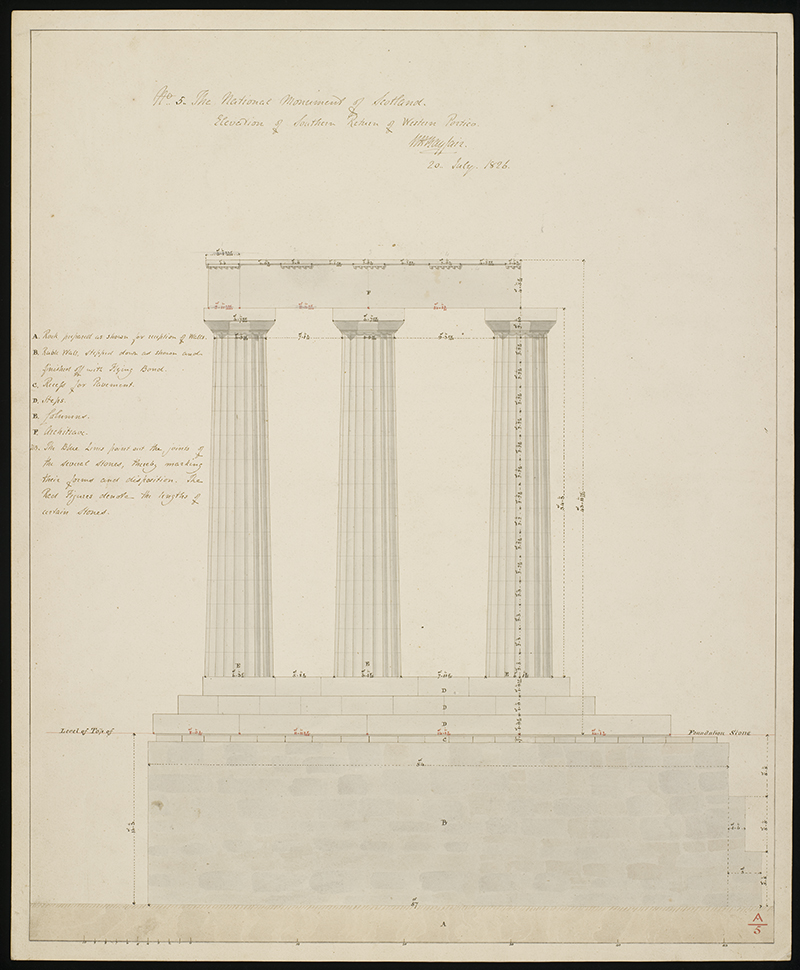
The National Monument of Scotland

Playfair, William Henry (b.1789, d.1857)  Return of Western Portico, 1826
Playfair, William Henry (b.1789, d.1857) Return of Western Portico, 1826

The Digital Imaging Unit has digitised many architectural drawings held in University of Edinburgh special collections over the years. They always present a challenge because of thier scale. They offer a fascinating glimpse of history in relation to many of the buildings in Edinburgh that we are familiar with on a daily basis. I think many of us have a positive relationship with the National Monument more commonly known as the Acropolis on Calton Hill. Continue reading “The National Monument of Scotland”

Globe trekking with the Roslin Glass Slides Collection

'Step Cutting on Ice Face, Tasman Glacier, New Zealand'. Photograph of two men step cutting on the ice face of the Tasman Glacier, New Zealand in the late 19th or early 20th century.

Currently I am based in the Digital Imaging Unit where I am responsible for digitising a large number of glass plate positive slides (about 3500!) which make up part of the Towards Dolly Project within the Roslin Collection. The digitisation project itself – aptly named ‘Science on a Plate’ – is funded by the Wellcome Trust and is due for completion at the end of April 2015. Only this week, the first batch of 1000 images have been made publicly accessible via the University of Edinburgh Image Collections website.

Having worked through over 1300 images so far, it is difficult to know where to start when attempting to whittle down the numbers to a small selection of favourites to post here. I have, therefore, simply chosen a handful of images that seem to jump out at me for one reason or another. These images do something to represent the wide-reaching nature of the Roslin Glass Slides Collection; many document people and animals at a particular time and place, whilst others are more informative and study-based. The collection contains images that span the globe. I am constantly surprised as I move through them. One minute I will be looking at a photograph of a Clydesdale horse at a show in Brunstane Park, Edinburgh, and the next minute I will be looking at a sable in eastern Africa or an indigenous tribe in India. The collection is vast, diverse and engaging all at once. Continue reading “Globe trekking with the Roslin Glass Slides Collection”

A lot of scanning and a little context

I am now coming to the end of my internship here in the Digital Imaging Unit. Over the past twelve weeks I have been responsible for digitising a large number of documents as part of the Godfrey Thomson Project. Collecting the project documents from Neasa, the Godfrey Thomson Archives Intern, I would then be required to capture every document individually using the Bookeye 4 Scanner (a machine that I have got to know very well lately, and one that behaves rather well, all told!).

Continue reading “A lot of scanning and a little context”

Photographists and the Grand Tour

01-060

One of my daily problems in this job is being drawn into the objects we are digitising- it is always too tempting to start reading, and yesterday was one of the toughest challenges I have faced! A reader had requested a book-scan copy of a transcript from a Diary of John Shaw Smith and his wife Mary as they did the Grand Tour of the Mediterranean and Middle East between 1849-1852 (see http://www.archives.lib.ed.ac.uk/catalogue/cs/viewcat.pl?id=GB-237-Coll-20&view=basic ). Perhaps it was that John Shaw Smith was one of the earliest photographers to visit these regions (see http://www.luminous-lint.com/app/photographer/John_Shaw__Smith/A/), or perhaps it was because I have visited many of the places they travelled to, however once I started I became fascinated by the lively, sharp witted pair and their adventures. Continue reading “Photographists and the Grand Tour”

css.php

Report this page

To report inappropriate content on this page, please use the form below. Upon receiving your report, we will be in touch as per the Take Down Policy of the service.

Please note that personal data collected through this form is used and stored for the purposes of processing this report and communication with you.

If you are unable to report a concern about content via this form please contact the Service Owner.

Please enter an email address you wish to be contacted on. Please describe the unacceptable content in sufficient detail to allow us to locate it, and why you consider it to be unacceptable.
By submitting this report, you accept that it is accurate and that fraudulent or nuisance complaints may result in action by the University.

  Cancel