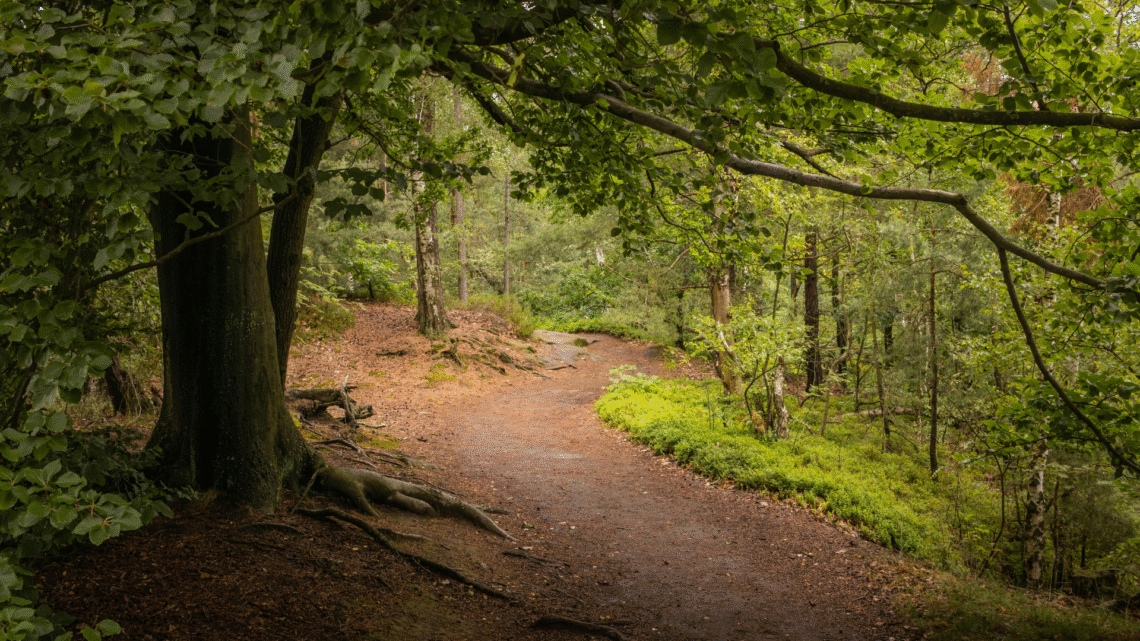
We all know that monoculture is not a good thing. In a monoculture forest, every tree looks the same, grows at the same rate, and draws from the same narrow nutrient pool. It looks orderly and logical, but it’s brittle. A storm is likely to flatten the whole forest, a disease will affect every identical tree the same.
True resilience is found in the ‘tangled’ woodlands – with cross-pollination, sharing of genetic information, and increased diversity – which all help the entire ecosystem survive a drought or a storm.

The research world demands and encourages similar monocultures, valuing the single, straight line of academic focus. But with only 10-15% of PhD holders managing to secure permanent academic positions, are we weeding out other types of researcher: people whose lives are a tangle of complexities?
We are taught to hide the bits of our lives that don’t feel like academic focus, but these are the very nutrients that feed it.
Part of the problem here is that academia values overwork – which is both unhealthy and unnecessary. The so-called ‘soft’ skills that a chaotically full life brings to the table are massively undervalued, and often even considered a disadvantage. These shouldn’t be considered as distractions; they are the cross-pollinators that make research more robust, creative, and resilient.
Having a child put this into sharp perspective for me. Previously my days were fluid; I rarely checked the time and stayed in the lab until I felt finished. Now, my days are defined by childcare and are at the mercy of illness, holidays and even weather. When I get home, I am a Mum, which often feels like a total personality transplant. Honestly, I still struggle with this, and though I wouldn’t change a thing, I miss not answering to a tiny dictator whose emotional regulation and physical survival is mostly my responsibility (and who definitely loved macaroni cheese yesterday, but hates it today!).
I remember the shock of coming back off maternity leave and realising that it wasn’t all the same.
I cynically smile at the naivety of the person I was before, who thought that despite the rearrangement of my internal organs and my neural pathways, I would simply pick up where I left off. It has taken me a while (6 years) to embrace the change and reframe it as positive. I have learned to see the pieces of my day like an ever-changing jigsaw, to work in shorter but more efficient bursts, to adapt plans at a moment’s notice and to recognise when something physically can’t be done – and to be OK with that.
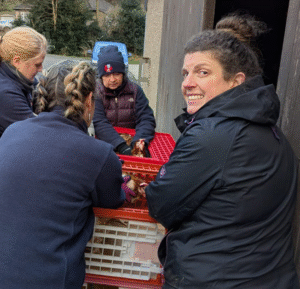
I have now realised that in the current research culture being a principal investigator would mean I have to give up things that I value: coordinating a community science festival in rural Scotland, re-homing hundreds of commercial egg-laying hens every year, serving as charity trustee for a community development trust, and most importantly time at home with my family. These things are part of what makes me who I am, and what add value to the diversity of thought I bring into my research and the academic communities I engage in. I am fortunate that my PI values who I am as a whole person, which allows me to keep doing these things.
But the narrow path to leadership generally does not value a tangled life.
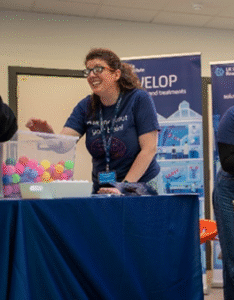
Recently, I was afforded the opportunity to join the UK Dementia Research Institute’s communications team on a part-time skills-enrichment secondment. I spent two days a week for six months developing new public engagement resources for the UK DRI, establishing networks, and setting up training. These were the tangible outputs, but the true benefits of this project were the opportunities to share ideas from different perspectives and to make doors through the invisible walls that keep us in our separate silos. I felt like I learned a new language – one that bridges lab research and science communication. I genuinely think this has made me a better scientist, with sharper ability to justify my work and see its impact.
This was a rare opportunity, and depended on the good will of many people around me to support me to do it. It was also incredibly refreshing – doing something different offered a break from staring at the same problem and I returned to the lab with fresh eyes.
My message to someone thinking that straight and narrow path isn’t for them is: bring your whole self to everything you do, surround yourself with the people that support you to grow without confinement, and embrace opportunities to get fresh perspectives and learn new things. When you see a researcher with a tangled life, don’t wonder how they find the time, ask what they will bring that will strengthen the forest and what you might do next to be part of that diversifying ecosystem.
Sarah McGlasson,
Sarah is a Postdoctoral Researcher at the UK Dementia Research Institute and is based at the University of Edinburgh.
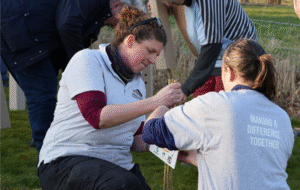
(Image credits: Shaun Dunmall, CC BY-SA 2.0 license; Adam Burton/WTML )