Commercial ventures don’t always have to be in pursuit of profit margins. As we return to our series on public engagement, Sinead Rhodes tells us about responding to meet a need using a range of formats and delivery tools – at scale – by establishing a Community Interest Company.

My approach to research has always involved engaging with those whom I do research with about the findings of the studies and their implications. This has included children and young people themselves, parents, educators and a wide range of health professionals. As online engagement opportunities vastly increased in 2020, I began to see ways in which I could engage the public more. There were still limitations, however.
One person can only do so much engagement themselves. To increase the number of people you want to reach you really need to employ people. Costing that in to grants enables researchers to do that to some degree but it can be quite piece meal and it’s not very sustainable…
Often, a project ends and the engagement ends with it.
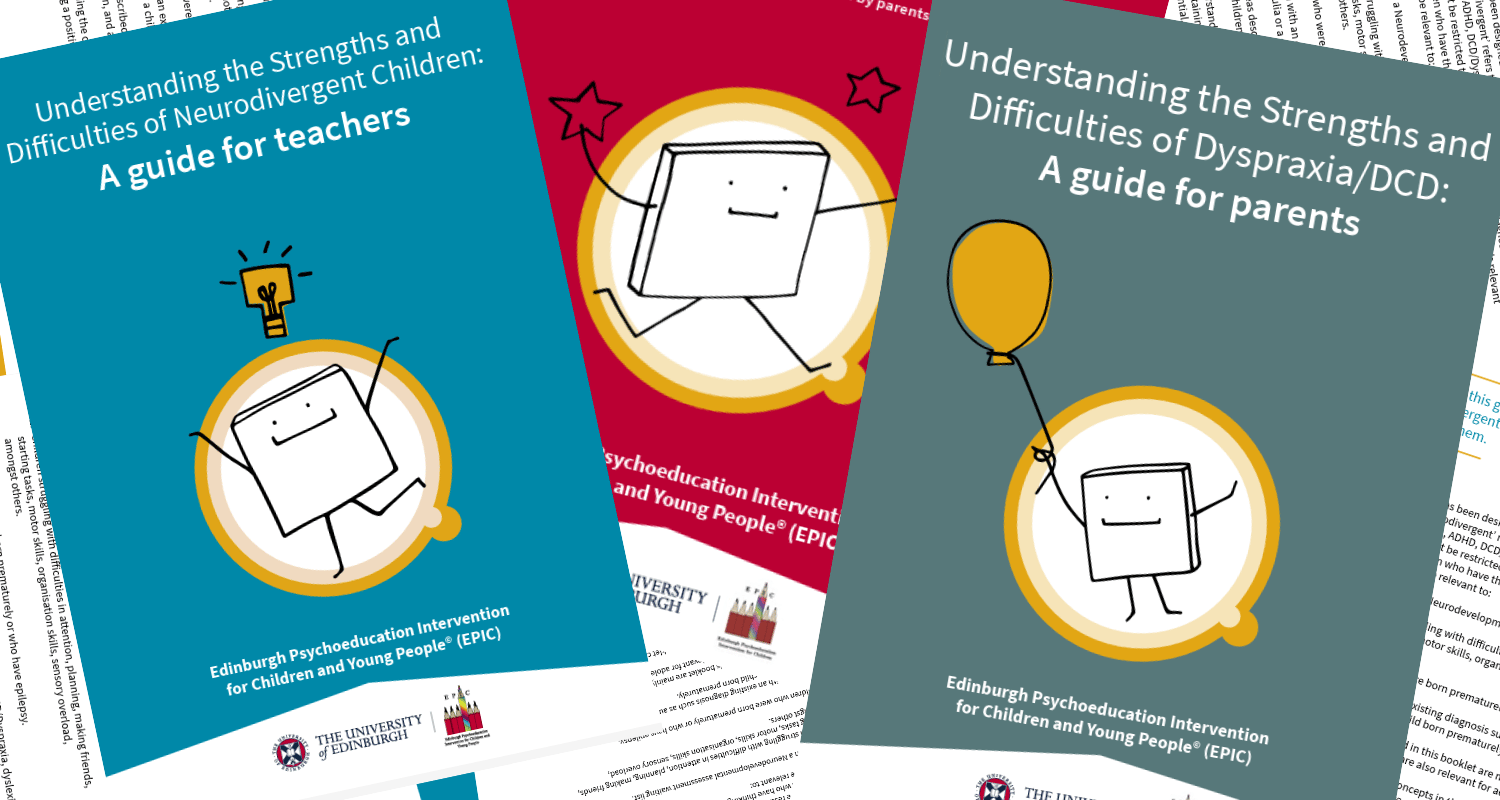
In 2021, I was coming to the end of a research project that had involved the development of a child neurodevelopmental intervention programme. Myself and colleagues from Moray House School of Education had developed a researcher-led intervention called EPIC (Edinburgh Psychoeducation Intervention for Children) that involved children, their parents and teachers; we were able to show that it had beneficial effects. I was very keen to get some of the content we had developed out to parents and teachers and to engage them long-term in a sustainable way. We applied for funding to pay for dissemination booklets and were successful. We co-produced these booklets with parents and teachers and they provided invaluable input. This ensured the content was appropriate, their use was feasible across contexts, and the style and language was in keeping with the needs of those who would use them.
The booklets were uploaded to the our department’s website and thousands of downloads followed. A brief questionnaire put up to access them meant there was knowledge of who was downloading them. This revealed it was a mix of parents, education and health professionals as well as neurodivergent people themselves. Simultaneously, queries began to pour in from parents and professionals asking if and how they could use the booklets within a programme and did we offer any types of programmes. It was clear there was a need for broader support than just the booklets themselves.
How could this engagement be extended? Parents were asking for a range of resources in different formats and importantly accompanied by support from people. They wanted to be able to ask questions and have discussions, not just access static resources. Education professionals were asking for evidence based in-service training. Clinicians were asking for webinars focused on the latest research.
This broader engagement need was fast evolving into a need for services beyond the capacity of typical engagement.
Around the same time, I had connected with Edinburgh Innovations (EI) who introduced me to the idea of commercialisation and to consider a spin-out company. This didn’t seem aligned with my motivations for this work. However, I really wanted to extend the engagement work I was doing – to reach more people and in new and different ways. I went on entrepreneurial training, facilitated by EI, and the general goal of financial success seemed at odds with what my aims were and more distracting than anything.
Could a business model help me stay focused on extending my engagement reach and scaling the impact of my research?

I wasn’t convinced until I came across the idea of a social enterprise company structure. One such format – a Community Interest Company – jumped out as being very aligned with my impact and engagement goals. The company would be not-for-personal profit but the ‘profits’ could feed back in to the research and engagement work. With funding, we translated the parent part of the intervention programme in to a ‘self-delivery with support’ version. This was now cost- effective and parents reported that it felt empowering but yet retained person support. Iona Beange, who worked on this project, came on board in the formation of the spin-out.

Choosing a social enterprise structure meant being able to access a lot of support from organisations like Community Enterprise in Scotland. In December 2023, Iona and I formed a Community Interest Company known as EPIC Think Learn. We initially focused on parents and developed a platform for parents of primary school children. We now have service offers and resources for teachers and webinars for clinicians. We are reaching more people and in different ways than we could conducting engagement solely via the University directly. Forming a spin-out company isn’t for everyone but should be at least considered as a viable option for scaling public engagement work.
Sinead Rhodes
Recognition and success
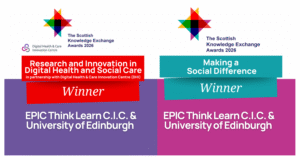
EPIC Think Learn recently won two awards at the Scottish Knowledge Exchange Awards in March 2026:
- Making a social difference – since its incorporation two years ago, EPIC has positively impacted more than 20,000 children.
- Research and innovation in digital health and social care – EPIC Think Learn C.I.C. brings University of Edinburgh research directly into homes, classrooms, and clinical settings through its innovative digital platform. By equipping families and professionals with practical, research-based strategies, the partnership improves children’s wellbeing, enhances early intervention, and strengthens Scotland’s capacity to support neurodivergent learners at scale.
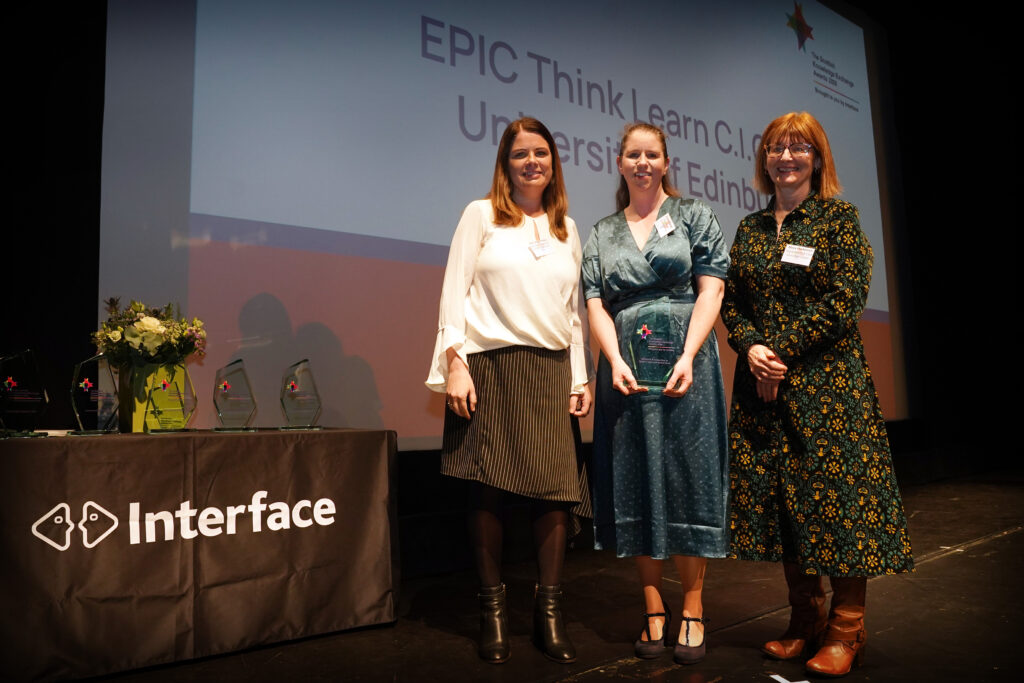
Sinead Rhodes is Professor of Developmental Neuropsychology and as well as the Engagement Lead for the Institute of Neuroscience and Cardiovascular Research at the University of Edinburgh. She will host the School’s first Innovation and Engagement showcase on 30 April 2026 . Joined by Jon Stone, Lara Campana and Scott Webster, they will discuss how they established a science communication information website; a platform that provides neurodevelopmental services and resources; a cell therapeutics company; a small molecule therapeutics company.
Further Reading
For an extended interview with Sinead Rhodes about the the background of EPIC Think Learn see https://www.linkedin.com/pulse/more-support-neurodivergent-children-university-of-edinburgh-esiie/
EPIC Think Lean website: https://epicthinklearn.com/
Edinburgh Innovations is the University of Edinburgh’s commercialisation service. They facilitate the process of utilising research in real-world applications: https://edinburgh-innovations.ed.ac.uk/
(Epic Think Learn 2025)