Sound design
My sound design is centered around the five emotional stages of the Kübler-Ross model, exploring the psychological changes that occur when people face a major loss. Each sound piece is designed to capture the core qualities of a specific emotional stage, bringing the listener into the emotional experience described by the model.
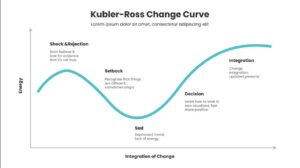


Anger is a strong outburst of emotion, with instability and confrontation. At this stage, individuals try to find external outlets to fight against the inner helplessness, and their emotions fluctuate violently. The sound shows a greater dynamic range contrast at this stage, and the sudden volume peak enhances the impact of anger. The inharmonious intervals increase the tense atmosphere, making the audience feel the aggressiveness and instability of anger in hearing.

The bargaining stage is an attempt to regain lost control, with the individual wandering between hope and despair. This stage reflects an inner contradiction: the inability to accept reality, yet the inability to change it. The sound design of this section symbolizes the repeated attempts and failures in psychology through a looping rhythm and a faint modulated melody. The sound reinforces the slimness and impossibility of hope, immersing the audience in an emotional “self-dialogue”. In this way, the sound expresses the core contradiction of the bargaining stage: the desire for change, but the inability to do anything about it.

The depression stage is the despair and helplessness deep in the heart after the individual begins to face reality. This is the lowest point of emotion, full of fear of the future and powerlessness of the current situation. The sound at this stage shows strong emotional oppression, as if an invisible weight is looming over the audience.

struggling to accept (Source: Psychology Today, 2017.)
The acceptance stage is not simply calm, but a compromise of inner emotions and surrender to reality. This is a complex emotional state, including superficial peace and deep worries. The sound of the work at this stage shows a subtle sense of calm, but this calmness always carries a hint of uneasiness. The subtle fluctuations and potential low frequencies symbolize the emotional residue that has not been completely eliminated in the heart. The audience experiences a complex state of balance in this emotion: no longer struggling, but not completely letting go. This sound experience highlights the emotional core of the acceptance stage – accepting reality, but not forgetting the pain.
Links to all sounds used here:www.youtube.com/@yuxinzhang-og1gg
Reference
- Visual Paradigm. n.d. “Kubler-Ross Change Curve.” Visual Paradigm Blog.Accessed February 12, 2025. https://blog.visual-paradigm.com/what-is-the-kubler-ross-change-curve/
- Dame Magazine. 2021. “There’s a Reason You Feel Numb Right Now.” Dame Magazine. Accessed February 12, 2025. https://www.damemagazine.com/2021/02/10/theres-a-reason-you-feel-numb-right-now/
- Ezra Counseling. n.d. “Anger Management: Understanding and Navigating the Stages of Anger.” Ezra Counseling. Accessed February 12, 2025. https://ezracounseling.com/anger-management-understanding-and-navigating-the-stages-of-anger/
- Cardiff University. n.d. “On Hope and Despair, Part I.” Open for Debate Blog. Accessed February 12, 2025. https://blogs.cardiff.ac.uk/openfordebate/on-hope-and-despair-part-i/
- Vanourek, Gregg. n.d. “How to Overcome Helplessness.” Gregg Vanourek Blog. Accessed February 12, 2025. https://greggvanourek.com/how-to-overcome-helplessness/
- Psychology Today. 2017. “How and Why You Compromise Your Integrity.” Evolution of the Self Blog. Accessed February 12, 2025. https://www.psychologytoday.com/us/blog/evolution-of-the-self/201707/how-and-why-you-compromise-your-integrity