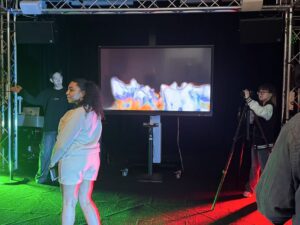
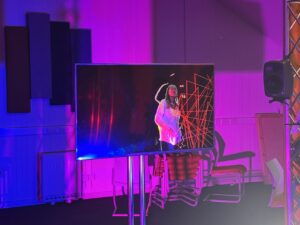
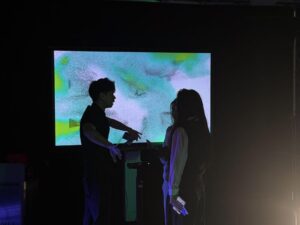
Prior to the exhibition we carried out three installation tests, on 3.26, 3.27 and 4.2. The visual test problems were mainly solved in the first and second tests, while the third one mainly solved the sound design problems and combined all the elements.
The first installation testing
During the first round of testing, several visual issues were identified:
1.Placement of the Kinect: Due to the limited detection range of the Kinect, it’s important to position it in a spot where it can capture all visitors entering the room. At the same time, the device should not obstruct the audience’s line of sight.
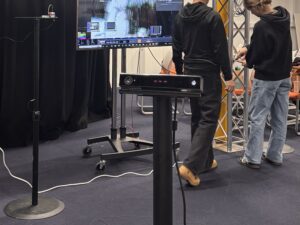
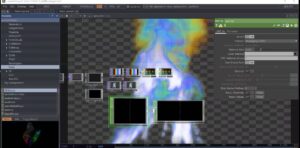
2. Adjusting the intensity of certain visual effects: Since the exhibition relies on real-time visuals, performance optimization is key. Take the flame effect in the Anger stage as an example—while a more intense flame burst enhances the emotional impact, it also risks causing system lag. During this test, I repeatedly fine-tuned the effect strength to strike a balance between visual impact and system performance.
The second installation testing
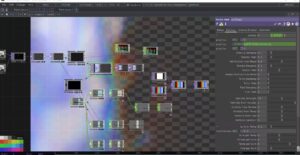
1. Since physical sensors are used, factors like lighting, air movement, and dust can interfere with the sensor’s data reception. This sometimes causes the visuals to change even when no one is near the sensor. To minimize this issue, I adjusted the input range within the Math CHOP to reduce sensitivity to such noise.
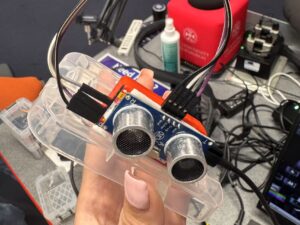
2.Some test effects were not visually obvious: when viewers approach the sensor, they do so with uneven body surfaces rather than a flat plane. If the resulting changes are too subtle, it can lead to disappointment during interaction. Therefore, during testing, I eliminated certain effects—such as changes in transparency—that didn’t provide strong enough visual feedback.
Exhibition Reflection:
Sensor placement: When visitors try to interact directly with the sensor, they may not appear in the visual output (screen) at the same time, which diminishes the overall experience and sense of immersion.
Clarity of the theme: During conversations with the audience, one visitor mentioned that they only understood the exhibition was about emotions after my explanation. This made me reflect on whether the emotional theme could be made clearer from the start. Possible solutions include incorporating interactive emotional quiz questions before entering the space, or placing more visually explicit emotional cues or posters at the entrance of the exhibition.