As the narrative designer of MM&NN, one of my core goals has been to explore how characters might communicate in a world where language—at least in its conventional, verbal form—does not exist. In this game, MM and NN do not speak in words, but in sounds. And in those sounds, in their rhythms and reactions, lies a new kind of storytelling.
This week, I focused on prototyping their non-verbal communication system, a mechanic that lies at the intersection of narrative design, world-building, and tutorial functionality.
⚠️ Note: The placeholder vocalizations shown here are temporary. All final sound design will be developed and implemented by our audio team.
The Design Goal: Language Through Interaction
Rather than relying on subtitles or exposition, we wanted players to understand MM and NN’s intentions, emotions, and decisions through behavior, context, and sound. This creates a sense of intuitive immersion—players are not told what’s happening, they feel it, they interpret it.
In MM&NN, sound is language. And because each character has a different perception—MM navigates through audio, NN through visuals—their shared “language” must emerge from collaboration.
First Encounter: A Conversation in the Dark
At the start of the game, MM and NN awaken in a pitch-black section of the maze. In front of them: three diverging paths. One holds the key to the next area. But which?
The scene plays out with simple vocalizations and gestures:
| Character | Line | Meaning | Behavior |
| NN | “Pu?” | Should we go forward? | Points ahead |
| MM | “Mu.” | No. That’s not right. | Shakes head |
| NN | “Ka?” | What about left? | Draws arrow on ground |
| MM | “Ni!” | Yes. That’s the safe way. | Nods and leads the way |
Later, they encounter a hidden trap:
🟡 NN: (Points forward) “Pu?” (Should we go forward?)
🔵 MM: (Listens carefully, then shakes their head) “Mu.” (No, that’s not the right way.)
🟡 NN: (Thinks for a moment, then draws an arrow on the ground pointing left) “Ka?” (Then left?)
🔵 MM: (Closes their eyes, listens, then nods) “Ni!” (Yes! Left is safe.)
🟡 NN: (Takes a step forward, MM follows.)
Tutorial Prompt
✔ “Pu?” – Asking if they should move forward.
✔ “Mu.” – No, that’s not right.
✔ “Ka?” – Asking if they should go left.
✔ “Ni!” – Confirming the correct choice.
🔵 MM: (Suddenly stops and makes a sharp sound) “Sha!” (Danger!)
🟡 NN: (Stops immediately, looks back, confused) “Luu?” (Where is the danger?)
🔵 MM: (Points at the ground ahead, then steps back) “Ba! Ba!” (Move back!)
🟡 NN: (Carefully steps back. A second later, the ground ahead collapses, revealing a deep pit.)
🔵 MM: (Points to a different, safer path) “Ni!” (This is the right way.)
🟡 NN: (Follows MM, avoiding the trap.)
Tutorial Prompt
✔ “Sha!” – Warning! Danger!
✔ “Luu?” – Asking where the danger is.
✔ “Ba! Ba!” – Telling the other to move back.
They continue forward and finally find a glowing key in a small room! NN picks it up, the entire room lights up, and a door to the next area opens.
🔵 MM: (Taps NN’s arm) “Ni!” (We did it!)
🟡 NN: (Nods slightly, holding the key tightly, and moves forward.)
🎮 [Next Level Begins…]
Language as Mechanic: Teaching Through Play
This system is not just for flavor—it serves as the foundation for our immersive tutorial experience. Instead of showing UI prompts or explicit directions, players learn the meaning of each sound through repetition and interaction.
Current design goals include:
- A non-intrusive tutorial where sounds and gestures naturally introduce language through context.
- An evolving player vocabulary: the more the player observes, the more fluent they become in MM and NN’s communication.
- Environmental feedback reinforces understanding (e.g., choosing the wrong path triggers visual/auditory consequences).
Sound as World-Building
The vocal system is also deeply embedded in MM&NN’s world and story themes. Since the entire game is built around dual perception—visual vs. auditory, illusion vs. reality—the absence of traditional language allows us to emphasize embodied communication.
These sounds become a metaphor for how connection forms in uncertain environments: not through clarity, but through shared rhythm, risk, and response.
Next Steps (with the Audio Team)
While I’ve mapped out the core vocabulary and use-cases from a narrative perspective, all final audio design and vocalization development will be handled by our sound design team.
Their next tasks include:
- Defining the tonal quality and emotion of each vocalization (e.g., pitch, intensity, texture)
- Creating differentiated sound palettes for MM and NN
- Adding subtle audio-reactive environmental cues (like how the maze “responds” to certain sounds)
- Exploring communication breakdowns (e.g., ambiguity, mimicry, silence) as narrative devices
Inspirations: Learning from Games That Speak Without Speaking
The idea of crafting a unique language for MM and NN didn’t come out of nowhere—it was deeply inspired by several games that have beautifully embraced non-verbal or pseudo-linguistic character expression.
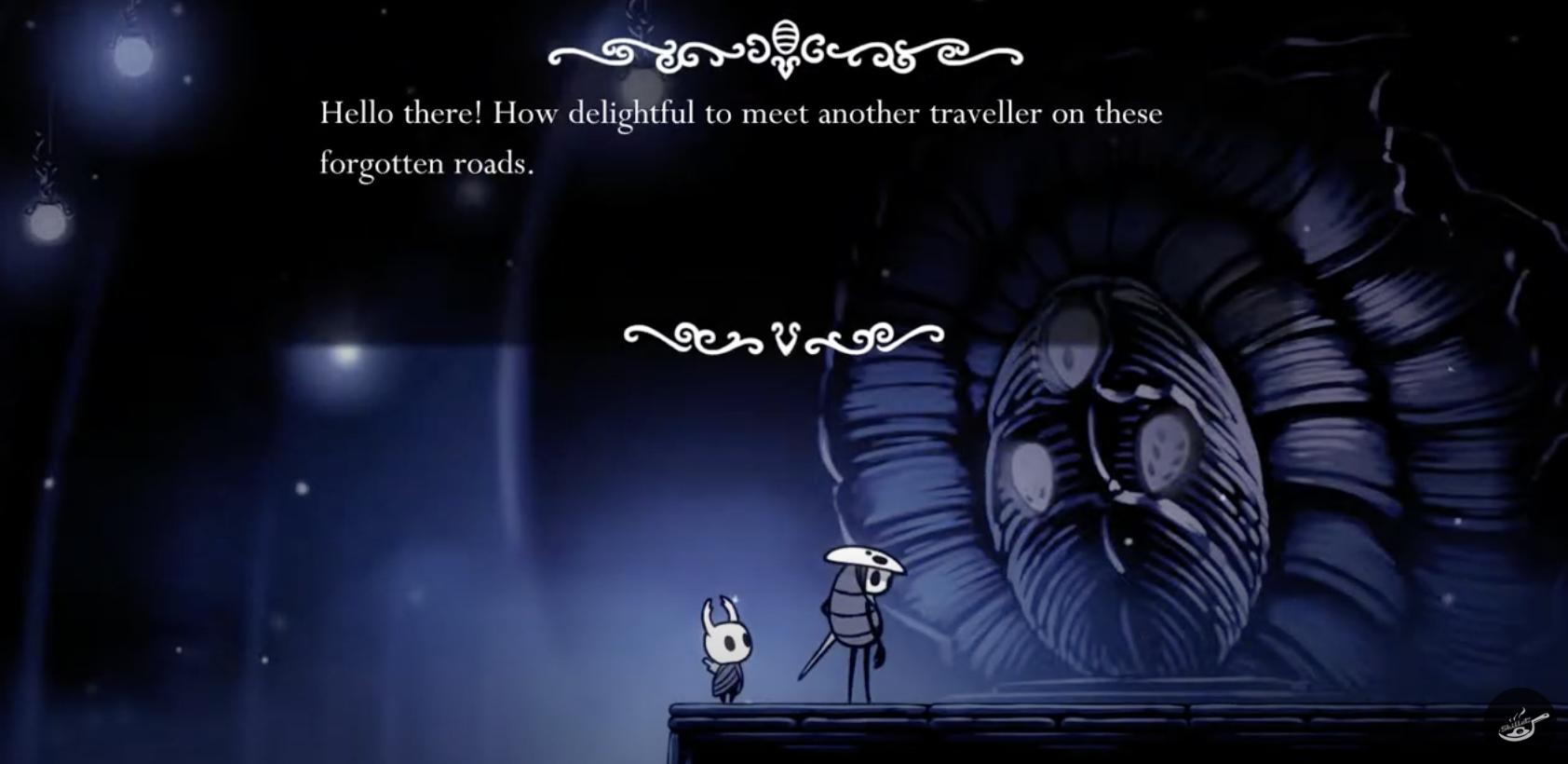
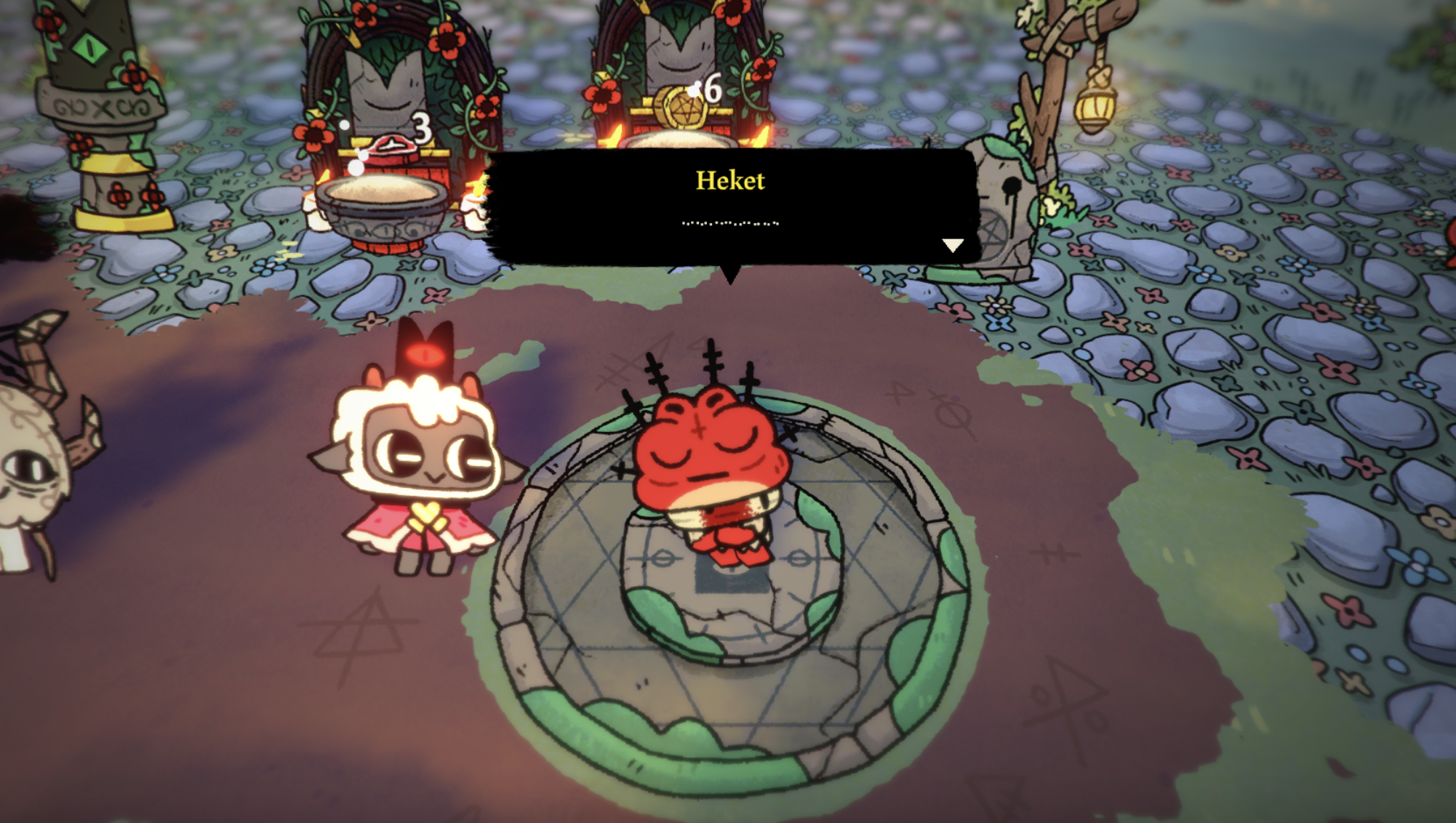
Games like Hollow Knight, Cult of the Lamb, Minions (from broader media), and Ori and the Blind Forest all demonstrate how character-specific sound design can become a language in itself—conveying tone, emotion, and intent without relying on traditional dialogue systems.
-
In Hollow Knight, brief utterances—grunts, chirps, and sighs—build a melancholic, wordless world of underground wonder.
-
Cult of the Lamb uses playful, randomized vocalizations to give each character a quirky personality without breaking flow.
-
The Minions franchise created a near-universal comedic language out of gibberish—highly expressive and emotionally direct.
These examples showed me how sonic identity can become a fundamental part of storytelling. In MM&NN, I hope to continue that tradition—where every “Ni!” or “Sha!” isn’t just a mechanic, but a narrative moment in its own right.
Final Thoughts
In MM&NN, communication is not about language. It’s about attention, response, and intuition. This developing system of vocal exchanges is just the beginning of a deeper emotional and mechanical dialogue between player, character, and world.
Through this system, I hope to guide players into a state of play where meaning is not told, but felt—and where even the simplest sound can become a bridge between two lost voices in the maze.